Azem Palace (Beit al-Azem): A Masterpiece of Ottoman Architecture in the Heart of Damascus
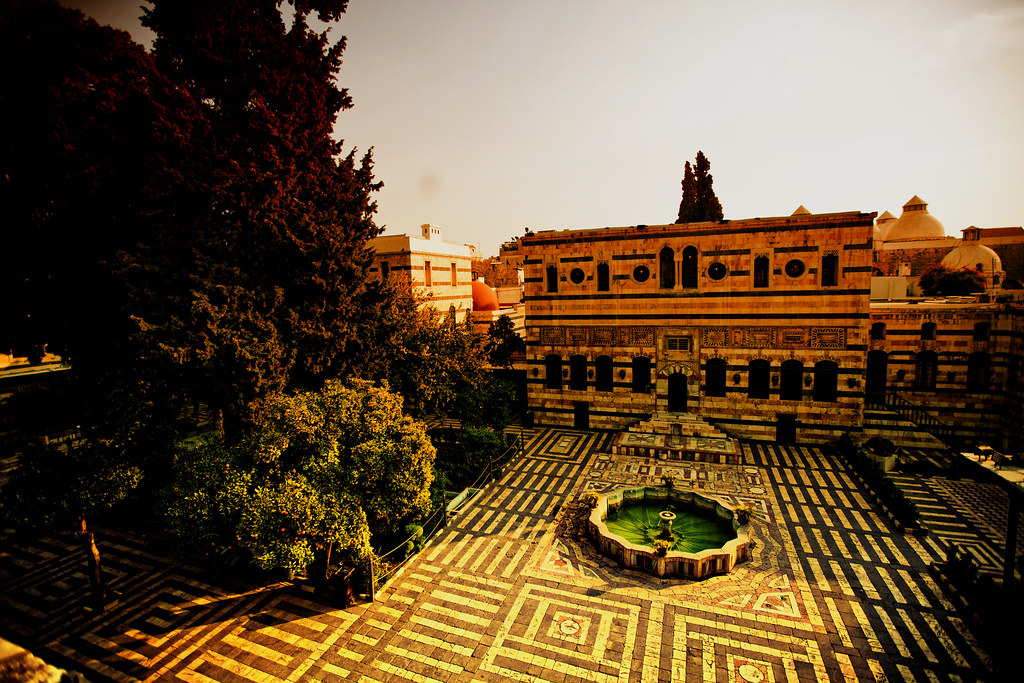
In the winding lanes of Old Damascus, just south of the Umayyad Mosque, stands Azem Palace, one of the city’s most iconic and beautifully preserved examples of traditional Damascene architecture. Built in the 18th century by As’ad Pasha al-Azem, Azem Palace serves today as both a historical museum and a living showcase of Syrian artistry and culture during the Ottoman era.
With its elegant courtyards, intricate stonework, and atmospheric halls, Azem Palace invites travelers to step back in time and explore the refined domestic life of old Damascus. Visiting Azem Palace is not just a glimpse into architecture — it’s a journey into the soul of Syria’s rich heritage.
Azem Palace | Quick Info.
| Topic | Quick Info |
|---|---|
| Name | Azem Palace (Beit al-Azem) / قصر العظم – بيت العظم |
| Location | Old City of Damascus, Syria – near the Umayyad Mosque |
| Built | 1749 CE (Ottoman period) |
| Builder / Patron | Constructed by As’ad Pasha al-Azem, governor of Damascus |
| Original Function | Luxurious residential palace for the al-Azem family |
| Later / Current Use | Converted into the Museum of Arts and Popular Traditions in 1954 |
| Architectural Highlights | Courtyards with marble fountains, carved wooden ceilings, colorful stone façades, and traditional Damascene rooms |
| Significance | One of the best-preserved Ottoman palaces in Syria, showcasing 18th-century Damascene architecture and lifestyle |
| Architectural Style | Ottoman–Damascene domestic architecture with Arab-Islamic design elements |
| Visitor Experience | Offers insight into traditional Syrian family life, art, and craftsmanship |
Historical Background
The Vision of As’ad Pasha al-Azem
Azem Palace was constructed in 1749 by As’ad Pasha al-Azem, the then Ottoman governor of Damascus. He was also the patron behind other major landmarks in the city, including Khan As’ad Pasha. His intention was to build a residence that reflected his power, wealth, and taste — and to create a structure that would become a lasting symbol of refined Ottoman Syrian architecture.
Azem Palace remained a private residence for the Azem family until the early 20th century, when it was converted into the Museum of Arts and Popular Traditions, a role it continues to fulfill today.
From Residence to Museum

In the 1950s, the building was restored and repurposed to showcase Damascene culture, crafts, customs, and heritage. It has since become one of the most visited heritage sites in the city, welcoming both international tourists and locals.
Location and Access
The palace is located in the Midan al-Hamidiyeh area, just across from the southern wall of the Umayyad Mosque. It is within walking distance of major Old City attractions, including the Al-Hamidiyah Souq, the Straight Street, and several historic hammams and khans.
- Opening hours: Usually open from 9:00 AM to 5:00 PM (closed on certain public holidays)
- Admission: A small fee is charged for entrance; discounts may apply for students and groups
- Best time to visit: Early morning or late afternoon for ideal lighting and fewer crowds
Architectural Highlights
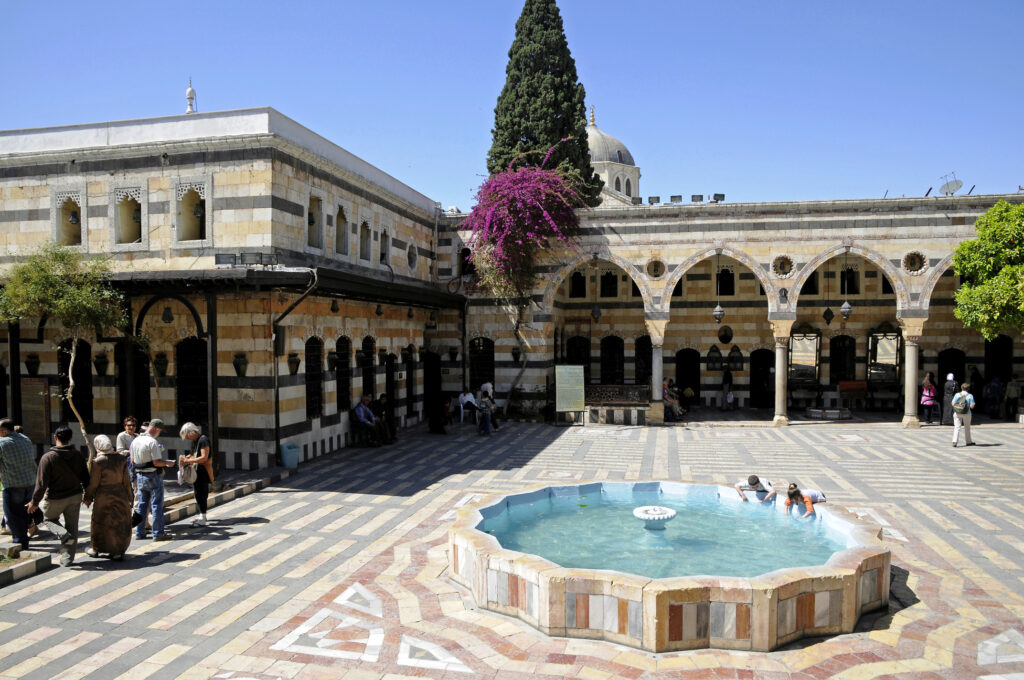
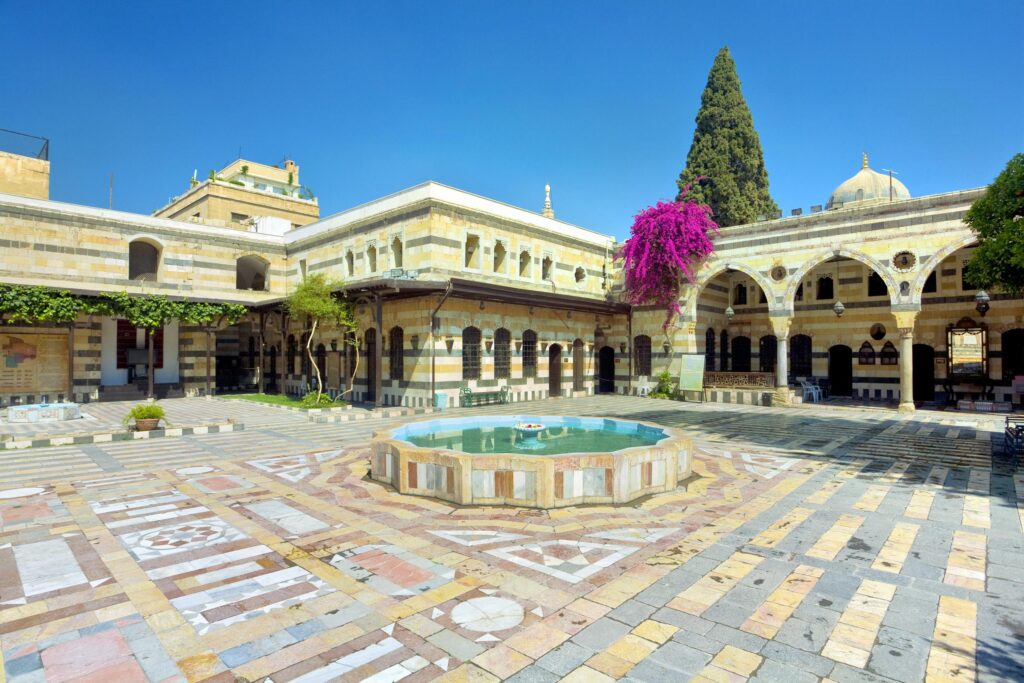
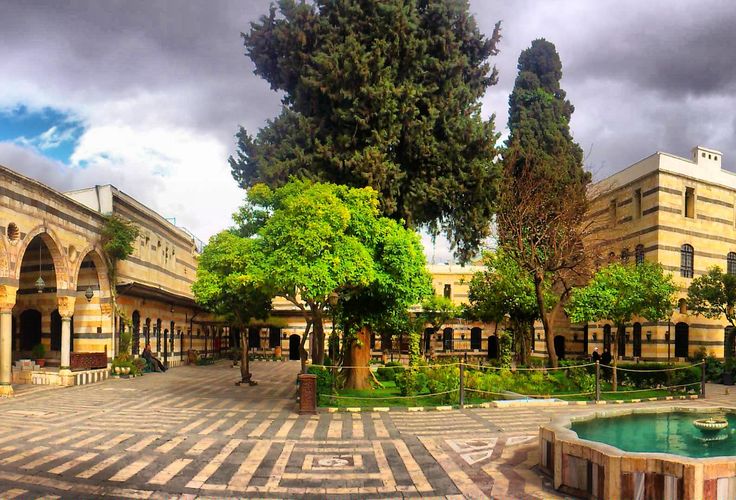
Azem Palace is a brilliant representation of Damascene courtyard architecture, combining functionality, beauty, and cultural symbolism. The palace reflects the Ottoman-era ideal of privacy, family life, and aesthetics.
- The Outer and Inner Courtyards
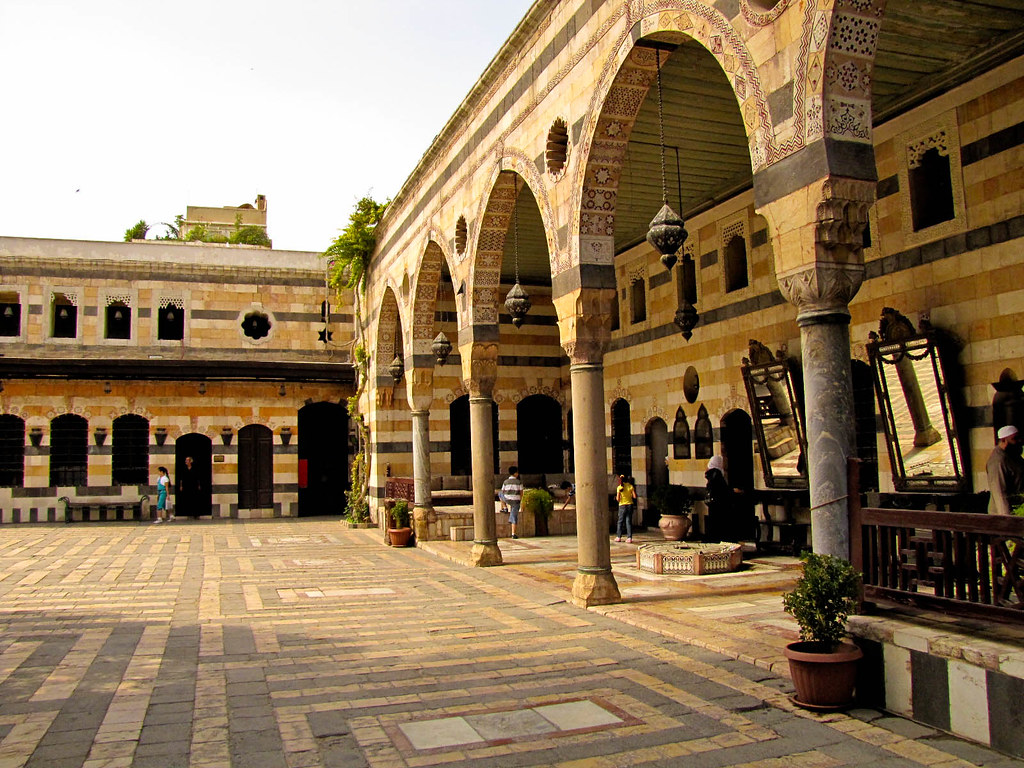
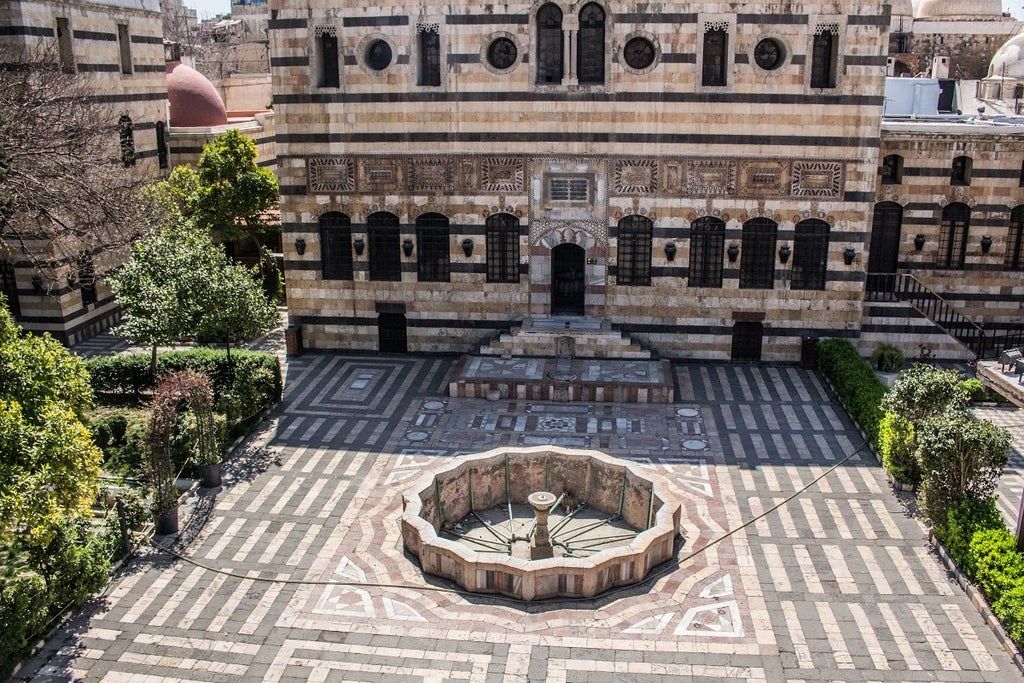
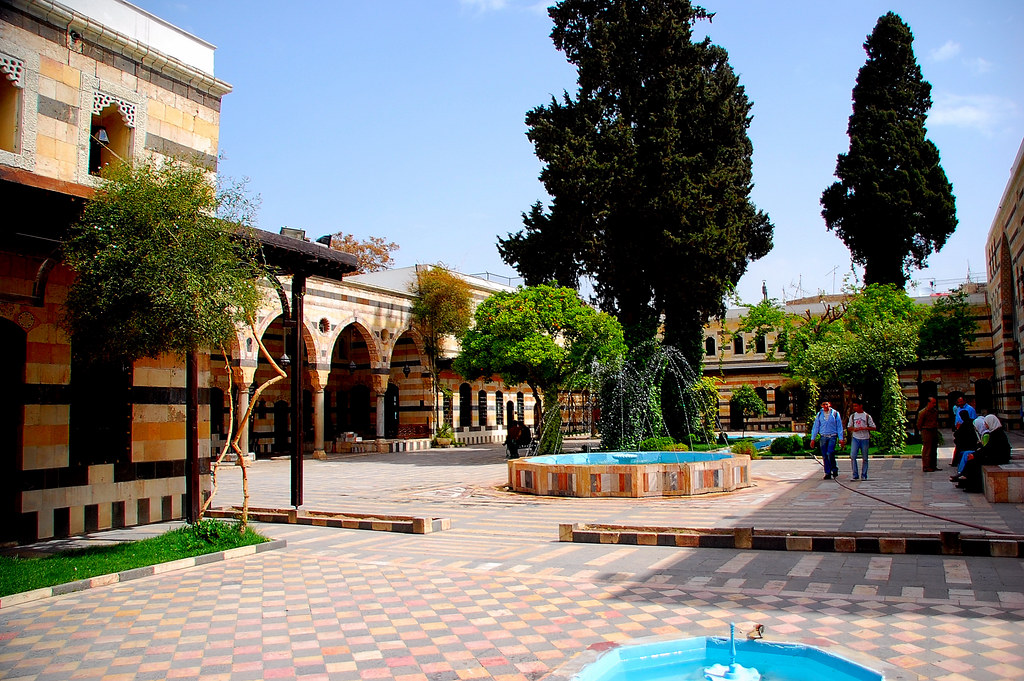
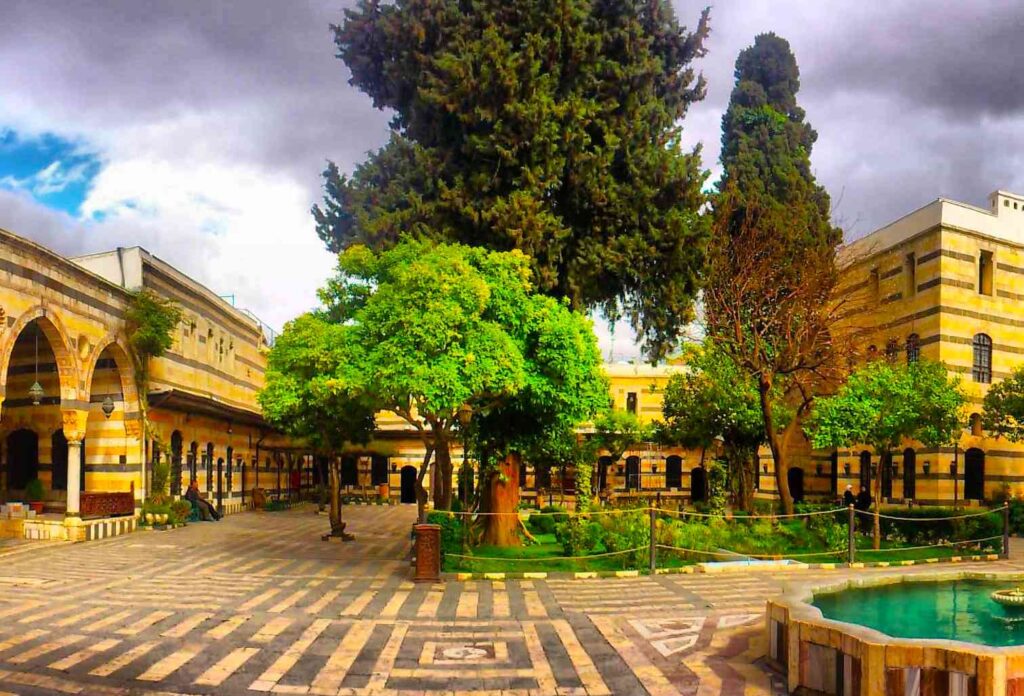
The palace is organized around two main courtyards: - The Outer Courtyard: Designed for receiving guests and conducting official business. It includes grand iwans (vaulted spaces), fountains, and beautiful stone patterns.
- The Inner Courtyard: Reserved for the family and domestic life. More secluded and serene, it includes private rooms, a small fountain, and access to living quarters.
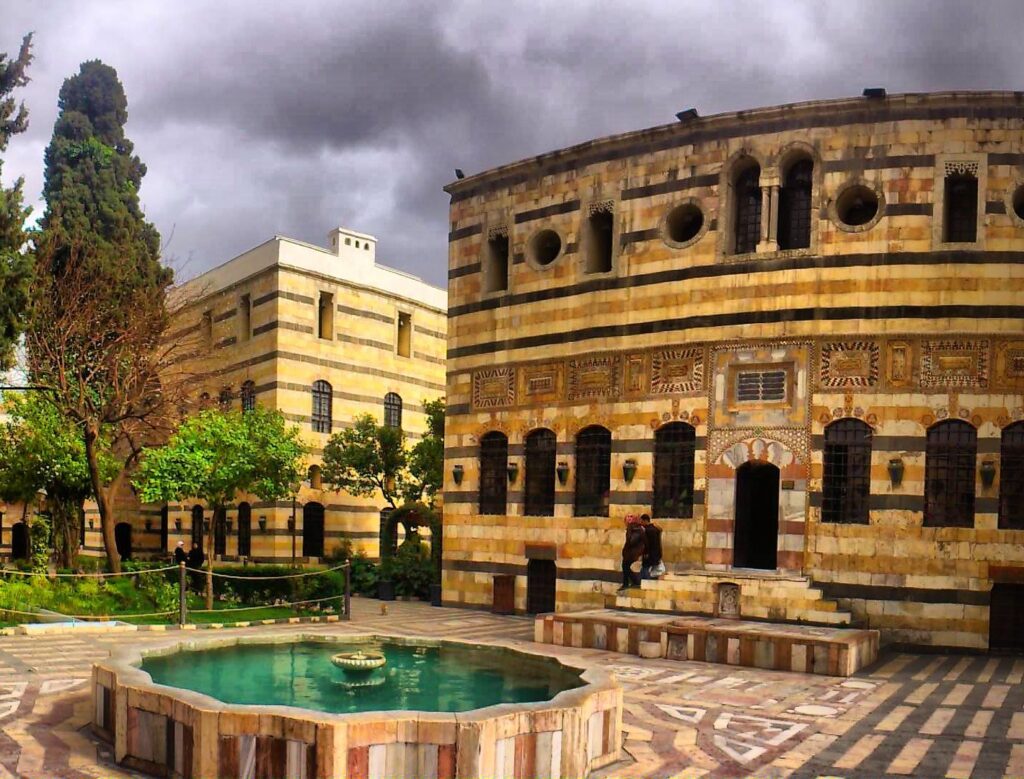
- Each courtyard is paved with traditional stones arranged in artistic geometric designs, and centered around fountains that provide cooling and ambiance.
Ablaq Stonework and Wood Carvings
The structure features the famous ablaq technique — alternating rows of black basalt and white limestone — common in traditional Syrian architecture. This creates a striking striped effect on the walls, arches, and domes.
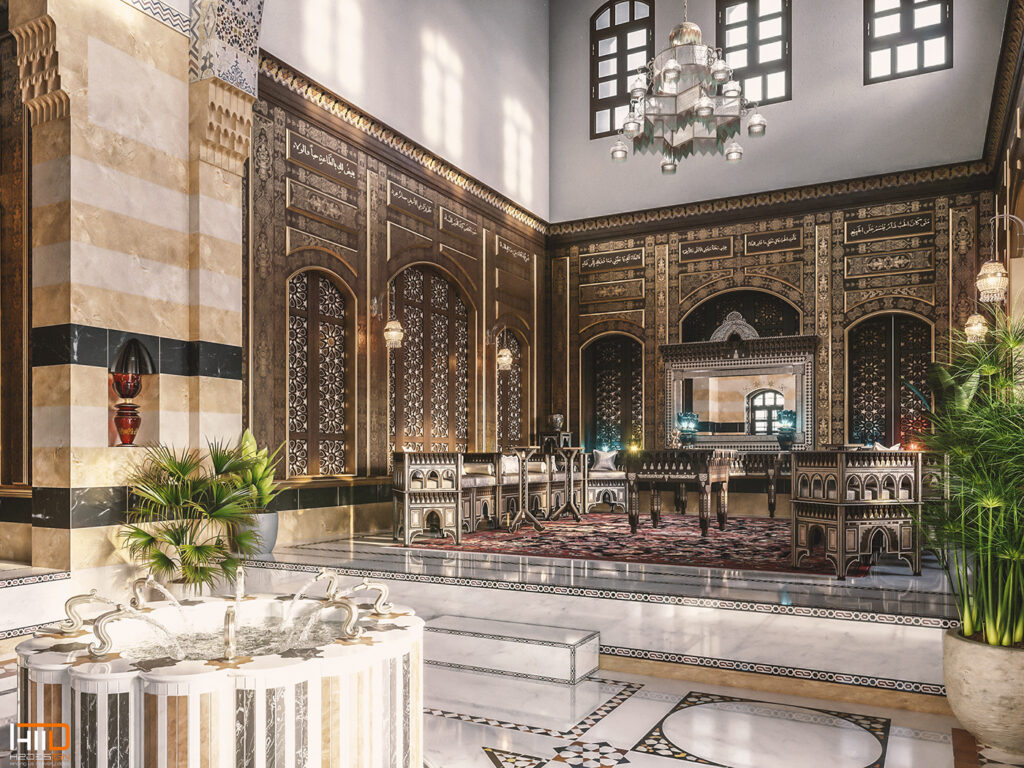
Intricate wooden mashrabiya windows, hand-painted ceilings, and elaborately carved doors add to the decorative richness. No two rooms are exactly alike, and each space reflects the taste and values of the Damascene elite.
The Iwans and Living Quarters
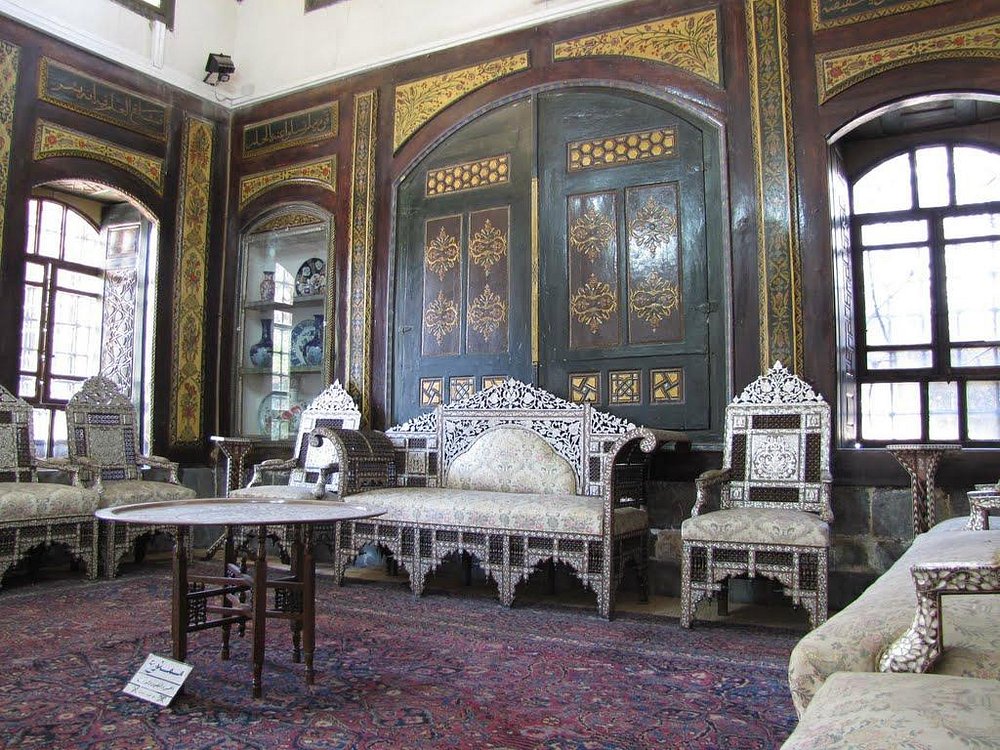
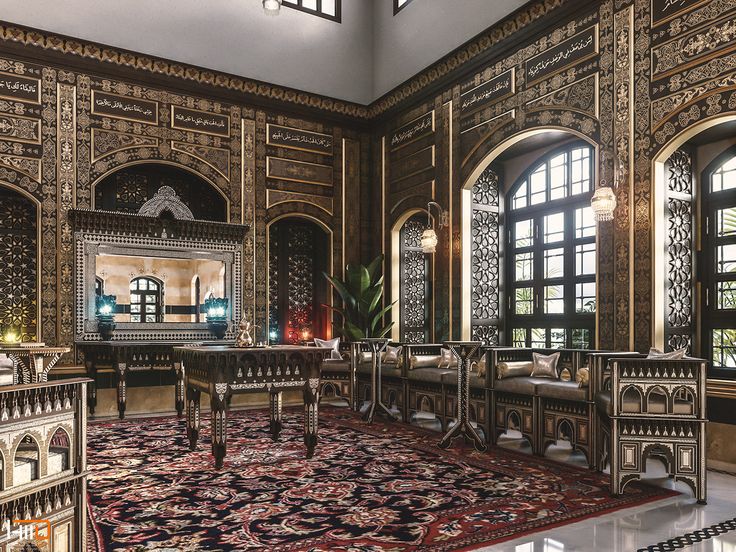
The iwans — large vaulted sitting areas — are among the palace’s most impressive features. These open-air halls provided shade in summer and were used for family gatherings, relaxation, and cultural discussions.
The upper floor includes private quarters with bedrooms, dressing rooms, and personal spaces, all built to maximize comfort, privacy, and beauty. Visitors will notice the thoughtful separation of public and private spaces, a key element in Middle Eastern residential architecture.
What to See Inside
While the architecture is a reason to visit on its own, the palace also houses a museum dedicated to Syrian traditions.
Museum of Arts and Popular Traditions
The museum exhibits include:
- Traditional Syrian clothing, including bridal gowns and festive attire
- Household items like copper trays, wooden chests, ceramics, and textile tools
- Musical instruments used in traditional Syrian and Levantine music
- Handicrafts, such as mother-of-pearl inlay, embroidery, and calligraphy
- Models and reconstructions of historical events and domestic scenes
- These displays offer insight into everyday life in Damascus during the Ottoman and early modern periods.
Audio-Visual Displays and Reenactments
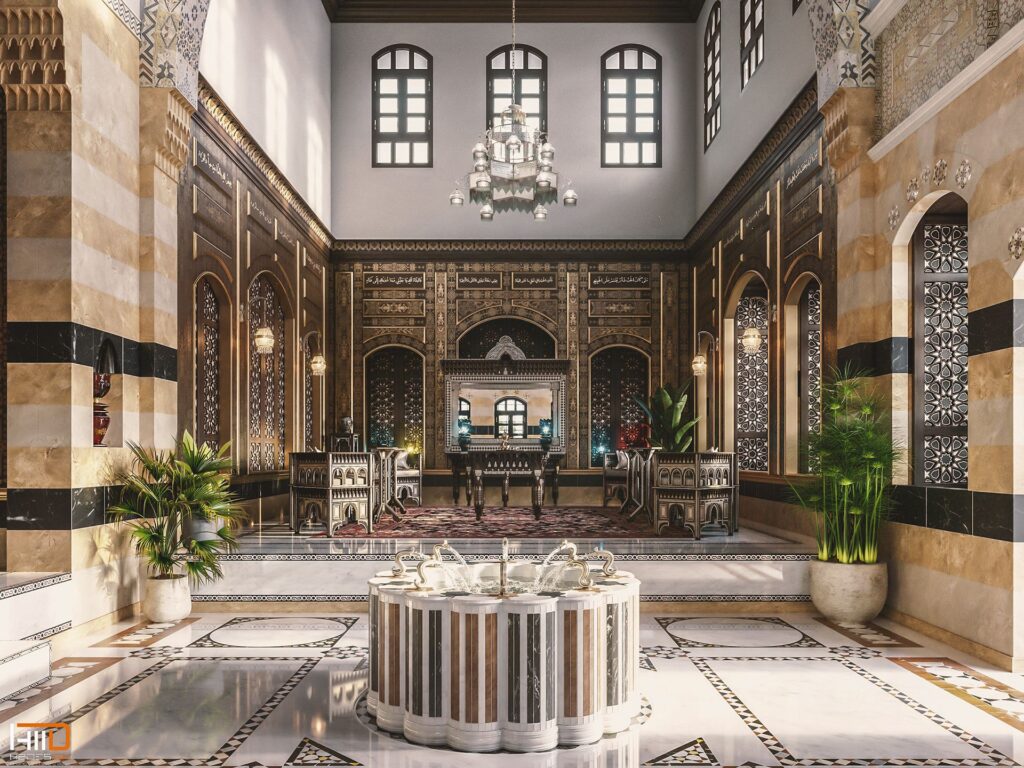
In some rooms, you will find life-size figures dressed in traditional attire, reenacting scenes such as:
- A family preparing for a wedding
- Children in a madrasa (school)
- Artisans working on wood and textiles
- These exhibits help bring the space to life and are especially engaging for visitors unfamiliar with the local culture.
Visitor Tips
- Photography: Photography is allowed, and the palace provides fantastic backdrops. A wide-angle lens is ideal for capturing the architecture.
- Wear comfortable shoes: The stone pathways can be uneven, especially in the courtyards.
- Hire a local guide: A guide can offer rich historical context and highlight details you may miss on your own.
- Respect the space: Though it is a museum, the palace is also a cultural treasure. Dress modestly and avoid loud behavior.
Cultural Significance
Azem Palace is more than a museum; it is a symbol of Damascus’s legacy as a cultural and artistic capital. Its preservation allows current and future generations to appreciate the architectural genius and way of life that shaped the city’s character.
For locals, it represents pride in heritage. For visitors, it offers a personal encounter with Damascus’s soul — one that goes far beyond what books or photos can offer.
Events and Special Exhibits
Occasionally, the palace hosts temporary exhibitions, musical performances, or craft fairs in the courtyard, particularly during cultural festivals. These events bring new life to the space and are worth seeking out if your visit coincides with local celebrations.
Nearby Attractions
- The location of Azem Palace makes it easy to combine with a walking tour of Old Damascus. Nearby landmarks include:
- Umayyad Mosque: One of the oldest and most revered mosques in the Islamic world
- Souq al-Hamidiyah: The main market street leading to the mosque
- Straight Street (Via Recta): A Roman road still in use today
- Khan As’ad Pasha: A beautifully restored caravanserai built by the same governor
- Ancient Christian Quarter: Just a short walk away
See Also: Maktab Anbar
Final Thoughts
Azem Palace is a must-see destination for anyone visiting Damascus. With its exquisite architecture, peaceful courtyards, and rich museum collections, Azem Palace offers an immersive glimpse into the refined world of Ottoman-era Damascus.
A visit here is not just about admiring a beautiful building — it’s about understanding how people lived, celebrated, and preserved their heritage in one of the world’s oldest continuously inhabited cities. Whether you’re a lover of architecture, a history enthusiast, or a curious traveler, Azem Palace will leave a lasting impression on your journey through Syria’s capital.
Finally.. If you have any questions, please contact us. To explore further, visit our website gallery for rare images and cultural highlights.
Sources & References:
UNESCO – World Heritage Centre: https://whc.unesco.org
Archnet – Architecture & Heritage Database: https://www.archnet.org
World History Encyclopedia: https://www.worldhistory.org
Syrian Heritage Archive Project: https://syrian-heritage.org
Global Encyclopedia: Wikipedia