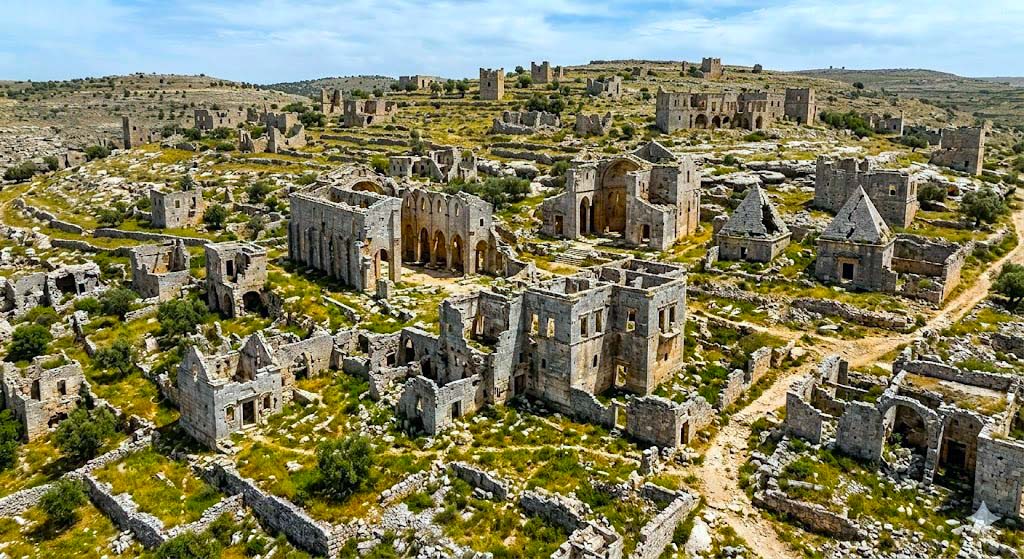
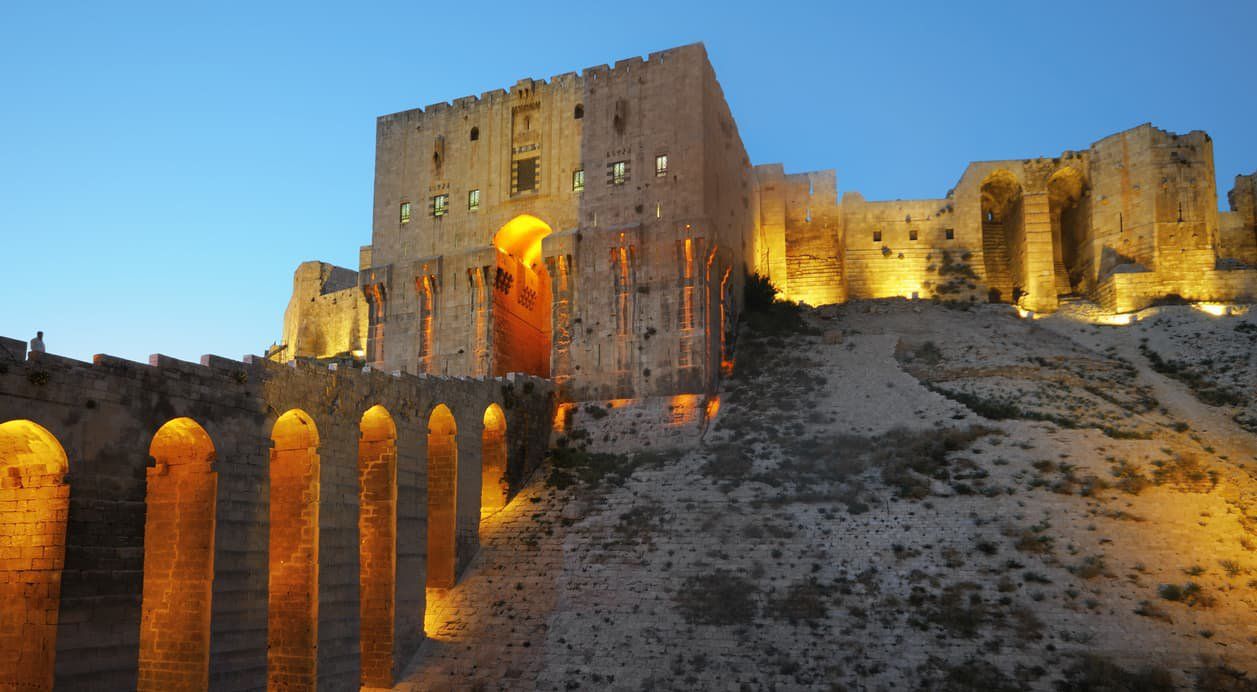
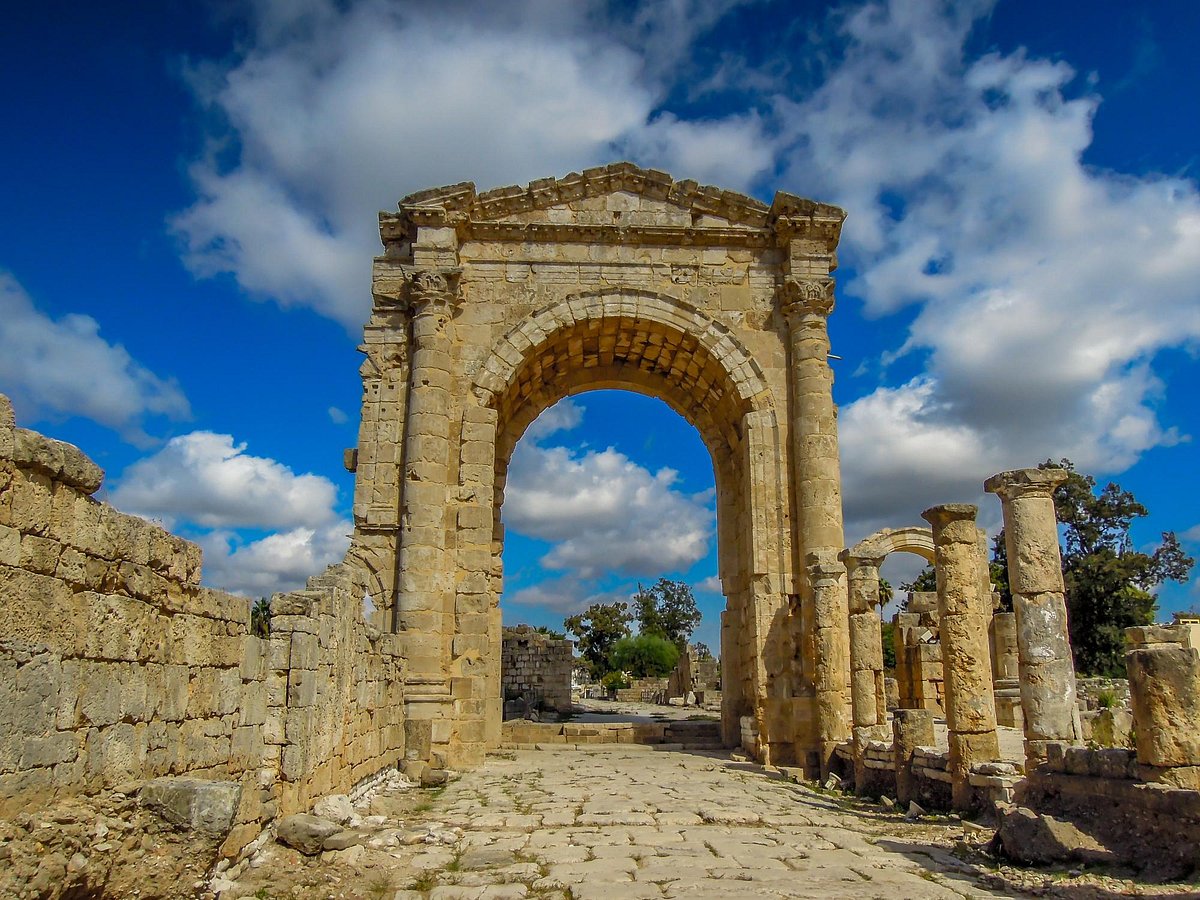
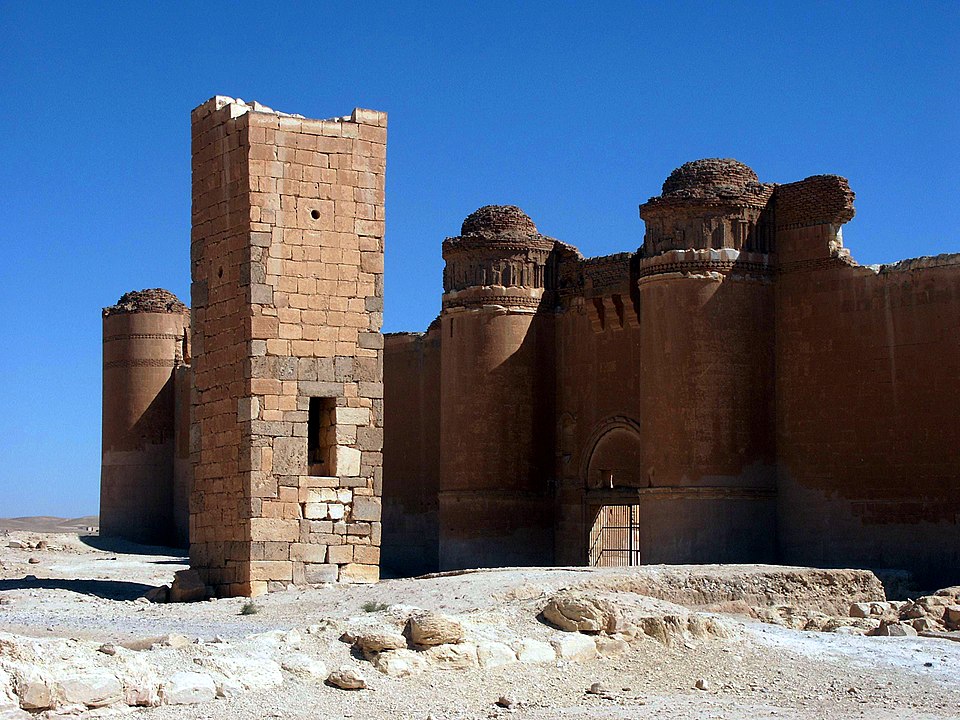
Qasr al-Heir al-Sharqi is a majestic relic of the early Islamic period. Located deep in the heart of the Syrian desert, Built in 728 AD by the Umayyad caliph Hisham ibn Abd al-Malik, this desert castle stands as a remarkable example of Islamic architecture, ingenuity, and adaptation to harsh desert environments. Qasr al-Heir al-Sharqi impresses visitors with its remote location and refined design, offering a unique experience for travelers who seek history off the beaten path. Despite centuries of exposure to the elements, much of Qasr al-Heir al-Sharqi’s structure remains visible today—an unforgettable window into the elegance and resilience of Umayyad-era architecture.
Qasr al-Heir al-Sharqi | Quick Info
| Topic | Quick Info |
|---|---|
| Name | Qasr al-Heir al-Sharqi / قصر الحير الشرقي |
| Location | In the Syrian desert, northeast of Palmyra |
| Historical Period | Early Islamic / Umayyad era |
| Built | 728 CE |
| Builder / Patron | Caliph Hisham ibn Abd al-Malik of the Umayyad dynasty |
| Function | Served as a desert palace, caravan stop, and agricultural estate |
| Architectural Highlights | Fortified walls, towers, courtyards, baths, mosque, and elaborate stucco decoration |
| Significance | Example of Umayyad desert architecture, blending functionality with luxury |
| Current Status | Partially preserved ruins; some decorative elements are displayed in the National Museum of Damascus |
| Visitor Experience | Offers a striking glimpse into early Islamic life and architectural ingenuity in a harsh desert setting |
Location and How to Get There
Qasr al-Heir al-Sharqi lies in the vast Syrian steppe, about 110 kilometers northeast of Palmyra (Tadmor) and roughly 280 kilometers from Damascus. The site’s remote position amid sweeping desert landscapes enhances its allure and mystique. Travelers heading to Qasr al-Heir al-Sharqi should use 4×4 vehicles, as standard cars may struggle with the rugged terrain. Most journeys start from Palmyra or Homs, and it’s best to coordinate with local guides familiar with the region. Because of the site’s isolation, visitors should bring enough water, snacks, and a full tank of fuel for a safe and comfortable trip.
Historical Background
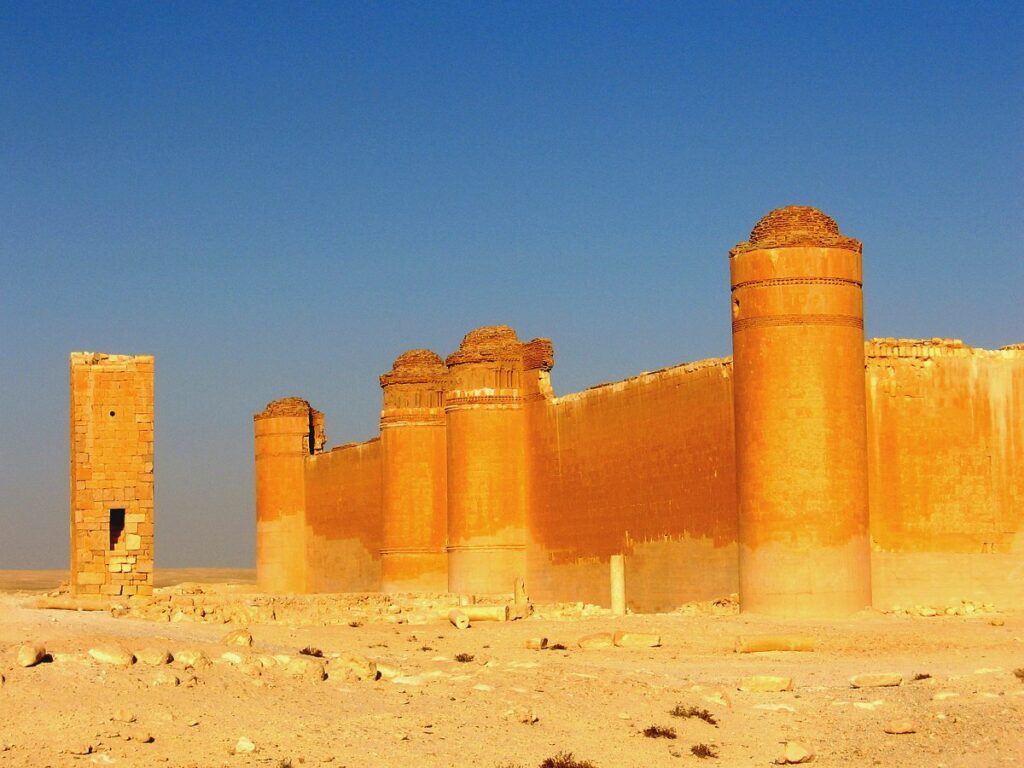
Qasr al-Heir al-Sharqi was commissioned during the golden age of the Umayyad Caliphate, a dynasty that ruled from Damascus and became famous for its architectural achievements. The castle served several purposes: a seasonal residence for the caliph, an agricultural and administrative hub, a military stronghold, and a rest stop for caravans crossing the Syrian desert. Strategically located between major cities such as Palmyra, Damascus, and Iraq, Qasr al-Heir al-Sharqi symbolized the Umayyads’ ambition to control and cultivate the desert while creating elegant retreats in its midst.
Architectural Design and Layout
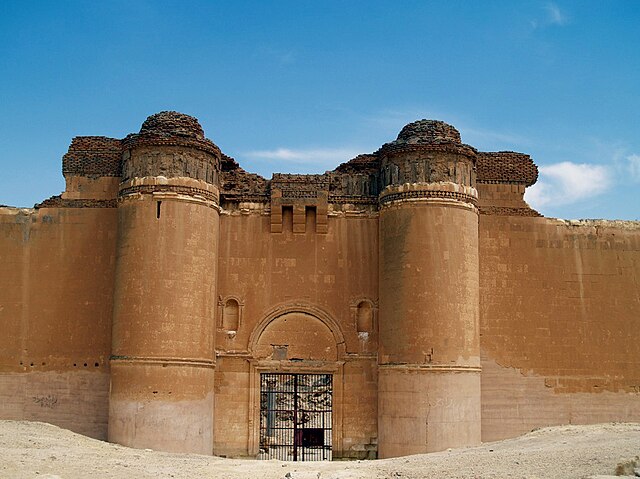
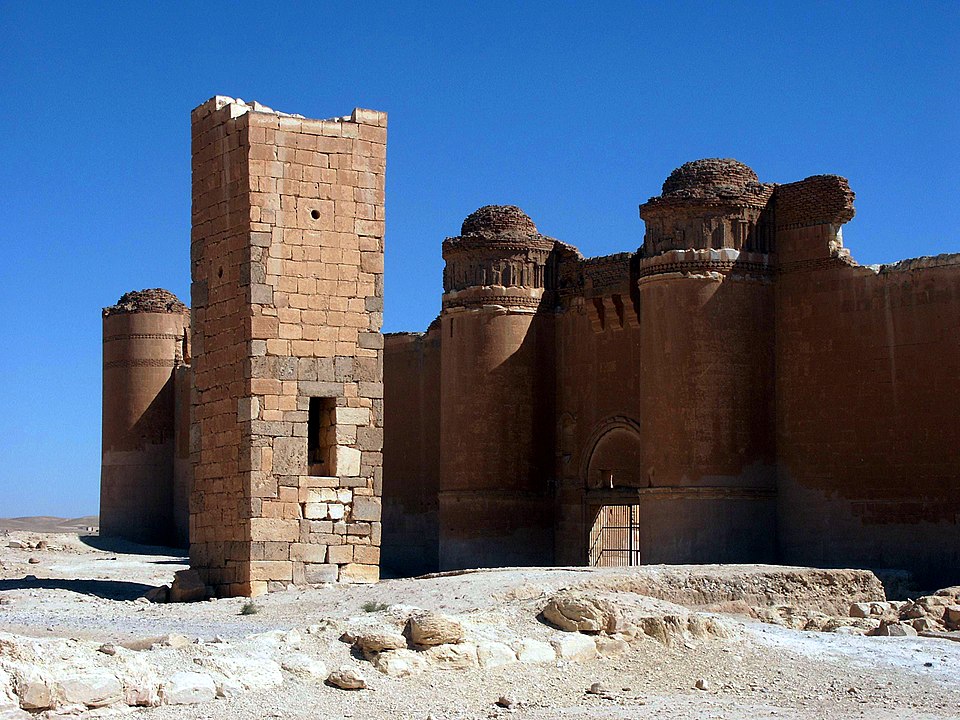
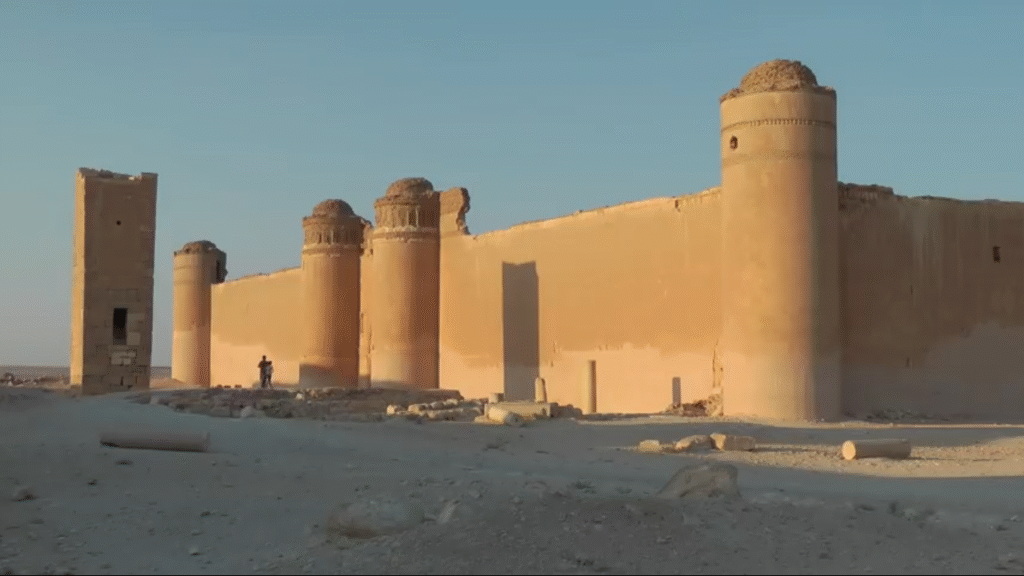
The castle complex stretches over a vast area, originally covering more than 7 square kilometers, making it one of the largest early Islamic desert settlements. The main fortified enclosure is square-shaped, with walls measuring approximately 70 meters on each side. Each corner contains circular towers, and the main entrance is centered on the southern wall.
The structure is composed of several key elements:
Main Palace
At the heart of the complex stands the central palace. This structure was likely used for administration and official receptions. It consists of multiple rooms, large open courtyards, staircases, and remnants of intricate stucco decorations and frescoes. The palace reflects elements of Roman and Byzantine architectural influence, reinterpreted within an Islamic context.
Mosque
A small mosque, located near the main palace, reveals the religious dimension of the site. It’s characterized by its qibla wall and mihrab niche, which point toward Mecca. The simplicity of the mosque contrasts with the more elaborate palace buildings, illustrating the early Islamic aesthetic of modesty and function.
Bathhouse
A hammam, or bathhouse, located within the compound, speaks to the refined lifestyle of its residents. Featuring a sequence of cold, warm, and hot rooms, the hammam displays technological ingenuity in water heating and steam distribution. The existence of such facilities in a remote desert setting is a testament to the Umayyads’ ambition to recreate urban comforts in the wilderness.
Agricultural Facilities and Water Management
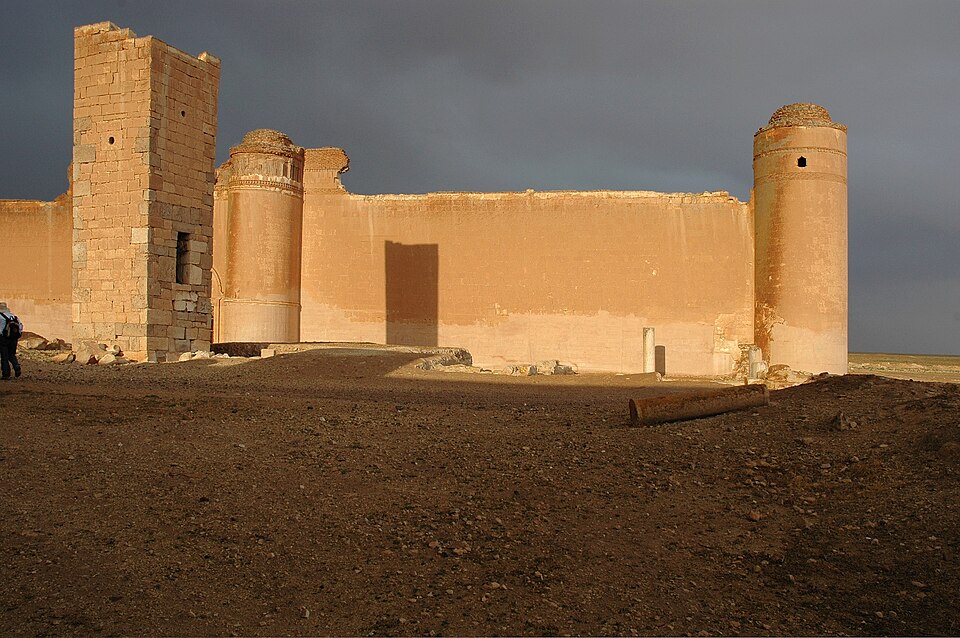
One of the most impressive aspects of Qasr al-Heir al-Sharqi is its sophisticated water management system. A dam and a network of canals were built to collect and channel rainwater from nearby wadis (dry riverbeds) into the fields and storage cisterns. The water was used to irrigate surrounding agricultural land, including orchards and olive groves. Remains of an olive press and storage facilities further indicate the site’s role as an agricultural center.
Decorative Art and Relocated Facades
The castle once featured an elaborately carved stone entrance gate. To protect it from decay and looting, the gate’s original façade was removed in the 1930s and reassembled inside the National Museum of Damascus, where it can be seen today. This monumental gate, decorated with geometric and floral patterns, offers an excellent example of early Islamic decorative art and highlights the Umayyads’ blending of local and imperial styles.
What to Expect When Visiting

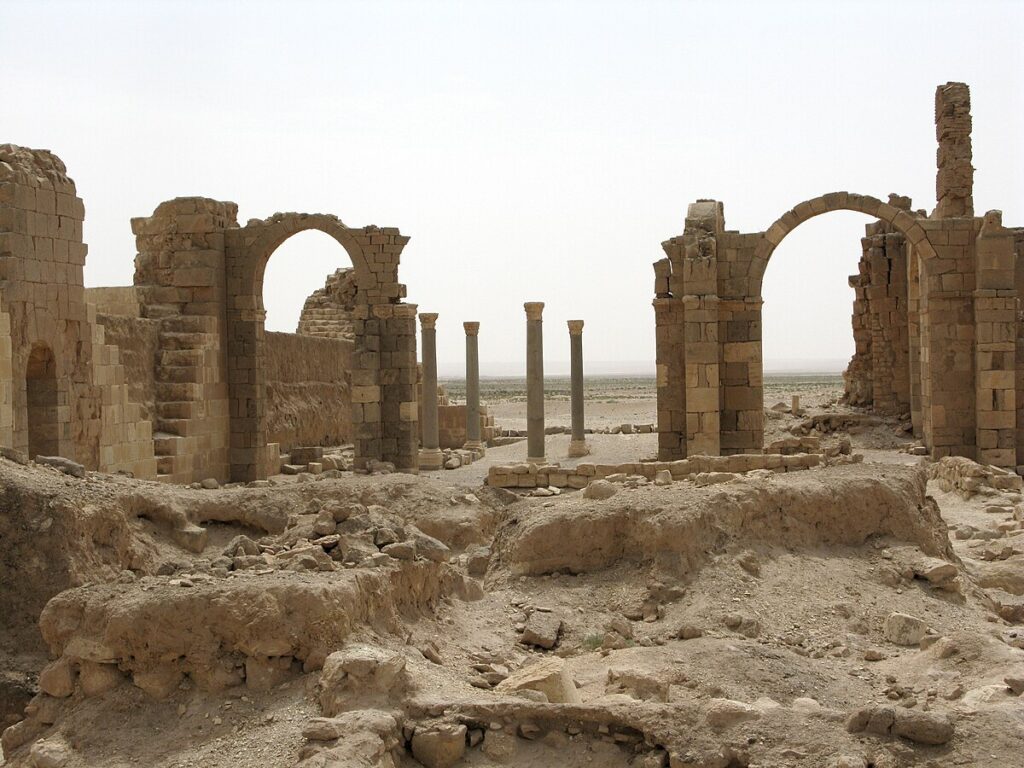
Visiting Qasr al-Heir al-Sharqi is a journey into silence, space, and time. The desert’s stillness is overwhelming, broken only by the wind and the crunch of footsteps on gravel. The site is open-air and unguarded, which means visitors can explore freely, but also must take responsibility for their safety and preservation of the ruins.
There are no formal ticket booths, fences, or tourist facilities, so it’s advised to:
- Wear sturdy shoes for walking over rough ground.
- Bring plenty of water and sun protection (hat, sunglasses, sunscreen).
- Visit with a knowledgeable guide, if possible, to fully appreciate the site’s historical context.
- Carry a GPS device or offline map to navigate to and from the site.
Photography and Exploration Tips
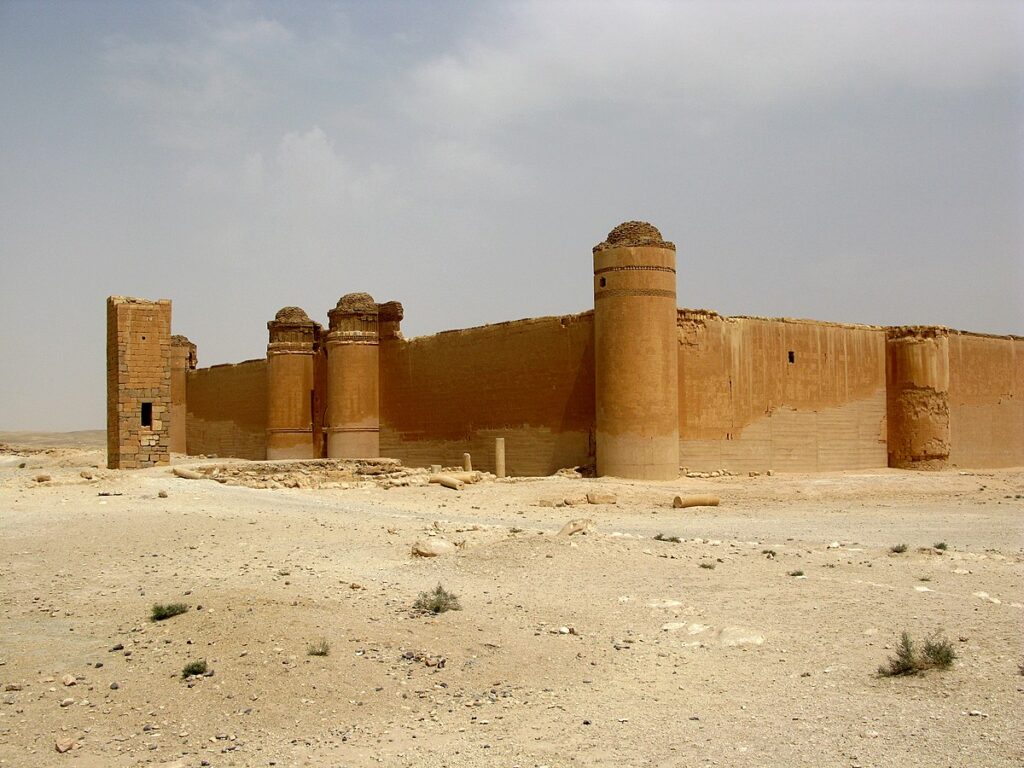
Qasr al-Heir al-Sharqi is a paradise for photographers and archaeology enthusiasts. The stark contrast between the golden stone walls and the blue desert sky provides stunning imagery. Morning and late afternoon offer the best light for photography. Drones are not officially permitted without approval, but handheld gimbals and panoramic cameras can capture the expanse effectively.
For those interested in detailed exploration:
- Study the alignment of the mosque and note the early Islamic orientation practices.
- Observe the construction materials—stone foundations and mudbrick upper walls.
- Examine areas where the decorative stucco and wall paintings are still faintly visible.
- Look for channels and cisterns that reveal the site’s hydraulic mastery.
Is It Safe to Visit?
As of recent years, the region around Qasr al-Heir al-Sharqi is considered relatively stable, especially compared to war-affected zones. However, given the remote location and past unrest in the broader area, tourists should:
- Check with local authorities or tour operators before planning a visit.
- Avoid traveling alone; go in small, guided groups.
- Inform someone of your travel route and estimated return time.
- Ensure you have mobile signal coverage or a satellite phone for emergencies.
Best Time to Visit

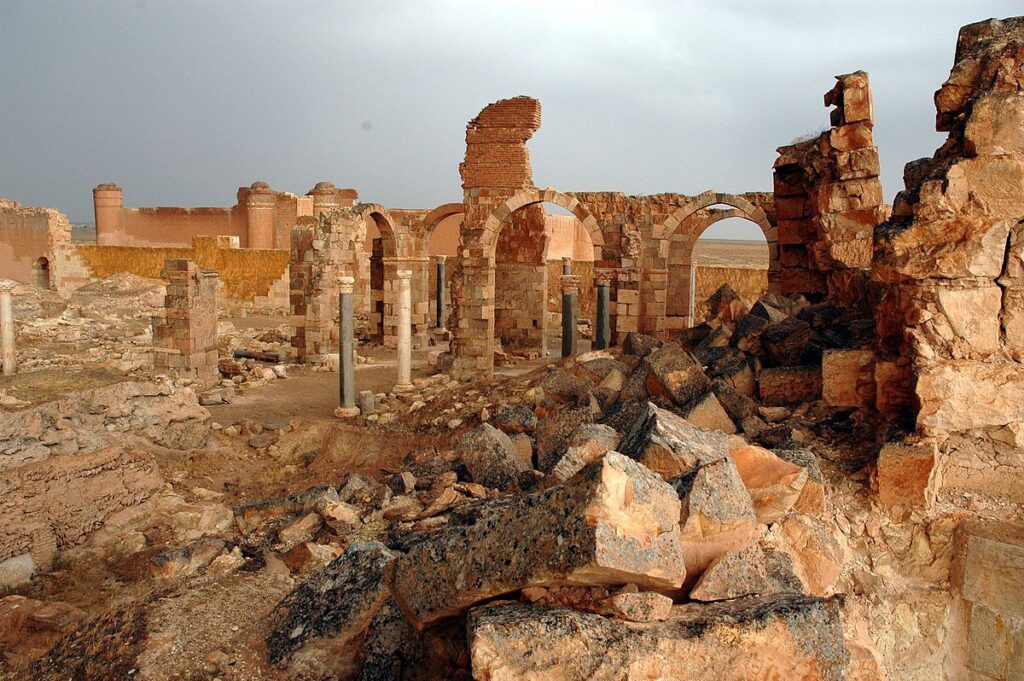
The ideal time to visit is during spring (March to May) or autumn (September to November), when daytime temperatures are moderate and the desert is more welcoming. Summer months can be extremely hot, often exceeding 40°C, making exploration uncomfortable and risky due to heatstroke or dehydration. Winters are cold at night, but the clear skies and cooler days still offer a viable window for daytime exploration.
Nearby Attractions
Qasr al-Heir al-Sharqi is best visited in combination with other historic sites in Syria’s interior. Nearby highlights include:
- Palmyra (Tadmor): One of the most iconic ancient cities in the Middle East, with Roman temples, colonnaded streets, and a stunning amphitheater.
- Qasr al-Heir al-Gharbi: A sister castle to the west of Palmyra, also Umayyad in origin, though less well-preserved.
- Sergiopolis (Resafa): An ancient Byzantine city with Christian and Islamic layers of history, not far to the north.
See Also: Qasr Ibn Wardan
Cultural Significance
Qasr al-Heir al-Sharqi represents more than an abandoned ruin—it stands as a cultural link between ancient desert traditions and the rise of Islamic civilization. It reflects a time when rulers sought to shape not only cities but also wilderness, introducing order, agriculture, and architecture into the heart of the steppe. It showcases how early Islamic culture absorbed Roman and Byzantine elements while forging its own distinct identity. Today, the site invites us to reflect on history’s layers and the resilience of human creativity in the face of nature’s extremes.
Conclusion
Qasr al-Heir al-Sharqi is a destination for the adventurous, the curious, and the historically minded. Its remote setting, architectural grandeur, and deep historical roots make it a must-see for anyone seeking a deeper understanding of Syria’s cultural legacy. Though travel to Syria requires careful planning, those who make the journey to this forgotten desert palace will be richly rewarded with stories etched in stone, silence, and sand.
Finally.. If you have any questions, please contact us. To explore further, visit our website gallery for rare images and cultural highlights.
Sources & References:
UNESCO – World Heritage Centre: https://whc.unesco.org
Archnet – Architecture & Heritage Database: https://www.archnet.org
World History Encyclopedia: https://www.worldhistory.org
Syrian Heritage Archive Project: https://syrian-heritage.org
Global Encyclopedia: Wikipedia