Ebla (Tel Mardikh): Not far from the city of Idlib in northwestern Syria lies an unassuming mound known as Tel Mardikh. To the casual traveler, it may seem like any other hill dotting the Syrian countryside. But for archaeologists and lovers of ancient history, Tel Mardikh is something far more extraordinary. Beneath this mound lies the ruins of Ebla, one of the earliest and most influential kingdoms of the ancient Near East.
Once a flourishing Bronze Age metropolis, Ebla was a center of trade, diplomacy, language, and law. It played a key role in shaping the political and cultural landscape of Syria and beyond, long before the rise of Babylon or the glory of ancient Egypt’s New Kingdom. Today, Tel Mardikh stands as a gateway to this forgotten civilization.
Ebla | Quick Info.
| Topic | Quick Info |
|---|---|
| Name | Ebla (Tel Mardikh) / إبلا – تل مرديخ |
| Location | Near Idlib, northwestern Syria |
| Historical Period | Early Bronze Age (c. 3000–1600 BCE) |
| Discovery | Identified in 1964 by Italian archaeologists |
| Archaeological Importance | Once a major Bronze Age city-state known for its archives of clay tablets and early Semitic language |
| Key Discoveries | Over 17,000 cuneiform tablets, palace ruins, temples, and fortifications |
| Role in History | Center of trade, law, administration, and diplomacy in ancient Syria |
| Current Status | Important archaeological site and UNESCO tentative heritage location |
| Notable Features | Royal Palace G, archives, monumental gates, ancient urban layout |
| Significance | Provides crucial insight into early Semitic civilization and state organization in the ancient Near East |
The Location and Importance of Tel Mardikh
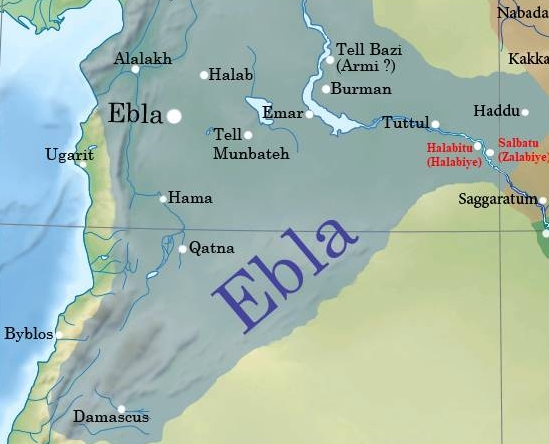
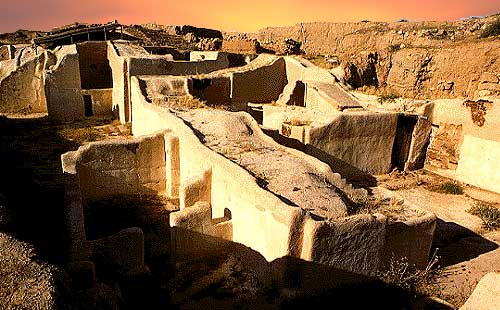
Tel Mardikh is located about 55 kilometers southwest of Aleppo and 25 kilometers southeast of Idlib, in the fertile plains of northern Syria. It rises approximately 30 meters above the surrounding terrain and spans a surface area of over 50 hectares, making it one of the largest archaeological tells in the Levant.
Ebla’s strategic position between Mesopotamia and the Mediterranean gave it access to trade routes that connected Sumer, Akkad, Egypt, and the Levantine coast. This made Ebla not only a cultural crossroads but also a powerful city-state that exerted economic and political influence across the region.
The Discovery of Ebla
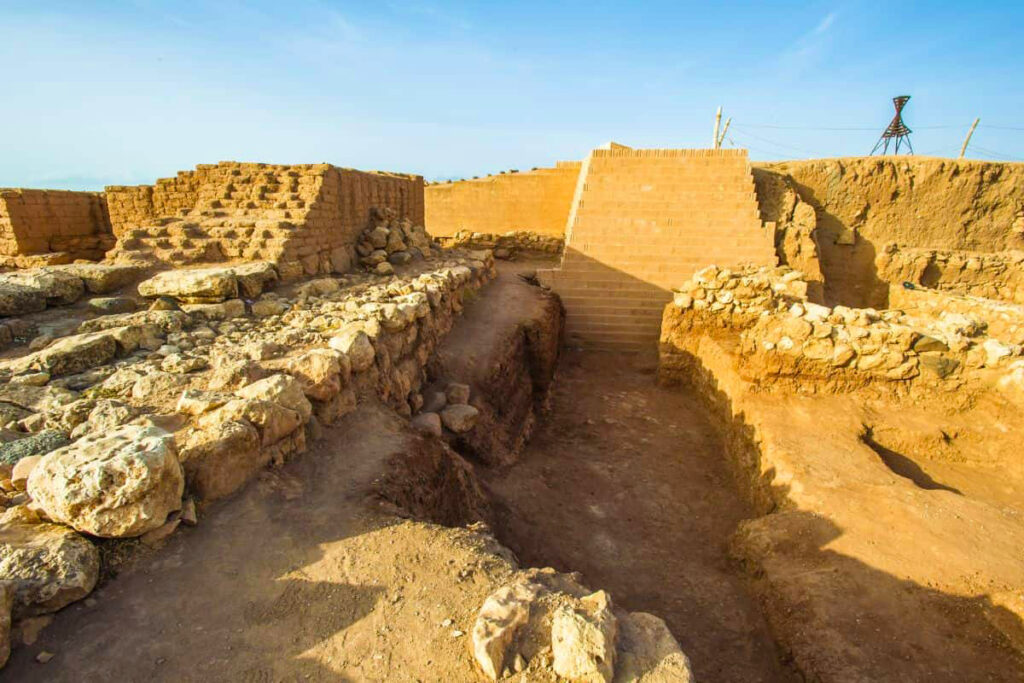
The site of Tel Mardikh had been known since the 19th century, but its true significance was not understood until the 1960s, when Italian archaeologists led by Paolo Matthiae began excavations. Their efforts bore fruit in 1974, with the discovery of a royal archive containing more than 17,000 clay tablets inscribed in cuneiform script.
These tablets, many of which were still intact and arranged in neat rows on wooden shelves, provided unprecedented insight into life in the third millennium BCE. They revealed the name of the city—Ebla—and told stories of its kings, its economy, its religion, and its vast connections to other civilizations.
A Flourishing Civilization in the Bronze Age
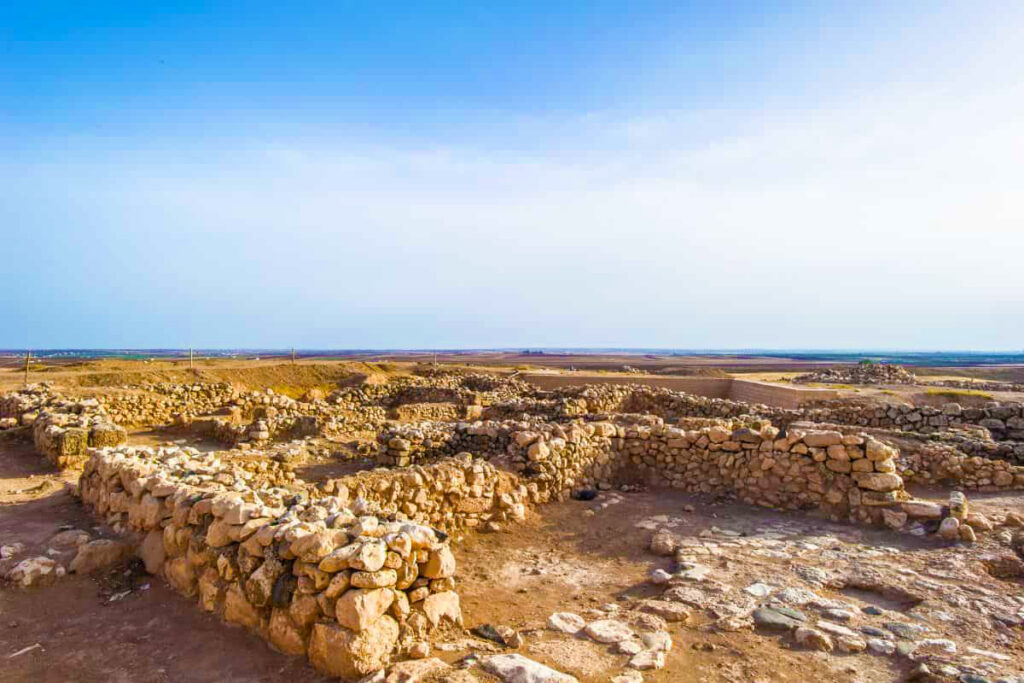
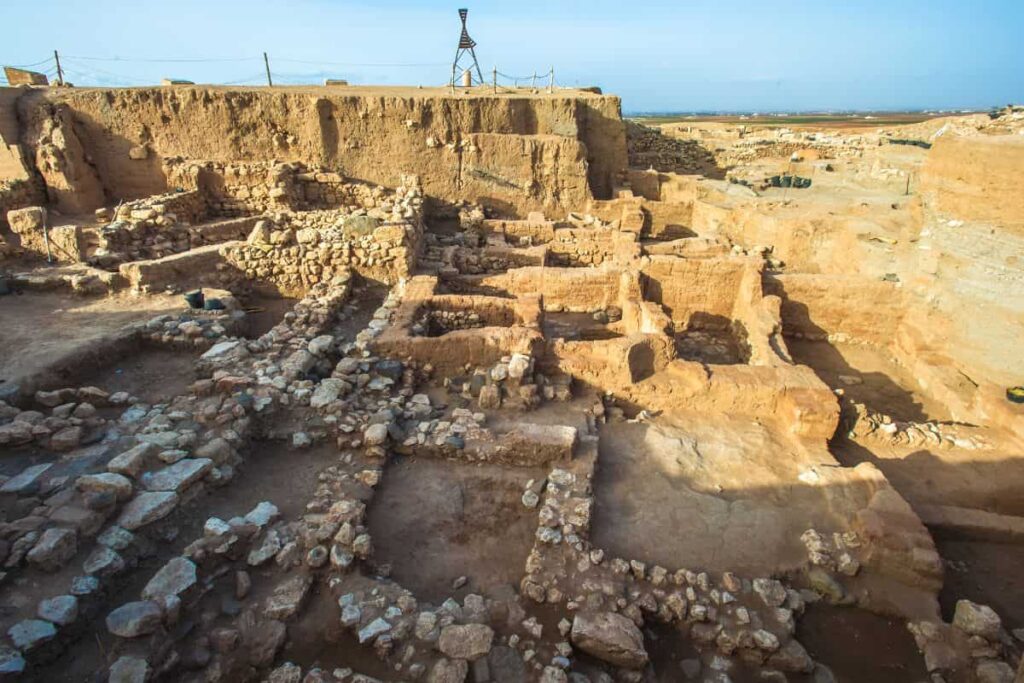
At its height around 2400 to 2250 BCE, Ebla was home to an estimated 15,000 to 20,000 people, making it one of the largest and most complex urban centers of its time.
Political Power and Administration
Ebla was a monarchy governed by a king and a complex bureaucratic system. The city maintained detailed records of its administration, economy, and diplomacy, as seen in the cuneiform tablets. These records included tax lists, trade transactions, diplomatic correspondence, and legal codes.
The city’s ruling elite lived in palatial structures made of mudbrick and stone, while artisans, merchants, scribes, and farmers formed the backbone of society. The tablets even record the names of individuals and describe the duties of various officials.
Trade and Diplomacy
Ebla’s prosperity was largely due to its robust trade network. The city exported wool, textiles, and olive oil and imported precious metals, timber, and luxury goods from as far as Anatolia, Sumer, and the Persian Gulf.
The Ebla tablets mention diplomatic relations with cities such as Ur, Mari, and Kish in Mesopotamia, and even with Egypt. The presence of foreign gods in religious texts and international treaties reflects Ebla’s far-reaching cultural influence.
Language and Writing
Hidden beneath Tel Mardikh lies one of the most remarkable archaeological finds in Syria — the discovery of the Eblaite language, among the oldest known Semitic tongues. It was written with the Sumerian cuneiform system, adapted to the local speech. The clay tablets unearthed here reveal that writing served many purposes: accounting, legal rulings, inventories, and even school exercises. This vast archive ranks among the richest and most significant collections in the history of Near Eastern archaeology.
Religion and Mythology in Ebla
Eblaite religion combined native Semitic traditions with influences from Mesopotamian and Canaanite cultures. The city’s chief deity was Kura, unique to Ebla, worshiped alongside his consort Barama. Other important gods included Dagan, Ishtar, and Resheph. The tablets reveal details of offerings, temple rituals, and the organization of priestly staff, showing how religion in Ebla was deeply intertwined with royal authority and state administration.
The Fall and Rediscovery
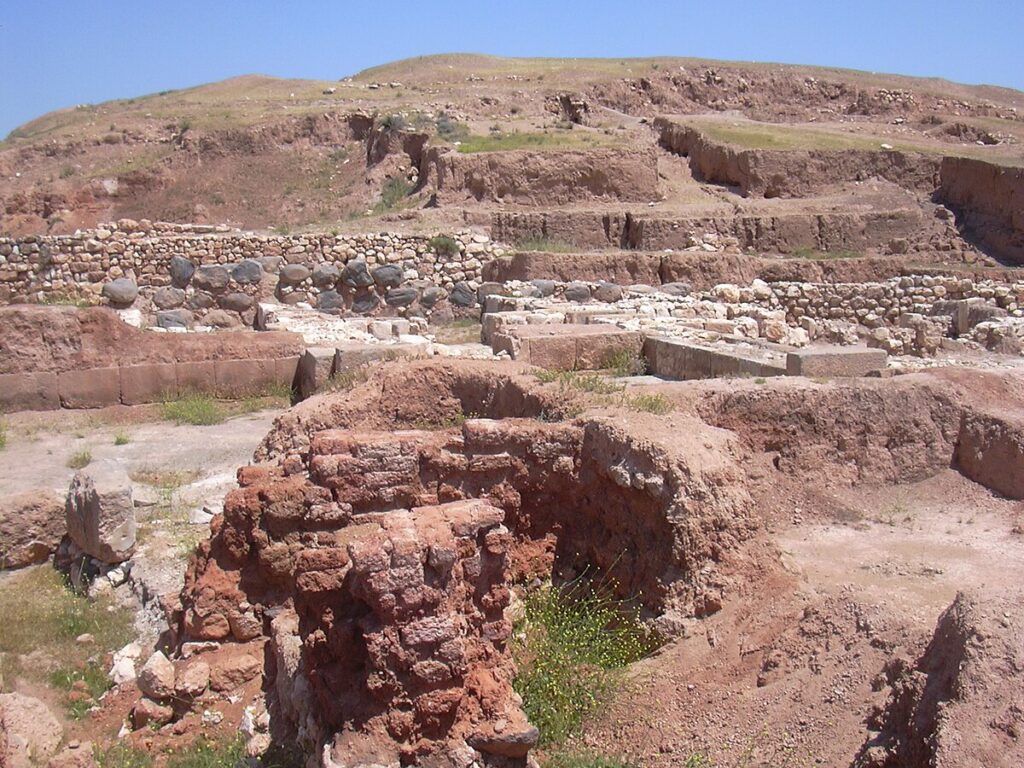
Around 2250 BCE, Ebla was destroyed—likely by Sargon of Akkad or his grandson Naram-Sin, though scholars still debate the details. The city was later rebuilt but never regained its former prominence. A second destruction occurred around 1600 BCE, possibly linked to the rise of the Hittites or Amorites.
After that, Ebla faded from history. Its name disappeared from memory for over 3000 years until its rediscovery in the modern era.
The Excavated Areas of Tel Mardikh

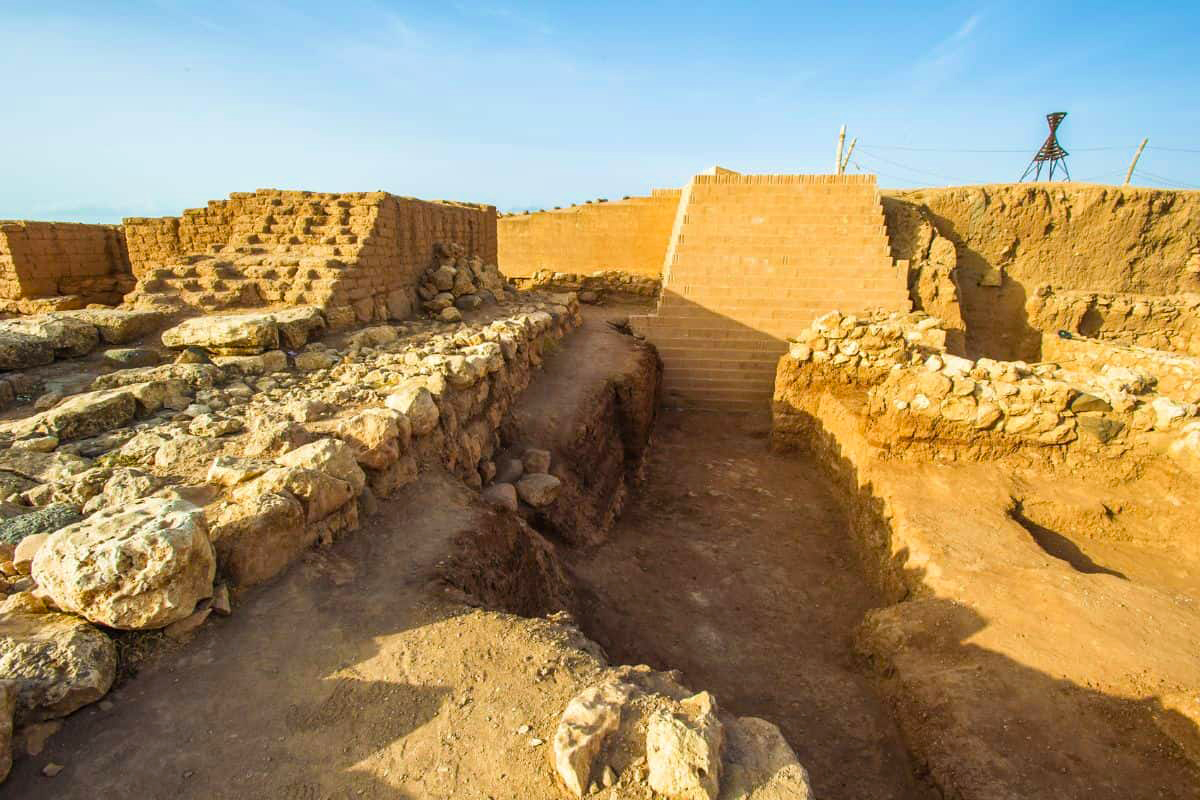
Visitors to Tel Mardikh today can walk through portions of the ancient city that have been unearthed by archaeologists. Key areas include:
The Royal Palace G
The most famous structure on the site, Palace G was the seat of administration and the place where the tablet archive was discovered. Though now largely in ruins, you can still trace its walls and chambers.
Temples and Religious Structures
Several temples have been uncovered, including one dedicated to the storm god Dagan, reflecting Mesopotamian religious influence. Temples were central to both worship and administration.
City Walls and Gates
Ebla was protected by a formidable system of defensive walls and gates. These structures, made of mudbrick and stone, demonstrate advanced urban planning and military architecture for their time.
Residential and Craft Areas
The excavation has also revealed houses, workshops, and storage rooms, giving a sense of daily life. Evidence of textile production, metallurgy, and ceramics confirms Ebla’s economic complexity.
Ebla’s Legacy
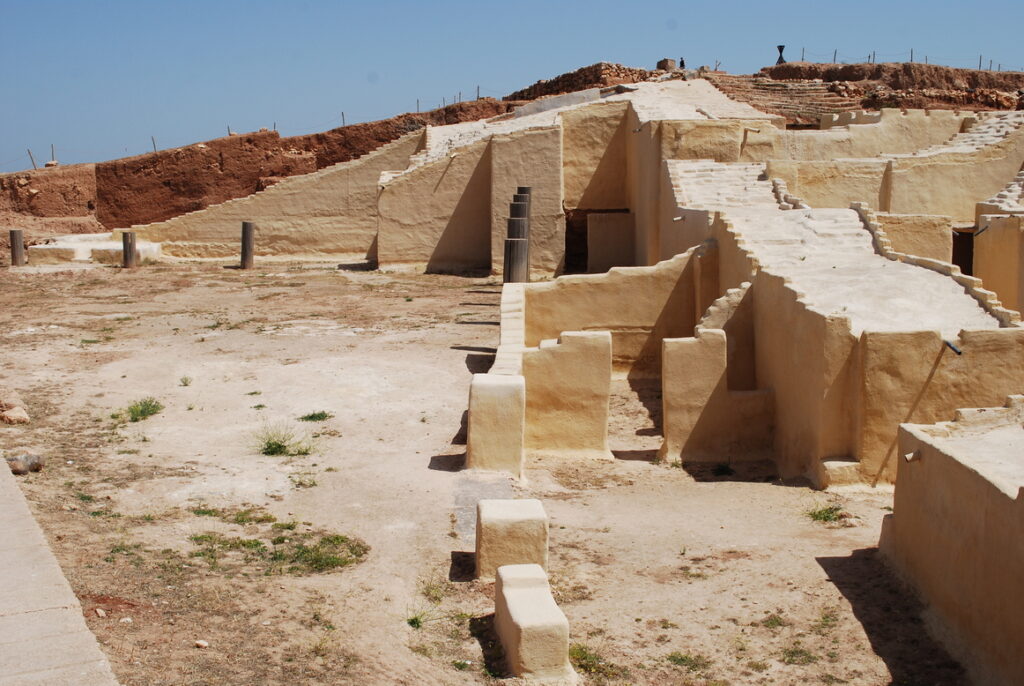
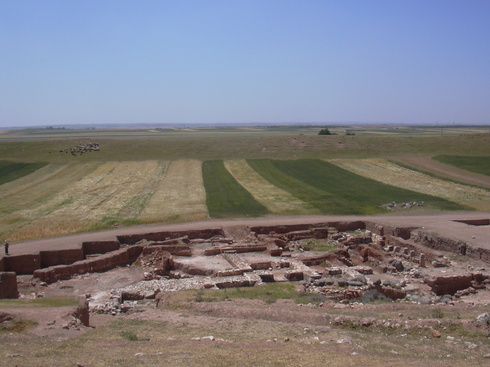
The rediscovery of Ebla changed how scholars view the ancient Near East. It proved that major civilizations existed in Syria long before the rise of Mesopotamia and Egypt. The Ebla tablets revolutionized our understanding of early Semitic languages, diplomacy, trade, and urban life.
Moreover, Ebla’s role as a cultural mediator between Mesopotamia and the Mediterranean reflects Syria’s historical identity as a bridge between civilizations.
Visiting Tel Mardikh Today
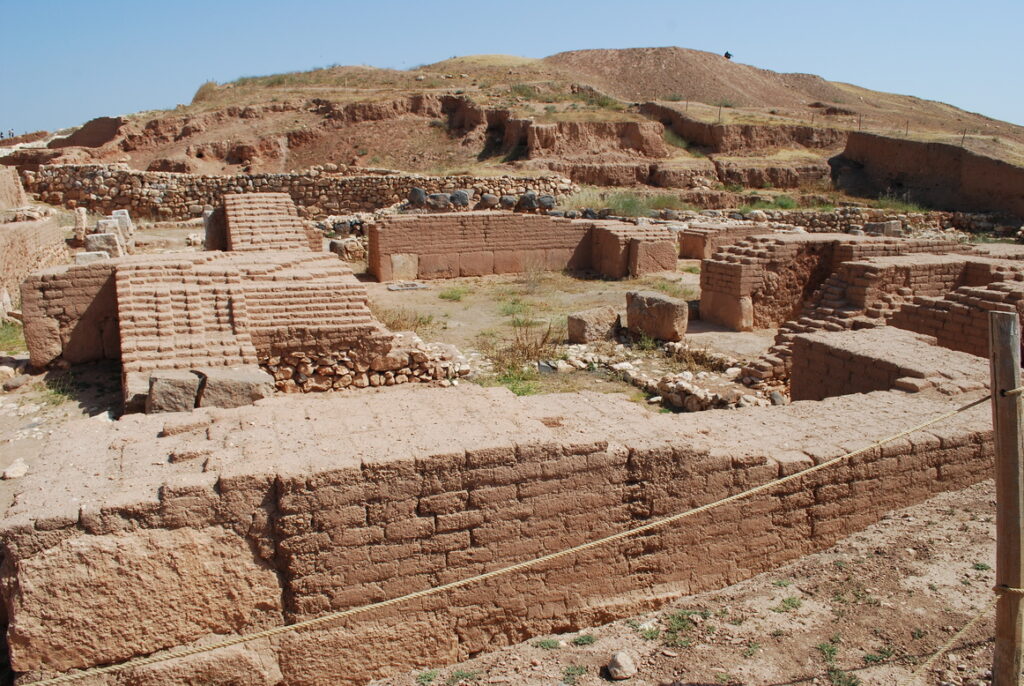
Though the site has suffered from conflict and neglect in recent years, Tel Mardikh remains a compelling destination for travelers interested in archaeology and history.
- The site is accessible by road from Idlib or Aleppo, though conditions may vary
- Guided visits can help contextualize the ruins, as signage is limited
- The National Museum of Aleppo and Damascus once housed many artifacts from Ebla, including tablets and statues
Nearby Attractions
For visitors exploring northwestern Syria, Tel Mardikh can be combined with visits to:
- Serjilla and al-Bara well-preserved Byzantine cities in the Jebel Zawiya
- Maarrat al-Numan Museum home to mosaic collections and near other ancient sites
- Apamea a major Roman city with a colonnaded street and theater
See Also: Al-Mishrafeh (Qatna)
Final Thoughts
Tel Mardikh, the ancient city of Ebla, stands as a silent testament to a lost civilization that once lit the world with knowledge, law, and culture. It is not merely a collection of stones and tablets, but a reminder of humanity’s long journey through writing, diplomacy, and urban life.
For travelers who seek more than just ruins, who want to touch the roots of history itself, Ebla is a profound and unforgettable destination.
Finally.. If you have any questions, please contact us. To explore further, visit our website gallery for rare images and cultural highlights.
Sources & References:
UNESCO – World Heritage Centre: https://whc.unesco.org
Archnet – Architecture & Heritage Database: https://www.archnet.org
World History Encyclopedia: https://www.worldhistory.org
Syrian Heritage Archive Project: https://syrian-heritage.org
Wikipedia Global Encyclopedia: Wikipedia