Ruweiha (روِيحة) Hidden among the limestone hills of northwestern Syria lies a hauntingly beautiful and lesser-known Byzantine site — Ruweiha. Though often overshadowed by more famous Dead Cities like Serjilla or al-Bara, this ancient village offers one of the most striking journeys into the past, with monumental tombs, grand basilicas, and intricate stone houses that reveal the lives of rural elites and villagers during the Byzantine era. For lovers of archaeology, early Christianity, and off-the-beaten-path travel, Ruweiha remains a forgotten gem waiting to be rediscovered.
Ruweiha | Quick Info
| Topic | Quick Info |
|---|---|
| Name | Ruweiha (روِيحة) |
| Location | Northwestern Syria – in the Limestone Massif region (Jebel Barisha area) |
| Historical Era | Byzantine period (5th–6th century CE) |
| Type of Site | Ancient rural settlement with churches, tombs, and houses |
| Notable Features | Two large basilicas, monumental tombs, multi-story stone houses, and carved decorative facades |
| Cultural Context | Part of the “Dead Cities” (ancient rural Byzantine towns) |
| Significance | Offers insight into Byzantine rural life, architecture, and social structure |
| Preservation Status | Abandoned after the 7th century; partially preserved ruins surrounded by olive groves |
| UNESCO Connection | Within the Ancient Villages of Northern Syria UNESCO World Heritage zone |
Where Is Ruweiha Located
Ruweiha is located in the Jebel al-Zawiya region, roughly 35 kilometers south of Idlib and a few kilometers southeast of the more well-known site of al-Bara. It sits on the edge of the Limestone Massif, a rugged area known for its ancient settlements and ideal conditions for growing olives and grapes.
It is part of the broader archaeological region often called the Dead Cities, a network of over 700 abandoned Byzantine-era villages scattered across northern Syria.
The History and Origins
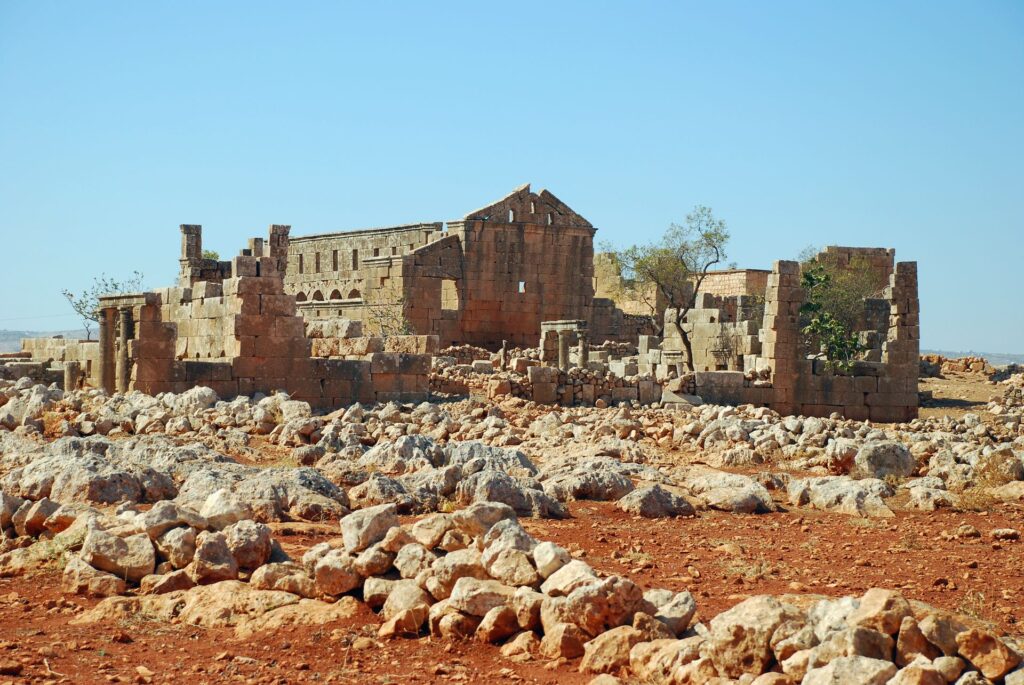
Ruweiha was founded sometime in the late 4th or early 5th century AD and reached its peak between the 5th and 6th centuries. Like many of the Dead Cities, it thrived thanks to agriculture—especially olive oil production, which was in high demand throughout the Byzantine Empire.
Its location on a high plateau, with access to trade routes and a favorable climate, helped the town grow into a wealthy rural center. The number of monumental tombs and churches suggests that Ruweiha was home to a community of local aristocrats, priests, and merchants who invested heavily in stone-built architecture.
A Walk Through the Ruins of Ruweiha
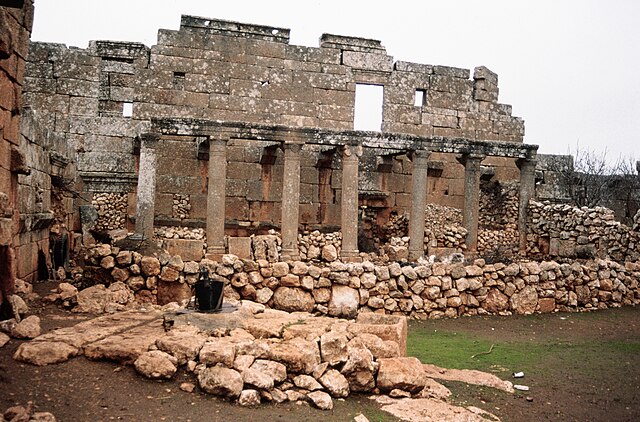
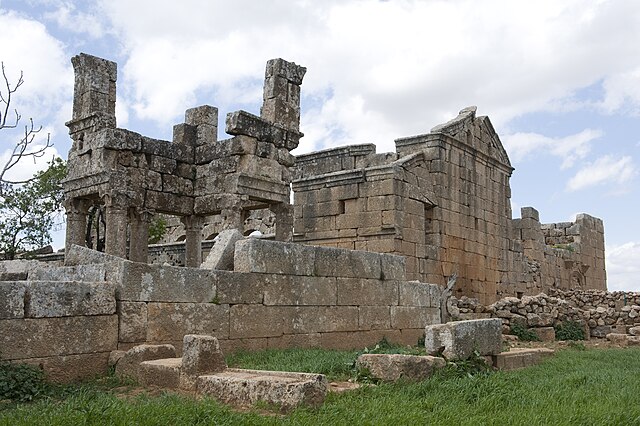
While Ruweiha may not be as well known as its neighboring sites, it arguably contains some of the most impressive architectural remains in the entire region. Walking through its ruins, a visitor will discover everything from finely built churches to awe-inspiring tombs carved with extraordinary care.
Monumental Tombs
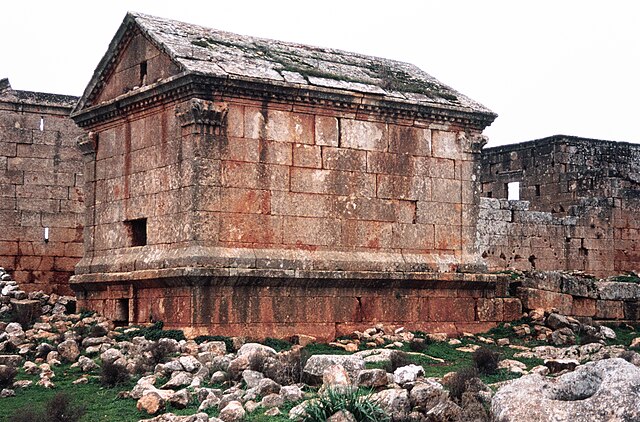
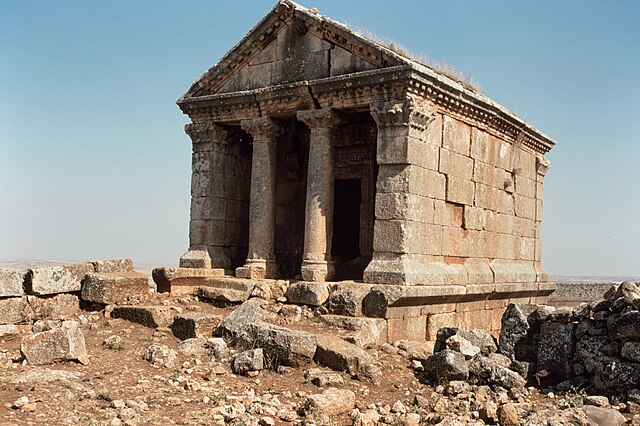
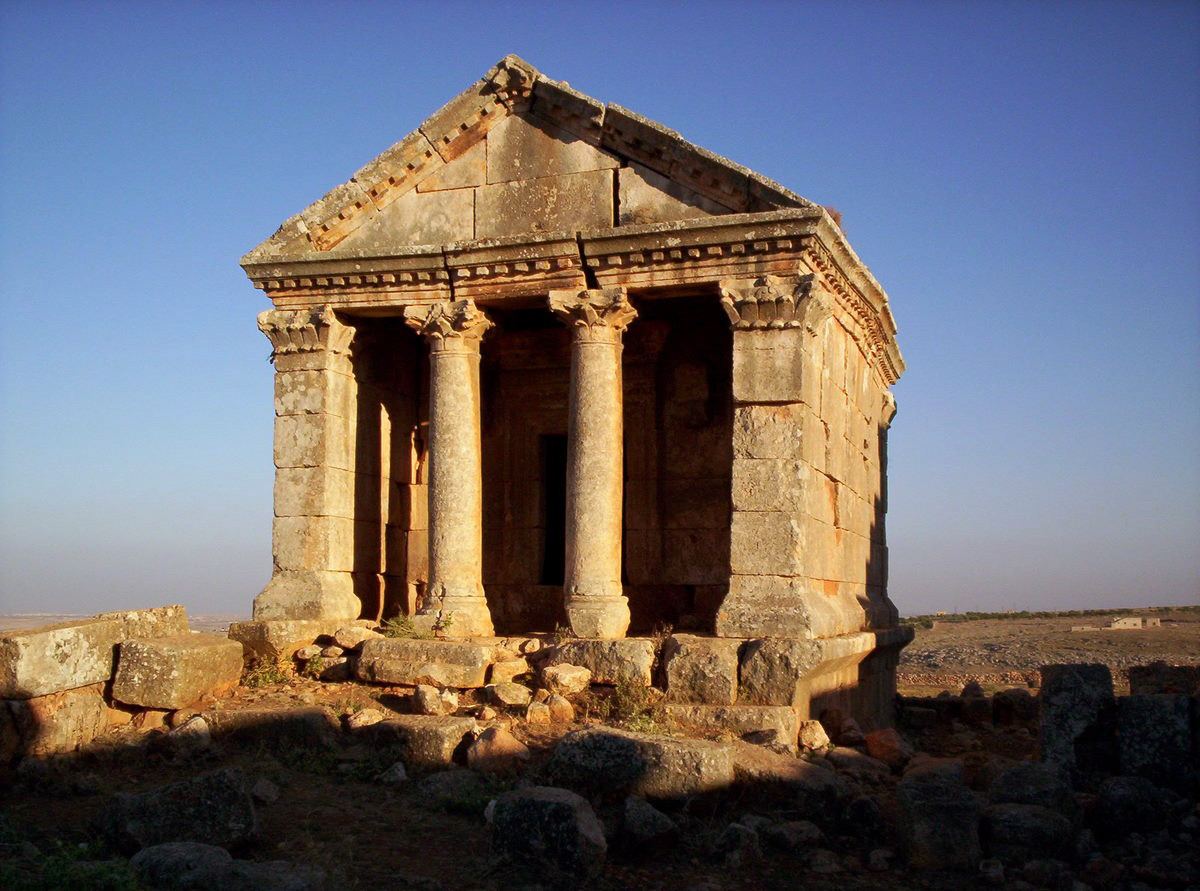
Ruweiha is especially famous for its funerary monuments. At least six massive tombs are still visible today, some of which stand two storeys tall and are built from finely cut limestone.
These mausoleums likely belonged to elite families and reflect a fusion of Greco-Roman and local Syrian styles. They are decorated with carved lintels, columns, and even inscriptions that give insight into burial practices and social hierarchy.
Many tombs have pyramid-shaped roofs, a distinctive style found throughout the Dead Cities. Inside, sarcophagi and burial niches remain, often aligned with symbolic Christian motifs.
The Churches of Ruweiha
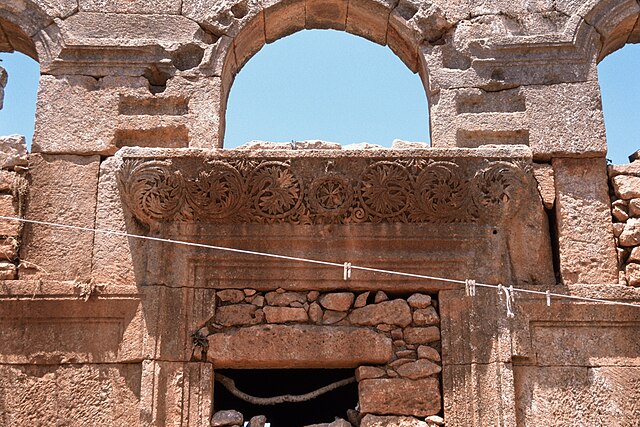
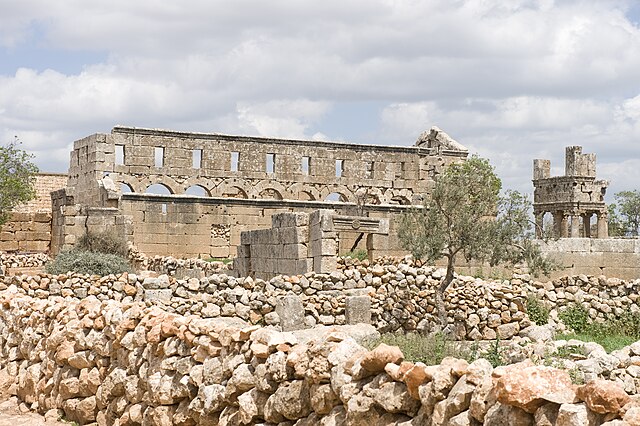
Ruweiha once housed several Christian churches, two of which are particularly noteworthy:
- The Northern Basilica, one of the largest in the region, measuring over 40 meters in length. It features a three-aisled layout with an apse at the eastern end and is thought to have been the main church for the community.
- The Southern Church, smaller in scale but equally elegant, is distinguished by its architectural harmony and carved doorways.
These churches reflect the village’s religious devotion and the wealth available for constructing grand places of worship. They also show how Christianity had taken firm root in the rural Syrian countryside during the Byzantine period.
Residential Areas
Scattered among the tombs and churches are numerous residential buildings, many still standing up to their original height. These homes were made from large limestone blocks and included features like:
- Internal courtyards
- Arched windows and carved doorways
- Second storeys accessed via staircases
- Storage rooms and workshops
Some houses contain olive presses, indicating that processing was done at the household level. The consistency of architectural style across Ruweiha reflects careful planning and long-term settlement.
Agricultural Infrastructure
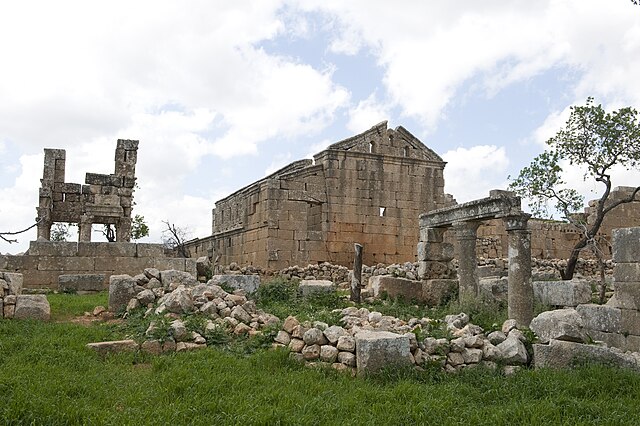
In addition to housing and worship spaces, Ruweiha contains cisterns, wells, and channels used for collecting and distributing water. This was vital for both agriculture and daily life in an area with limited rainfall.
Nearby, ancient terracing on the hills shows how villagers cultivated olives and other crops by carefully managing the landscape.
The People of Ruweiha
The size and grandeur of Ruweiha’s buildings suggest that its population was both wealthy and well-organized. Scholars believe that the town was inhabited by a mix of:
- Wealthy landowners
- Skilled artisans and craftsmen
- Priests and church officials
- Farmers and traders
Most residents would have spoken Syriac or Greek, and their culture blended Roman administrative traditions with local customs and Christian beliefs.
Unlike many Roman-era cities that were designed by imperial decree, Ruweiha was likely built by locals who had access to wealth and stone masonry techniques. The balance between religious, funerary, and domestic architecture shows a deeply rooted and self-sustaining community.
Why Was Ruweiha Abandoned
Like many Dead Cities in Syria, Ruweiha was gradually abandoned over the centuries. Its decline likely began in the 7th century following the Islamic conquest, which shifted political and economic centers to the south and east.
Additional reasons for abandonment include:
- Earthquakes, such as the one in 1157 that devastated much of northern Syria
- Changes in trade routes, particularly the decline of inland overland trade
- Population movement to urban centers or new villages in the Islamic period
Despite being abandoned, Ruweiha’s buildings remained intact thanks to the dry climate and sturdy construction. Today, they offer a unique example of rural Byzantine architecture that has survived the test of time.
Visiting Ruweiha Today

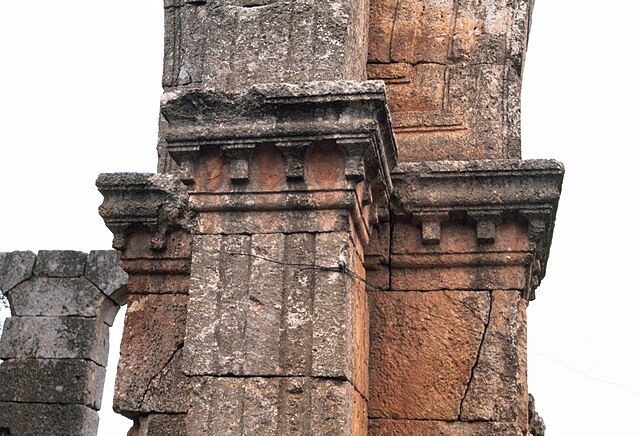
Ruweiha is an open and largely unregulated archaeological site. There are no fences, visitor centers, or entry fees. This provides a rare and intimate experience for those who venture there.
Visitors can:
- Walk inside ancient churches where early Christians once prayed
- Climb tower tombs that still rise majestically over the hills
- Enter homes and imagine daily life as it once was
- Enjoy views over the plateau and valleys of the Limestone Massif
The best time to visit is during spring or autumn, when the weather is pleasant and the landscape is green and inviting.
Travelers should wear comfortable shoes and bring water, as the terrain can be rocky and facilities are nonexistent.
Why Ruweiha Is Worth the Journey

Ruweiha may not be as instantly recognizable as other historical cities in Syria, but it holds something even more precious: authenticity. It is a place where time seems to stand still, where stone structures whisper stories of faith, family, and tradition.
For those who want more than just famous monuments, who seek connection to everyday history and ancient communities, Ruweiha offers something unforgettable. It is a place of peace, memory, and silent majesty.
Nearby Sites to Combine With Ruweiha
Ruweiha is located near several other important archaeological destinations:
- al-Bara, with dozens of churches and tombs
- Serjilla, known for its bathhouse and tavern
- Shinshirah (Khirbet Has), the largest in the Dead Cities network
- Qalb Lozeh, home to one of the most beautiful early Christian churches in Syria
A well-planned route can combine these sites into a multi-day exploration of Syria’s lost villages.
See Also: Al-Bara
Final Thoughts
Ruweiha is not a tourist attraction in the traditional sense. It has no brochures, no guides, and no paved paths. But it offers something far richer: a direct, untouched connection to a past that is both magnificent and humble.
For the thoughtful traveler, the student of history, or the pilgrim of memory, Ruweiha is a destination that delivers a deep sense of wonder. It is a monument not just to buildings, but to lives once lived with purpose, community, and faith.
Finally.. If you have any questions, please contact us. To explore further, visit our website gallery for rare images and cultural highlights.
Sources & References:
UNESCO – World Heritage Centre: https://whc.unesco.org
Archnet – Architecture & Heritage Database: https://www.archnet.org
World History Encyclopedia: https://www.worldhistory.org
Syrian Heritage Archive Project: https://syrian-heritage.org
Global Encyclopedia: Wikipedia