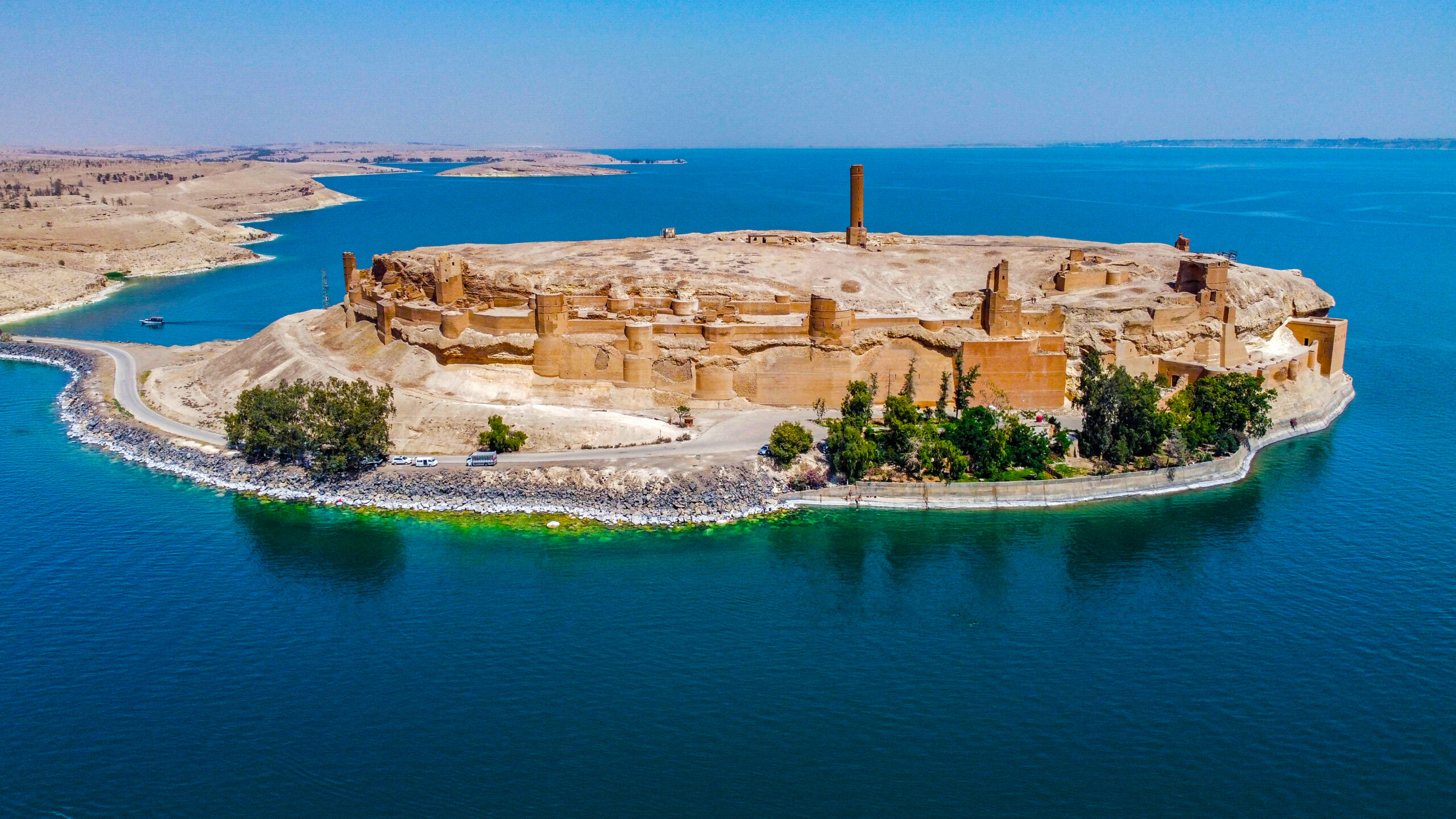
Qalaat Jaabar (Jaabar Castle) the Desert Fortress Rising Above the Euphrates: Surrounded by shimmering waters and the open expanse of the Syrian steppe, Qalaat Jaabar stands as a commanding witness to centuries of history along the banks of the Euphrates River. Once a vital military and administrative stronghold, this imposing fortress has transformed over the centuries from a desert hilltop castle to a lakeside citadel due to the formation of Lake Assad.
Often overlooked by mainstream tourism, Qalaat Jaabar offers a unique blend of Islamic architecture, medieval history, and dramatic natural scenery. It is one of Syria’s most visually striking historical sites, combining human ingenuity with the raw beauty of the Euphrates basin.
Qalaat Jaabar | Quick Info
| Topic | Quick Info |
|---|---|
| Name | Qalaat Jaabar / قلعة جعبر |
| Location | Syrian steppe, on the banks of the Euphrates River, now overlooking Lake Assad |
| Built | 10th–12th century CE (Medieval Islamic era) |
| Function | Military fortress, administrative center, desert citadel |
| Architectural Highlights | Hilltop fortress with stone walls, towers, ramparts, and Islamic-era modifications |
| Later Changes | Submerged partially by Lake Assad; preserved as a lakeside citadel |
| Significance | Strategic defensive site; combines Islamic architecture with dramatic natural scenery |
| Tourism | Less visited, offers panoramic views and historical insights |
Where Is Jaabar Castle Located
Qalaat Jaabar is located in northern Syria, west of Raqqa city, and near the shores of Lake Assad, the large artificial lake formed by the Tabqa Dam on the Euphrates River. Originally, the castle sat on a hill above the riverbank, but the construction of the dam in the 1970s flooded the valley and turned the site into a peninsula connected to the mainland by a narrow causeway.
The landscape surrounding the castle is dry and open, with views that stretch across the lake and into the arid highlands. Its remote location makes it feel like a forgotten island of history frozen in time.
The History of Qalaat Jaabar
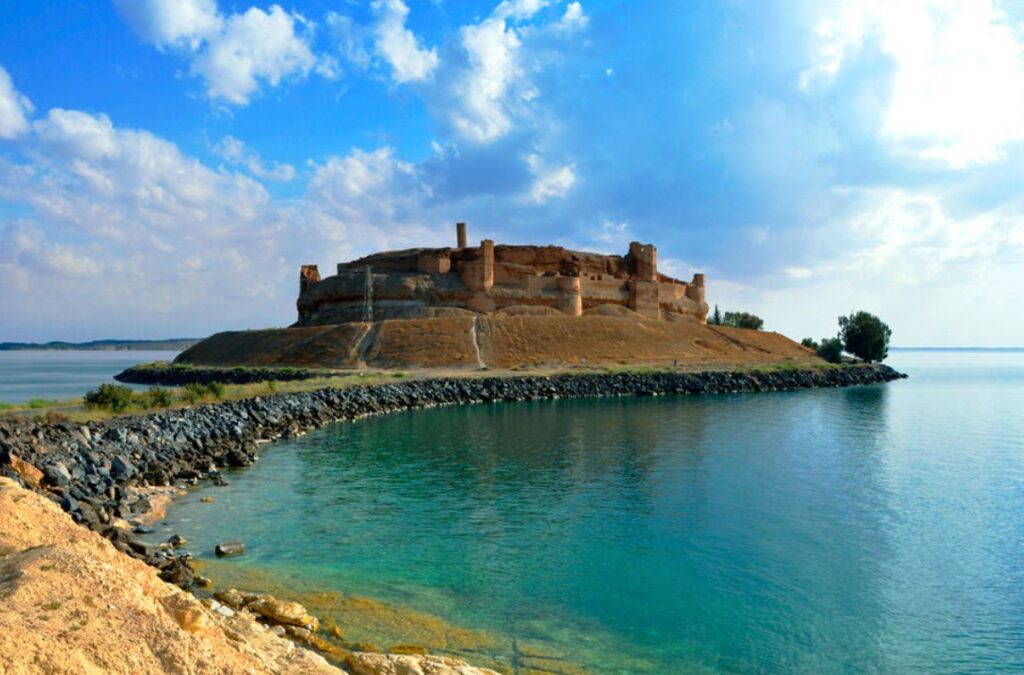
The history of Qalaat Jaabar spans over a millennium, touching upon multiple eras of Middle Eastern civilization and conflict.
Early Origins
Although the exact date of its initial construction is uncertain, some evidence suggests that the hilltop was fortified as early as the Abbasid period in the 9th century. However, the castle as we see it today is mainly the result of Seljuk and Zengid construction in the 11th and 12th centuries.
The name “Jaabar” is believed to come from Jaabar ibn Sabiq, a tribal leader of the Banu Numayr, who occupied the site during the 11th century. It later passed into the hands of the Seljuks, and was rebuilt into a strong fortress as part of their efforts to defend the Euphrates frontier.
The Zengid Era and Nur ad-Din
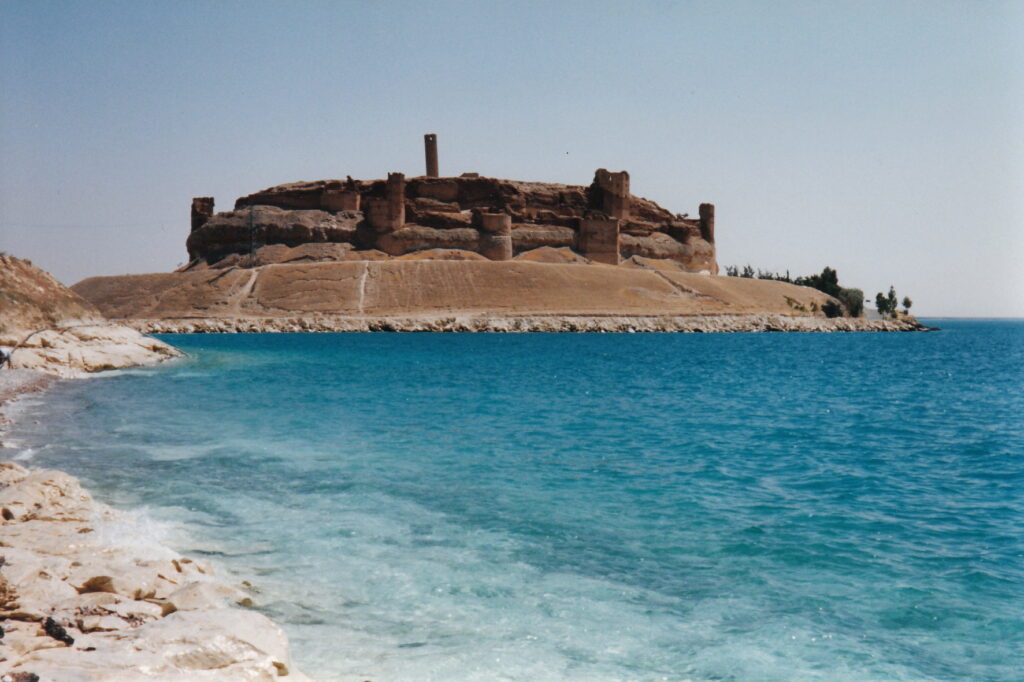
In the mid-12th century, Qalaat Jaabar gained further prominence under Nur ad-Din Mahmud Zengi, one of the greatest Muslim rulers of the Crusader period. He restored and strengthened the castle, transforming it into a key military base on the eastern frontier of his realm.
Nur ad-Din’s architectural contributions, including towers and curtain walls, form the core of the structure today. Qalaat Jaabar became part of a vast chain of fortresses that protected trade routes and deterred Crusader advances from the west.
Later History
In the Ayyubid and Mamluk periods, Jaabar Castle retained strategic value. Its importance, however, began to decline during the Ottoman era, especially as new centers of power and transportation emerged.
By the 20th century, the castle had become more of an archaeological site than an active stronghold. The creation of Lake Assad in the 1970s drastically changed its environment, submerging surrounding villages and isolating the castle on a rise surrounded by water.
Architecture and Layout of Qalaat Jaabar
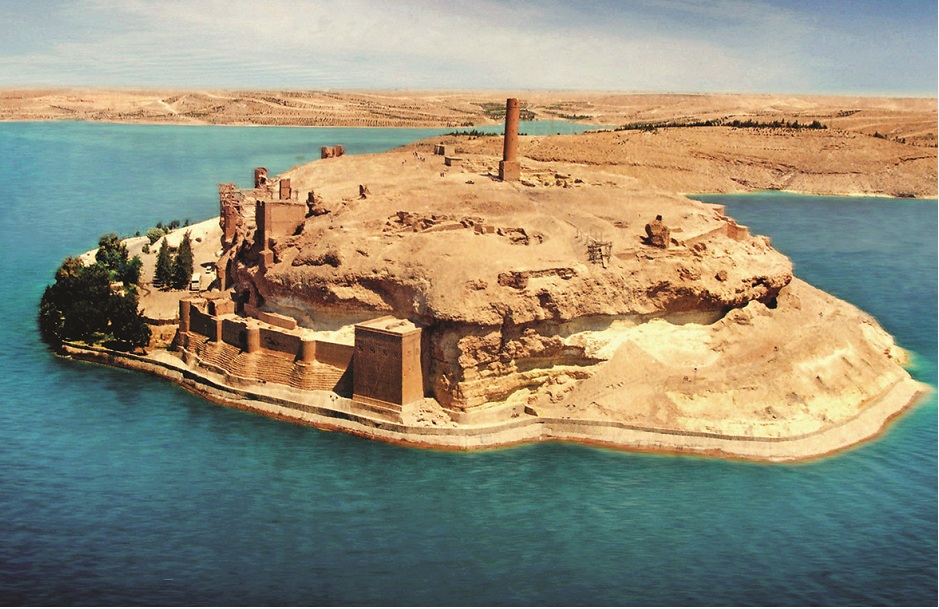
Qalaat Jaabar is a walled fortress with over 30 towers, a large central courtyard, residential and storage areas, and commanding views over its surroundings.
Walls and Towers
The fortress is surrounded by thick limestone walls reinforced with semi-circular and rectangular towers at regular intervals. These towers not only served a defensive purpose but also provided vantage points and firing positions.
The outer walls form an irregular polygon, adapting to the natural shape of the hill. The masonry includes finely cut limestone blocks and evidence of repairs and reinforcements from multiple historical periods.
The Entrance Gate
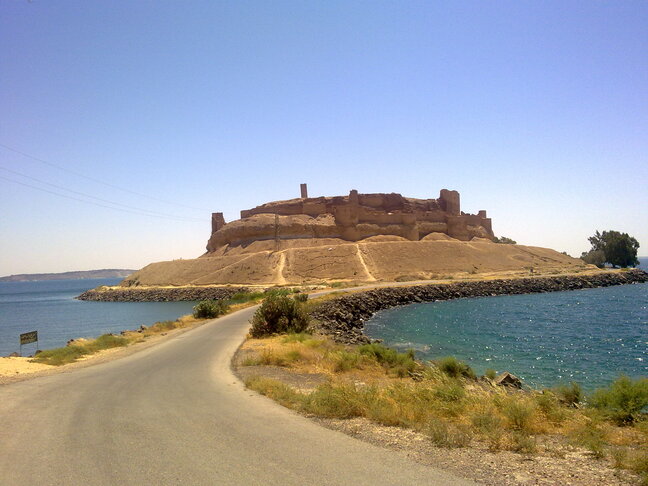
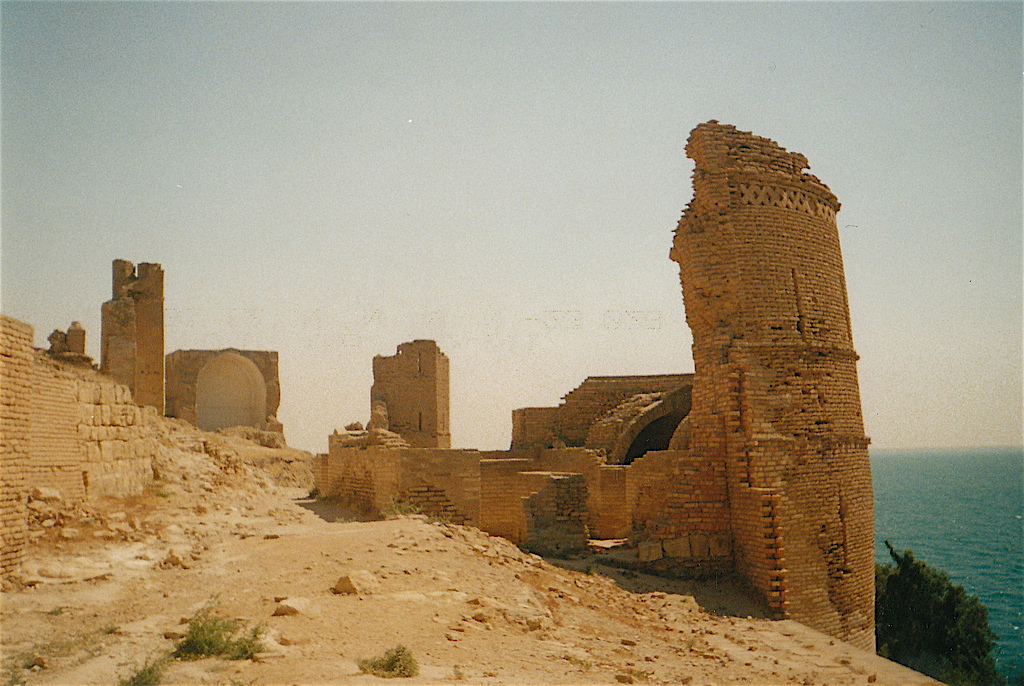
The main entrance is located on the eastern side, accessible via a causeway that connects the peninsula to the mainland. A large gatehouse protects the entry point, and once inside, visitors are greeted by the remains of arched passages and stone staircases that lead to various sections of the fortress.
Interior Structures
Within the walls are the foundations and partial remains of:
- Storage rooms and cellars used for food and water during sieges
- Barracks and living quarters for the garrison and castle staff
- Prayer halls and small mosques indicating religious use
- An observation tower, possibly added during the later Islamic period
Although many roofs have collapsed, the layout remains visible, allowing visitors to imagine the daily life of soldiers, guards, and workers who once inhabited the fortress.
Strategic Importance
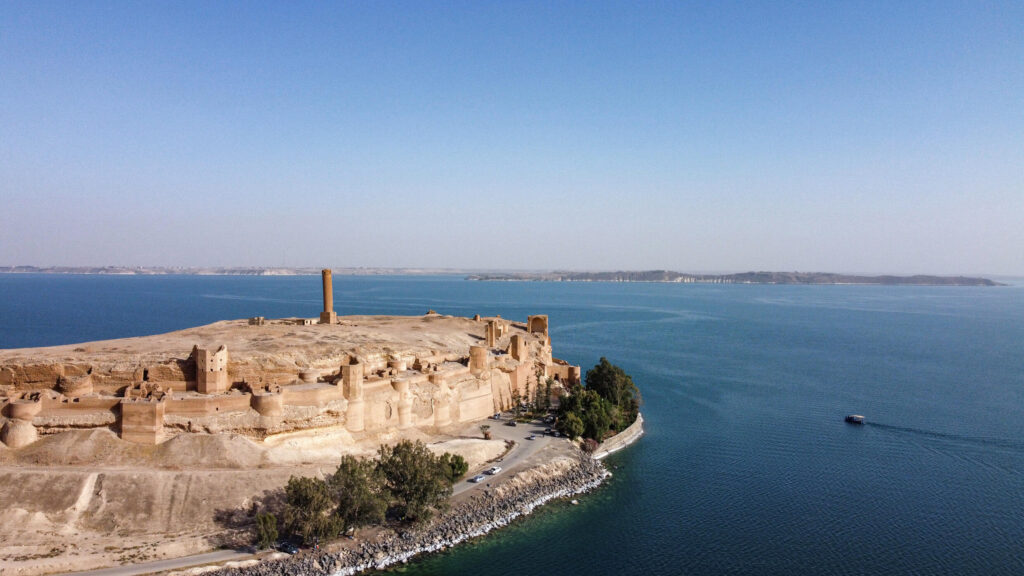
Qalaat Jaabar’s position made it one of the most important strongholds along the Euphrates River. It was a gateway between Syria and Mesopotamia, and controlled movement along key east-west trade and military routes.
Its location near fertile lands and water sources also made it ideal for supporting long-term garrisons. From its towers, observers could detect approaching forces from kilometers away.
During the Crusader period, its role in the defense of northern Syria made it a vital piece in the geopolitical chessboard between Muslim dynasties and the Crusader states.
Qalaat Jaabar in Modern Times
After the formation of Lake Assad, the castle was conserved and partially restored by the Syrian Directorate-General of Antiquities and Museums. A small archaeological museum was even established inside one of the towers during the 1980s, although it is no longer functioning due to recent instability.
In recent decades, the castle has drawn attention not only for its architectural beauty, but also for its symbolic value in Syrian history. It appeared in textbooks, travel guides, and official posters as a national monument.
Unfortunately, the conflict in Syria during the 2010s impacted the site. Control of the region shifted multiple times, and for a period, the castle and surrounding area were under militant control. Since then, conditions have stabilized somewhat, and access is again possible in certain contexts.
Visiting Qalaat Jaabar Today
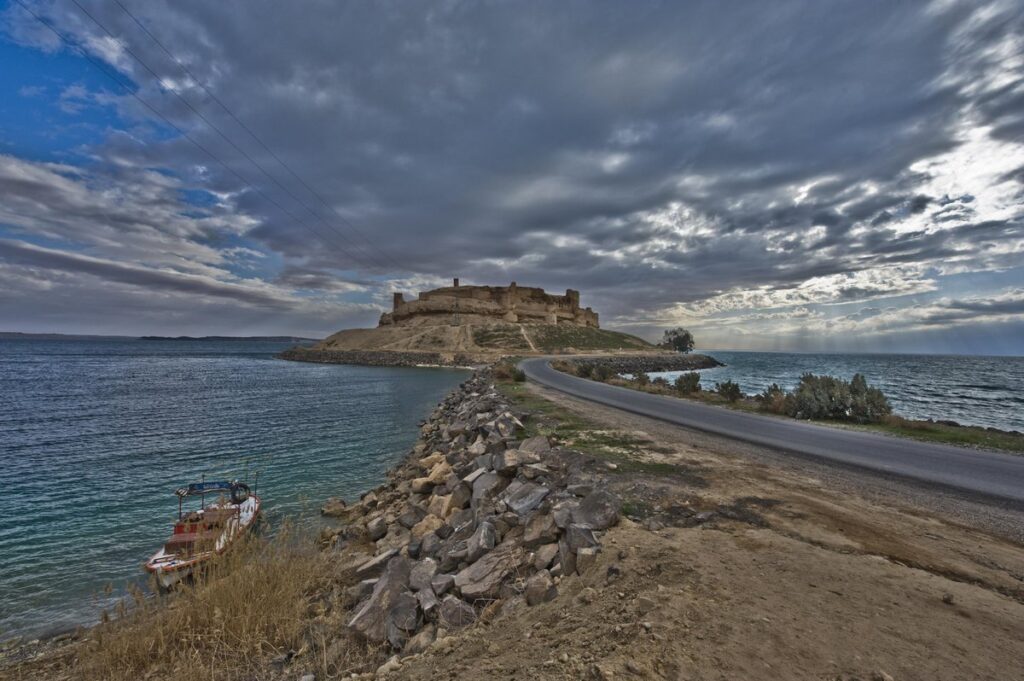
Visiting Qalaat Jaabar remains a rare and unforgettable experience, especially for travelers who appreciate medieval history, Islamic architecture, and natural landscapes.
What to Expect
- The site can be accessed from Raqqa, typically requiring local guidance and reliable transportation
- The views over Lake Assad are especially dramatic during sunrise or sunset
- The castle is open-air and does not require an entry ticket, although access depends on local conditions
- The walk across the causeway adds to the sense of adventure and isolation
While there are no formal tourist facilities, this gives the visit an authentic, untouched feel.
Why Qalaat Jaabar Is Worth Visiting
Qalaat Jaabar is not just a relic of Syria’s past—it is a symbol of resilience, adaptation, and strategic genius. It offers a rare combination of history, architecture, and nature, standing as a monument to the many civilizations that have passed through the Euphrates Valley.
For those who venture off the beaten path, it rewards with:
- Architectural beauty
- Sweeping landscapes
- Cultural depth and layered history
Its changing relationship with the landscape—from desert hilltop to lakeside fortress—adds a layer of intrigue and wonder.
Other Sites Nearby
Travelers interested in history can also visit:
- Raqqa, former Abbasid capital and home to ancient mosques and walls
- Tabqa Dam, which created Lake Assad and reshaped the region
- Tell Bi’a and Tell al-Mansura, ancient mounds near the Euphrates
- Jaabar Museum (if reopened) containing regional artifacts
Together, these sites offer insight into the agricultural, military, and religious heritage of Syria’s river valleys.
See Also: Al-Rasafeh
Final Reflections
Qalaat Jaabar is more than a castle—it is a place where stone meets water, and history meets silence. Built by warriors and guarded by time, it remains a witness to centuries of change. Whether viewed as a military fortress, an architectural masterpiece, or a lakeside monument, it holds its place among the finest historical sites in Syria.
For those who seek authenticity, isolation, and epic views, Qalaat Jaabar delivers on every level.
Finally.. If you have any questions, please contact us. To explore further, visit our website gallery for rare images and cultural highlights.
Sources & References:
UNESCO – World Heritage Centre: https://whc.unesco.org
Archnet – Architecture & Heritage Database: https://www.archnet.org
World History Encyclopedia: https://www.worldhistory.org
Syrian Heritage Archive Project: https://syrian-heritage.org
Wikipedia Global Encyclopedia: Wikipedia