Al-Rasafeh (Resafa) The Forgotten Fortress of the Desert: In the middle of Syria’s arid plains, where the Euphrates meets the desert, lies the majestic and haunting ruins of al-Rasafeh. Also known historically as Resafa, this ancient walled city was once a vibrant Roman fortress, a Christian pilgrimage center, and a strategic Islamic garrison town. Today, its isolated beauty and massive limestone walls stand as a powerful symbol of Syria’s layered history.
al-Rasafeh is not merely a forgotten outpost. It is a place where empires, religions, and cultures intersected. From Roman legions to Byzantine saints, from Umayyad caliphs to Abbasid governors, this city was shaped by centuries of transformation. For travelers and history lovers, al-Rasafeh offers one of the most awe-inspiring journeys through time in the entire Middle East.
Al-Rasafeh | Quick Info
| Topic | Quick Info |
|---|---|
| Name | Al-Rasafeh / الرصافة (also known as Resafa) |
| Location | Northern Syrian Desert, southwest of Raqqa, near the Euphrates River |
| Founded | Originally Aramean or Assyrian settlement; flourished under the Romans (3rd century CE) |
| Historical Eras | Roman → Byzantine (Christian pilgrimage center) → Umayyad (Islamic garrison town) |
| Notable For | Massive limestone city walls, basilicas, cisterns, and ruins of St. Sergius Church |
| Religious Significance | Became a major pilgrimage site after the martyrdom of St. Sergius (Sargis) |
| Later Use | Revived under Caliph Hisham ibn Abd al-Malik as a desert fortress and palace complex |
| Present State | Impressive archaeological ruins amid the desert, symbolizing Syria’s diverse civilizations |
| Nickname | “The Forgotten Fortress of the Desert” |
Where Is al-Rasafeh Located
al-Rasafeh is located in the Syrian Desert, approximately 30 kilometers south of the Euphrates River and about 50 kilometers southwest of Raqqa. The city rises in stark contrast to its surroundings, surrounded by barren plains and accessible by unpaved roads.
Its isolated position today hides the fact that it was once at the crossroads of major trade and military routes connecting northern Syria with Mesopotamia and the Arabian Peninsula.
Early Origins

From Roman Fort to Holy Site
al-Rasafeh began as a Roman military outpost in the 1st century AD, built to defend the empire’s eastern frontier and to guard the Euphrates crossings. The city’s early name, Sergiopolis, emerged later, but its roots lie in Rome’s efforts to control the desert borderlands through fortresses and fortified towns.
In the 3rd century, al-Rasafeh’s importance increased under the rule of Diocletian and other emperors who fortified the eastern borders against Persian invasions. Roman legions stationed here protected the region and oversaw trade.
The Cult of Saint Sergius
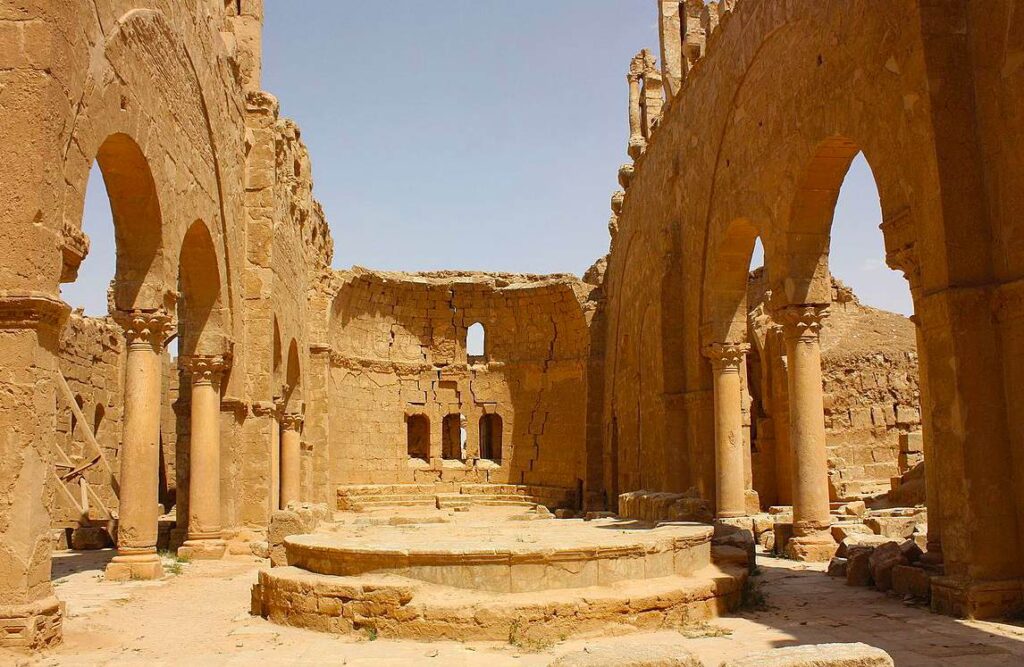
A Roman Soldier Becomes a Christian Saint
The transformation of al-Rasafeh from a military town to a Christian pilgrimage center is tied to the martyrdom of Saint Sergius, a Roman officer who converted to Christianity and was executed around AD 297 under Emperor Diocletian’s persecution.
Sergius quickly became a revered figure across the Christian world, and al-Rasafeh, believed to be the place of his martyrdom or burial, developed into a major pilgrimage destination. His tomb attracted believers from the Byzantine Empire and beyond.
By the 5th and 6th centuries, the city was renamed Sergiopolis, and emperors such as Anastasius I and Justinian I invested in its development. It grew into a thriving walled city with basilicas, baths, markets, and homes, centered around the magnificent Church of Saint Sergius.
The Walls of al-Rasafeh
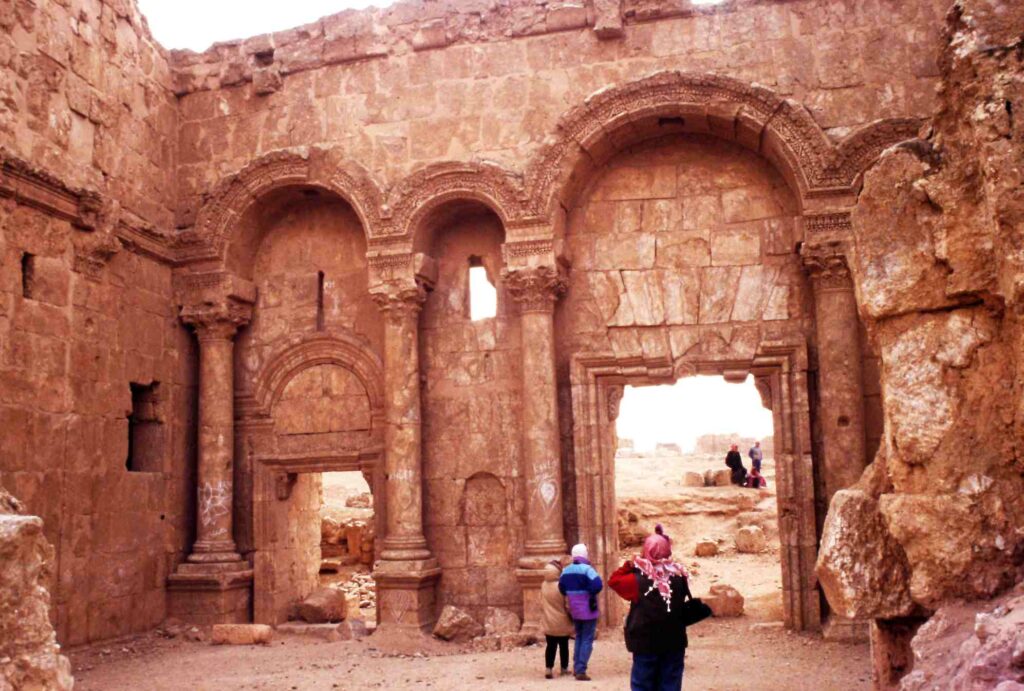
A Fortress in the Desert
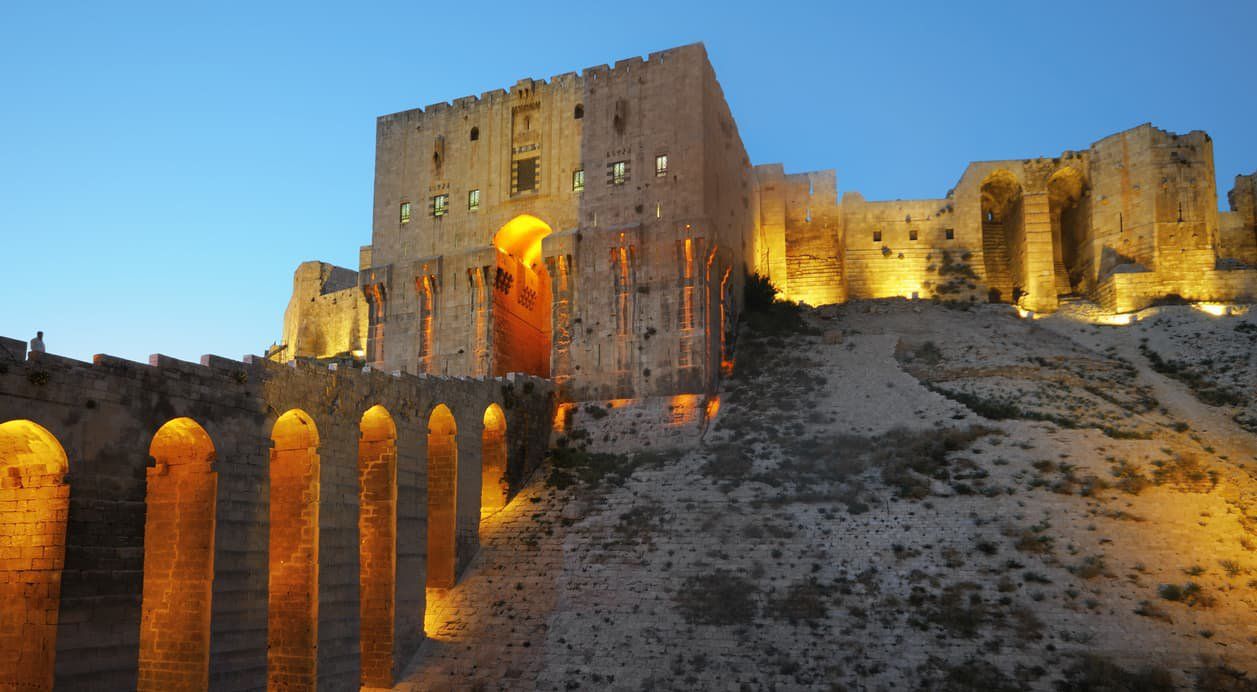
One of the most impressive features of al-Rasafeh today is its massive limestone walls, built in the 6th century. These walls stretch for over five kilometers, forming a square-shaped fortification with thirty towers and four monumental gates.
The walls were not just military defenses; they symbolized the power and prestige of the city as a religious and administrative center. Even today, the walls dominate the landscape, making al-Rasafeh visible from miles away.
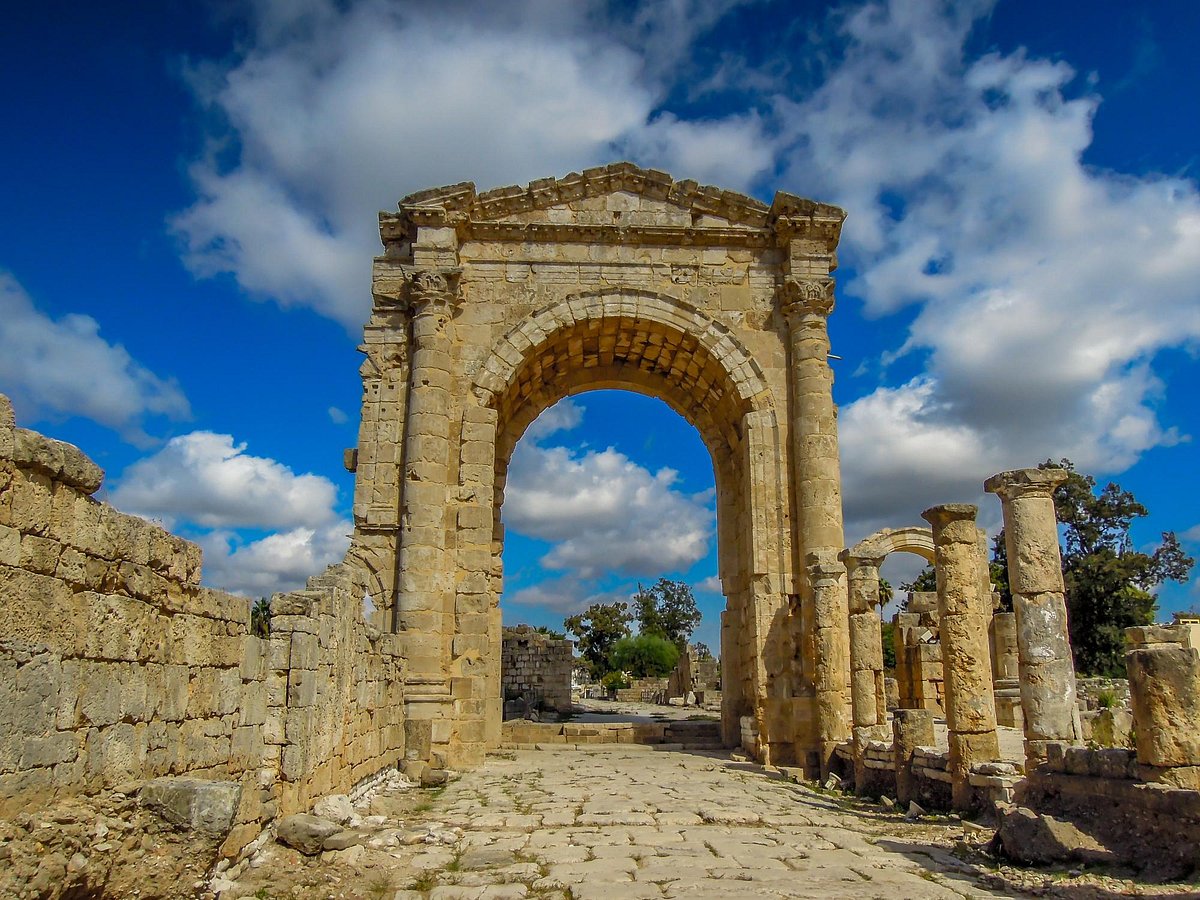
Entering through one of the gates, visitors are transported into a lost city of wide streets, ruined churches, and silent plazas.
The Great Church of Saint Sergius
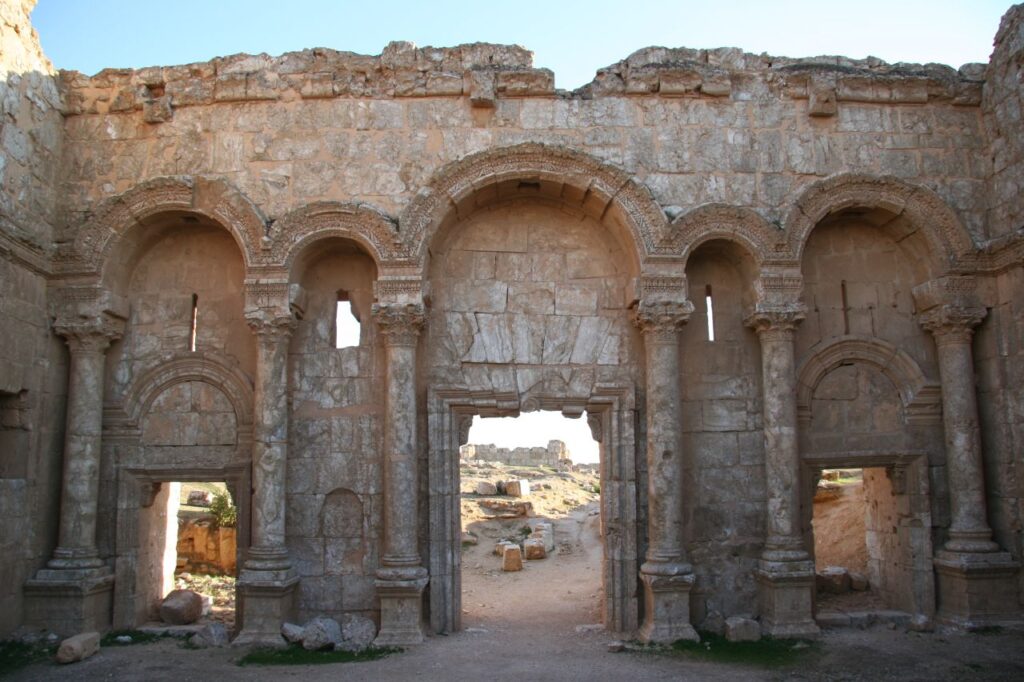
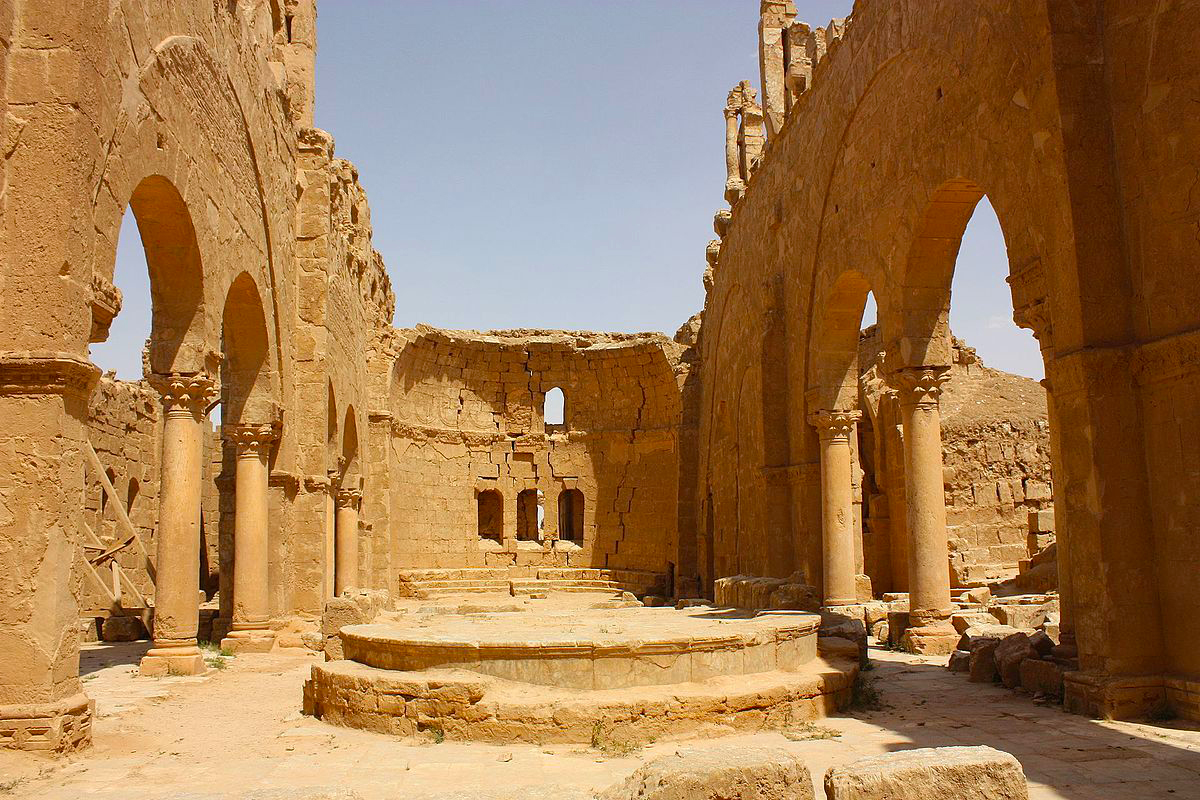
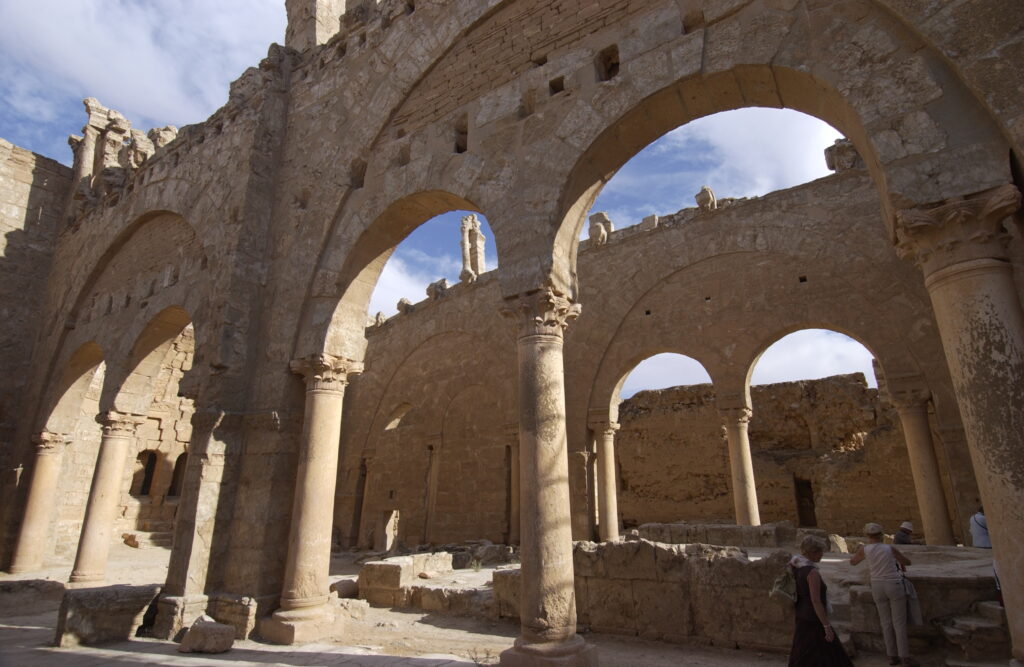
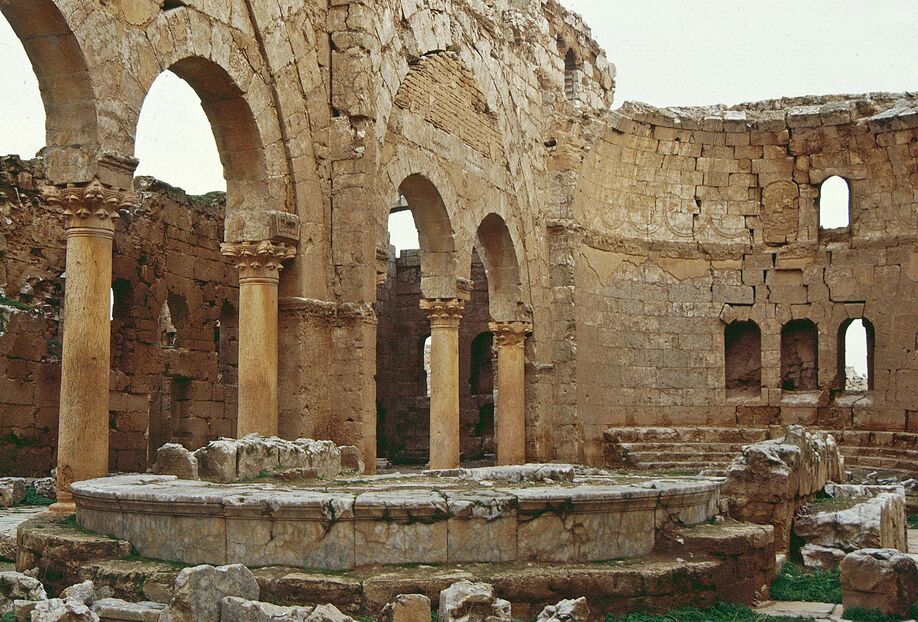
At the heart of al-Rasafeh stands the Basilica of Saint Sergius, one of the oldest and most important churches in Syria. Constructed in the mid-5th century, the church was a major pilgrimage site and an architectural masterpiece.
The church features:
- A three-aisled basilica with an apse and ambulatory
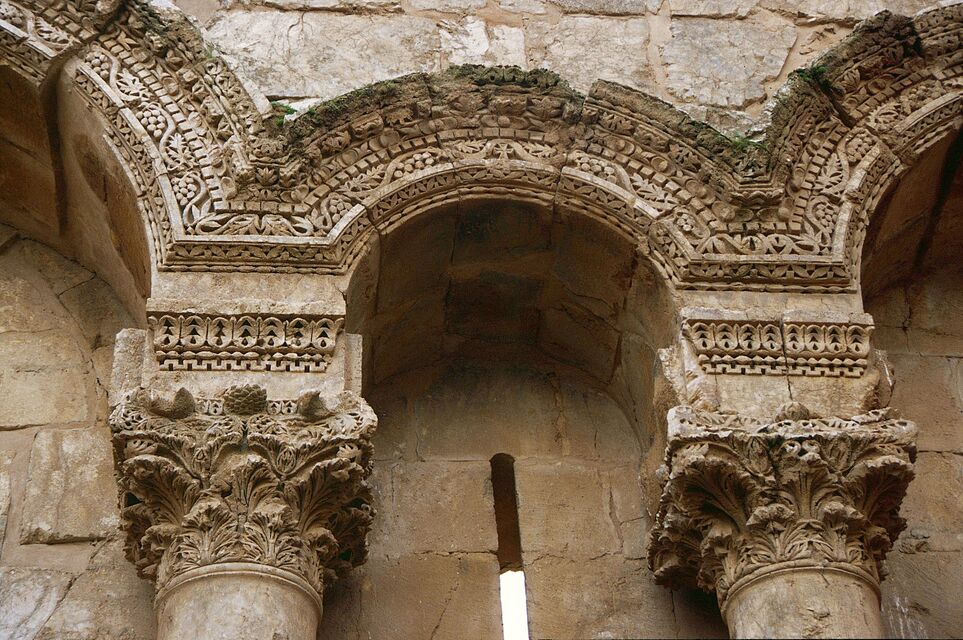
- Marble columns with Byzantine capitals
- A crypt or shrine believed to house the relics of Saint Sergius
- Intricate mosaics and carved decorations, some of which still remain
Pilgrims from as far as Constantinople and Armenia came to visit this church, bringing offerings and praying for healing and protection.
Byzantine Prosperity
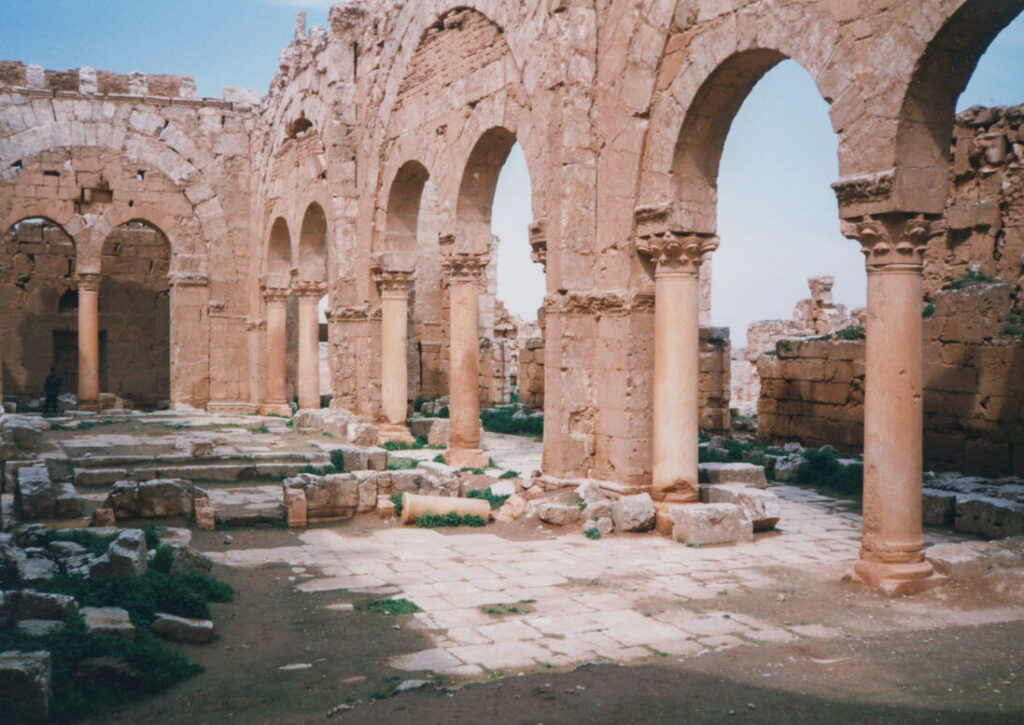
al-Rasafeh in the 6th Century
During the reign of Justinian I, al-Rasafeh reached its peak. The city was completely rebuilt and expanded, with new churches, roads, cisterns, and administrative buildings.
It became a regional bishopric and enjoyed the support of the imperial court. The presence of pilgrims, clergy, merchants, and soldiers turned al-Rasafeh into a bustling and cosmopolitan city.
The city plan from this period includes:
- Residential quarters with large homes
- Public baths and cisterns for water storage
- A forum-like plaza near the main church
- Market stalls and warehouses
- Defensive gates with towers and control points
Islamic Period

From Pilgrimage Site to Garrison City
After the Arab-Islamic conquest of Syria in the 7th century, al-Rasafeh was incorporated into the new Islamic state. Unlike some other Christian sites, it continued to thrive under Umayyad rule.
Caliph Hisham ibn Abd al-Malik even made al-Rasafeh his summer residence, expanding and beautifying it. Islamic palaces, mosques, and administrative buildings were added alongside the existing Christian monuments.
The city remained important during the Abbasid era, although gradually it declined due to shifting trade routes, political instability, and desertification.
By the 13th century, al-Rasafeh was largely abandoned.
What Remains Today
A Silent Monument of Stone and Spirit
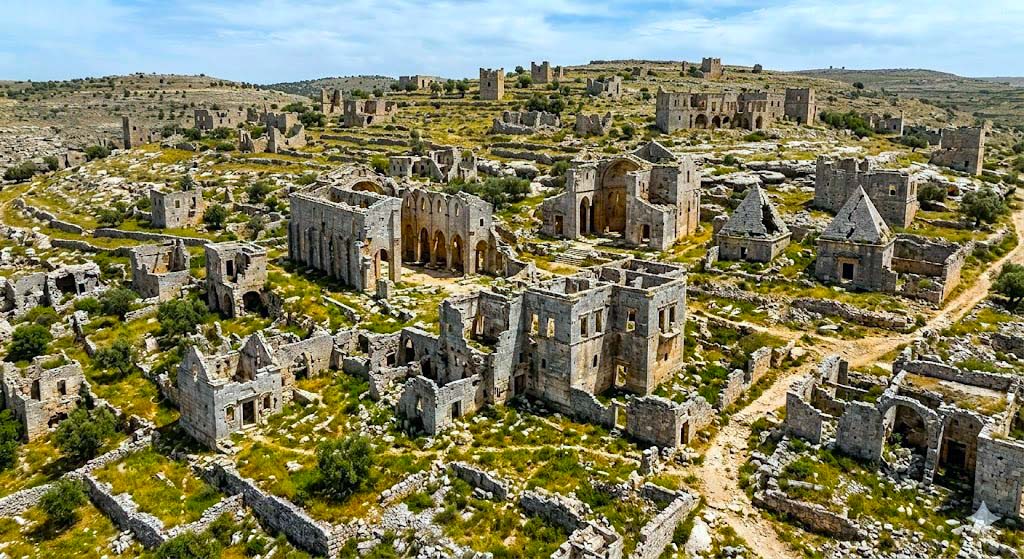
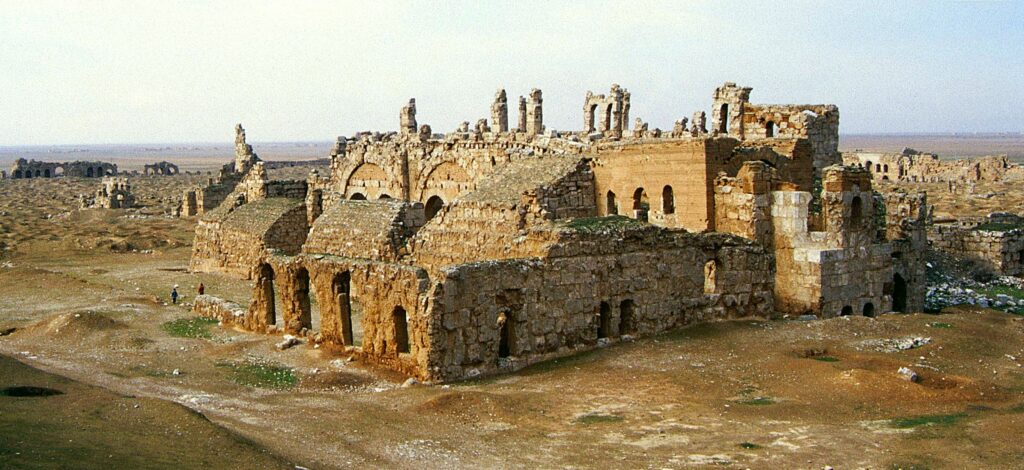
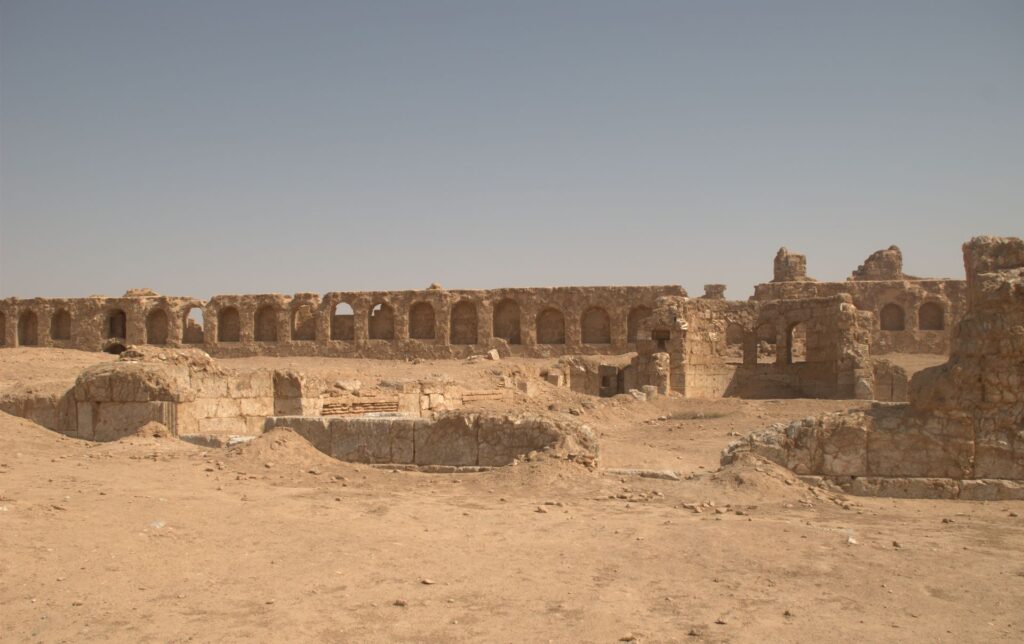
Modern visitors to al-Rasafeh are struck by its sheer scale and its majestic silence. The desert has preserved the limestone walls and many internal structures, though time and erosion have worn them down.
Among the most visible remains are:
- The outer fortification walls, with towers and gates
- The Basilica of Saint Sergius, partly roofless but majestic
- Roman cisterns and reservoirs, still echoing with water
- Sections of Umayyad palaces and walls
- Remnants of smaller churches, homes, and marketplaces
The desert winds, combined with the warm sunlight, create a surreal atmosphere where history feels alive, yet distant.
Visiting al-Rasafeh Today
al-Rasafeh is one of Syria’s lesser-visited archaeological treasures due to its remote location. However, for those who make the journey, it offers an unforgettable experience.
Tips for visiting:
- The site is accessible via unpaved desert roads, best with a local guide
- Bring water, food, and sun protection, as the site has no modern facilities
- Allocate at least two to three hours to explore the site fully
- Ideal times to visit are spring and autumn, when the desert heat is mild
Due to its openness and scale, al-Rasafeh is perfect for photographers, historians, and travelers who seek solitude and deep history.
Why al-Rasafeh Matters
al-Rasafeh is not just another ruin. It is a palimpsest of civilizations, where Roman military planning meets Byzantine spirituality and Islamic urban design. It reminds us that the desert was never empty—it was full of movement, ideas, and encounters.
The site is:
- A rare example of Roman-Christian-Muslim continuity
- One of the best-preserved pilgrimage churches in the Levant
- A unique fusion of Roman fort, Christian city, and Islamic palace
- A symbol of coexistence and historical layering across centuries
See Also: Qalaat Jaabar
Final Thoughts
al-Rasafeh deserves far more attention than it receives. Its massive stone walls, elegant basilica, and desert setting make it one of the most extraordinary archaeological sites in Syria.
For any traveler looking to connect with the spiritual, military, and cultural depth of the ancient world, al-Rasafeh offers more than ruins. It offers reflection, inspiration, and awe.
Finally.. If you have any questions, please contact us. To explore further, visit our website gallery for rare images and cultural highlights.
Sources & References:
UNESCO – World Heritage Centre: https://whc.unesco.org
Archnet – Architecture & Heritage Database: https://www.archnet.org
World History Encyclopedia: https://www.worldhistory.org
Syrian Heritage Archive Project: https://syrian-heritage.org
Global Encyclopedia: Wikipedia