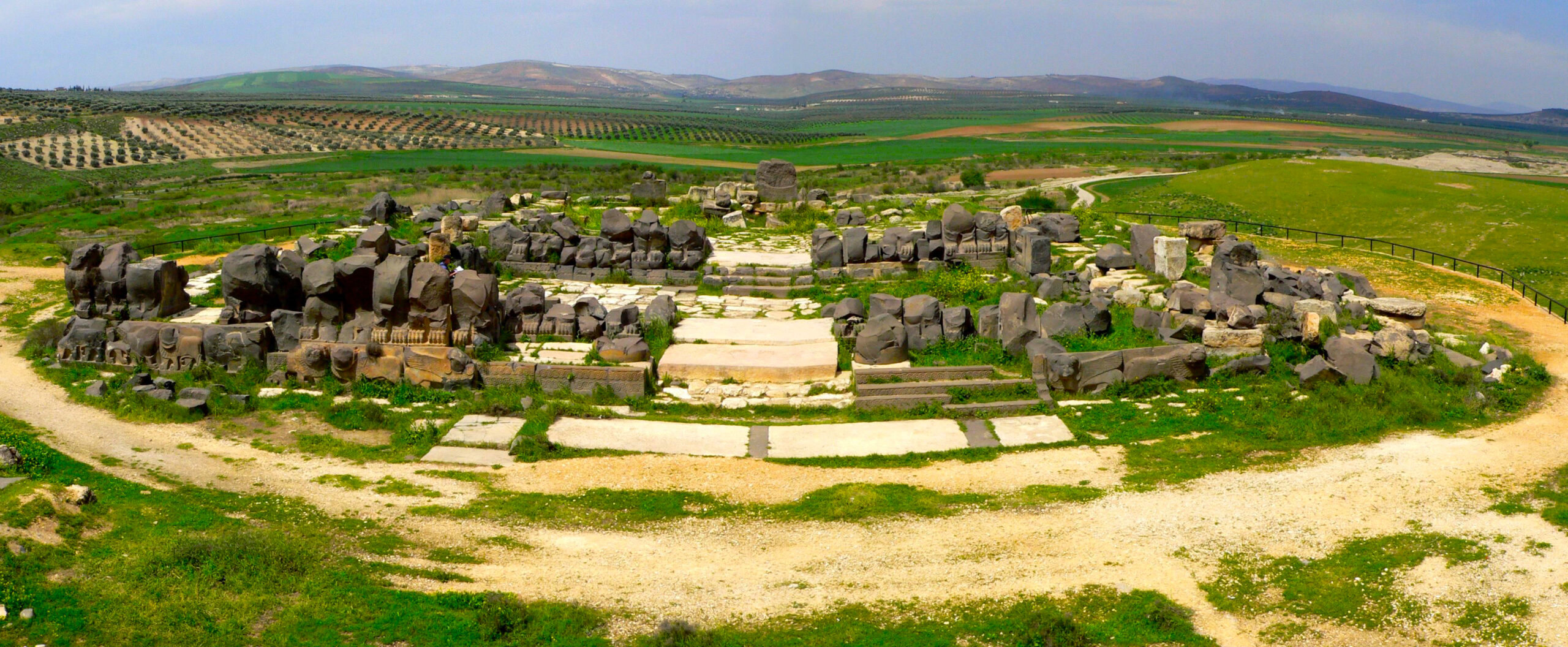
Ain Dara A Mysterious Temple from the Iron Age in Northwestern Syria: Nestled in the hills near Afrin, about 40 kilometers northwest of Aleppo, lies the archaeological site of Ain Dara — one of Syria’s most fascinating and visually striking ancient temples. Often overshadowed by better-known sites like Palmyra or Ugarit, Ain Dara offers a unique glimpse into the Iron Age cultures of the Levant. With its massive basalt lions, intricate stone carvings, and enormous footprints carved into the floor, the Temple of Ain Dara is both enigmatic and deeply evocative.
Although partially destroyed in recent years, the site remains a powerful symbol of ancient religious architecture and continues to draw attention for its artistic and historical value.
Ain Dara | Quick Info
| Topic | Quick Info |
|---|---|
| Name | Ain Dara Temple / معبد عين دارا |
| Location | Near Afrin, northwestern Syria |
| Discovered | 1955 CE |
| Period | c. 1300–740 BCE (Late Bronze to Iron Age) |
| Civilization | Aramean / Neo-Hittite culture |
| Structure Type | Ancient temple complex with basalt carvings and monumental sculptures |
| Notable Features | Giant carved footprints at entrance, lion and sphinx statues, intricate bas-reliefs |
| Material | Built mainly of basalt stone |
| Significance | One of the best-preserved Iron Age temples in Syria, often compared to Solomon’s Temple for architectural similarities |
| Current Condition | Partially damaged in recent conflicts, but remains a key archaeological landmark |
Where is Ain Dara Located

Ain Dara is situated in northwestern Syria, approximately 7 kilometers south of the town of Afrin and near the village of Ain Dara. It lies in the region historically known as Jebel Simeon, a mountainous area known for its numerous ancient sites, including Christian monasteries and Roman ruins.
The temple stands on a natural limestone terrace that overlooks the Afrin Valley. This elevated position enhances its visual impact and may have had symbolic religious meaning for the people who built it.
Discovery and Excavation
The site of Ain Dara was first brought to scholarly attention in 1955, when a basalt lion statue was discovered by accident. This prompted a series of systematic excavations beginning in the 1980s, led by Syrian archaeologists.
Excavations revealed that the site was home to a large temple complex dating from the Syro-Hittite period, specifically between the 10th and 8th centuries BCE. While many details about the site remain uncertain, it quickly became clear that Ain Dara was one of the most important and best-preserved Iron Age temples in the Levant.
Cultural and Historical Context
Ain Dara belonged to the cultural sphere known as the Syro-Hittite or Neo-Hittite kingdoms, which arose after the fall of the Hittite Empire around 1180 BCE. These kingdoms occupied areas of modern-day Syria and southeastern Turkey and maintained many Hittite religious and artistic traditions while integrating influences from Assyria, Aram, and Phoenicia.
The temple’s architecture, reliefs, and symbolism reflect this hybrid cultural identity, making it a rare and valuable source for understanding early Iron Age religion in Syria.
The Temple Layout and Architecture
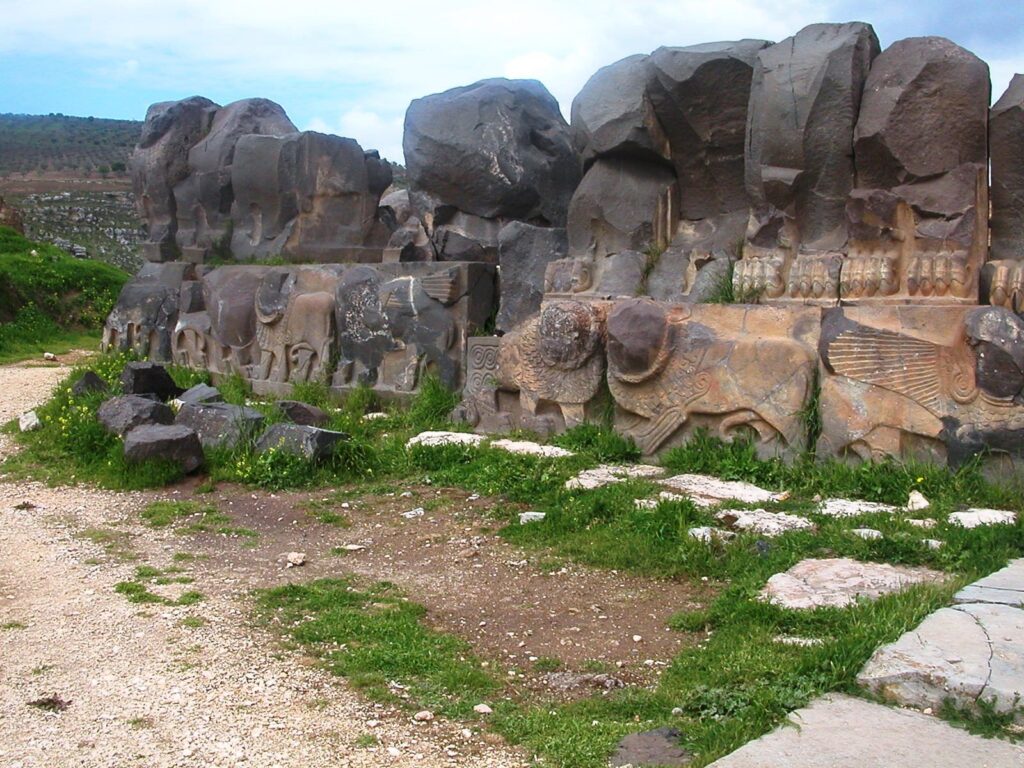
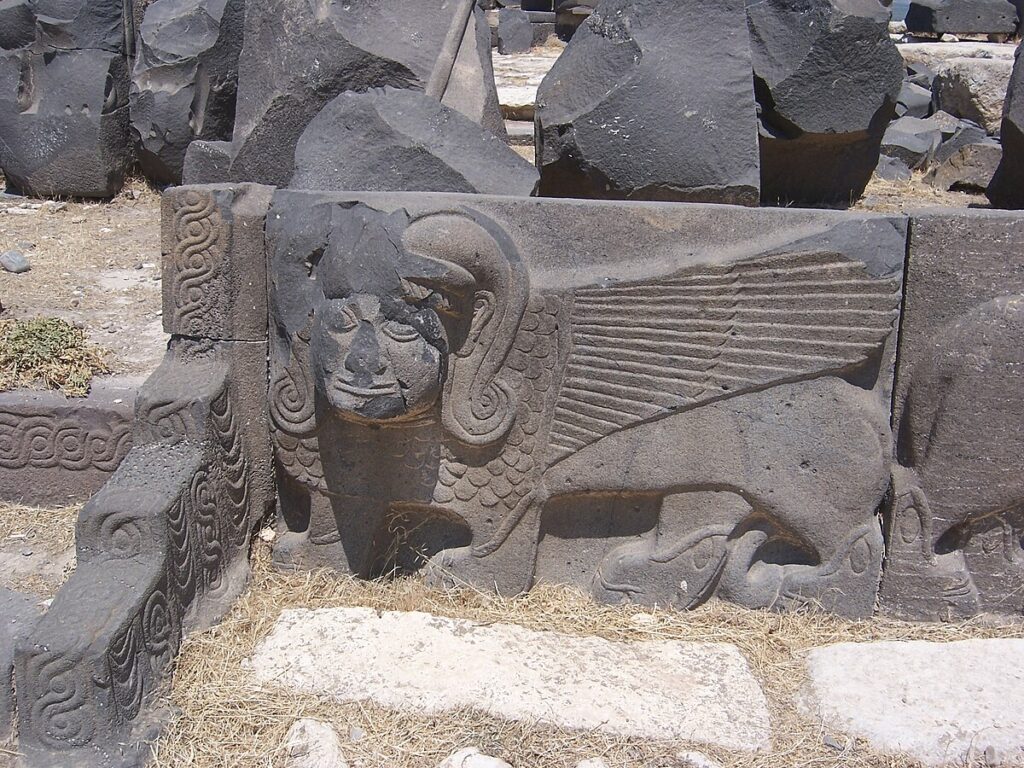
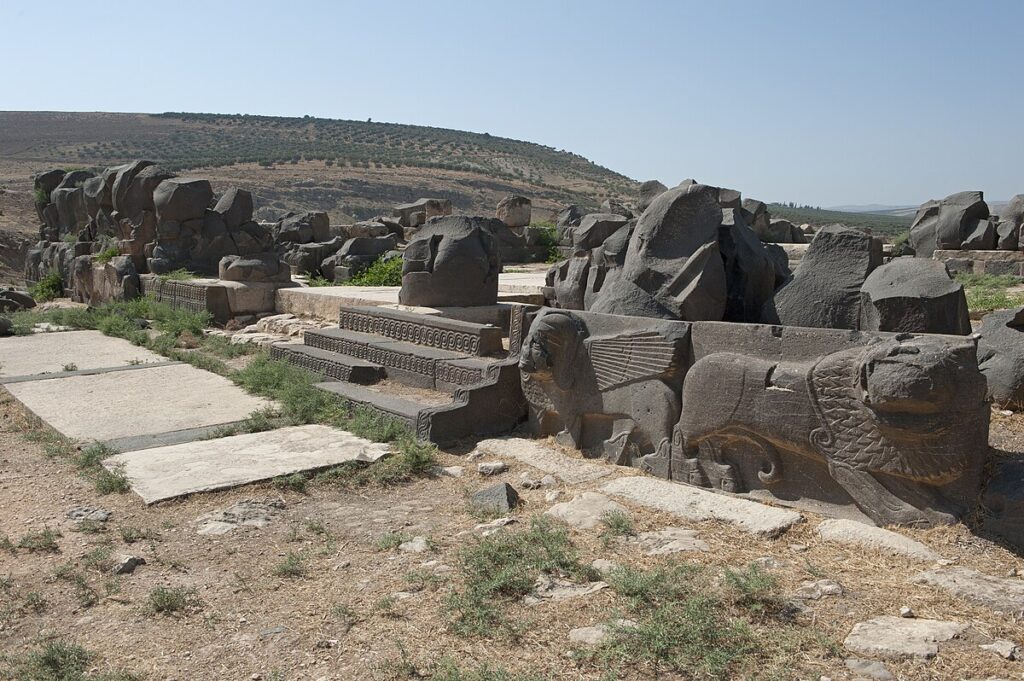
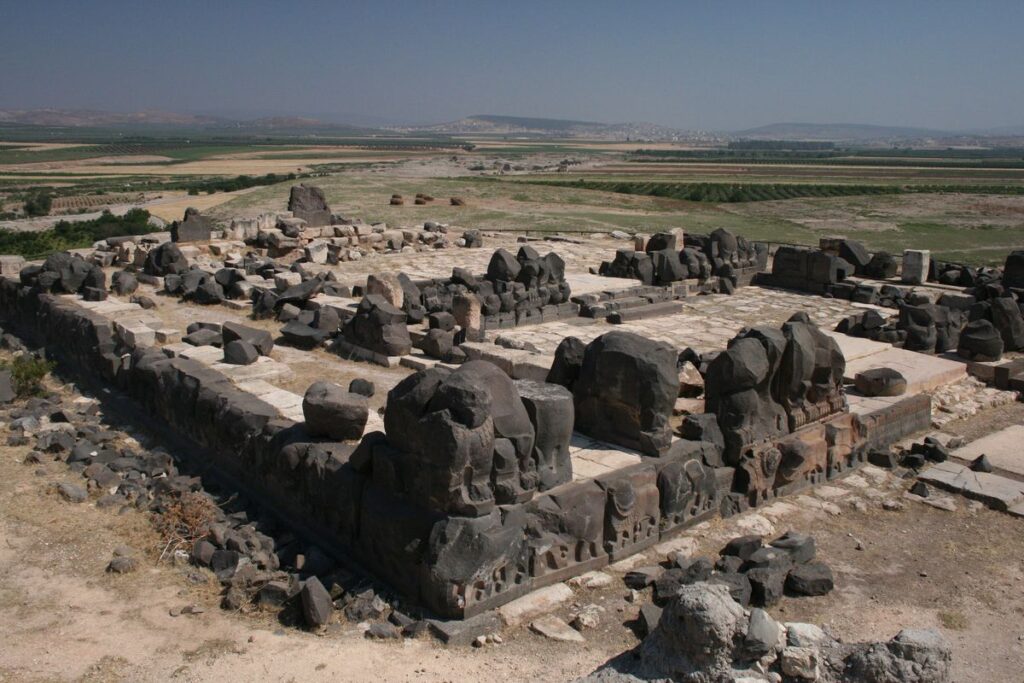
The Temple of Ain Dara is oriented east-west and stands on a massive stone platform accessible by a staircase. It follows a tripartite plan, a common layout in ancient Near Eastern temple architecture.
Main Parts of the Temple:
1. The Porch (Portico)
- The entrance features two large basalt lions flanking the staircase.
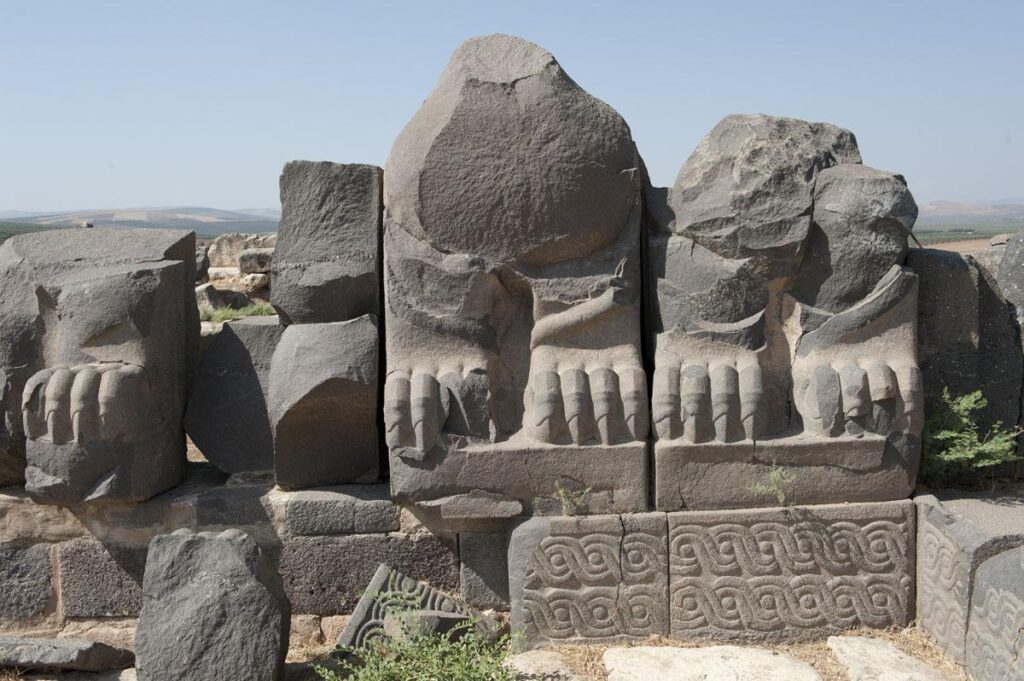
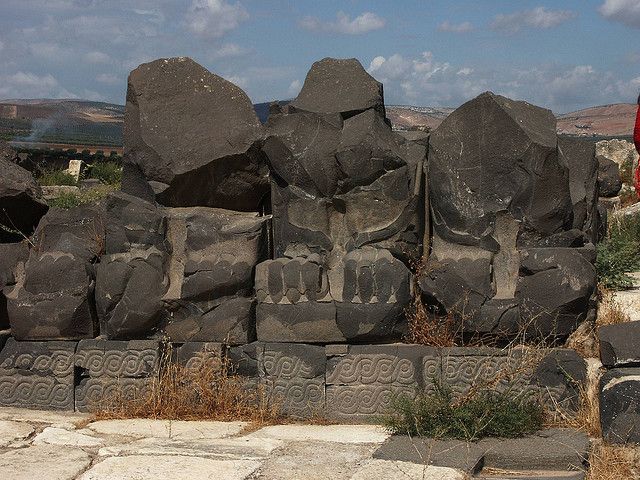
- The floor is decorated with gigantic footprints carved into the stone, believed to symbolize the footsteps of a god or giant entering the temple.
2. The Antechamber
- A rectangular space leading from the porch into the inner sanctuary.
- Decorated with reliefs depicting mythological creatures such as sphinxes and winged lions.
3. The Cella (Main Sanctuary)
- The heart of the temple, where the deity’s cult image would have been placed.
- A raised platform at the back likely served as a pedestal for a sacred statue.
- The walls were adorned with relief carvings and geometric designs.
The total structure measures around 30 by 20 meters, though the overall temple complex, including its courtyard and surrounding wall, was even larger.
The Gigantic Footprints
One of the most mysterious and talked-about features of Ain Dara is the presence of giant footprints carved into the stone floor of the temple. These prints are roughly 1 meter long and appear at the entrance and inside the sanctuary.
Interpretations vary. Some scholars suggest they symbolize the divine presence entering the temple. Others see them as part of a ceremonial or ritual practice. Their exact meaning remains unknown, adding an element of myth and intrigue to the site.
Basalt Carvings and Symbolism
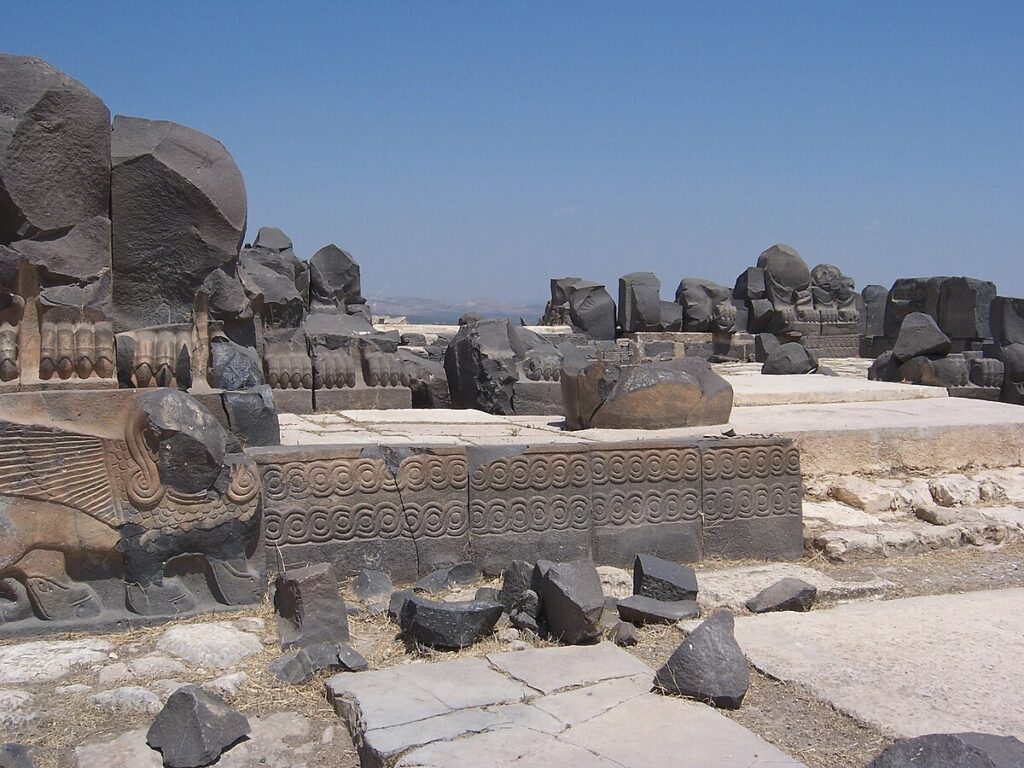
Ain Dara is known for its richly decorated basalt reliefs, many of which are carved directly into the temple’s foundation and walls. These include:
- Winged lions and sphinxes guarding the entrance
- Rosette motifs, commonly used as protective symbols
- Tree of Life imagery, representing fertility and divine order
- Mythological creatures that link the world of humans and gods
These reliefs show strong artistic connections with both Hittite and Mesopotamian traditions. In particular, the style is similar to that found at sites like Carchemish and Tell Halaf.
Religious Significance
While the exact deity worshipped at Ain Dara remains uncertain, scholars believe the temple was likely dedicated to a mother goddess or storm god, possibly similar to the goddess Ishtar or the god Hadad.
The importance of lions and other protective figures at the entrance suggests the deity was powerful and required guardianship. The rich symbolism and monumental size of the structure indicate that this was a major regional cult center.
Comparison with Solomon’s Temple
Ain Dara has drawn interest because of its striking architectural parallels with the biblical description of Solomon’s Temple in Jerusalem, as recorded in the Book of Kings. Similarities include:
- Tripartite structure (porch, antechamber, inner sanctuary)
- Use of basalt and limestone
- Decorative motifs like lions, cherubim, and floral patterns
- Raised platform and column bases
These parallels suggest that Ain Dara reflects a broader religious architectural tradition in the Levant during the Iron Age and may help archaeologists visualize what the Jerusalem temple may have looked like.
Damage and Preservation Status


In January 2018, during the conflict in Syria, the Ain Dara temple suffered significant damage due to aerial bombardment. Satellite images confirmed that nearly 60 to 70 percent of the temple was destroyed or heavily affected.
This destruction was widely condemned by archaeologists, historians, and cultural organizations around the world. Despite the damage, some of the basalt reliefs and foundation stones remain intact, and efforts have been discussed to document, preserve, and eventually restore parts of the site.
Visiting Ain Dara
Before the conflict, Ain Dara was open to visitors and relatively easy to access from Aleppo or Afrin. Travelers were often struck by the majesty of its carvings, the mystery of the footprints, and the peaceful setting surrounded by olive trees and distant hills.
What You Could Experience:
- Walking along the giant footprints toward the sanctuary
- Observing finely carved lions and mythological guardians
- Exploring the detailed reliefs that cover the basalt blocks
- Gazing across the valley and imagining ancient ceremonies taking place
For those passionate about ancient religions, symbolism, and temple architecture, Ain Dara was and remains a site of profound meaning.
Ain Dara in the Broader Picture of Syrian Heritage
Syria is known for its wealth of archaeological sites — from Bronze Age cities like Ebla and Mari to Roman cities like Palmyra and Apamea. Ain Dara holds a special place as a representative of early Iron Age temple architecture, a period less visible but no less important.
It offers insights into pre-Islamic, pre-Roman religious traditions and helps us understand the artistic and cultural connections that spanned from Anatolia to Mesopotamia.
See Also: Dead Cities (4th Century)
Final Thoughts
Ain Dara is a symbol of ancient Syrian creativity, faith, and artistic mastery. Despite the damage it has suffered, the memory of its towering lions, giant footprints, and sacred stone walls continues to captivate the imagination.
For those who seek to understand the complexity of early Near Eastern religions and architectural traditions, Ain Dara stands as one of the most evocative and mysterious sites in Syria.
When peace allows, Ain Dara deserves restoration, protection, and global attention as a place where stone and spirit once walked together.
Finally.. If you have any questions, please contact us. To explore further, visit our website gallery for rare images and cultural highlights.
Sources & References:
UNESCO – World Heritage Centre: https://whc.unesco.org
Archnet – Architecture & Heritage Database: https://www.archnet.org
World History Encyclopedia: https://www.worldhistory.org
Syrian Heritage Archive Project: https://syrian-heritage.org
Wikipedia Global Encyclopedia: Wikipedia