Safita Castle (قلعة صافيتا – برج صافيتا), known locally as the Safita Tower, is one of the most unique military monuments of the Crusader period. Unlike the concentric designs of Krak des Chevaliers, Safita Castle is defined by its massive, singular keep (donjon), a colossal stone block dominating the town of Safita. Primarily controlled by the Knights Templar, it was a crucial link in their coastal communication network. Its most remarkable feature is the active Greek Orthodox Church incorporated into its foundation. Safita Castle stands today as a living monument to architectural resilience and historical continuity.
Safita Castle | Quick Info.
| Feature | Details |
| Primary Names | Chastel Blanc (French, medieval name); Safita Castle; Safita Tower |
| Location | Town of Safita, Tartus Governorate, Syria |
| Crusader Order | Knights Templar |
| Era | 12th Century CE |
| Function | Watchtower, Command Post, Communication Link, Pilgrimage Site |
| Key Architectural Feature | Massive, well-preserved central Keep (Donjon) |
| Unique Feature | Lower floor houses an active Greek Orthodox Church |
| Strategic Role | Part of the limes (frontier) defense chain, communicating with Tortosa and Krak des Chevaliers |
History: A Templar Fortress and Communication Hub
The history of Chastel Blanc (Safita Castle) is inextricably linked to the military campaigns and subsequent settlement of the Knights Templar in the County of Tripoli during the 12th and 13th centuries. The castle’s creation was motivated by the Templars’ need to secure the interior roads leading from the coast to the strategic interior valley, which was bordered by the competing power centers of the Assassins and the Mamluks.
The Templar Mandate
The town of Safita—and the towering rock upon which the castle stands—was originally fortified in the early 12th century, likely around 1112 CE, when the area fell under Crusader control. However, the site was officially granted to the Knights Templar shortly thereafter, making it one of their key strongholds alongside Tortosa (Tartus).
The Templars did not build a complex, multi-walled city like the Hospitallers did at Krak des Chevaliers. Instead, they focused on the central tower, recognizing the site’s value as an immense watchtower and a communication relay post. Positioned on an elevated ridge, Safita Castle could communicate directly via fire signals with the Templars’ main coastal headquarters at Tortosa (Tartus) to the southwest, and, critically, with the great Hospitaller fortress of Krak des Chevaliers to the east. This network allowed rapid transmission of intelligence across a crucial swathe of the Crusader states.
Sieges, Earthquakes, and Resilient Reconstruction
Like all fortresses of the era, Safita Castle faced constant threats and destruction.
- The 1170 Earthquake: The powerful earthquake that devastated much of the Levant in 1170 severely damaged the nascent fortifications. The Templars rebuilt, reinforcing the structure to withstand future tremors.
- The 1202 Earthquake: This second major seismic event caused even greater destruction, necessitating a complete, massive reconstruction. The colossal size and strength of the existing keep are primarily due to this 13th-century rebuilding effort, where the Templars prioritized mass and solidity.
- The Mamluk Era: The castle remained a Christian outpost, occasionally paying tribute, until the final decades of the Crusades. The Mamluk Sultan Baybars is often credited with besieging and capturing or dismantling parts of the outer defenses, but the central tower proved too sturdy to destroy completely. The castle remained largely intact due to its sheer mass, enduring through the Mamluk and Ottoman periods.
Architectural Grandeur: The Tower and the Church
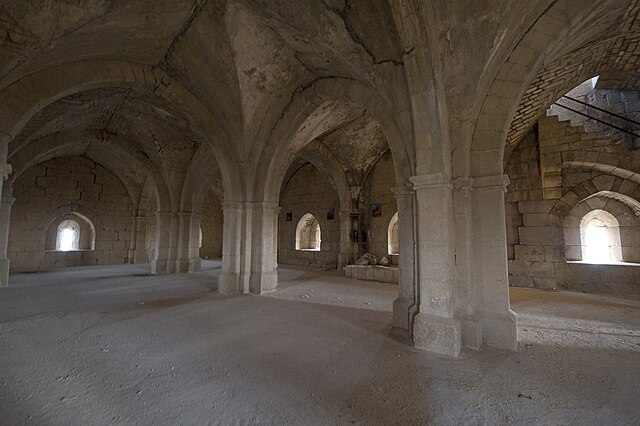
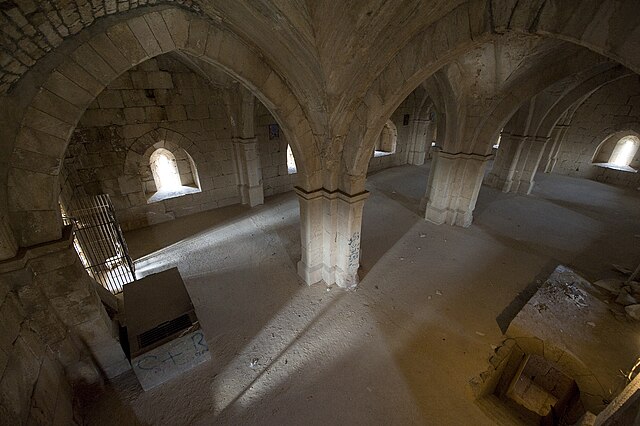
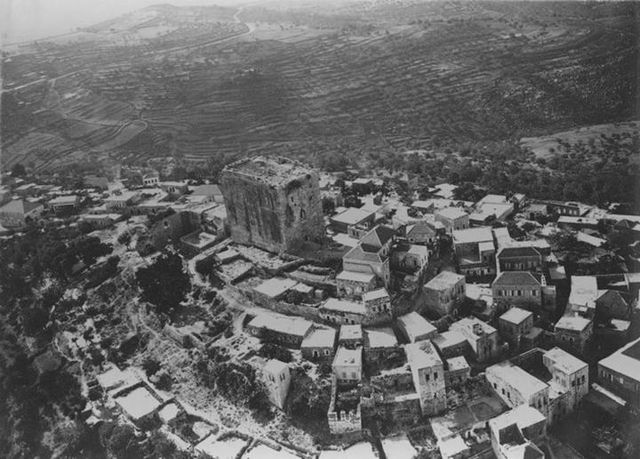
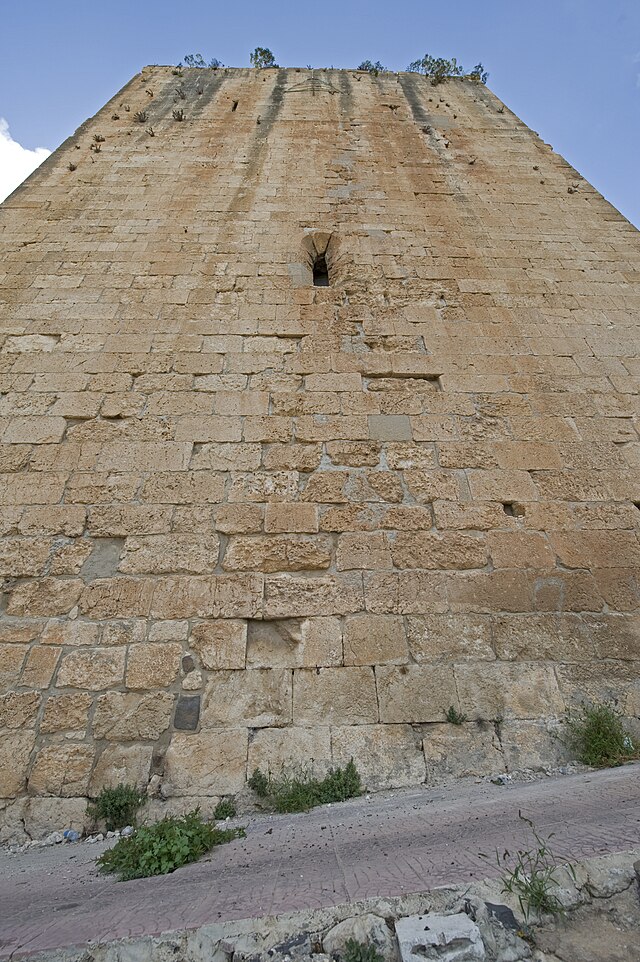
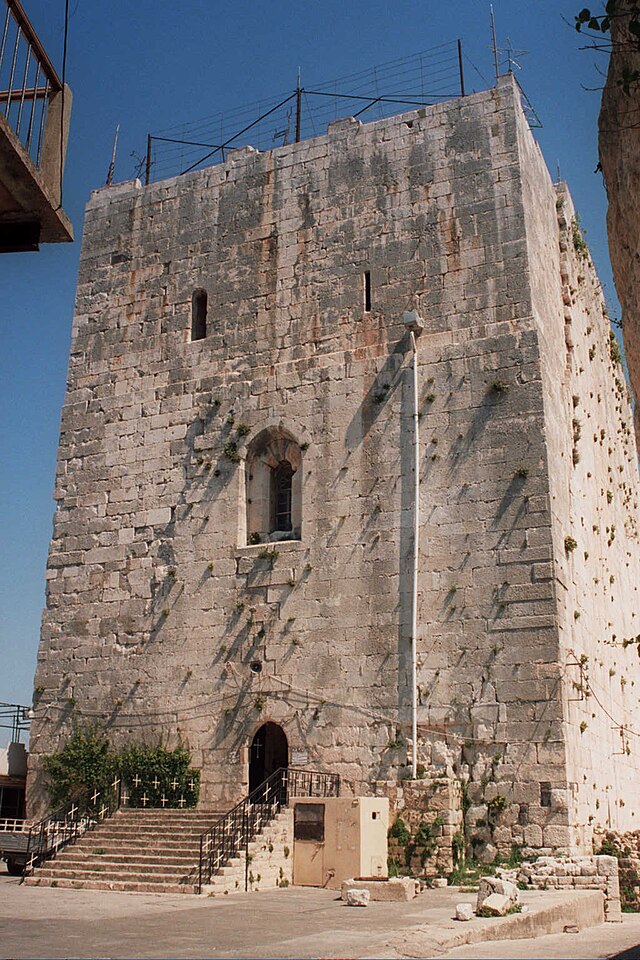
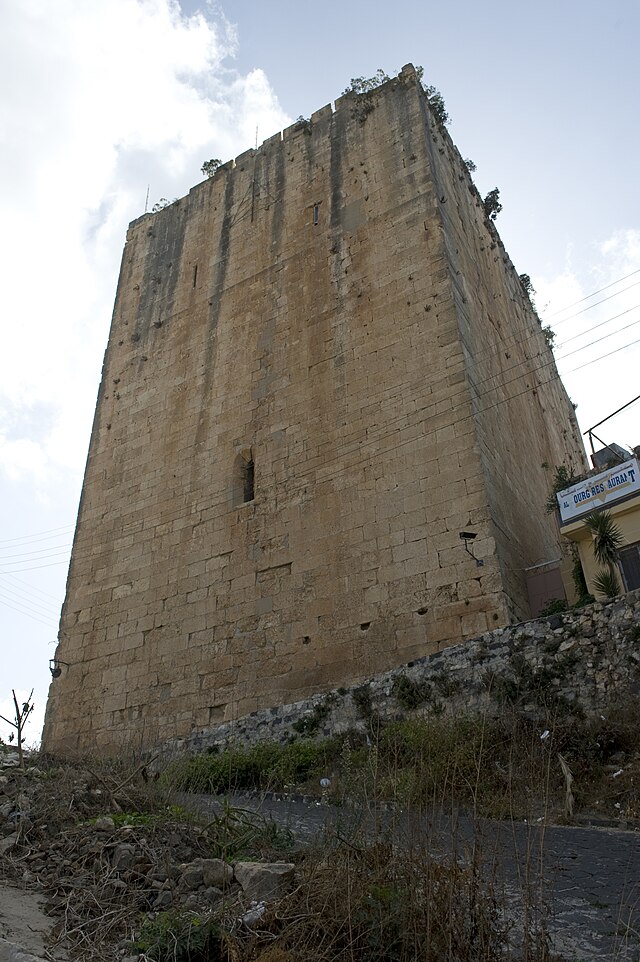
The architecture of Chastel Blanc (Safita Castle) is dominated by its immense four-story rectangular keep (donjon), which is all that substantially remains of the original complex. The castle’s architectural profile is unique among major Crusader fortresses due to its blend of military and religious function housed within a single block.
The Colossal Keep
The keep, built with large, finely cut blocks of local limestone, measures approximately 34 meters long, 18 meters wide, and 27 meters high. Its sheer thickness (walls up to 3.5 meters thick) reflects the Templars’ engineering priority: an impregnable, self-sufficient core that could withstand direct assault and earthquakes.
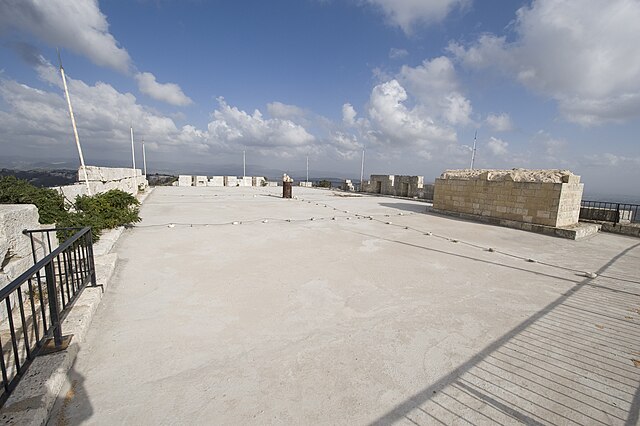
- Defensive Features: The upper floors are equipped with narrow slit windows for archery and machicolations (openings from which to drop objects onto attackers) added during the rebuilding phases. The rooftop provided an essential vantage point for surveillance and signaling.
- Internal Structure: The tower is divided into four distinct levels, each serving a specific purpose:
The Living Sanctuary: A Church in the Basement
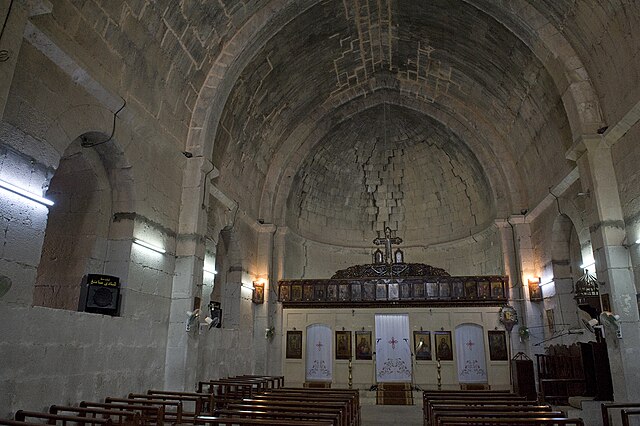
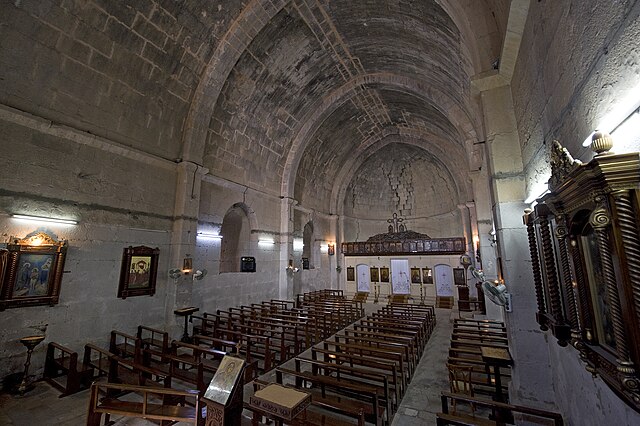
The most famous architectural feature of Safita Castle is the way its lowest level has been continuously utilized for worship:
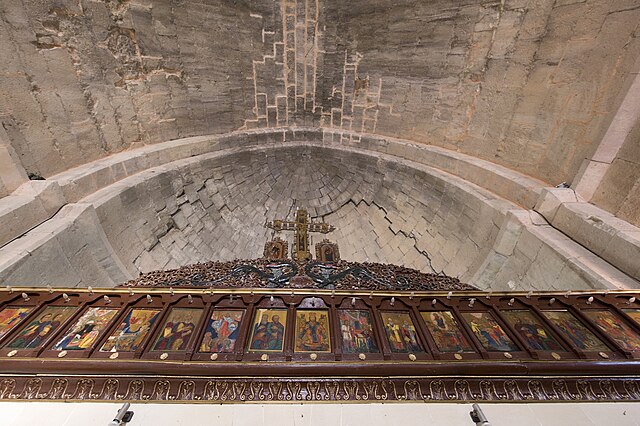
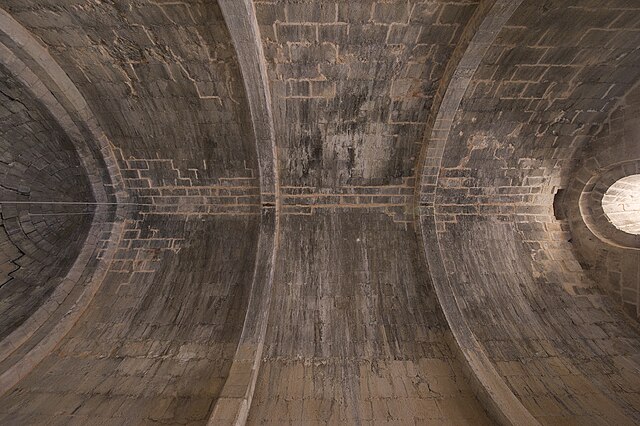
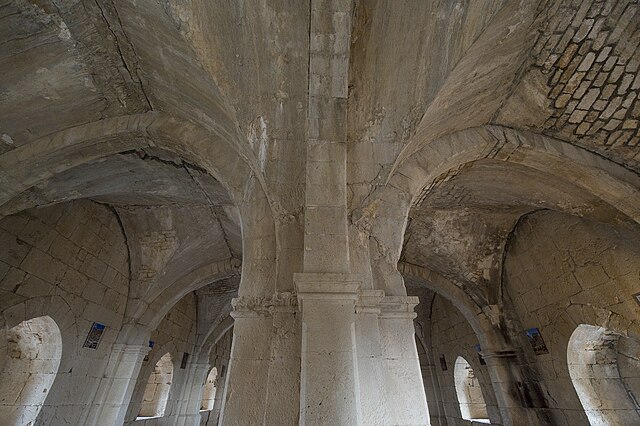
- The Lower Floor: This is the ground-level chamber, built with a robust vault, which was dedicated by the Templars as a chapel. Today, this space functions as an active Greek Orthodox Church. Its continuous use, from the Crusader era through to the present day, makes it a rare and powerful example of historical continuity. It is characterized by heavy stone columns and a dimly lit, sacred atmosphere.
- The First Floor (Templar Hall): Above the church, the first floor originally served as the main Templar Hall or Chapter House. It was a massive, vaulted space, often used for meetings, ceremonies, and possibly as a large dormitory or storage area.
- The Upper Floors: The higher floors served as the living quarters for the garrison commander, the soldiers’ barracks, and storage areas for food, water, and weapons—making the keep a truly self-contained fortress.
The Outer Defenses (Mostly Lost)
While the great tower is the primary surviving element, Safita Castle originally had a larger complex, including:
- Outer Walls (Courtyard): There was a wider curtain wall enclosing a large courtyard (or faussebraye) that contained stables, cisterns, and secondary buildings. These walls were relatively thin and proved more vulnerable to the Mamluks and earthquakes, which is why only traces of them remain today, integrated into the foundation of the modern town of Safita.
- Entrance: Access to the keep was originally controlled by a separate gateway structure attached to the courtyard walls, though the entrance today is much simpler.
Strategic Importance and Legacy
Safita Castle was never intended to be an independent regional capital like Krak des Chevaliers. Its role was highly specialized and vital to the overall Templar defensive strategy:
The Sentinel in the Limes
Safita Castle acted as a core communication sentinel. It was geographically positioned almost perfectly to act as a visual relay station between the two great rival fortresses:
- Tortosa (Templar Headquarters): The main coastal port and supply base.
- Krak des Chevaliers (Hospitaller Headquarters): The great castle guarding the Homs Gap.
This direct visual link allowed the Templars to coordinate military responses rapidly across the landscape using smoke, mirrors, or fire signals—an early form of communication technology essential for medieval warfare.
The Legacy of Continuity
The castle’s ultimate legacy lies not just in its military history but in its resilience. While the political power of the Templars vanished, the stone structure remained, becoming an organic part of the local community. The survival of the ancient church within the keep’s base reflects a cultural and religious continuity that transcended the conflicts of the Crusades. The Safita Tower is therefore a unique bridge connecting the medieval period, the Ottoman era, and the modern Syrian state.
Current Status and Conservation
Today, Chastel Blanc (Safita Castle) is a recognized national monument and a significant tourist attraction, though its visibility on the international stage is currently limited by regional conflict.
- Preservation Efforts: The tower remains structurally sound due to the superb quality of the Templar masonry and the major reinforcements conducted after the 1202 earthquake. Several restoration and archaeological projects have been undertaken since the 1990s to secure the interior vaults and repair damage caused by weather and historical wear.
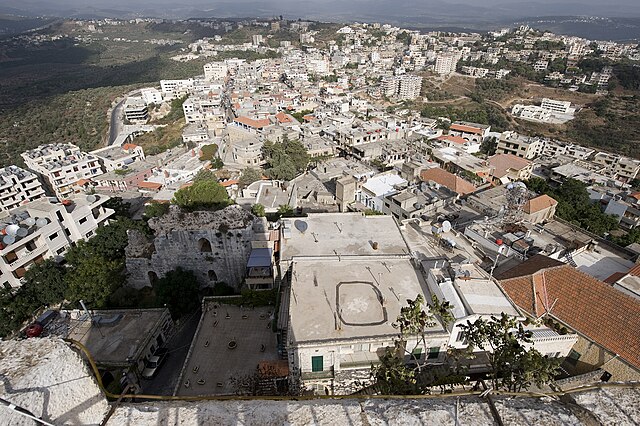
- Community Integration: The castle is completely integrated into the modern town of Safita. The town streets surround the base of the mound, and life continues right up to the base of the massive walls, giving it a unique atmosphere distinct from isolated desert castles.
- Contemporary Challenges: Like all historical sites in Syria, the castle faces challenges related to maintenance funding and regional instability. However, its continued use as a church by the local community ensures a constant level of care and vigilance, offering a unique form of historical protection.
See Also: Arwad Island
Conclusion
Chastel Blanc (Safita Castle) is a compelling architectural anomaly, its single dominating tower reflecting the military might of the Knights Templar. More than a fortress, Chastel Blanc (Safita Castle) was a vital medieval defense hub and a sanctuary that still holds a religious function today. Its survival through earthquakes confirms its exceptional engineering. Chastel Blanc (Safita Castle) holds a unique place in the history of the Levant’s limes and Syrian heritage.
If you have any questions, please contact us. To explore further, visit our website gallery for rare images and cultural highlights.
Sources & References:
UNESCO – World Heritage Centre: https://whc.unesco.org
Archnet – Architecture & Heritage Database: https://www.archnet.org
World History Encyclopedia: https://www.worldhistory.org
Syrian Heritage Archive Project: https://syrian-heritage.org
Global Encyclopedia: Wikipedia