Aleppo Historical Churches : Aleppo, one of the oldest continuously inhabited cities in the world, is celebrated not only for its Islamic heritage but also for its deep-rooted Christian history. For centuries, the city was home to a vibrant mosaic of Christian communities—including Armenian, Greek Orthodox, Greek Catholic, Maronite, and Syriac groups—each leaving behind stunning churches that continue to tell stories of faith, endurance, and artistry.
Despite challenges over the centuries, including war, fire, and most recently, civil conflict, many of Aleppo’s historical churches still stand, preserving the city’s legacy as a center of religious tolerance and multiculturalism. This article explores some of the most notable churches—those you mentioned and more—offering travelers and history lovers a guide to Aleppo’s rich Christian heritage.
Aleppo Historical Churches | Smart Chart
| Church Name | Era & Year | Key Notes |
|---|---|---|
| Catholic Church of Saint Asia al-Hakim (كنيسة القديس آسيا الحكيم) | 20th century – 1930s | Known for its unique architecture and Catholic liturgy in Arabic |
| Armenian Orthodox Church of Forty Martyrs (كنيسة الأربعين شهيدًا للأرمن الأرثوذكس) | 15th century – 1491 | Located in Jdeydeh; iconic bell tower, historic heart of Armenian community |
| The Greek Catholic Church of Our Lady (كنيسة السيدة للروم الكاثوليك) | 19th century – 1848 | Baroque style with a beautiful dome; still active, located in old Aleppo |
| The Armenian Catholic Church (كنيسة الأرمن الكاثوليك) | 19th century – 1823 | Elegant interior; symbol of Armenian Catholic presence in Aleppo |
| Mar Assia al-Hakim Syriac Catholic Church (كنيسة مار آسيا الحكيم للسريان الكاثوليك) | 15th century – Rebuilt 1970s | Historic Syriac church; originally from medieval period, rebuilt after fire |
| Maronite Cathedral of Saint Elijah (كاتدرائية مار الياس المارونية) | 19th century – 1873 | Main Maronite church in Aleppo; neo-Gothic influences |
| Church of Saint Michael Syriac Orthodox (كنيسة مار ميخائيل للسريان الأرثوذكس) | 19th century – 1814 | Modest in size; important center for Syriac Orthodox liturgy |
| Latin Church of Saint Francis (كنيسة القديس فرنسيس للاتين) | 20th century – 1937 | Franciscan mission church with attached convent and school |
| Church of Saint George – Greek Orthodox (كنيسة مار جرجس للروم الأرثوذكس) | 19th century – 1870s | Large community church with rich iconography and interior murals |
| Evangelical National Church (الكنيسة الإنجيلية الوطنية بحلب) | 20th century – 1923 | Founded by Protestant missionaries; damaged during conflict, now active again |
| Church of the Presentation of the Virgin (كنيسة دخول السيدة إلى الهيكل) | Byzantine roots – rebuilt 19th century | Located near Citadel; small but historically significant Greek Orthodox site |
| Church of Saint Gregory the Illuminator (كنيسة القديس غريغوريوس المنور) | 20th century – 1933 | Armenian Apostolic; named after the founder of Armenian Christianity |
| Chaldean Catholic Church of Aleppo (كنيسة الكلدان الكاثوليك بحلب) | 20th century – 1920s | Serves Chaldean Catholic community; traditional Eastern liturgy |
| Church of the Holy Trinity – Armenian Evangelical (كنيسة الثالوث الأقدس الأرمنية الإنجيلية) | 20th century – 1923 | Evangelical Armenian heritage; near old Armenian quarter |
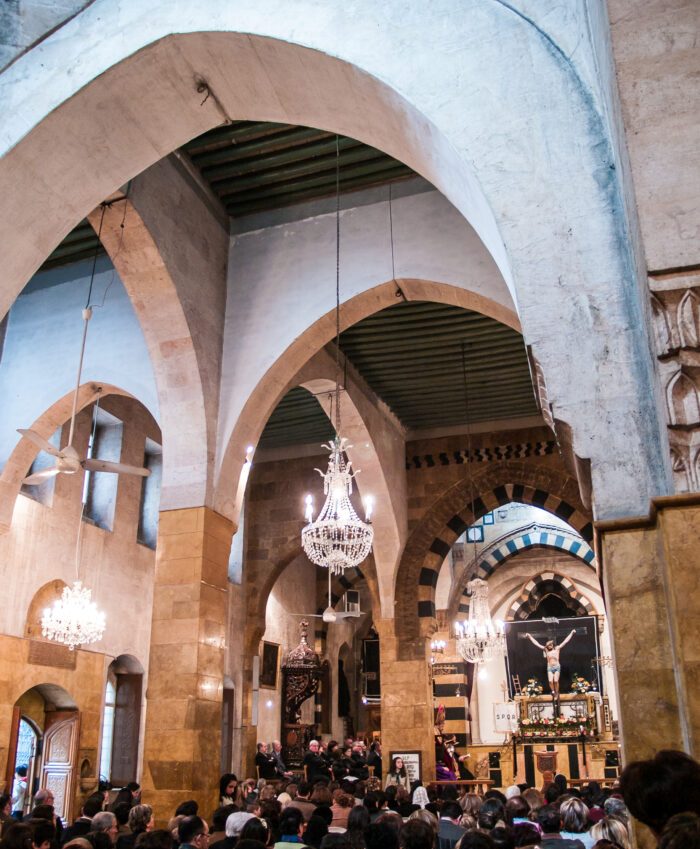
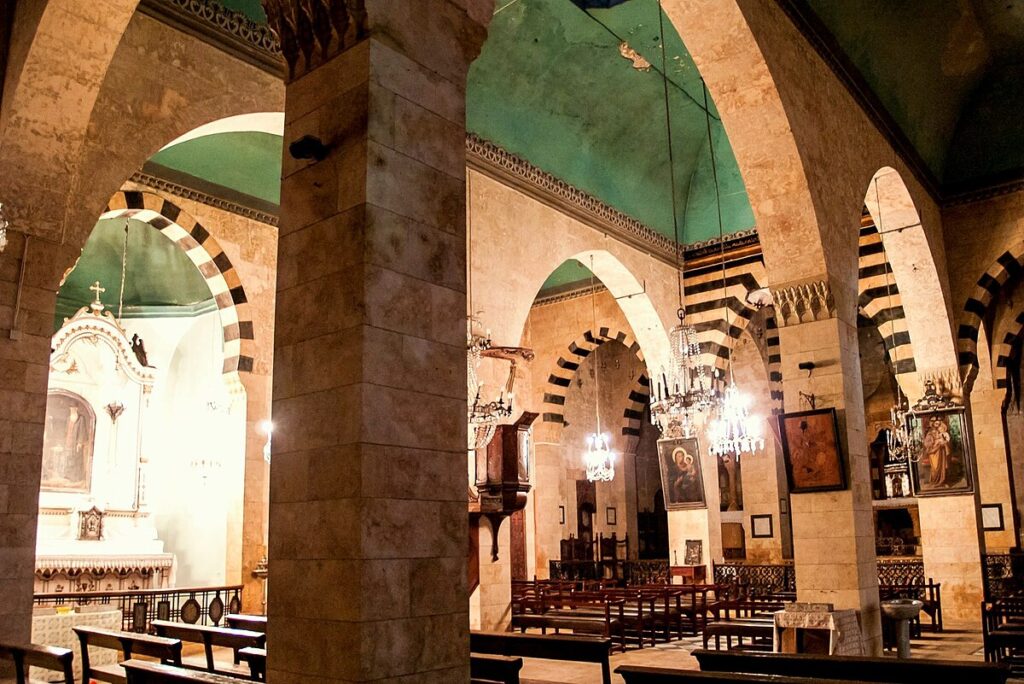
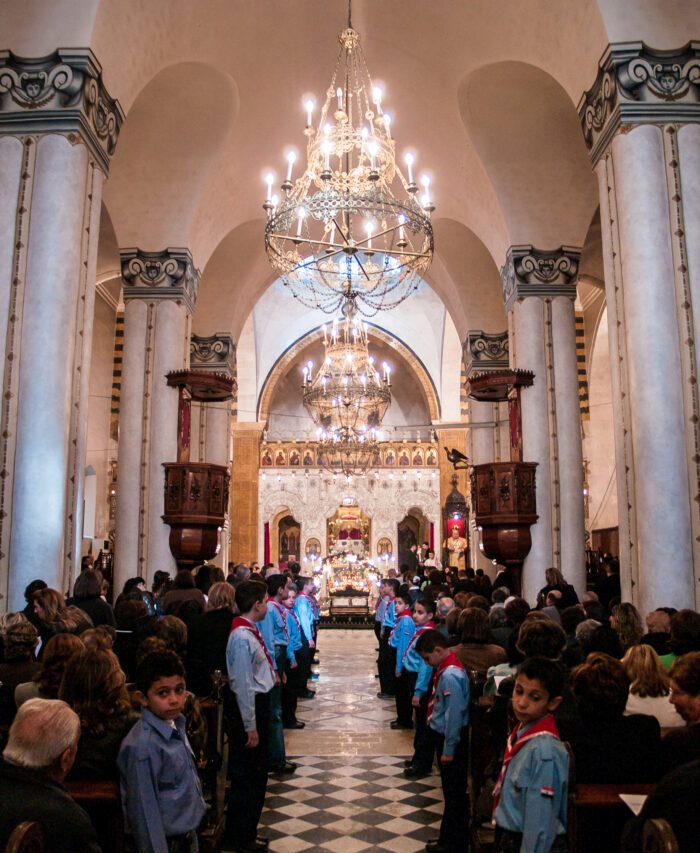

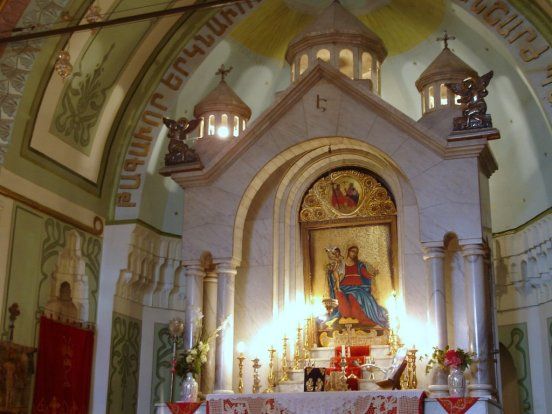
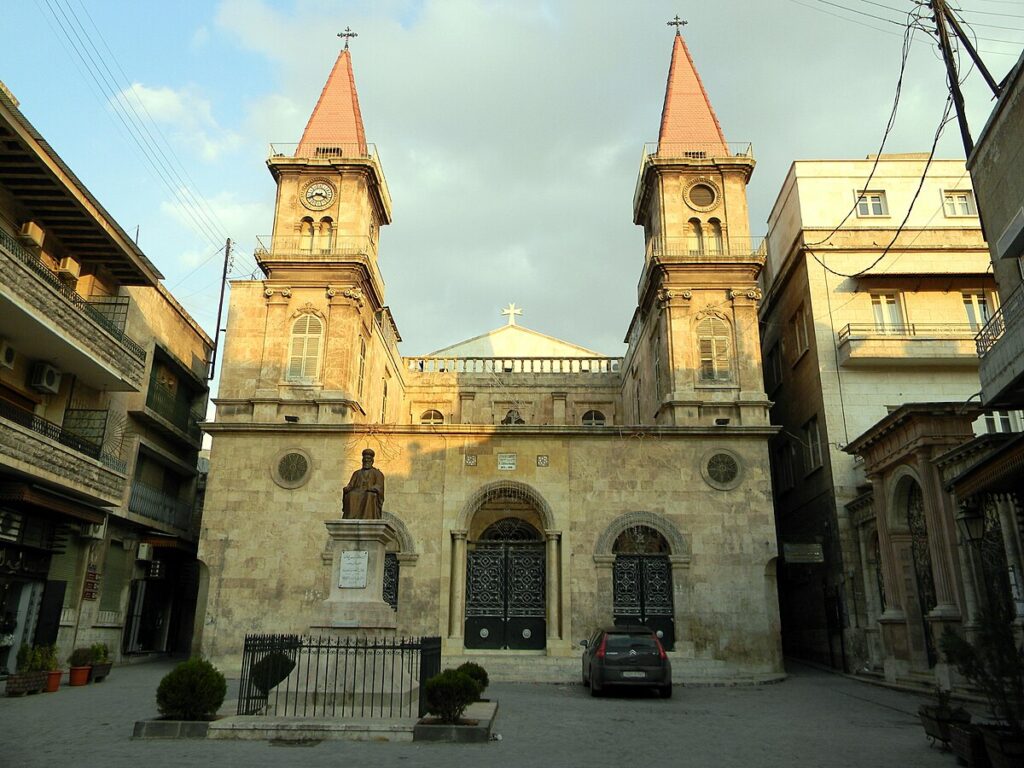
Catholic Church of Saint Asia al-Hakim (كنيسة القديس آسيا الحكيم)
Located in the Al-Farafira district, the Catholic Church of Saint Asia al-Hakim is a unique gem within the Christian quarters of Old Aleppo. This church belongs to the Melkite Greek Catholic Church, which follows Byzantine rites while remaining in full communion with the Roman Catholic Church.
Named after Asia al-Hakim, an early Christian martyr and saint, the church is modest in size but holds significant historical and spiritual importance. Its structure reflects a combination of local Syrian and Byzantine architectural elements: a simple stone exterior hides a warm, welcoming interior with arched ceilings, painted icons, and traditional pews.
The church has served as a spiritual home for generations of Aleppine Catholics, offering a glimpse into the city’s lesser-known but resilient Eastern Catholic communities.
Armenian Orthodox Church of the Forty Martyrs (كنيسة الأربعين شهيد)
Perhaps the most iconic Christian church in Aleppo, the Armenian Orthodox Church of the Forty Martyrs stands in the old Armenian quarter, known as Jdeydeh. Built in 1491, this church is dedicated to the Forty Martyrs of Sebaste, Roman soldiers who were executed for their Christian faith.
Architecturally, it is a magnificent example of traditional Armenian ecclesiastical design, with its pointed dome, stone bell tower, and cross-shaped layout. Inside, visitors will find rich wood carvings, a beautifully decorated altar, and several religious relics and manuscripts.
The church served as the spiritual heart of Aleppo’s Armenian Apostolic community for over five centuries. It was damaged during recent conflicts but is undergoing careful restoration with the help of the Armenian Patriarchate and UNESCO.
The Greek Catholic Church of Our Lady (كنيسة السيدة للروم الكاثوليك)
Located just off the Al-Tilal Street in central Aleppo, The Greek Catholic Church of Our Lady (Sayyidat al-Roum al-Katholik) is another stunning testament to the city’s Byzantine Catholic tradition. Built in the 19th century, the church features a grand interior adorned with Byzantine-style frescoes, gold-plated icons, and marble flooring.
Its large nave and high ceiling make it one of the largest Eastern Catholic churches in Aleppo. The church is particularly important during Christian holidays, drawing large congregations for Christmas, Easter, and the Feast of the Virgin Mary.
Before the war, it was also a center of interfaith dialogue and musical concerts, given its excellent acoustics and beautiful architecture.
Armenian Catholic Church (كنيسة الأرمن الكاثوليك)
The Armenian Catholic Church of Aleppo is another religious and cultural treasure found in the Christian quarter of Jdeydeh. It was built in the 19th century, after the Armenian Catholic community split from the Apostolic Church and aligned with the Vatican, maintaining Eastern rites while recognizing the Pope.
The church is noted for its beautiful iconostasis, high arched windows, and peaceful courtyard surrounded by trees and community buildings. It has served as both a place of worship and a cultural hub, housing a small library and community center.
Though the church was also affected by recent conflicts, restoration efforts are bringing it back to life, ensuring that the Armenian Catholic heritage remains a visible part of Aleppo’s religious identity.
Aleppo Historical Churches : Additional Landmarks
Maronite Cathedral of Saint Elijah (كاتدرائية مار إلياس المارونية)
Built in the mid-19th century, this church is the central cathedral for Aleppo’s Maronite Catholic community. The Maronites, who originate from Lebanon and Syria, follow Eastern rites but are in full communion with the Vatican.
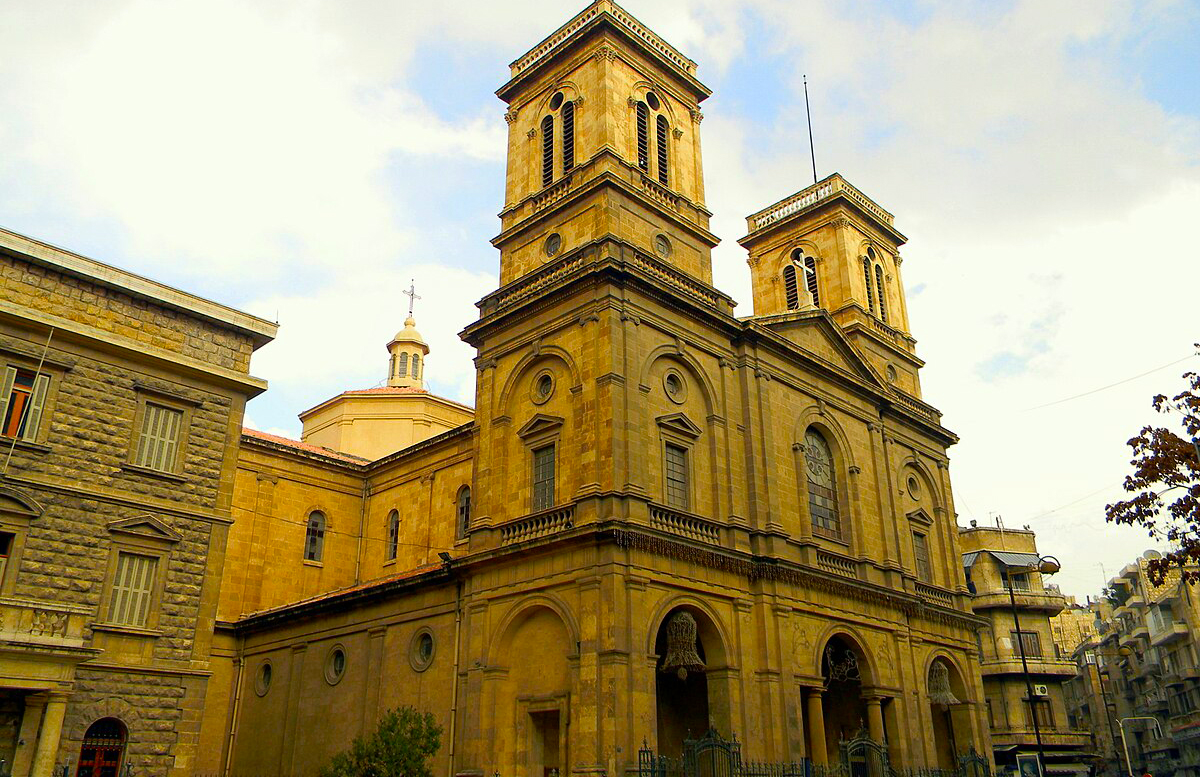
The cathedral, with its neoclassical design, tall bell towers, and arched portico, dominates the surrounding neighborhood. Inside, the cathedral features marble altars, Arabic and Syriac inscriptions, and large stained-glass windows.
The church has seen heavy damage during the war, but efforts to restore it are well underway, symbolizing the Maronite community’s commitment to resilience and faith.
Church of Saint Elijah the Prophet (كنيسة مار إلياس النبي للسريان الكاثوليك)
This historic church belongs to the Syriac Catholic Church, which uses the Syriac-Aramaic language in its liturgy—a direct descendant of the language spoken by Jesus.
The Church of Saint Elijah the Prophet is located in the Old City and was constructed in the 17th century. Its modest exterior hides an awe-inspiring wooden altar, handwritten Syriac manuscripts, and a rare collection of liturgical vestments and chalices.
The Syriac community in Aleppo has always been small in number but rich in culture and liturgical tradition. The church continues to be an active center of worship and cultural preservation.
Church of the Dormition of the Theotokos (كنيسة رقاد السيدة)
This church belongs to the Greek Orthodox Patriarchate of Antioch, one of the oldest Christian institutions in the world. The Dormition of the Theotokos—also known as the “Falling Asleep of the Virgin Mary”—is a major feast in Eastern Christianity.
The church is known for its dome with Byzantine mosaics, marble columns, and traditional Byzantine-style iconography. Services are conducted in Arabic and Greek, reflecting Aleppo’s long-standing connection with both Eastern and local Christian traditions.
Saint George’s Syrian Orthodox Church (كنيسة مار جرجس للسريان الأرثوذكس)
Another jewel of Aleppo’s Christian past is Saint George’s Church, serving the Syriac Orthodox community. Built in the early 20th century on the foundations of older structures, the church is named after St. George the Martyr, a figure venerated across many Christian denominations.
The church celebrates ancient West Syriac rites, including chants and liturgies preserved from early Christianity. It is a reminder of Aleppo’s deep-rooted connection to Syriac heritage, which has flourished here for centuries.
See Also: Damascus Historical Churches
The Jdeydeh Quarter: Christian Aleppo’s Beating Heart
Most of Aleppo Historical Churches are concentrated in the Jdeydeh quarter, a district founded in the 15th century by Christian merchants. This area is one of the most iconic sites linked to Aleppo Historical Churches, featuring narrow pedestrian streets, Ottoman-era houses, and interwoven churches from various Christian traditions.
Before the conflict, Jdeydeh was a vibrant cultural hub filled with artisan workshops, bookstores, restaurants, and music events often hosted in church courtyards. Restoration projects now aim to revive Jdeydeh and protect the legacy of Aleppo Historical Churches through the careful renovation of their structures and nearby residences.
Christianity in Aleppo: A Living Heritage
The story of Aleppo Historical Churches is inseparable from the Christian community that has shaped the city for centuries. Although Aleppo’s Christian population has declined due to migration and war, the traditions remain alive. Sunday Mass, Easter celebrations, and Christmas liturgies are still observed within many Aleppo Historical Churches, which also serve as schools, cultural centers, and charitable institutions.
These churches are more than religious landmarks—they are guardians of heritage, places of learning, and living witnesses to coexistence. Preserving Aleppo Historical Churches ensures that Aleppo’s multi-faith legacy continues to inspire future generations.
Visiting Aleppo Historical Churches: What Tourists Should Know
For travelers, Aleppo Historical Churches offer an authentic and spiritual experience. To make the most of your visit, consider the following tips:
- Dress respectfully: Modest clothing is recommended, particularly during services.
- Photography: Always ask before taking pictures, especially during liturgies or when sacred icons are present.
- Go with a guide: Many Aleppo Historical Churches hold centuries of untold stories that are best understood with the help of a local historian.
- Best time to visit: Spring and fall provide pleasant weather, while religious festivals like Easter or the Feast of the Virgin Mary bring Aleppo Historical Churches to life with vibrant traditions.
Final Thought
Aleppo Historical Churches represent the sacred footprints of a city that has stood as a beacon of diversity, resilience, and faith. From Armenian and Syriac to Maronite and Greek Orthodox communities, each church reflects not only centuries of prayer but also a cultural and artistic survival unmatched in the region.
In the echo of bells and the glow of candlelit altars, visitors can still feel the heartbeat of Aleppo’s Christian heritage. For historians, spiritual seekers, and cultural travelers, exploring Aleppo Historical Churches is more than sightseeing—it is a journey through one of the world’s oldest and most enduring civilizations
Finally.. If you have any questions, please contact us. To explore further, visit our website gallery for rare images and cultural highlights.
Sources & References:
UNESCO – World Heritage Centre: https://whc.unesco.org
Archnet – Architecture & Heritage Database: https://www.archnet.org
World History Encyclopedia: https://www.worldhistory.org
Syrian Heritage Archive Project: https://syrian-heritage.org
Global Encyclopedia: Wikipedia