Ancient Sites Beyond Euphrates : The ancient Near East is often associated with the fertile banks of the Tigris and Euphrates, yet its deeper history extends into the surrounding hinterlands and tributaries. These Ancient Sites Beyond Euphrates reveal a distinct layer of civilization, where desert, steppe, and rivers like the Khabur and Balikh shaped new forms of urban life and religion. Cities such as Harran and Dur-Katlimmu became key frontier centers, linking Mesopotamia to the wider Mediterranean world.
Quick Facts: Ancient Sites Beyond Euphrates
| Feature | Harran (Carrhae) | Dur-Katlimmu (Tell Sheikh Hamad) |
| Location | Upper Mesopotamia (Modern Turkey/Syria Border) | Khabur River Basin (Eastern Syria) |
| Primary Era | 2500 BC – 1271 AD | 1300 BC – 600 BC |
| Key Deity | Sin (Moon God) | Dagan / Salmanu |
| Famous Structure | Temple of Ekhulkhul & Beehive Houses | The Red House (Neo-Babylonian) |
| Key Historical Moment | Last capital of the Assyrian Empire (612 BC) | Seat of the “King of Hanigalbat” |
| Archaeological Find | Nabonidus Stelae | 600+ Middle Assyrian Tablets |
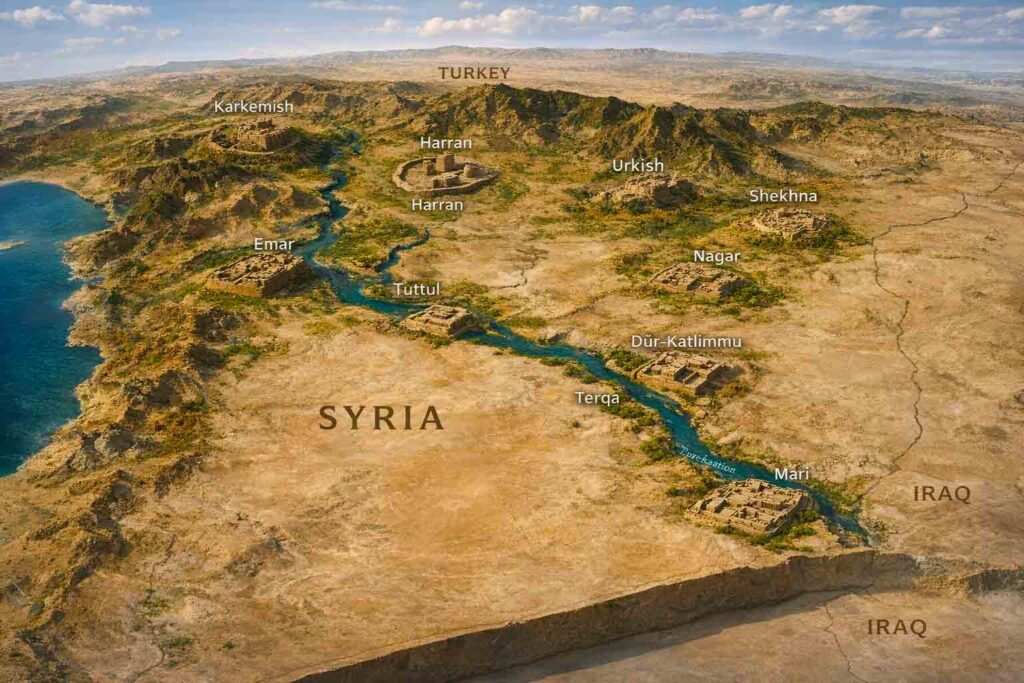
The Hidden Empires: Ancient Sites Beyond Euphrates
To explore the archaeological wealth of the Middle East is to realize that the Great Rivers were the highways, but the surrounding plains were the lifeblood of the regional economy. When we look beyond the Euphrates, we find a landscape defined by the “Hilly Flanks” and the vital tributaries that allowed for a different kind of urban expansion. These Ancient Sites Beyond Euphrates highlight this transformation. Harran and Dur-Katlimmu are the quintessential examples of this expansion—one a cosmic center of lunar worship, the other a fortified administrative engine of the Assyrian war machine.
Harran: The Crossroads of the Moon God
Harran, whose name literally translates to “Road” or “Crossroads” in Akkadian, lived up to its title for over five millennia. Situated in the Balikh River basin, it represents the northern reach of the Ancient Sites Beyond Euphrates cultural sphere.
The Temple of Ekhulkhul
For the ancient inhabitants of Mesopotamia, Harran was not just a city; it was the home of Sin, the Moon God. The Temple of Ekhulkhul (“House of Rejoicing”) was one of the most sacred sites in the world. It wasn’t just a place of prayer but a center of astronomical observation and political legitimacy, making it one of the most significant Ancient Sites Beyond Euphrates. Even the last king of Babylon, Nabonidus, was so obsessed with the restoration of this temple that he neglected Babylon itself for ten years, staying in the Arabian desert while his mother, a high priestess in Harran, maintained the lunar cult’s influence.
The Final Stand of Assyria
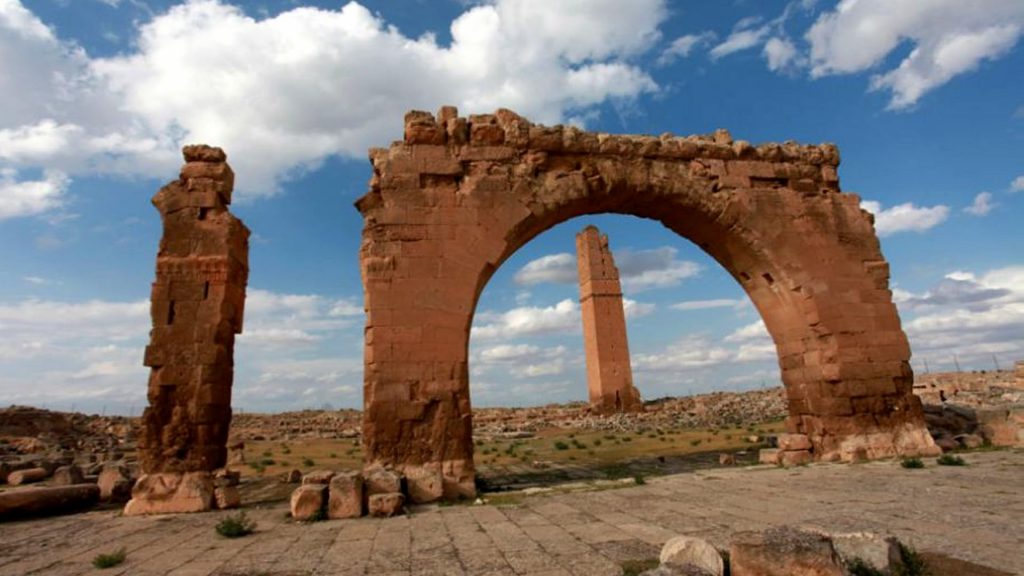
Harran’s historical weight peaked in 612 BC. After the catastrophic fall of Nineveh to the Medes and Babylonians, the remnants of the Assyrian royal family fled beyond the Euphrates to Harran. For a brief, desperate period, Harran served as the final capital of the Assyrian Empire under Ashur-uballit II, becoming one of the most critical Ancient Sites Beyond Euphrates. Its fall in 609 BC marked the definitive end of an empire that had dominated the Near East for centuries, shifting the center of gravity permanently toward Babylon.
The Sabians and the Beehive Houses
Harran’s legacy didn’t end with the ancients. Throughout the Islamic Golden Age, it remained a center of “pagan” learning. The Sabians of Harran were renowned as master astronomers and translators, preserving Greek philosophy and science when much of the West had forgotten it. Today, the site is visually famous for its “Beehive Houses”—conical mudbrick structures designed to stay cool in the scorching Mesopotamian heat. These houses, though relatively modern in their current form, utilize architectural principles that have existed in the region beyond the Euphrates for thousands of years, reinforcing its place among the most distinctive Ancient Sites Beyond Euphrates.
Dur-Katlimmu: The Fortress of the East
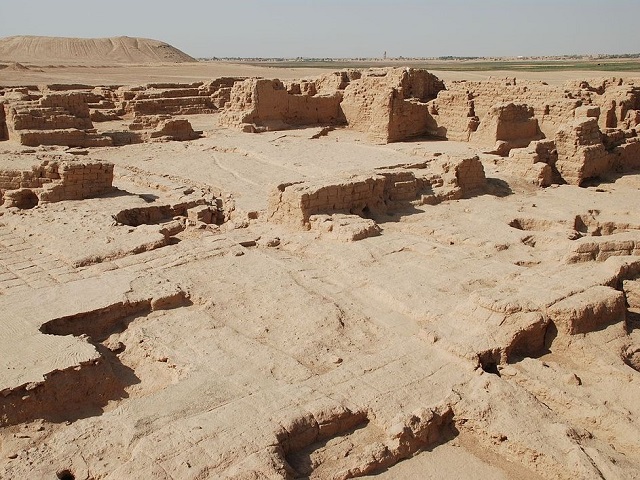
While Harran was a city of stars and scholars, Dur-Katlimmu (modern Tell Sheikh Hamad) was a city of soldiers and scribes. Located on the lower Khabur River, it was the easternmost provincial capital of the Assyrian Empire, acting as a strategic buffer and a gateway to the lands beyond the Euphrates, making it one of the key Ancient Sites Beyond Euphrates.
The Seat of the Great Vizier
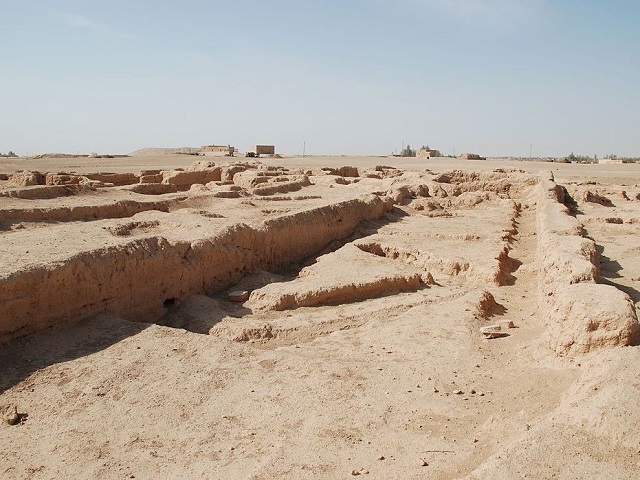
Founded as an Assyrian stronghold in the 13th century BC by Shalmaneser I, Dur-Katlimmu was more than just a fort. It was the residence of the “Grand Vizier,” a high-ranking official who often held the prestigious title of “King of Hanigalbat.” This meant the city was the administrative heartbeat of the western empire and one of the key Ancient Sites Beyond Euphrates. Excavations have unearthed a “Building P” which functioned as an annex to the royal palace, containing hundreds of cuneiform tablets that detail the meticulous bureaucracy of the Assyrian state.
The Mystery of the Red House
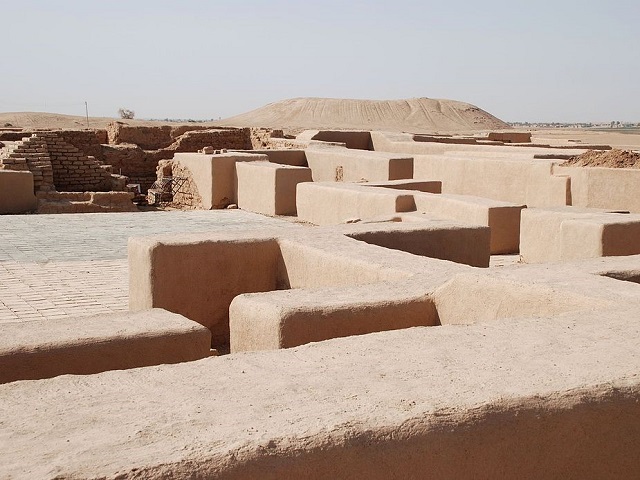
One of the most significant discoveries at the site is the Red House. This massive, 90-room residence dates to the Neo-Babylonian period (the 6th century BC), long after the Assyrian Empire had officially “collapsed.” The discovery of the Red House proved that life beyond the Euphrates continued with high-status residents even under new imperial masters, placing it among the important Ancient Sites Beyond Euphrates. The walls were finished with a distinct red plaster, and the presence of elite goods—ceramics, jewelry, and legal archives—suggests that Dur-Katlimmu remained a center of wealth and power well into the era of Nebuchadnezzar II.
Trade and Irrigation
Dur-Katlimmu’s success was built on its mastery of the water. The Assyrians constructed elaborate canal systems to divert water from the Khabur River, turning the surrounding steppe into a breadbasket. This agricultural surplus allowed the city to support a massive population and a standing army, making it one of the most important Ancient Sites Beyond Euphrates. By looking beyond the Euphrates to these tributary systems, archaeologists have realized that the Assyrians were as much master engineers as they were warriors.
Socio-Political Impact of the Frontier
The existence of sites like Harran and Dur-Katlimmu challenges the traditional “river-centric” view of history. These cities prove that the civilizations of the Near East were not just confined to the banks of the primary rivers but were actively expanding Beyond the Euphrates to control trade routes and religious narratives.
- Religious Diplomacy: The cult of the Moon God in Harran was used to forge treaties between empires. When the Hittites or Mitanni wanted to secure a border, they swore oaths in the name of “Sin of Harran.”
- Linguistic Diversity: While Akkadian was the language of the empire, the regions Beyond the Euphrates were melting pots where Aramaic, Hurrian, and Hittite influences blended.
- Economic Resilience: These sites managed to survive the collapse of the Bronze Age better than many coastal cities because their inland, steppe-based economies were more adaptable to shifts in trade.
See Also: Ancient Sites East Syria (on the Euphrates)
FAQ: Ancient Sites Beyond Euphrates
What are Ancient Sites Beyond Euphrates?
Ancient Sites Beyond Euphrates refer to archaeological locations located outside the main Euphrates River valley, often in tributary regions like the Khabur and Balikh rivers. These sites played a key role in trade, religion, and administration in the ancient Near East.
Why were Harran and Dur-Katlimmu important?
Harran was a major religious center dedicated to the Moon God Sin, while Dur-Katlimmu served as an administrative hub of the Assyrian Empire. Together, they represent key examples of Euphrates frontier civilizations.
What makes Harran one of the most important ancient cities in Syria?
Harran is known for the Temple of Ekhulkhul, its role as the last capital of the Assyrian Empire, and its long-lasting religious and intellectual legacy during the Islamic Golden Age.
What is Dur-Katlimmu known for?
Dur-Katlimmu is famous for its Assyrian administrative system, the discovery of hundreds of cuneiform tablets, and structures like the Red House, which show continued elite occupation after the Assyrian collapse.
How did water systems influence these civilizations?
Ancient engineers built canals from rivers like the Khabur to irrigate farmland. This allowed Ancient Sites Beyond Euphrates to support large populations and strong military systems, making them economically powerful.
What languages were spoken in these regions?
The regions Beyond the Euphrates were linguistically diverse, with Akkadian as the administrative language alongside Aramaic, Hurrian, and other regional dialects.
How did these sites connect to ancient trade routes?
These sites acted as key nodes in ancient Near Eastern trade networks, linking Mesopotamia with Anatolia and the Mediterranean through caravan and river routes.
What is the significance of the Sabians of Harran?
The Sabians were a scholarly and religious group known for preserving Greek philosophy, astronomy, and scientific knowledge during the Islamic Golden Age, keeping Harran an intellectual center.
Are there any important archaeological discoveries from these sites?
Yes. Key discoveries include:
The Nabonidus Stelae at Harran
Over 600 cuneiform tablets from Dur-Katlimmu
The Red House, a large Neo-Babylonian elite residence
What caused the decline of these cities?
Their decline was due to a combination of:
Assyrian and Babylonian conquests
Shifts in trade routes
Political instability
Environmental and economic changes
How are Ancient Sites Beyond Euphrates preserved today?
Modern archaeology uses:
Satellite imaging
3D reconstruction
Digital archiving
These methods help protect and study ancient Syrian archaeological sites despite challenges like looting and conflict.
What is the difference between river cities and frontier sites?
River cities depended on irrigation and centralized control, while frontier sites Beyond the Euphrates relied on:
Trade routes
Tributary rivers
Strategic positioning
This made them more adaptable and often more resilient.
Conclusion: The Enduring Allure of the Steppe
The story of human civilization is often told as a journey from rivers to the sea, but Harran and Dur-Katlimmu show that history also thrived in the quiet plains. As we look beyond the Euphrates, we uncover a complex world—where the moon was a god, palaces held the secrets of kings, and crossroads shaped early thought. Protecting these sites in 2026 is not just archaeology; it is preserving a vital part of our shared human heritage.
Sources & References:
UNESCO – World Heritage Centre: https://whc.unesco.org
Archnet – Architecture & Heritage Database: https://www.archnet.org
World History Encyclopedia: https://www.worldhistory.org
Syrian Heritage Archive Project: https://syrian-heritage.org
Global Encyclopedia: Wikipedia