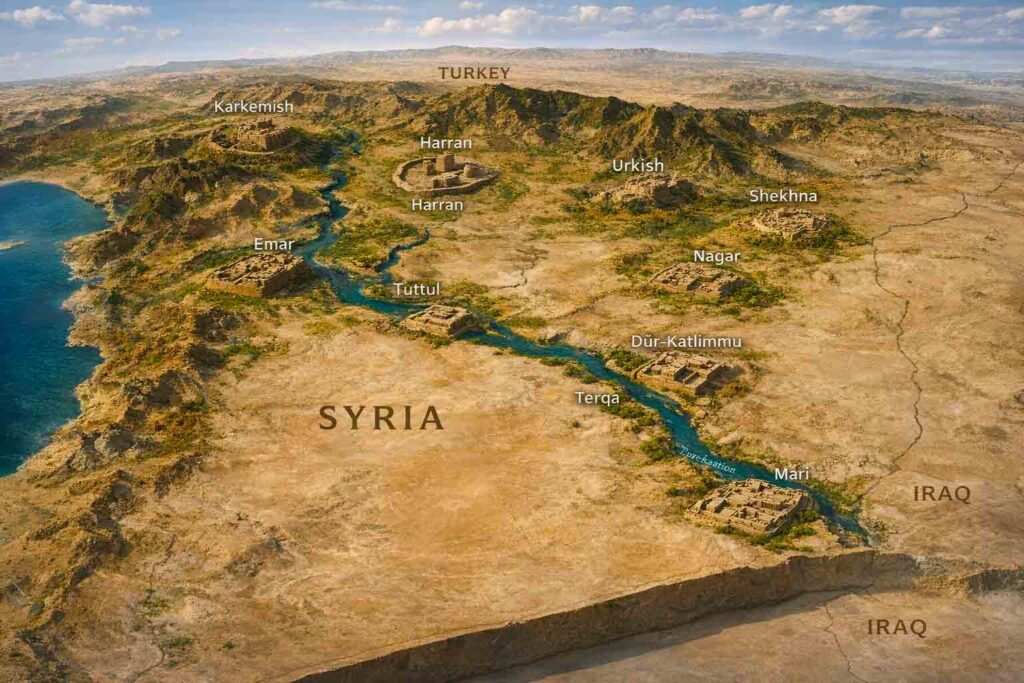
Ancient Sites east Syria along the Euphrates River represent some of the earliest and most influential urban civilizations in human history. Stretching between Anatolia and Mesopotamia, this region became a strategic corridor where trade, diplomacy, and culture converged. Cities like Mari, Terqa, Emar, and Karkemish were not just settlements—they were powerful hubs that defined the Bronze and Iron Ages.
These Euphrates River civilizations formed a unique cultural bridge between the north and south, blending Amorite, Hurrian, and Semitic traditions into some of the world’s first cosmopolitan societies. Today, these sites offer one of the most profound insights into the origins of cities, international trade, and political systems.
Quick Facts | Ancient Sites East Syria
| Site Name | Ancient Name | Key Era | Primary Significance |
|---|---|---|---|
| Mari | Tell Hariri | 2900–1759 BC | Trade powerhouse; 25,000 tablets; Zimri-Lim’s Palace |
| Terqa | Tell Ashara | 3000–1500 BC | Capital of the Kingdom of Khana; religious center for Dagan |
| Tuttul | Tell Bi’a | 2500–1500 BC | Religious crossroads; associated with the Great God Dagan |
| Emar | Tell Meskene | 1400–1187 BC | Late Bronze Age trade hub; unique private/legal archives |
| Karkemish | Carchemish | 1800–717 BC | Neo-Hittite capital; massive basalt reliefs and Iron Age power |
The Importance of Ancient Sites east Syria in World History
The Ancient Sites east Syria differ significantly from southern Mesopotamian cities. While cities like Babylon relied heavily on irrigation systems, the ancient Syrian cities along the Euphrates thrived through a combination of:
- River-based trade networks
- Rain-fed agriculture
- Strategic military positioning
This combination created highly adaptive and economically dynamic societies. These Bronze Age cities of Syria became early centers of diplomacy, where kings negotiated alliances, trade agreements, and political strategies across vast regions.
Understanding these sites means understanding the foundations of:
- International law
- Trade systems
- Diplomatic communication
Mari (Tell Hariri): The Political and Economic Powerhouse
Among all Ancient Sites east Syria, Mari stands as the most iconic. Founded around 2900 BC, it was a carefully planned city built specifically to control trade along the Euphrates.
Its circular design and advanced flood-control systems demonstrate remarkable engineering for its time.
The Palace of Zimri-Lim
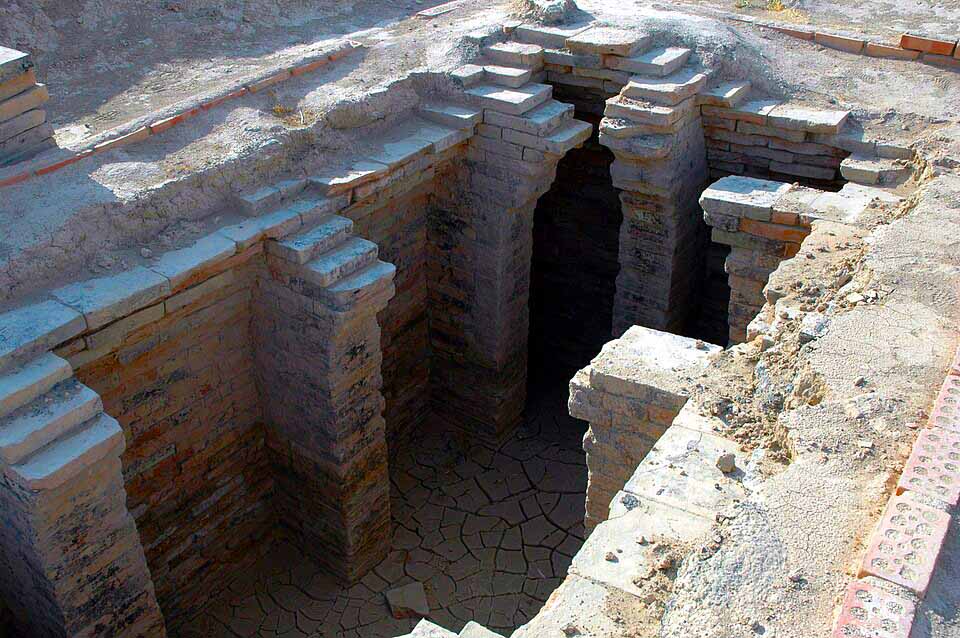
Mari’s greatest treasure is the Palace of Zimri-Lim, one of the most sophisticated administrative complexes of the ancient world. It functioned as:
- A royal residence
- A political headquarters
- A massive archive center
The discovery of over 25,000 cuneiform tablets transformed our understanding of the Middle Bronze Age Near East. These texts reveal:
- Diplomatic correspondence between kingdoms
- Trade negotiations
- Social and economic life
The fall of Mari in 1759 BC, after its conquest by Hammurabi of Babylon, marked a major turning point in the history of the Euphrates River civilizations. Read More about Kingdom of Mari.
Terqa (Tell Ashara): Trade Networks and the Kingdom of Khana
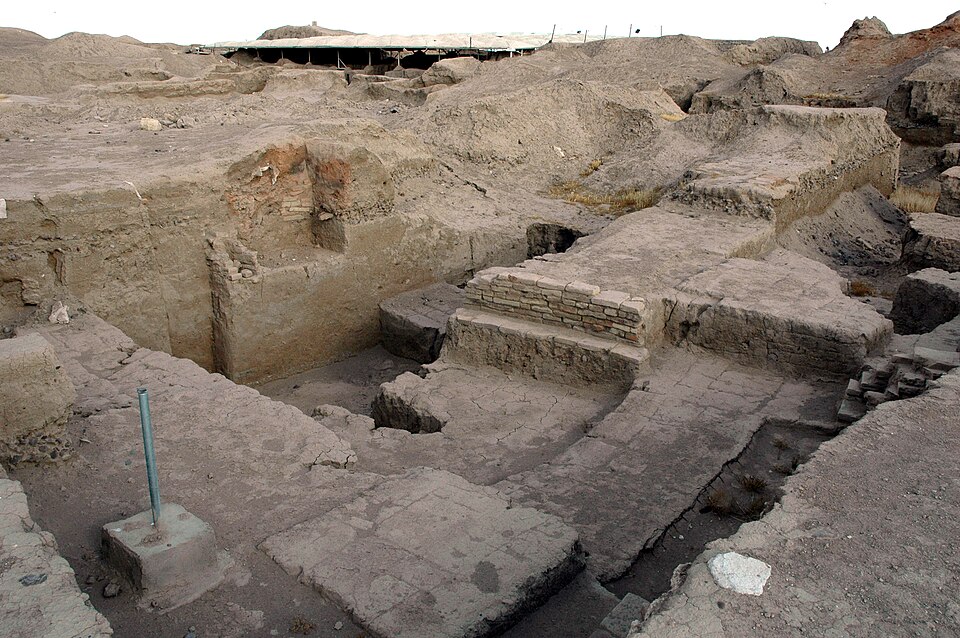
After the fall of Mari, Terqa emerged as a dominant force among the Ancient Sites east Syria.
It became the capital of the Kingdom of Khana and a major religious center dedicated to the god Dagan.
Evidence of Early Global Trade
One of the most remarkable discoveries at Terqa was a jar containing cloves dating to 1700 BC. Since cloves were native only to Southeast Asia, this find demonstrates that:
- The ancient trade routes of Syria extended far beyond the Near East
- The region was connected to early global exchange networks
Terqa’s massive defensive walls also highlight its importance as a protected economic center during periods of instability.
Tuttul (Tell Bi’a): The Spiritual Center of the Euphrates
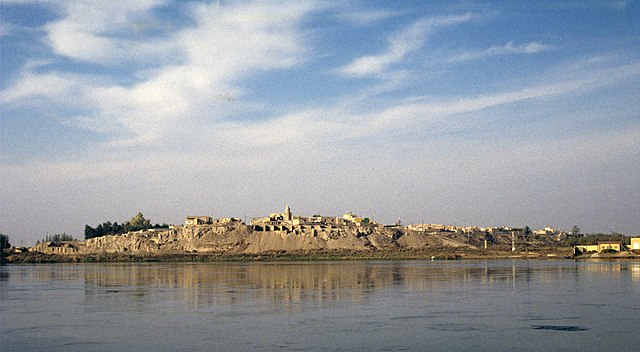
Located at the meeting point of the Balikh and Euphrates rivers, Tuttul was a key religious hub among the Ancient Sites east Syria.
A City of Divine Authority
Tuttul gained prominence as a sacred city where rulers sought legitimacy. Historical accounts suggest that Sargon of Akkad visited its temple to receive divine approval for his campaigns.
Its strategic position made it a natural intersection for:
- Trade routes
- Cultural exchange
- Religious pilgrimage
The city played a vital role in spreading religious influence across the ancient Near East civilizations.
Emar (Tell Meskene): Daily Life in the Late Bronze Age
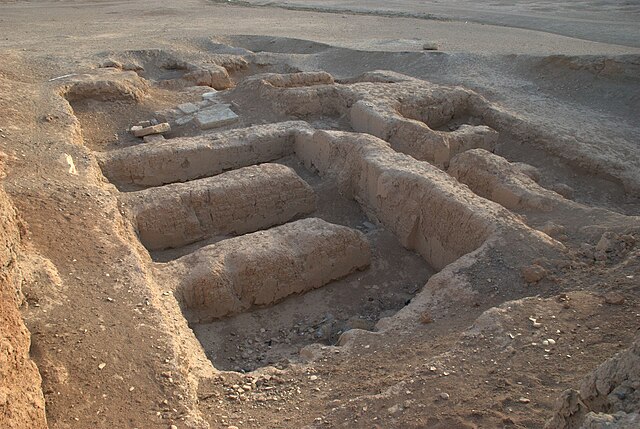
Emar offers one of the most unique perspectives among the Ancient Sites east Syria.
Unlike Mari, where archives were royal, Emar’s texts were found in private homes.
A Rare Look at Ancient Society
These records provide insight into everyday life, including:
- Property sales
- Family law and adoption
- Religious rituals
This makes Emar one of the best-preserved examples of ancient urban life in Syria.
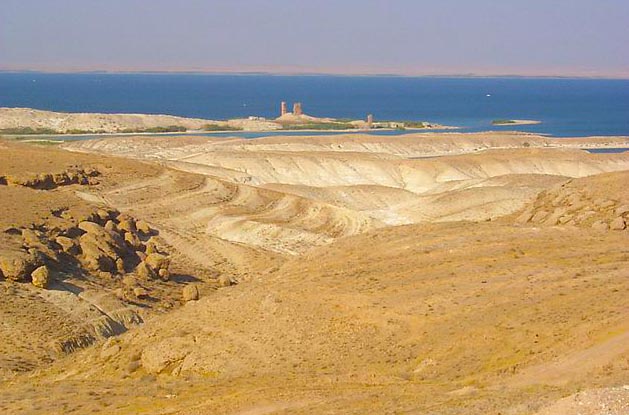
Architecturally, the city adapted to its environment with terraced housing overlooking the Euphrates, showing the flexibility of Euphrates valley settlements.
Karkemish: The Iron Age Stronghold
Karkemish was one of the most powerful Ancient Sites east Syria, especially during the Iron Age.
From Hittite Empire to Neo-Hittite Kingdom
Originally a major administrative center under the Hittite Empire, Karkemish later became an independent Neo-Hittite capital after the Bronze Age Collapse.
The site is famous for:
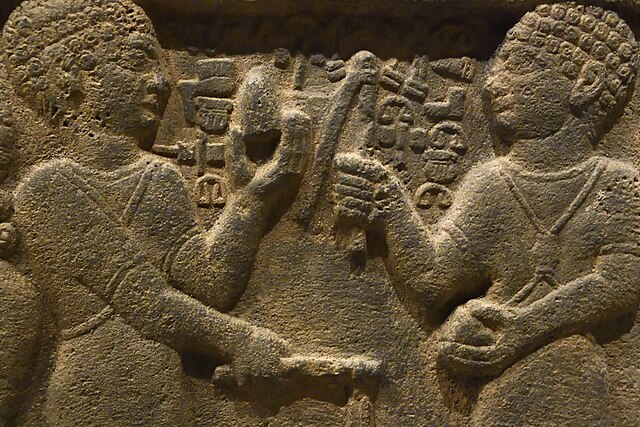
- Monumental basalt reliefs
- The Processional Way
- Military and political dominance
It was also the location of the famous Battle of Carchemish (605 BC), where Babylon defeated Egypt and Assyria, reshaping the political landscape of the region.
The Legacy of Ancient Sites east Syria
The Ancient Sites east Syria were pioneers of complex civilization. Their contributions include:
- Early diplomatic systems
- Trade regulations
- Multilingual communication (Akkadian as a lingua franca)
They developed economic systems that supported major cities like Babylon and Ur.
These ancient Euphrates cities were not isolated—they were deeply interconnected, forming one of the earliest globalized networks in history.
Preservation Challenges and Modern Efforts (2026)
Today, many Ancient Sites east Syria face serious threats, including:
- Looting
- Environmental damage
- Lack of conservation resources
However, modern archaeology is evolving. New technologies such as:
- Satellite imaging
- 3D reconstruction
- Digital archiving
are helping preserve these sites virtually, ensuring their legacy survives for future generations.
FAQ: Ancient Sites East Syria
What are the most important ancient sites in eastern Syria?
The most significant sites include Mari, Terqa, Tuttul, Emar, and Karkemish, all located along the Euphrates River.
Why were the Euphrates civilizations important?
They served as a bridge between Anatolia and Mesopotamia, enabling trade, diplomacy, and cultural exchange.
What makes Mari unique?
Mari is known for its massive archive of 25,000 tablets, offering detailed insights into ancient political and economic life.
Did eastern Syria have global trade connections?
Yes. Evidence like cloves found in Terqa proves long-distance trade reaching as far as Southeast Asia.
What language was used in these civilizations?
Akkadian served as the primary diplomatic and commercial language.
Conclusion: The Origins of Civilization Along the Euphrates
The Ancient Sites east Syria tell a story of innovation, adaptation, and connectivity. From the administrative brilliance of Mari to the resilience of Karkemish, these cities shaped the earliest forms of organized society.
They were not just ancient ruins—they were the foundation of modern civilization, influencing law, trade, and governance systems that still exist today.
Preserving and studying these sites is not just about history—it is about understanding the origins of the world we live in today.
Sources & References:
UNESCO – World Heritage Centre: https://whc.unesco.org
Archnet – Architecture & Heritage Database: https://www.archnet.org
World History Encyclopedia: https://www.worldhistory.org
Syrian Heritage Archive Project: https://syrian-heritage.org
Global Encyclopedia: Wikipedia