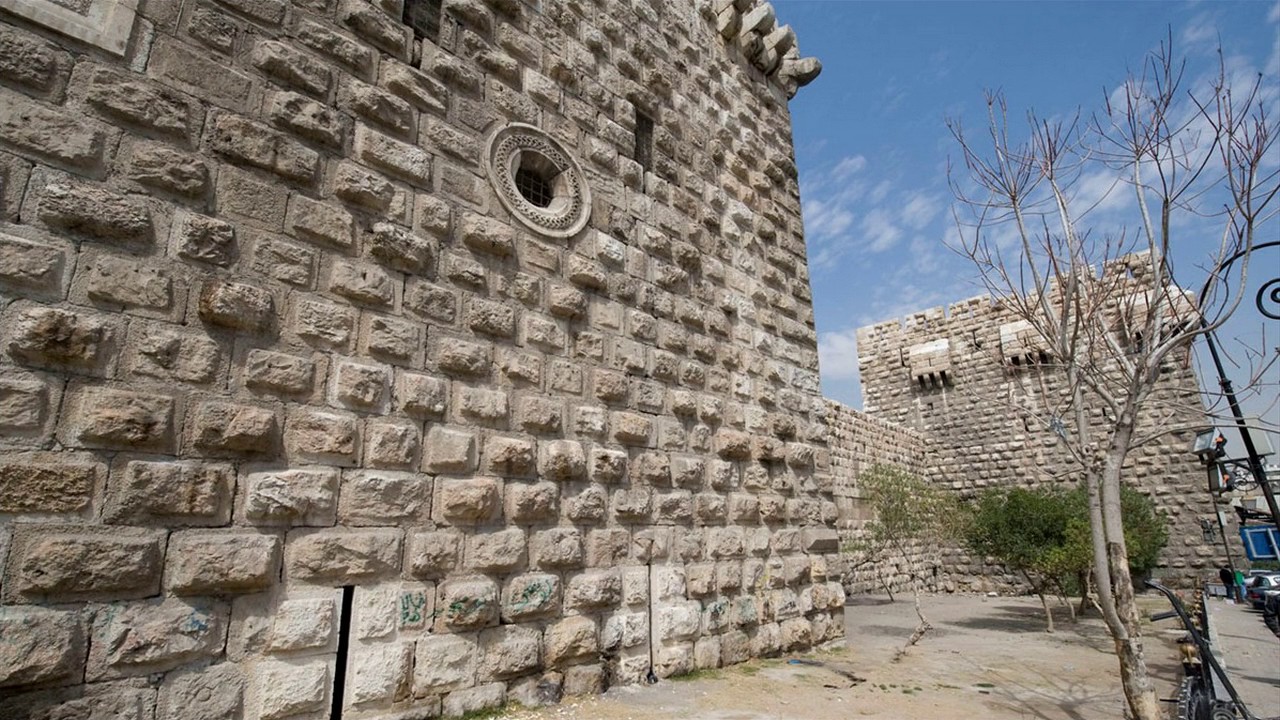
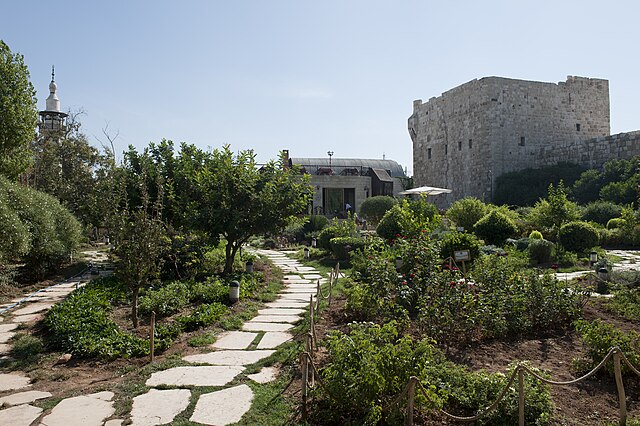
Qalaat Dimashq (قلعة دمشق), known as the Damascus Citadel, is a massive medieval fortress that stands proudly at the northwest corner of Old Damascus. Qalaat Dimashq has a history dating back to the 11th century and played a crucial role in the city’s defense, serving as a stronghold for various Islamic dynasties, including the Seljuks, Ayyubids, Mamluks, and Ottomans. Today, Qalaat Dimashq remains one of the few surviving fortresses in the world to have been continuously used for military purposes for nearly a thousand years.
| Feature | Details |
|---|---|
| Name | Qala’at Dimashq (Arabic: قلعة دمشق) |
| Location | Northwest corner of Old Damascus, near Al-Hamidiyah Souq and Umayyad Mosque |
| Historical Significance | Built in the 11th century; served as a military fortress for Ayyubid, Mamluk, and Ottoman rulers |
| Architectural Style | Medieval Islamic military architecture with thick stone walls and towers |
| Main Features | Massive gates, towers, underground chambers, panoramic views of Old Damascus |
| Visiting Hours | Usually open during daytime (may vary depending on renovations) |
| Dress Code | Casual, comfortable clothing; no special dress code |
| Photography | Allowed |
| Nearby Attractions | Al-Hamidiyah Souq, Umayyad Mosque, Azem Palace |
| Best Time to Visit | Early morning or late afternoon to avoid heat and crowds |
Why Visit?
Qalaat Dimashq, the iconic Damascus Citadel, is more than just a fortress—it is a symbol of the city’s resilience, history, and strategic importance. Dating back to the 11th century, this medieval citadel has witnessed centuries of political change, sieges, and dynastic rule. Over the years, it has served as a military stronghold for the Seljuks, Ayyubids, Mamluks, and Ottomans, making it one of the rare fortresses in the world that has been in continuous use for nearly a thousand years. Today, Qalaat Dimashq impresses visitors with its massive stone walls, towering gateways, intricate battlements, and subterranean chambers that echo the planning and defenses of medieval military architecture.
Walking through Qalaat Dimashq, visitors can feel the weight of history beneath their feet. The fortress provides not only a glimpse into ancient military engineering but also stunning panoramic views of Damascus’s Old City, allowing travelers to admire the urban landscape from a unique vantage point. The Citadel is an ideal destination for anyone interested in Islamic architecture, Middle Eastern history, urban archaeology, or military heritage. Each tower, gate, and corridor tells the story of the city’s defense strategies and the civilizations that left their mark on Damascus over centuries.
How to Reach


The Damascus Citadel is conveniently located at the northwestern edge of the Old City, near the entrance to Al-Hamidiyah Souq and within walking distance of the Umayyad Mosque. For travelers already exploring the Old City, it is just a few minutes’ walk from the central souqs and main streets. If you prefer transport, taxis can drop you at Bab al-Faradis or the Al-Hamidiyah entrance, from where Qalaat Dimashq is easily accessible on foot. Many guided city tours of Damascus include the Citadel as a key historical landmark, providing valuable context about the fortress’s architecture and role in Syrian history.
What to Know Before You Go
- Entry is usually free or requires a small fee depending on current restoration efforts.
- Opening hours may vary, especially during holidays or ongoing repairs.
- No strict dress code, but modest clothing is respectful.
- Photography is allowed—the massive gates and stone architecture make for dramatic photos.
- Wear comfortable shoes—you’ll be walking through uneven stone surfaces.
Nearby Attractions
- Al-Hamidiyah Souq – Just outside the Citadel, full of shops, sweets, and souvenirs.
- Umayyad Mosque – A 5-minute walk; one of the oldest mosques in the world.
- Azem Palace – A beautiful Ottoman-era house museum close by.
- Mausoleum of Saladin – Located right next to the Umayyad Mosque.


To read more about this topic, click here. To explore further, visit our Facebook Syria Collection for rare images and cultural highlights.