To enter the Old City of Damascus is to step into a living museum where history is etched into every stone. The most profound expression of this history is found in Damascus Courtyard Houses. These structures, often referred to as Syrian Patio Houses, are designed with an “introverted” philosophy—presenting plain, windowless walls to the street while concealing breathtaking beauty within.
Today, the old courtyard houses of Damascus fall into four main types:
- Museums and Cultural Houses – Some historic homes are open to visitors and allow you to walk through the original rooms and courtyards.
- Boutique Hotels and Heritage Stays – A number of traditional houses have been restored and turned into small hotels or cultural spaces, where you can actually stay inside a historic Damascene home.
- Restaurants and Cafés – Many courtyard houses now operate as dining spaces, giving you the chance to experience traditional interior design while enjoying local food.
- Private Homes – Some historic houses are still family residences and are not open to visitors, preserving the privacy of Damascene domestic life.
Must-Visit Damascus Courtyard Houses (Open to the Public)
The following table highlights Damascus Courtyard Houses that are currently available for public tours or cultural visits.
| House Name | Type | District | Google Maps Anchor Point |
| Azm Palace | State Museum | Al-Buzouriya | Umayyad Mosque / Al-Buzouriya |
| Maktab Anbar | Cultural Center | Al-Qaymariyyeh | Maktab Anbar |
| Beit al-Aqqad | Cultural Institute | Al-Qaymariyyeh | Maktab Anbar |
| Beit Khalid al-Azm | History Museum | Sarouja | Sarouja Souq |
| Beit al-Zahrawi | Archeological Site | Al-Amara | Damascus Citadel |
| Beit Nizam | Heritage Landmark | Al-Shaghour | Khan As’ad Pasha |
| Beit al-Baroudi | Historical Site | Al-Qanawat | Damascus Citadel |
| Beit al-Quwatli | Historical Site | Medhat Pasha | Medhat Pasha Souq |
| Beit Mardam Bey | Historical Site | Al-Qanawat | Bab al-Jabiyeh |
| Beit Mujalled | Historical Site | Al-Qaymariyyeh | Maktab Anbar |
Damascus Courtyard Houses : Exploring the Icons


1. Azm Palace (The Architectural Zenith)
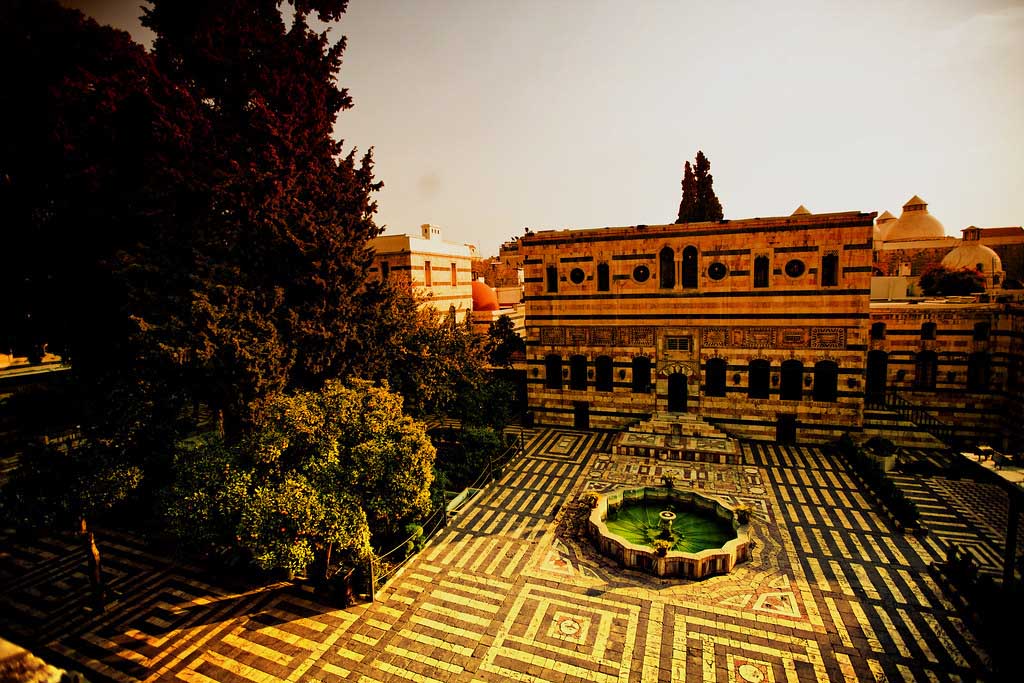
The most famous of all Damascus Courtyard Houses, this 18th-century palace is a masterpiece of Ottoman Era Architecture in Damascus. It showcases the Ablaq technique (alternating black and white stone) and sprawling gardens. Read more
2. Maktab Anbar (The Jewish Quarter’s Gem)
Originally a private mansion, this site is a massive example of late Ottoman Era Architecture. It features three distinct courtyards and intricate plasterwork that defines high-end Levantine Interior Design. Read More
3. Beit al-Aqqad (The Danish Institute)
This house is a timeline of the city, built over the remains of a Roman theater. It is one of the most intellectually significant Damascene Heritage Sites, showcasing layers of history from Mamluk to Ottoman periods. Read More
4. Beit Khalid al-Azm (The Museum of History)
Located in the Sarouja district, this mansion belonged to a former Prime Minister. It serves as a museum and offers a glimpse into the aristocratic lifestyle of 19th-century Traditional Syrian Architecture. Read More
5. Beit al-Zahrawi (The Medieval Treasure)
Unlike the later Ottoman palaces, this site dates back to the Mamluk era. It is one of the oldest Historical Homes of Syria, featuring a more fortress-like and robust architectural style.
6. Beit Nizam (The Sophisticated Sanctuary)
Often used for high-profile cultural events, Beit Nizam Damascus is famous for its three-courtyard layout and its incredibly preserved “Winter Hall,” which features the finest wood-inlay ceilings in the city.
7. Beit al-Baroudi (The Urban Mansion)
Located in the Al-Qanawat area, Beit al-Baroudi features a grand facade—rare for Damascus Courtyard Houses—and an interior that balances Mamluk austerity with Ottoman decorative flourishes.
8. Beit al-Quwatli (The House of Leadership)
This home belonged to the Quwatli family, prominent in Syria’s modern political history. Its design is a transition between traditional layouts and early 20th-century influences.
9. Beit Mardam Bey (The Grand Diplomatic Mansion)
Located in Al-Qanawat, this house features one of the largest Iwans in the city, designed for receiving foreign dignitaries and hosting grand celebrations.
10. Beit Mujalled: The Ottoman-Rococo Fusion
Located in the trendy Qaymariyyeh district, Beit Mujalled stands out for its unique murals. During the 19th century, Damascene elites were influenced by European styles, leading to the “Ottoman Rococo” style. This house features rare wall paintings of Istanbul and Mediterranean landscapes.
The Engineering of Paradise: Architectural Elements


The design of Damascus Courtyard Houses is a sophisticated response to climate and culture. Key elements of Islamic Courtyard Design include:
- The Dehliez: A crooked entrance corridor that prevents passersby from seeing into the private sanctuary.
- Ardi al-Diyar (The Courtyard): The heart of the home, featuring the Bahra (fountain). The evaporation from the fountain and the shade from citrus trees create a natural microclimate.
- The Iwan: A three-walled, vaulted hall opening onto the courtyard. It is the primary summer living space, oriented to catch the cooling northerly breezes.
- The Qa’a (Grand Hall): The winter reception room, often featuring a raised wooden ceiling called Ajami, which is hand-painted and gilded.
Damascene Interior Decoration


The transition from the sun-drenched courtyard to the shaded rooms reveals the true aesthetic splendor of Damascus Courtyard Houses. This interior artistry is defined by “Ajami” wood paneling—hand-painted, gilded ceilings and walls that transform every hall into a visual symphony of Damascene decoration. In these Damascus Courtyard Houses, floors and fountain basins are often adorned with intricate marble mosaics and mother-of-pearl inlays, showcasing a level of craftsmanship that was meant to be felt as much as seen. Ultimately, the rich textures and symmetrical patterns found within Damascus Courtyard Houses serve as a silent dialogue between the artisan’s patience and the pursuit of a private, indoor masterpiece.
Essential Tips for International Visitors
- Navigation: Digital maps (GPS) struggle in the narrow alleys. Always head to a “Google Maps Anchor Point” (like a major mosque or gate) and then walk the short distance to the house.
- Respect the “Private” Doors: If a house does not have a sign or open portal, it is likely a private residence. Do not knock or enter without an invitation.
- Timing: Cultural centers and museums usually close between 3:00 PM and 5:00 PM.
- Look Up: In Damascus Courtyard Houses, the most expensive and beautiful decorations are often on the ceilings.
Nearby Attractions
When exploring these Damascene Heritage Sites, you are always just steps away from other world-class landmarks:
- The Umayyad Mosque: A short walk from Azm Palace and Maktab Anbar.
- The Street Straight (Via Recta): The main Roman artery of the city, lined with smaller Syrian Patio Houses.
- Al-Hamidiyah Souq: The grand covered market that leads directly to the heart of the historic district.
Conclusion: The Eternal Echo of the Fountain
Visiting Damascus Courtyard Houses is more than a tour; it is an emotional journey. From the poetic silence of Beit Nizam to the grand halls of Azm Palace, these Old Damascus Mansions offer a unique window into a civilization that valued beauty, hospitality, and tranquility above all else. As you walk through these Historical Homes of Syria, you will understand why the courtyard is considered the “living soul” of the Levant.
Sources & References:
UNESCO – World Heritage Centre: https://whc.unesco.org
Archnet – Architecture & Heritage Database: https://www.archnet.org
World History Encyclopedia: https://www.worldhistory.org
Syrian Heritage Archive Project: https://syrian-heritage.org
Global Encyclopedia: Wikipedia