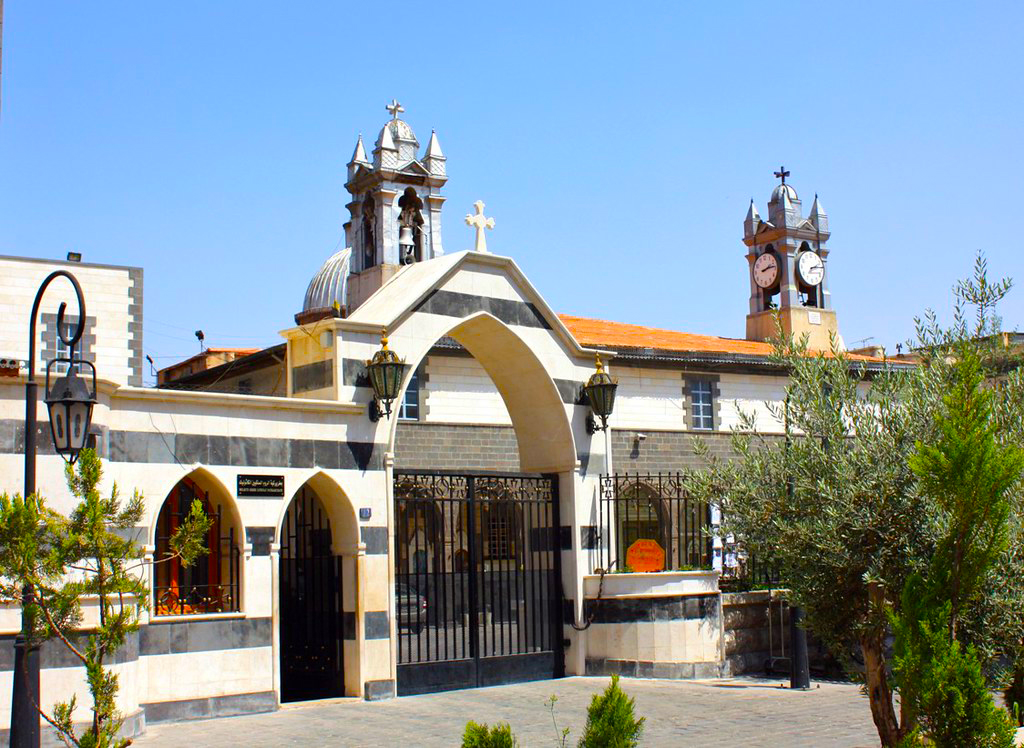
Damascus Historical Churches: Damascus’s churches are more than architectural treasures; they are living monuments of religious continuity, intercultural dialogue, and historical resilience. From early Christian sanctuaries to Ottoman-era cathedrals, each site weaves a thread in Syria’s broader narrative—a story of faith, coexistence, and perseverance.
Damascus Historical Churches | Summary Chart
| Church Name (English / Arabic) | Date of Origin | Historical Significance | Architectural Highlights |
|---|---|---|---|
| Mariamite Cathedral / Church of Mary / الكنيسة المريمية | 4th century; restored multiple times (last in 1953) | Seat of the Greek Orthodox Patriarchate of Antioch; houses relics of St John the Baptist and St Paul | Byzantine‑era basilica form, mosaics, chapels, upper dome, Umariyya minaret |
| Church of Saint Ananias (St. Ananias House) / كنيسة حنانيا | Excavated Byzantine church remains from 5th–6th centuries | Believed to be the house of Ananias, where Paul was baptized | Underground chapel, excavated walls, simple apse, subterranean ancient feel |
| St Paul’s Chapel (Bab Kissan) / كنيسة القديس بولس | Built on site of Bab Kissan; reconstructed 20th century from Mamluk gate (rebuilt 1364) | Marks the escape of St Paul; significant Melkite Greek Catholic chapel | Modest Romanesque-style chapel, stone gate remains, intimate interior |
| Al-Zeitoun Church / Cathedral of Our Lady (Melkite Greek Catholic) | 1833–34; restored 1864 after 1860 conflict | One of the largest Roman Catholic churches in Damascus; built during Tanzimat reforms | Dark basalt stone, white marble floors, vaulted ceilings, copper doors, icon of Our Lady of Perpetual Help |
| Church of Saint John of Damascus | Built shortly after 1856, when Ottoman officials granted the property to the Greek Orthodox Church | Dedicated to Saint John of Damascus (676–749), a key Eastern Christian theologian and philosopher. | Simple rectangular plan, basalt and limestone walls, arches on square columns, wood-carved iconostasis, marble–granite floors. |
| Franciscan Monastery & Church of St Paul conversion / البازيليك الفرنسيسكانية | Founded c.1600s; main church ca. 1780 | Catholic monastery/historical mission; near House of Ananias, significant Franciscan site | Courtyard and basilica-like church, restored bomb‑damaged structure, frescoes |
| Armenian Saint Sarkis Cathedral (Bab Sharqi) | 15th century | Center of Armenian Apostolic community in Damascus | Armenian architecture, vaulted ceilings, Armenian icons |
Damascus Historical Churches: Extended Overview
Mariamite Cathedral (Maryamiyya Church)
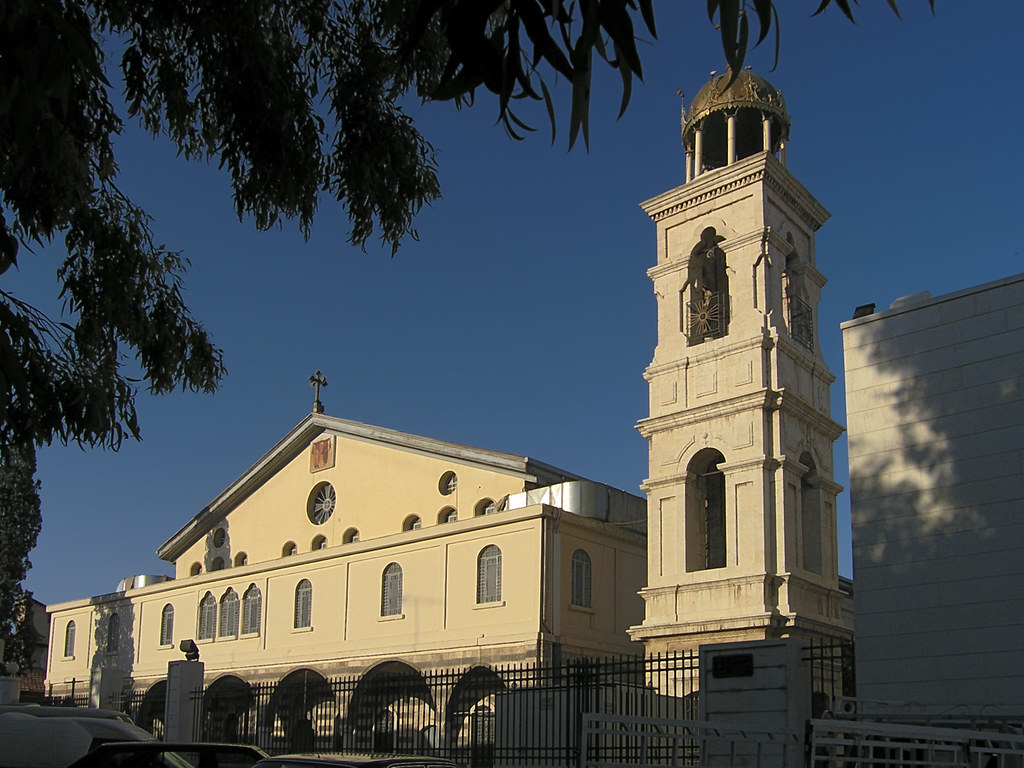
- Origins & History: Established in the 4th century, possibly earlier. Closed after Muslim conquest, reopened under Caliph al‑Walid in 706 AD in exchange for other Christian sites. Destroyed in the 1860 Druze conflict, rebuilt by 1863; last major renovation in 1953
- Significance: This cathedral serves as the seat of the Greek Orthodox Patriarchate of Antioch since 1342 and remains the spiritual heart for that community.
- Architecture: Classical basilica layout, intricate mosaics, multiple chapels, and the Umariyya minaret adjacent to the complex.
Church of Saint Ananias (Saint Ananias House)
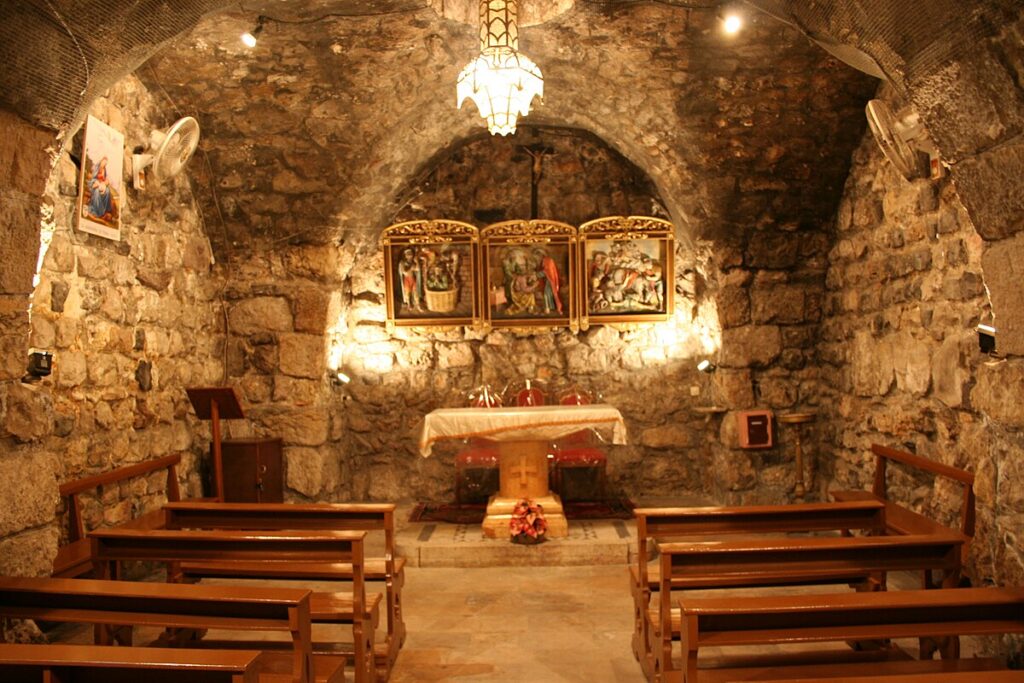
- Origins & History: Built over ancient remains of a Byzantine-era church (5th–6th century), traditionally believed to be the house of Ananias where St Paul was healed and baptized
- Significance: One of the oldest Christian sites in Damascus and a revered underground sanctuary.
- Architecture: Subterranean chapel accessed by stairs, modest apse design, holding serene ancient ambiance.
St Paul’s Chapel (Bab Kissan)

- Origins & History: Located on the remains of the Bab Kissan, a Roman gate sealed by Nur al‑Din and rebuilt under the Mamluks in 1364. The current chapel evoked and built in the 20th century as a Christian monument
- Significance: Commemorates the escape of Paul the Apostle from Damascus in a basket—an iconic biblical event.
- Architecture: Small stone chapel, modest interior, integrated into historic city wall remains.
Franciscan Monastery & Conversion Church (St Paul Mission)
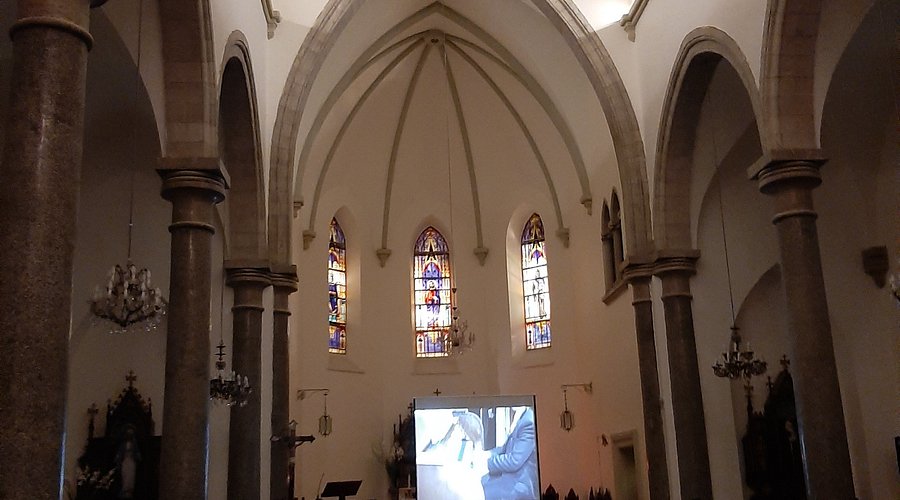
- Origins & History: Franciscan presence dates to the 17th century; they established their own church formally around 1780. Experienced violence during the 1860 conflict and bombing damage in recent decades; recently restored
- Significance: A key site for Roman Catholic and Franciscan pilgrimage in Old Damascus, near the house of Saint Ananias.
- Architecture: Simple basilica style with inner courtyard, frescoes, restored interiors displaying Ottoman-era damage marks.
Armenian Saint Sarkis Cathedral (Bab Sharqi)
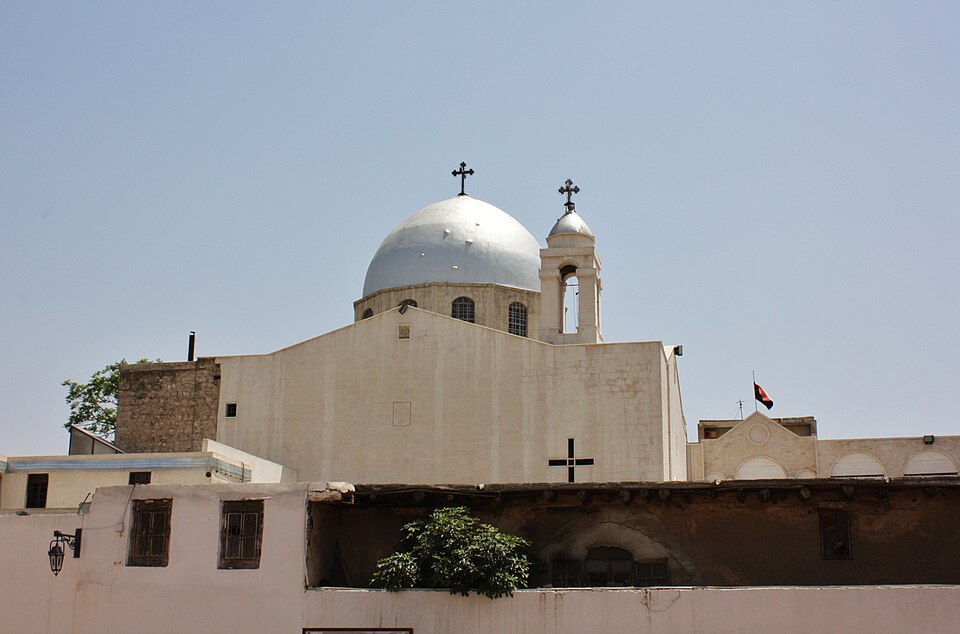
- Origins & History: Constructed in the 15th century following Armenian resettlement in Damascus
- Significance: Central place of worship for the Armenian Apostolic community in Damascus.
- Architecture: Features traditional Armenian church design, vaulted ceilings, and symbolic artwork blending Armenian iconography with regional materials.
Al-Zeitoun Church (Cathedral of Our Lady)
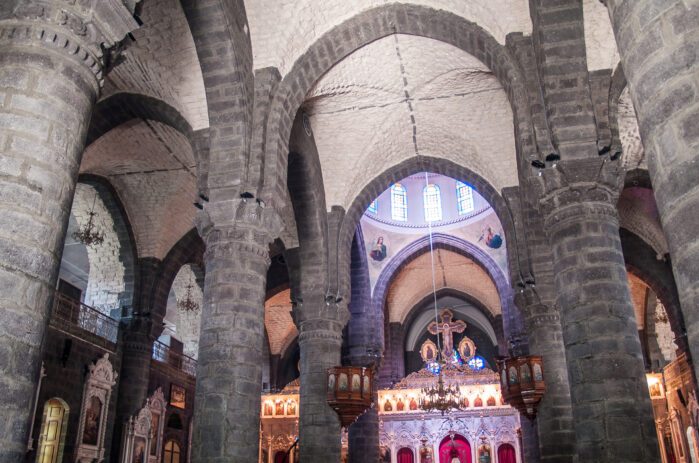
- Origins & History: Constructed in 1833–34 under the Ottoman Tanzimat reforms for Christian religious freedom; severely damaged in the 1860 conflict and restored by 1864
- Significance: One of the largest Roman Catholic (Melkite Greek Catholic) churches in Damascus, symbol of religious tolerance post-reforms.
- Architecture: Built with black basalt stone and white marble floors, vaulted interior, copper doors with inscriptions, housing the revered icon of Our Lady of Perpetual Help.
Church of Saint John of Damascus
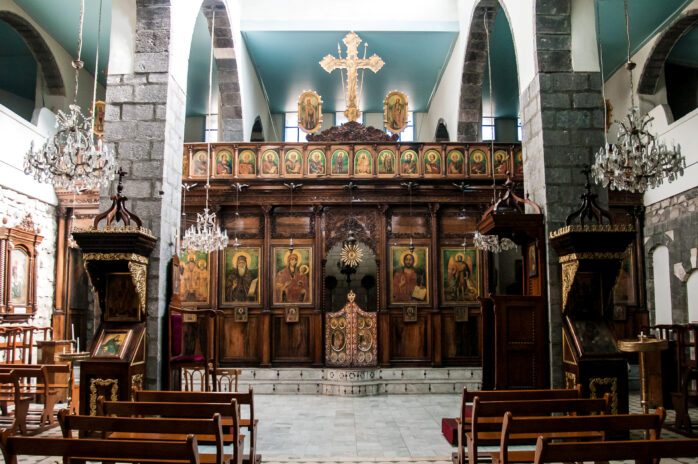
- Origins & History: Built shortly after 1856, when Ottoman officials granted the property to the Greek Orthodox Church
- Significance: Dedicated to Saint John of Damascus (Youhana Mansour Bin Sarjoun), a major figure of Eastern Christianity during the Umayyad period (676–749). Famous for his theological and philosophical writings in Greek and Aramaic, still used in Greek Orthodox teachings today.
- Architecture: Modest Greek Orthodox design with a rectangular plan; wood roof supported by arches on square basalt columns; walls of basalt and limestone; wood-carved iconostasis by local artisans; floors of marble and granite; upper-level windows providing natural light. Still serves the local Christian community, though not frequently visited.
See Also: Aleppo Historical Churches
Tips for Visiting
- Location: Most of these churches are located within the Bab Touma (Christian Quarter), Bab Sharqi, and along Straight Street in Old Damascus.
- Visiting Hours: Vary by denomination; some churches like Mariamite and Saint George operate daily, others like St Ananias and St Paul’s Chapel have limited hours.
- Photography: Usually allowed; always ask inside if photographing icons or relics.
- Dress Code: Conservative attire—shoulders and knees covered in most places.
- Guided Tours: Highly recommended for historical context and access via religious custodians.
Conclusion
The story of Damascus Historical Churches is one of faith, resilience, and cultural richness that has endured for centuries. From the humble underground sanctuary of Saint Ananias to the majestic Mariamite Cathedral, each site reflects a unique chapter in Christian history. Today, Damascus Historical Churches stand not only as places of worship but also as living museums of architecture and tradition. For pilgrims, historians, and travelers alike, visiting Damascus Historical Churches offers a journey through time, connecting the earliest days of Christianity with the Ottoman era. Preserving and celebrating Damascus Historical Churches ensures that future generations can continue to witness this extraordinary heritage in the heart of Syria.
Finally.. If you have any questions, please contact us. To explore further, visit our website gallery for rare images and cultural highlights.
Sources & References:
UNESCO – World Heritage Centre: https://whc.unesco.org
Archnet – Architecture & Heritage Database: https://www.archnet.org
World History Encyclopedia: https://www.worldhistory.org
Syrian Heritage Archive Project: https://syrian-heritage.org
Global Encyclopedia: Wikipedia