Damascus Seven Gates: Damascus, one of the world’s oldest continuously inhabited cities, is surrounded by walls that have guarded it for over 2,000 years. Along these ancient fortifications stand the Damascus Seven Gates, each holding stories of faith, trade, and empire.
The Damascus Seven Gates date back to the Roman, Byzantine, and Islamic eras, serving as timeless symbols of the city’s endurance and diversity. These gateways were more than entry points—they were passages through which culture, commerce, and belief flowed for centuries.
Exploring the Damascus Seven Gates today is a journey through living history. Each gate reveals a chapter of Damascus’s soul, connecting modern visitors to the heart of the ancient world.
Damascus Seven Gates | Quick Info.
| Topic | Details |
|---|---|
| Historical Origin | Constructed during the Roman era under Emperor Septimius Severus (3rd century CE) |
| City Layout | Followed the Roman grid with Via Recta (Straight Street) connecting the eastern and western gates |
| Islamic Period | Gates were preserved, renamed, and modified under Islamic rule |
| Number of Gates | Traditionally seven main gates |
| Cultural Importance | Symbolic entrances representing Damascus’s multi-faith and multi-era heritage |
| Architectural Styles | Mix of Roman, Byzantine, Ayyubid, Mamluk, and Ottoman influences |
| Modern Status | Most gates are still standing, integrated into the Old City of Damascus (UNESCO site) |
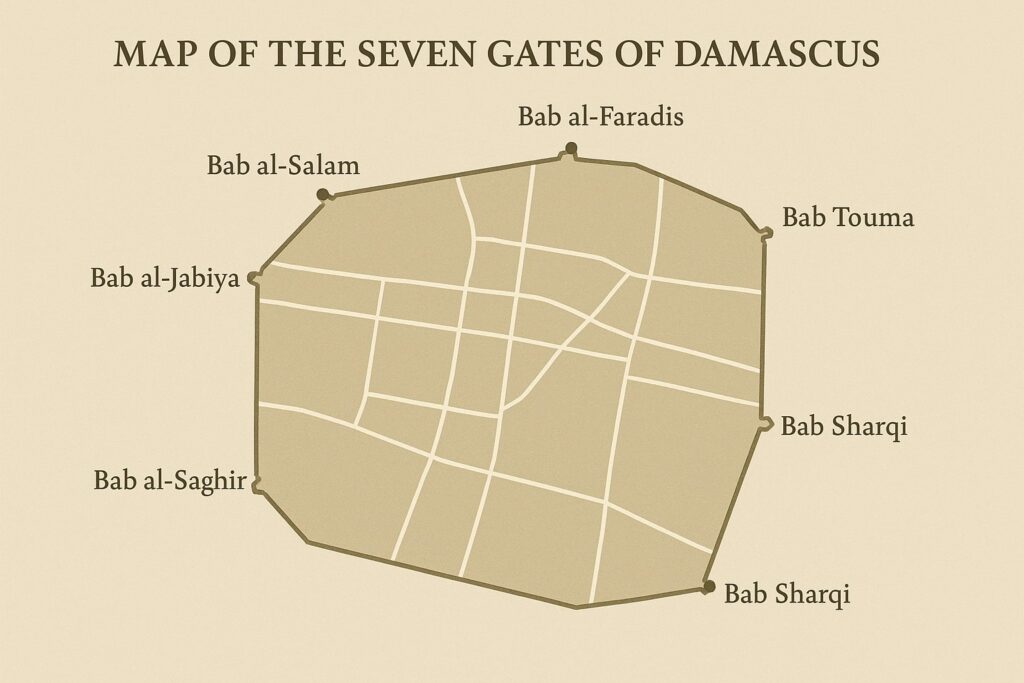
The original walls of Damascus were constructed during the Roman era, particularly under Emperor Septimius Severus in the 3rd century CE. The city’s layout followed the Roman grid, with Via Recta (Straight Street) running east to west, and the gates positioned at key points of entry along the fortified perimeter.
Throughout the Islamic period, these gates were preserved, modified, and renamed according to Arabic tradition and Islamic heritage. Many of them are still intact today, incorporated into the bustling fabric of the Old City.
| Gate Name | Meaning / Translation | Location | Key Highlights |
|---|---|---|---|
| Bab al-Saghir | Gate of the Small | Southern wall | Adjacent to Bab al-Saghir Cemetery; important Islamic and Shiite pilgrimage site |
| Bab al-Jabiya | Gate of the Water Fountain | Western side | Linked to Via Recta; historic trade route toward Beirut; now a bustling marketplace |
| Bab Sharqi | Eastern Gate / Gate of the Sun | Eastern wall | Only Roman gate retaining original structure; leads to the Christian Quarter |
| Bab Touma | Gate of Thomas | Northeast | Named after Saint Thomas; main entry to the Christian Quarter |
| Bab al-Salam | Gate of Peace | Northern wall | Connected Damascus to Homs and Aleppo; symbol of hospitality |
| Bab al-Faradis | Gate of the Paradises | Northwest | Once opened to orchards and gardens; name inspired by Damascus’s beauty |
| Bab Kisan | Gate of Conversion | Southeast | Associated with Saint Paul’s escape; site of Chapel of Saint Paul |
Bab al-Saghir
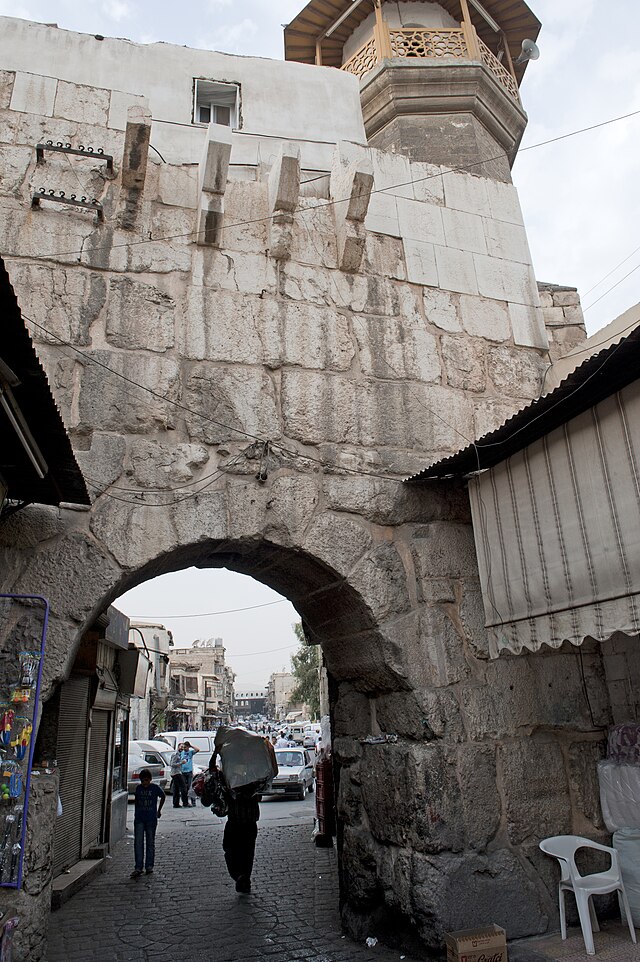
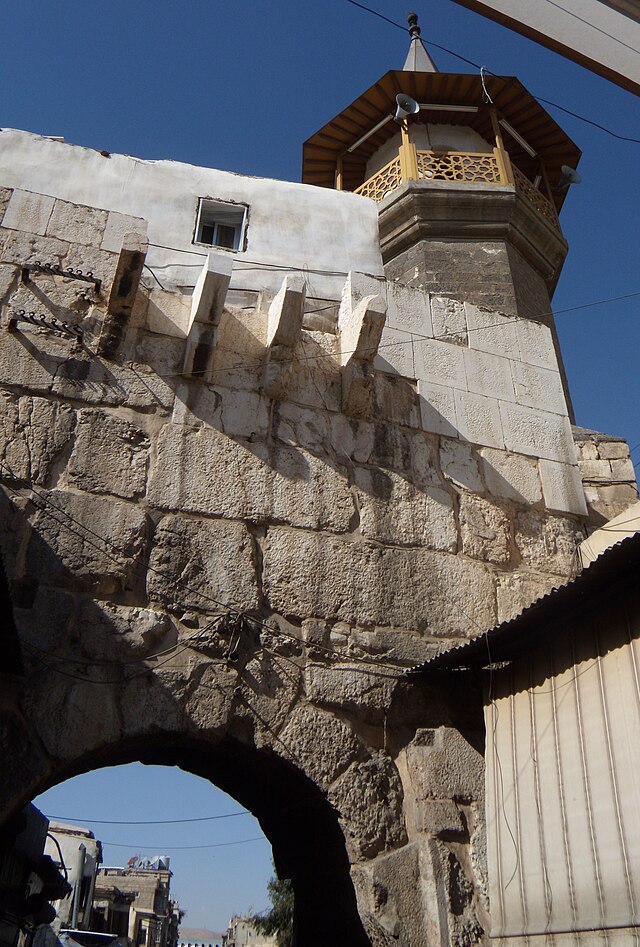
Located in the southern wall of the Old City, Bab al-Saghir is perhaps the most spiritually significant of the seven gates, particularly in Islamic and Shiite tradition. The name “al-Saghir” means “the small,” although the gate itself played a major role in religious and military history.
Religious Significance
Adjacent to the gate is the Bab al-Saghir Cemetery, one of the oldest and most revered Islamic graveyards in the world. Several family members of the Prophet Muhammad, including Sayyida Sukayna, Ruqqaya, and companions of Imam Ali, are believed to be buried here. It is an important pilgrimage site for Muslims, especially from Iran, Iraq, and Lebanon.
Architectural Features
The gate has been rebuilt multiple times, most notably during the Ayyubid and Mamluk periods. It features simple stonework, narrow entryways, and is framed by ancient tombstones and mausoleums.
Bab al-Jabiya
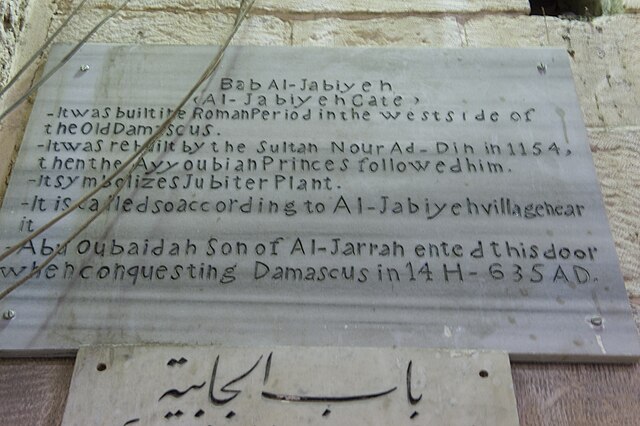
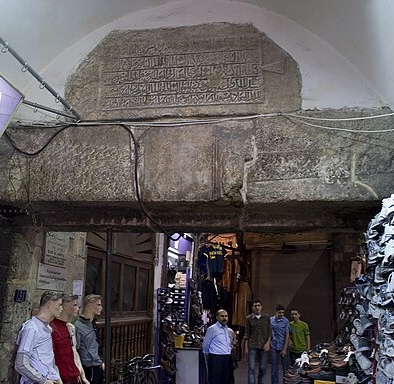
Bab al-Jabiya lies on the western side of the Old City and historically marked the beginning of the western trade route toward Beirut and the Mediterranean coast. The name “Jabiya” refers to a Roman-era water distribution system or a fountain that once stood nearby.
Historical Role
This gate was one end of the Via Recta, the Roman Straight Street, and faced the Decumanus Maximus of the Roman grid. It was the commercial gateway for caravans entering the city from the west.
Modern Presence
Today, Bab al-Jabiya leads into one of Damascus’s most vibrant markets, full of traditional shops, spice stalls, and historic khans (caravanserais). The area is a favorite for tourists looking to experience the city’s daily life.
Bab Sharqi
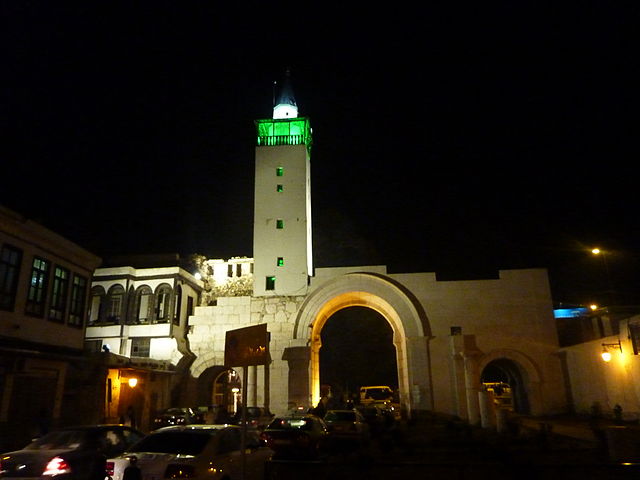
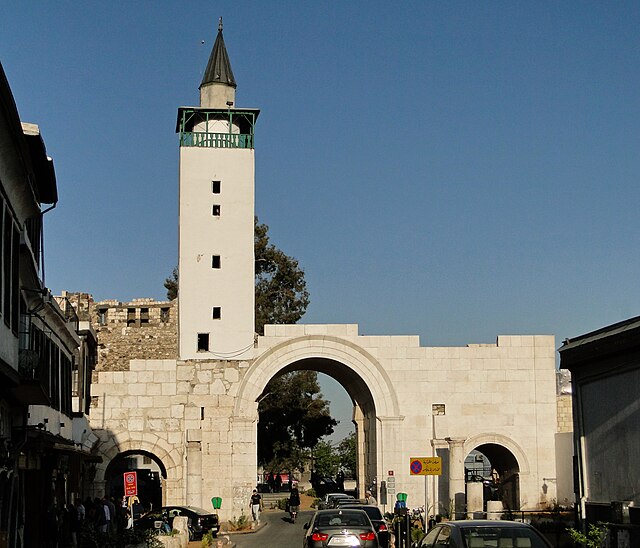
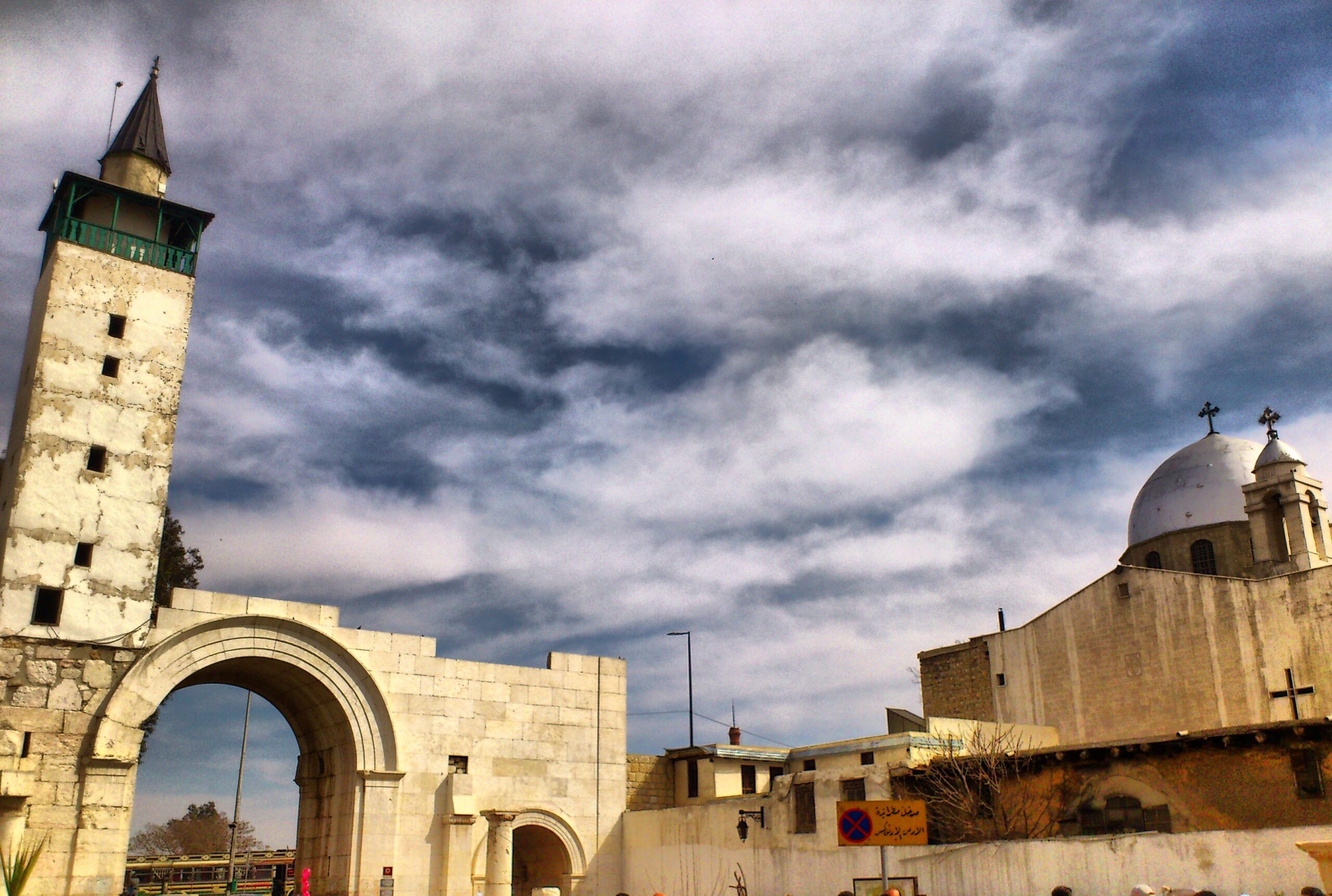
Bab Sharqi, also known as the Gate of the Sun, is the only original Roman gate that still retains much of its classical structure. Located on the eastern edge of the city, it directly connects to the famous Straight Street, which stretches from Bab Sharqi to Bab al-Jabiya.
Roman Architecture
Constructed with three arches (a central gate for vehicles and two side gates for pedestrians), Bab Sharqi is one of the best examples of surviving Roman city planning in the Middle East. The road it opens onto was once flanked by colonnades and marble paving.
Christian Quarter Access
Today, the gate leads directly into the Christian Quarter of Damascus, giving access to important churches such as the Chapel of Saint Paul, the House of Ananias, and various Roman Catholic and Orthodox cathedrals.
Bab Touma
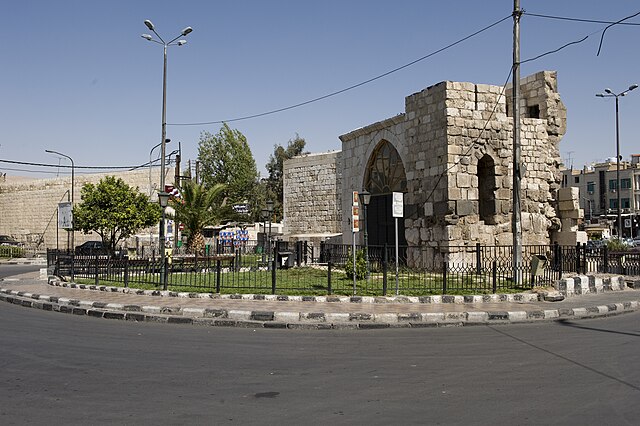
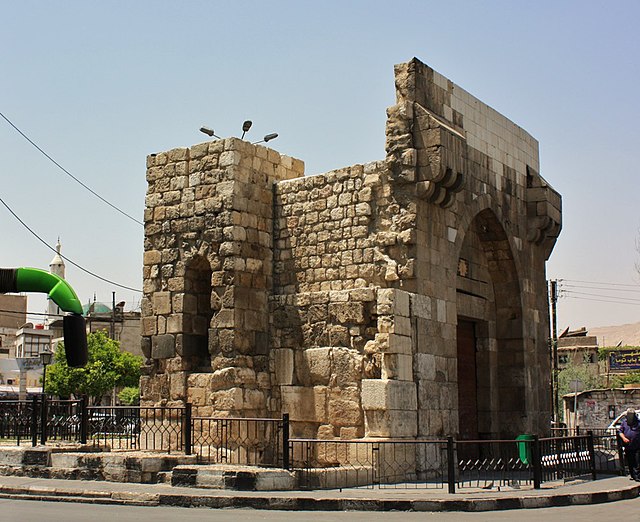
Bab Touma, meaning “Gate of Thomas,” is named after Saint Thomas the Apostle, who is believed to have passed through this gate during his missionary work. It leads into the heart of the Christian Quarter, and the name has remained unchanged since the Byzantine period.
Christian Heritage
This area is central to Syria’s Christian community. Within the vicinity of the gate are numerous churches, including the Greek Orthodox Cathedral, the Syriac Catholic Cathedral, and the Armenian Catholic Church.
Ottoman Influence
The current form of the gate was restored during the Ottoman period and features an Islamic-style arch with inscriptions in Arabic. Despite the restoration, it remains a focal point of interfaith harmony in the city.
Bab al-Salam
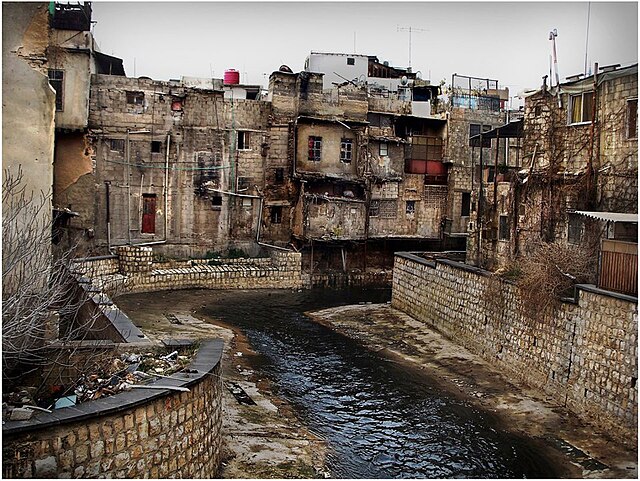
Positioned on the northern wall, Bab al-Salam literally means “Gate of Peace.” While it may seem simple compared to other gates, it played a key role in connecting Damascus to Homs and Aleppo, and thus to the northern Levant and Anatolia.
Peaceful Symbolism
The name suggests that this gate was traditionally associated with non-military access, welcoming pilgrims, scholars, and travelers. It has been mentioned in many Islamic texts as a symbol of hospitality.
Nearby Landmarks
Close to Bab al-Salam is the Madrasa al-Attareen, and further into the city are markets selling perfumes, textiles, and Damascene steel items.
Bab al-Faradis
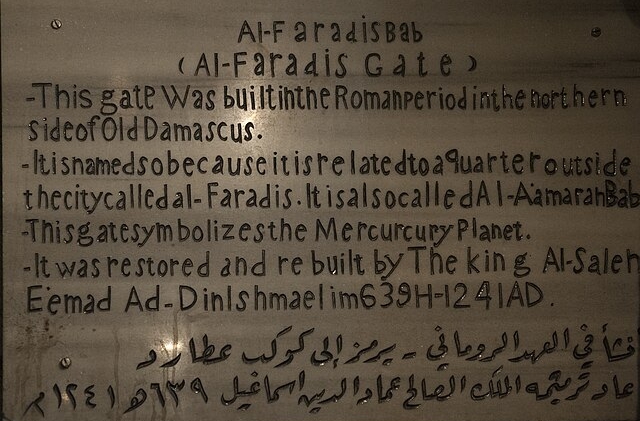
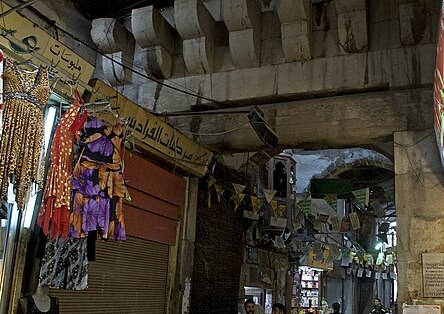
Known for its poetic name, Bab al-Faradis means “Gate of the Paradises.” It is located on the northwestern side of the Old City, leading to fertile lands and gardens that once flourished around Damascus.
Garden Connection
During the Islamic Golden Age, this gate opened onto a landscape of fruit orchards, vineyards, and water canals. The name refers to these heavenly surroundings, now mostly replaced by urban development.
Cultural Associations
The gate is sometimes associated with legendary Islamic scholars and poets, many of whom wrote about Damascus as a “paradise on earth,” citing Bab al-Faradis as its poetic threshold.
Bab Kisan
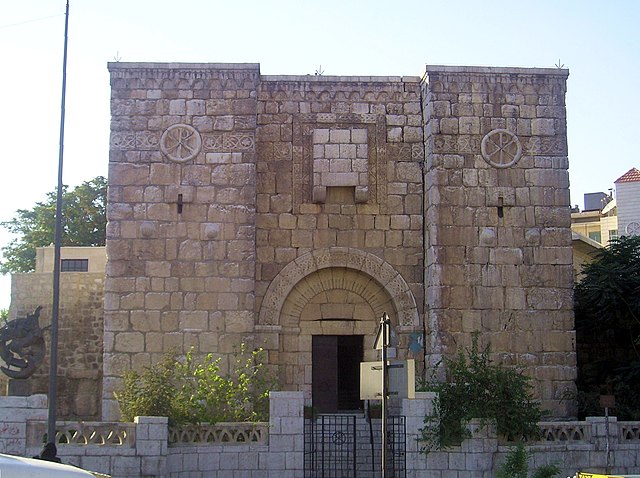
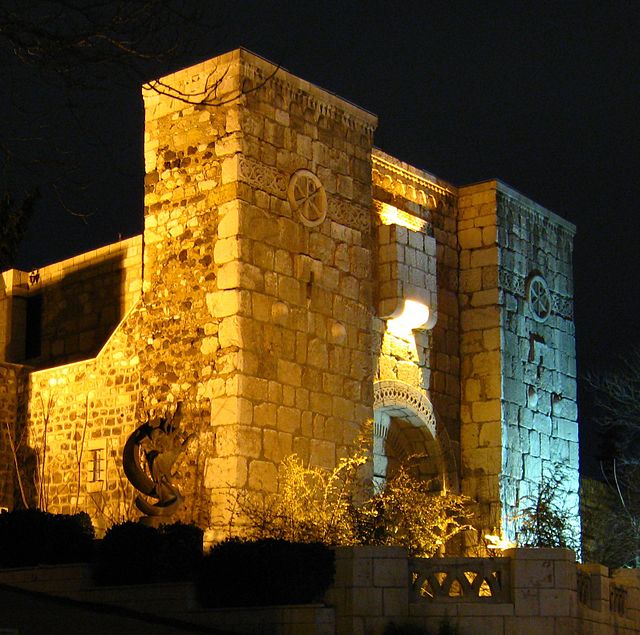
One of the most iconic gates in Christian tradition, Bab Kisan is located on the southeastern side of Damascus and is closely associated with the story of Saint Paul’s escape.
Saint Paul’s Escape
According to the New Testament, Paul the Apostle, then known as Saul of Tarsus, fled through this gate in a basket lowered by his followers after converting to Christianity. Today, this gate is the site of the Chapel of Saint Paul, built into the remains of the Roman wall.
Archaeological Interest
The gate retains its Roman masonry and is one of the few spots in Damascus where Christian, Roman, and Islamic heritage visibly coexist.
Damascus Seven Gates | Visiting Tips

Best Way to Explore
The gates are scattered along the outer perimeter of the Old City of Damascus, which is best explored on foot. A walking tour, either self-guided or with a local historian, is highly recommended.
- Begin at Bab Sharqi, walk through Straight Street, and end at Bab al-Jabiya.
- Include visits to nearby souks, mosques, and churches for a complete cultural immersion.
See Also: Damascus Roman Ruins
Photography and Timing
- Early morning and late afternoon offer the best lighting for photography.
- Evening walks near Bab Touma and Bab Sharqi are especially atmospheric, with cafés and lantern-lit streets.
Safety and Accessibility
- The area is generally safe, especially during daytime.
- Wear comfortable walking shoes, as the streets are cobbled.
- Dress modestly, particularly when entering religious or residential zones.
Final Thoughts
The Damascus Seven Gates are more than ancient stone passages — they are living witnesses to the city’s long and layered history. Each gate has its own story to tell, echoing tales of Roman engineers, Crusader warriors, Islamic scholars, and Christian pilgrims. Together, they form a living museum of civilizations that shaped the heart of Syria.
Walking through the Seven Gates of Damascus is like stepping across time itself. From Bab al-Salam to Bab Sharqi, every gate opens onto centuries of art, faith, and architecture that continue to inspire awe today.
For anyone visiting the Damascus Seven Gates, the journey is unforgettable — whether you are a student of history, a spiritual traveler, or simply curious to feel the timeless pulse of one of the world’s oldest cities.
If you have any questions, please contact us. To explore further, visit our website gallery for rare images and cultural highlights.
Sources & References:
UNESCO – World Heritage Centre: https://whc.unesco.org
Archnet – Architecture & Heritage Database: https://www.archnet.org
World History Encyclopedia: https://www.worldhistory.org
Syrian Heritage Archive Project: https://syrian-heritage.org
Global Encyclopedia: Wikipedia