Tucked among the limestone hills northwest of Aleppo, Deir Samaan is one of Syria’s most remarkable yet often-overlooked Byzantine villages. While nearby Qalaat Samaan—the famed Monastery of Saint Simeon the Stylite—attracts much of the attention, the lower settlement of Deir Samaan was the lifeblood of that spiritual center. It offered accommodation, supplies, and community for the thousands of pilgrims who journeyed through Jebel Samaan.
Today, the ruins of Deir Samaan Syria sprawl over nearly two-thirds of a square kilometer, revealing a stunningly preserved picture of rural and religious life during the Byzantine era. For travelers interested in archaeology, sacred heritage, or ancient architecture, Deir Samaan is an unmissable stop among the Dead Cities of Northern Syria.
Deir Samaan | Quick Info
| Feature | Details |
|---|---|
| Name | Deir Samaan (دير سمعان) |
| Ancient Name | Telanissos |
| Location | Jebel Samaan, northwest of Aleppo, Syria |
| Era | Byzantine Period (5th–6th century CE) |
| Historical Significance | Important Byzantine pilgrimage village supporting nearby Qalaat Samaan and the cult of St. Simeon Stylites |
| Main Structures | Monasteries, churches, inns (pandocheia), civic buildings, monumental arch |
| Notable Features | Well-preserved monasteries, rock-carved burial chambers, ancient marketplace |
| Original Function | Agricultural settlement turned monastic and pilgrimage center |
| Current State | Extensive ruins with remarkable preservation; partially inhabited modern village |
| Tourism Interest | Key stop for Byzantine history lovers exploring Dead Cities and St. Simeon’s Monastery |
| Nearby Sites | Qalaat Samaan, Jebel Samaan, Cyrrhus, Apamea |
From Telanissos to Deir Samaan – The Origins of a Sacred Village
Before it became known by its current name, the site was called Telanissos, a Greek term meaning “mountain of women.” Founded as an agricultural settlement, the village benefited from its position between the fertile plains of northern Syria and its location on the trade route connecting Apamea to Cyrrhus.
By the early fifth century CE, a monastery was established here. This development marked the beginning of a transformation—from an agrarian community into a vibrant religious hub. It was in this peaceful corner of Syria that an ascetic monk from Cilicia, named Simeon, arrived around 412 CE. He would soon become known throughout the Christian world as Saint Simeon the Stylite, the man who lived atop a pillar for nearly four decades.
Saint Simeon the Stylite and the Rise of Qalaat Samaan
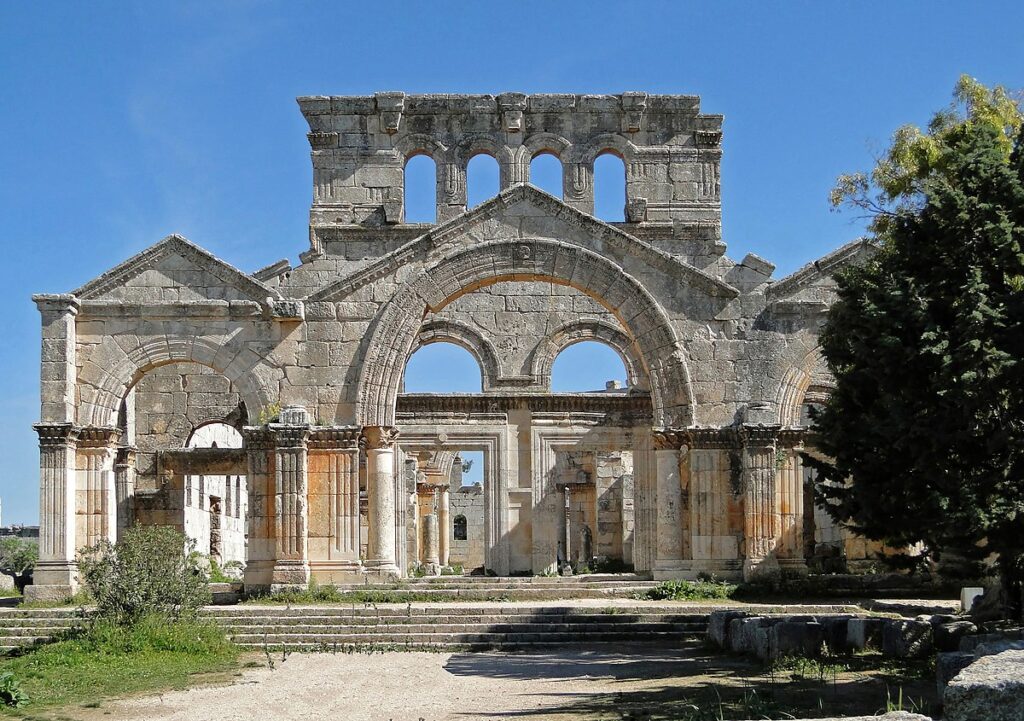
Saint Simeon sought solitude and spiritual devotion by climbing a pillar on the nearby hill, now crowned by Qalaat Samaan (قلعة سمعان). His astonishing discipline and endurance—remaining atop his column for 37 years until his death in 459 CE—drew an ever-growing stream of pilgrims from across the Byzantine Empire.
As devotion to the saint spread, Deir Samaan flourished. The once-quiet agricultural village transformed into a pilgrimage center, providing essential services to visitors heading up to the saint’s sanctuary. Inns, hostels, markets, and monasteries were built to accommodate the influx of travelers, and Deir Samaan became a bustling gateway to one of Christianity’s most sacred destinations.
Deir Samaan in the Byzantine Era – Life in a Pilgrimage Village
By the late fifth and sixth centuries, Deir Samaan Syria was thriving. The Byzantine authorities, supported by Constantinople, recognized the importance of the site and encouraged its expansion. Archaeological remains reveal an organized settlement with paved roads, religious buildings, workshops, and civic structures.
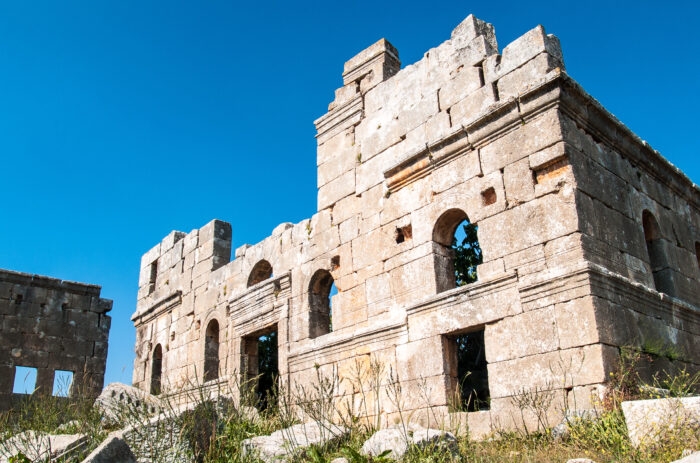
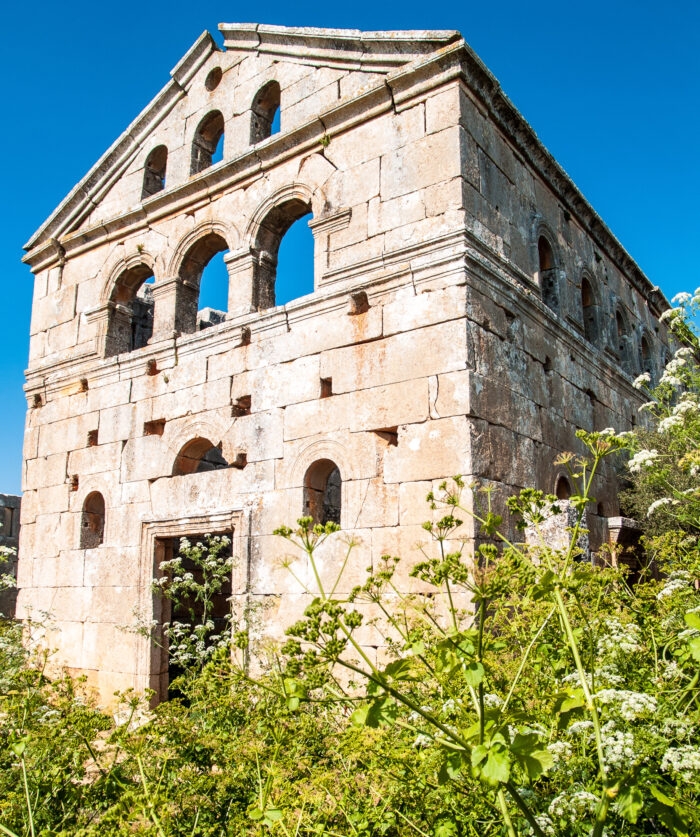
The pandocheia—ancient inns for travelers—are among the most striking remains. These large stone complexes could house many pilgrims at once. Their scale, some stretching 70 meters long, demonstrates the incredible volume of visitors drawn to the shrine of Saint Simeon.
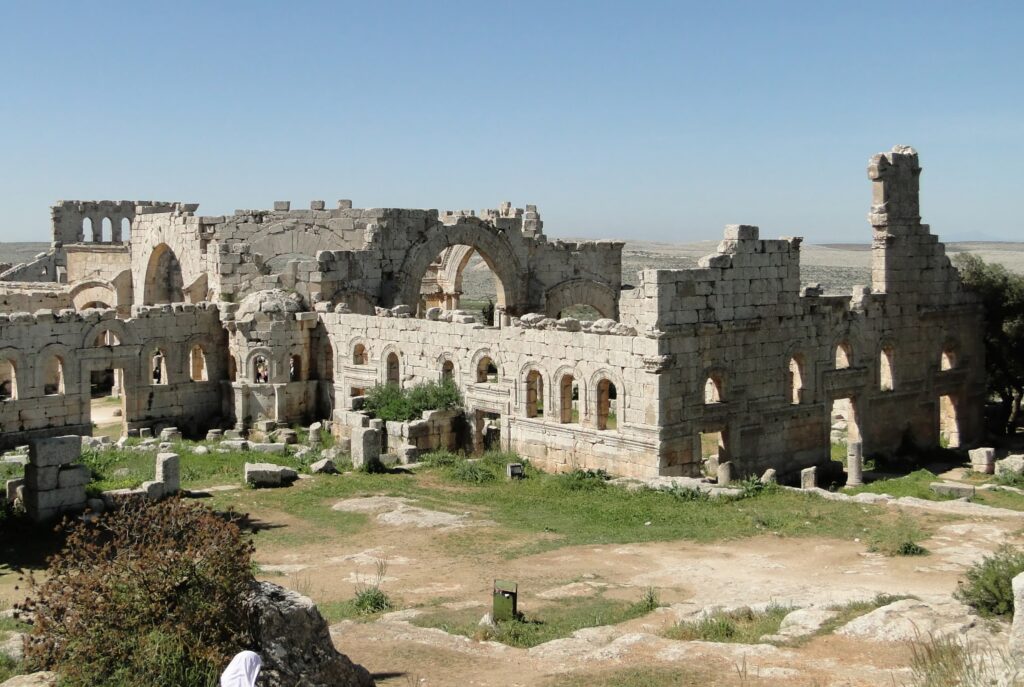
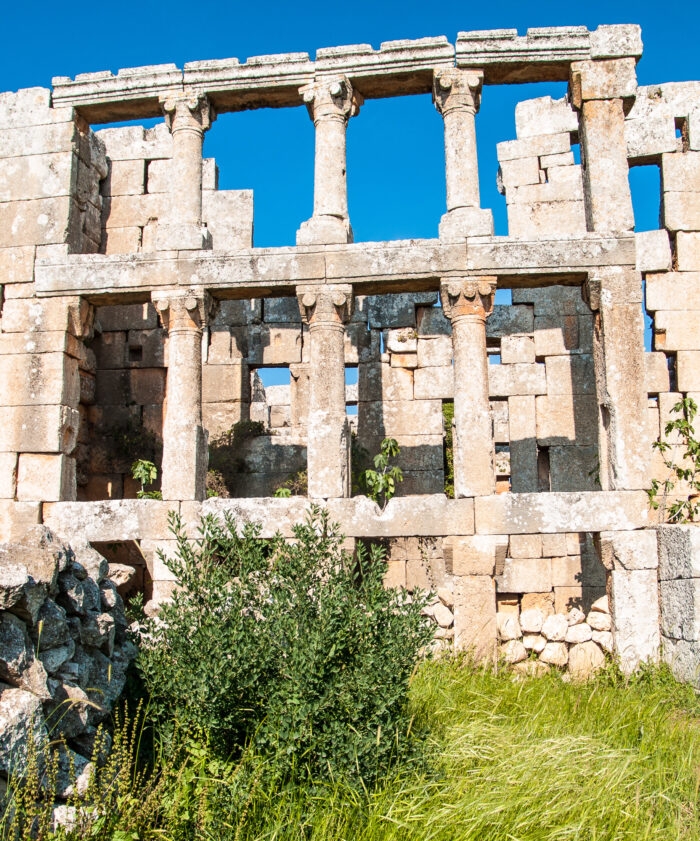
In addition to hospitality buildings, Deir Samaan boasted several churches, chapels, and monastic compounds. The north church, although modest, exhibits typical late-sixth-century design with arched doorways and twin columns supporting its portals. More impressive are the northwest and southwest monasteries, which remain in remarkable condition even today.
The Northwest and Southwest Monasteries – Architectural Highlights
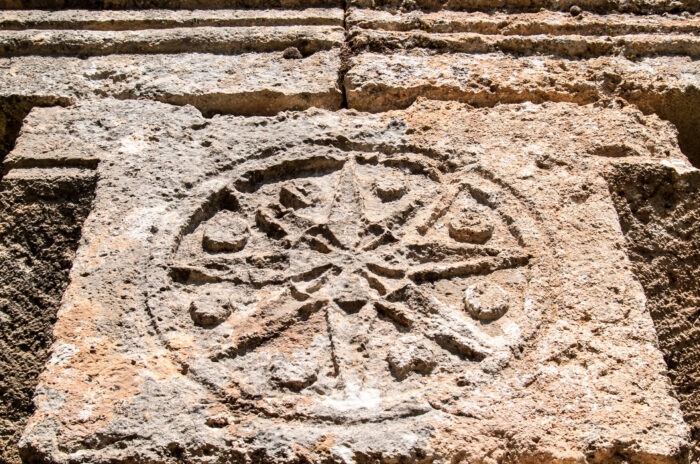
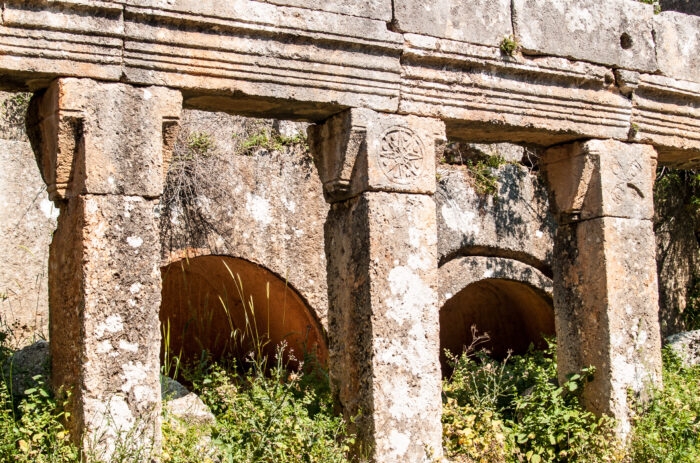
The northwest monastery of Deir Samaan was described by early 20th-century archaeologist Howard Crosby Butler as “an exceptionally fine group of buildings in a remarkable state of preservation.” Centered around a mid-fifth-century church measuring roughly 18 × 22 meters, the complex includes dormitory rooms, courtyards, and burial areas. The craftsmanship of its colonnaded porches and stone carving reflects the architectural sophistication of Byzantine Syria.
Nearby, the southwest monastery consists of three colonnaded structures arranged around a spacious courtyard. These likely served as additional accommodation for pilgrims visiting Qalaat Samaan. The associated church, dating to the sixth century, is the best-preserved structure at the site—an elegant reminder of the balance between faith and function that characterized Byzantine monastic architecture.
The Inns, Market, and Civic Buildings
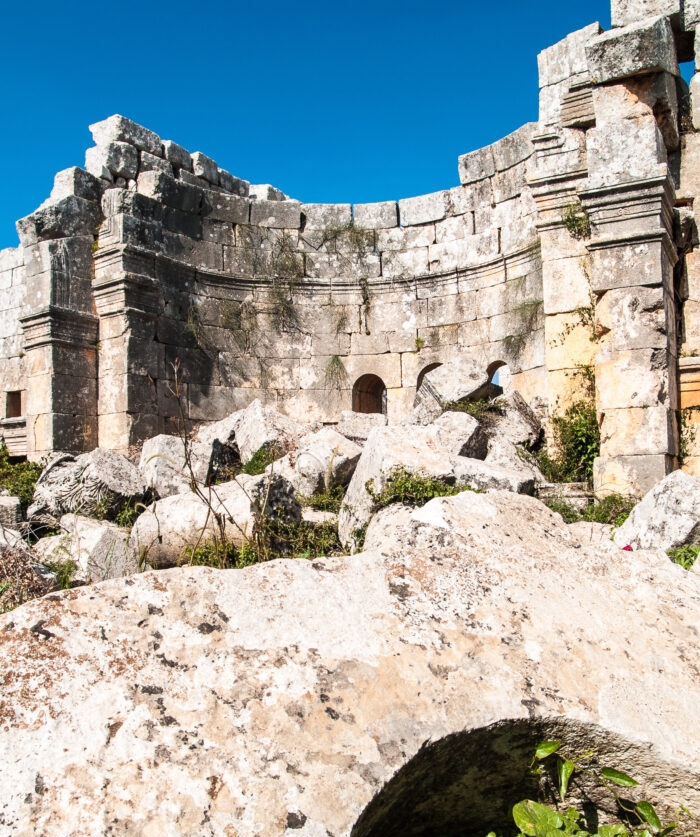
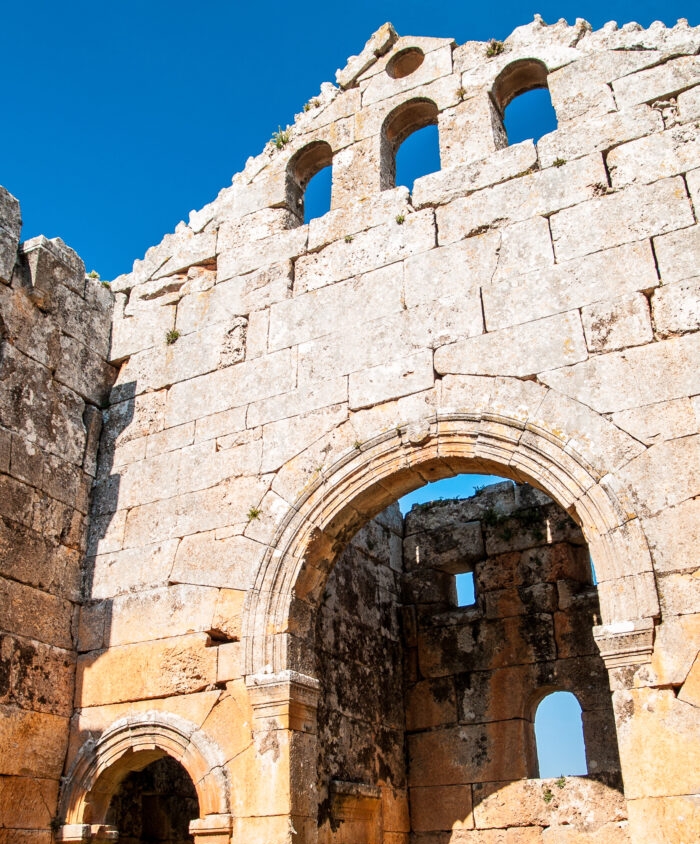
One of the most fascinating aspects of Deir Samaan Syria is its evidence of a complex economy driven by religious tourism. The largest inn, or pandocheion, provided extensive lodging for pilgrims. Attached to it was a small stone-carved chapel and burial chambers, illustrating the seamless connection between hospitality and spirituality in Byzantine culture.
A second inn, located further along the ancient road, is dated by inscription to 479 CE—only two decades after Saint Simeon’s death—proving that pilgrimage began almost immediately. Archaeologists have also identified remains of a marketplace and a mysterious civic building, possibly an andron (a meeting or ceremonial hall), suggesting that Deir Samaan functioned as both a religious and administrative hub.
The Monumental Arch and the Processional Way to Qalaat Samaan
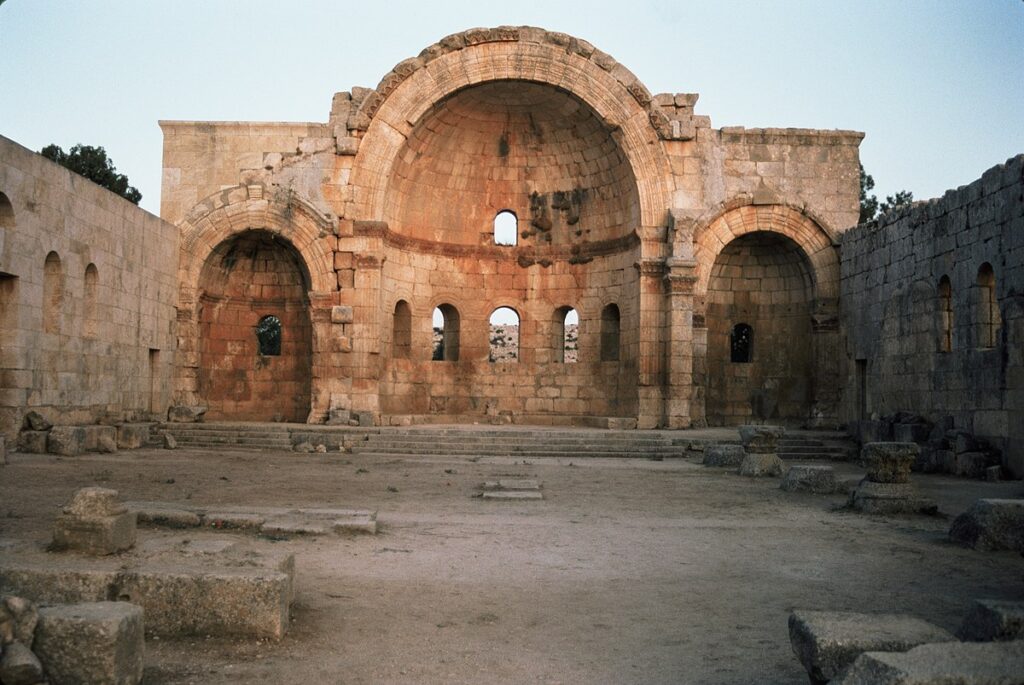
On the eastern side of the settlement, a reconstructed monumental archway once marked the beginning of the Triumphal Way—the ancient path linking Deir Samaan to the Monastery of Saint Simeon atop the hill. Pilgrims would pass beneath this arch and ascend toward the grand basilica of Qalaat Samaan, which was constructed after the saint’s death.
Although much of the original processional route is now lost, parts can still be traced along the modern track. Walking it today offers an evocative sense of connection to the countless pilgrims who once made the same journey seeking blessing and healing.
Decline and Rediscovery
Like many sites in the Dead Cities of Northern Syria, Deir Samaan began to decline after the 12th century. Changing trade routes, reduced pilgrimage traffic, and political instability led to gradual abandonment. Yet, the dry climate and sturdy limestone architecture preserved the village’s core remarkably well.
When Western archaeologists rediscovered the site in the late 19th and early 20th centuries, they were astonished by its state of preservation. Deir Samaan Syria remains one of the few ancient villages where entire multi-story houses, churches, and monasteries still stand, offering an extraordinary window into Byzantine daily life.
Visiting Deir Samaan Today
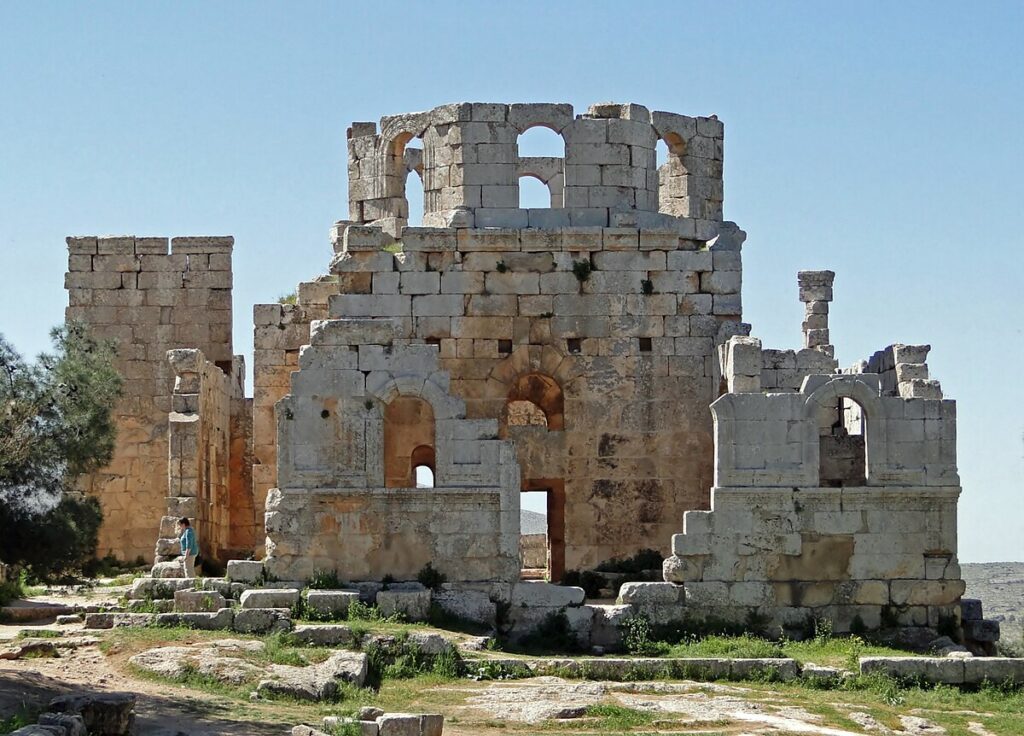
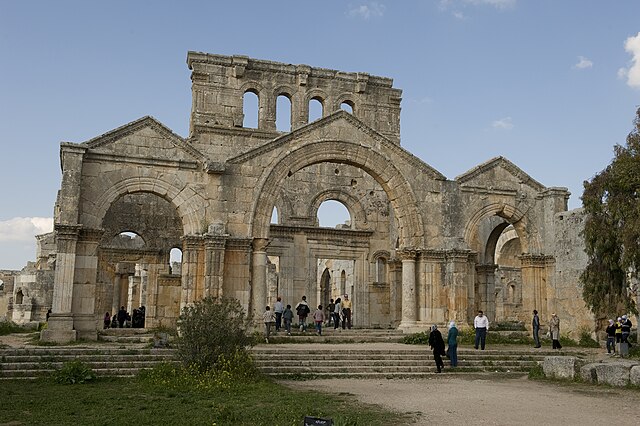
For travelers exploring northern Syria’s archaeological heritage, Deir Samaan is an essential stop—especially when combined with Qalaat Samaan and other Dead Cities such as Serjilla and Al-Bara.
The ruins spread across gentle hillsides, making them ideal for leisurely exploration. Visitors can wander through ancient courtyards, admire carved doorframes, and imagine the bustling atmosphere that once filled the inns and markets. The northwest monastery remains particularly photogenic, with its weathered stone facades catching the warm Syrian sunlight.
Although modern tourism has been limited in recent years, Deir Samaan retains a profound sense of tranquility. Standing among the ruins, with Jebel Samaan rising in the distance, it’s easy to picture the sound of pilgrims’ footsteps echoing along the ancient road.
Why Deir Samaan Matters
For history enthusiasts, Deir Samaan Syria is a masterpiece of rural Byzantine architecture and social organization. It illustrates how faith shaped not only monumental basilicas like Qalaat Samaan, but also the villages that supported them.
For travelers, it offers a tangible link to early Christian devotion—a place where daily life, agriculture, and spirituality merged harmoniously. Its well-preserved inns and monasteries tell the story of hospitality, devotion, and community at the height of Byzantine pilgrimage culture.
Recognized as part of the UNESCO-listed Ancient Villages of Northern Syria, Deir Samaan deserves far more attention from cultural travelers and archaeologists alike. Whether approached as a historical landmark or as a serene escape into Syria’s timeless landscape, Deir Samaan stands as a living testament to a forgotten world.
Practical Travel Notes
- Location: Northwestern Syria, west of Aleppo, near Qalaat Samaan (Saint Simeon Monastery).
- Best Season: Spring and autumn for pleasant temperatures.
- What to See: Northwest and Southwest Monasteries, two pandocheia (inns), monumental arch, north church, and residential buildings.
- Nearby Sites: Qalaat Samaan, Serjilla, Al-Bara, and Apamea.
See Also: Qalb Lozeh
Conclusion – A Timeless Stop on the Pilgrim’s Road
Deir Samaan (دير سمعان) may lack the fame of its hilltop neighbor, yet it offers a deeper, more intimate view of Byzantine devotion. Among its silent stone walls linger echoes of monks, pilgrims, and travelers who once filled its streets. For those who appreciate both travel and history, visiting Deir Samaan Syria is an unforgettable journey through faith, architecture, and the enduring human spirit that built the world’s first pilgrimage routes.
Finally.. If you have any questions, please contact us. To explore further, visit our website gallery for rare images and cultural highlights.
Sources & References:
UNESCO – World Heritage Centre: https://whc.unesco.org
Archnet – Architecture & Heritage Database: https://www.archnet.org
World History Encyclopedia: https://www.worldhistory.org
Syrian Heritage Archive Project: https://syrian-heritage.org
Wikipedia Global Encyclopedia: Wikipedia