Dura Europos A Crossroads of Cultures on the Edge of the Roman World: In the arid eastern plains of Syria, along a steep cliff overlooking the Euphrates River, lies the remains of Dura Europos, a remarkable ancient city once known as the “Pompeii of the Desert.” This fortified settlement tells a vivid story of multiculturalism, military power, and religious diversity at the edge of empires. Founded by the Greeks, expanded by the Parthians, and transformed by the Romans, Dura Europos offers an extraordinary glimpse into the layered civilizations of the ancient Near East.
Unlike many ancient cities that reflect a single cultural identity, Dura Europos is a true fusion of East and West. Greek inscriptions lie near Aramaic graffiti. Pagan temples sit beside the oldest known Christian house-church and one of the oldest synagogues in the world. It is a place where military, trade, faith, and art met in a city that, though lost for centuries, still speaks clearly today.
Dura Europos | Quick Info
| Topic | Quick Info |
|---|---|
| Name | Dura Europos / دورا أوروبوس |
| Location | Eastern Syria, on the bank of the Euphrates River near Deir ez-Zor |
| Founded | Around 300 BCE (Hellenistic period) by Seleucus I Nicator |
| Historical Periods | Hellenistic → Parthian → Roman occupation until mid-3rd century CE |
| Importance | Known as the “Pompeii of the Desert” for its exceptional preservation of ancient architecture and wall paintings |
| Key Discoveries | Earliest known Christian house-church, Jewish synagogue with vivid frescoes, and Roman military fortifications |
| Abandonment | Destroyed and abandoned after the Sassanian siege (~256 CE) |
| Excavations | Major excavations by Yale University and French teams (1920s–1930s) |
| Significance | Offers unique insight into multicultural life, religions, and art in the ancient Near East |
Where Is Dura Europos Located
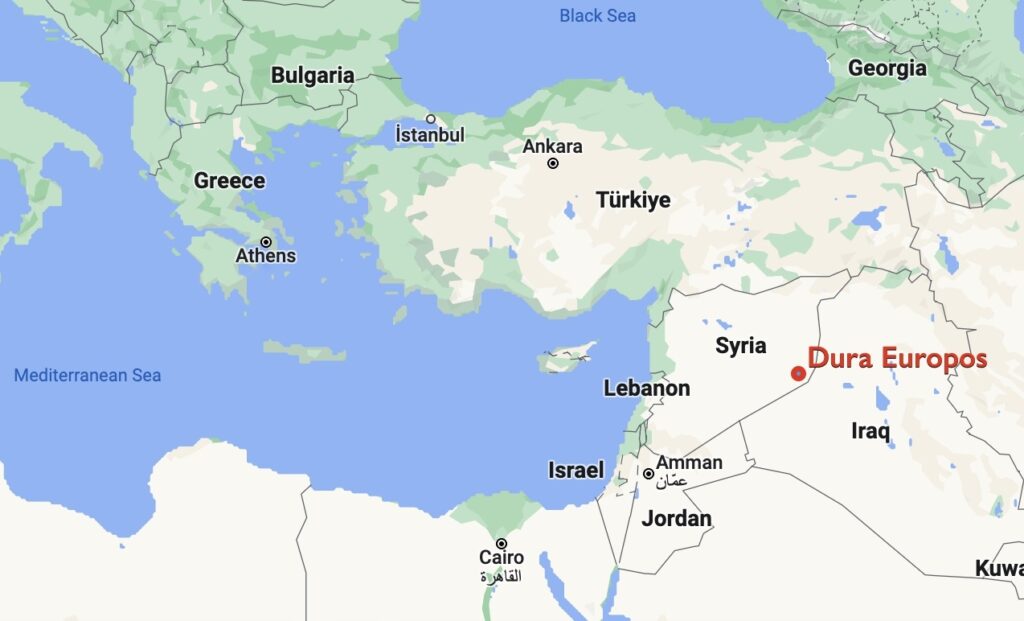
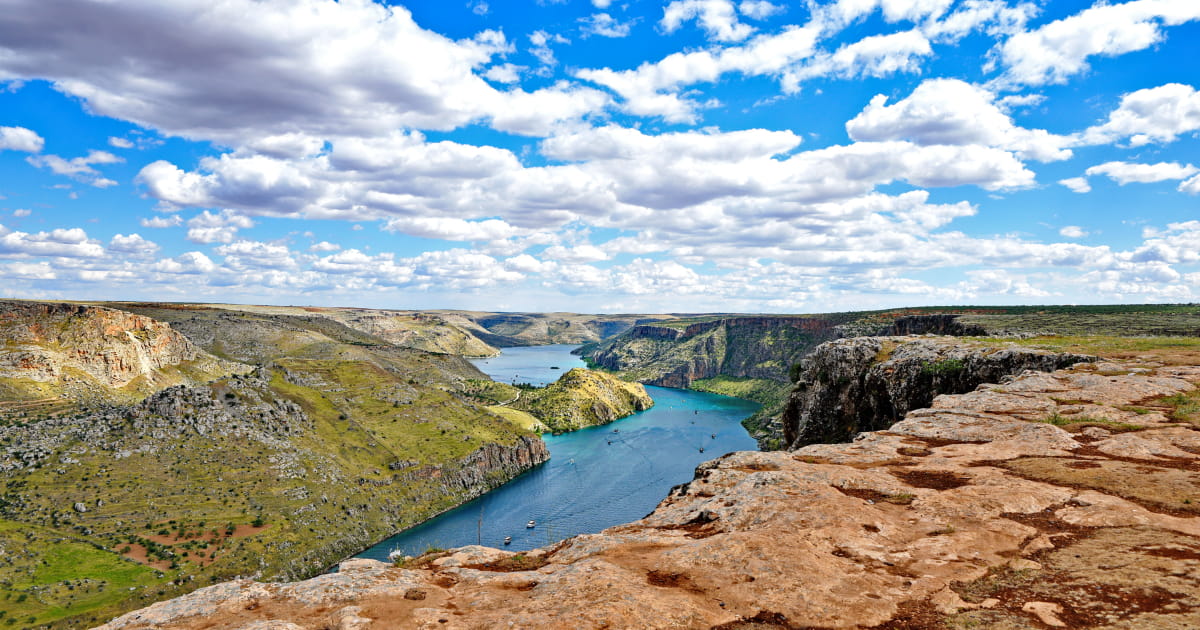
Dura Europos is located in eastern Syria, about 90 kilometers southeast of Deir ez-Zor, close to the modern village of Salhiyé. It occupies a strategic position on a rocky outcrop above the Euphrates River, near Syria’s border with Iraq.
This location made it a valuable military and trade site, connecting Mesopotamia with the Mediterranean world. Its position along the Silk Road made it a melting pot of languages, customs, and religions.
Founding and Early History
Dura Europos was founded around 300 BC by the Seleucid Greeks, a dynasty that ruled much of the territory once conquered by Alexander the Great. The name “Dura” means “fortress” in Semitic languages, while “Europos” was added to honor the Greek homeland of the Seleucid rulers.
Originally designed as a military garrison, Dura was built with a Hellenistic street grid and included all the features of a classical city:
- A central agora or marketplace
- Temples to Greek gods
- A city wall with towers
- Public baths and theaters
However, its identity began to evolve rapidly with the arrival of new powers.
Parthian Period Influence
In the 2nd century BC, Dura Europos fell under the control of the Parthian Empire, the dominant power of Iran and Mesopotamia. The Parthians brought new architectural styles, art, and languages. During this time, the city became more oriental in character, and local Semitic culture flourished alongside Greek traditions.
Temples were built not just for Greek gods like Zeus, but also for local deities, Iranian gods, and Mesopotamian ones. The city’s artistic styles reflected a blend of Persian, Mesopotamian, and Hellenistic elements, creating a unique aesthetic.
The Roman Era and the City’s Transformation

In 165 AD, the Romans captured Dura Europos and turned it into a border garrison. The city became a crucial defensive point along the eastern frontier of the Roman Empire. A Roman military camp was constructed, and the city’s walls were reinforced.
Under Roman control, the city flourished again. It housed a mixed population of Romans, Greeks, Syrians, Jews, and others. The fusion of Roman administration with local religious and social customs gave Dura a distinctive character.
Dura Europos as a Center of Religion
Perhaps the most fascinating aspect of Dura Europos is its religious diversity. Archaeological excavations have revealed shrines and houses of worship from multiple faiths that coexisted side by side.
The Synagogue
Dura Europos is home to one of the oldest and most complete synagogues ever discovered. Built in the 3rd century AD, the synagogue was richly decorated with frescoes depicting scenes from the Hebrew Bible. These murals include images of Moses, Abraham, Ezekiel, and other prophets—an extraordinary find, since Jewish art typically avoided figural representation.
The preservation of the synagogue’s artwork offers insight into how Jewish communities in the Roman world adapted and expressed their faith in visual ways while still maintaining their religious identity.
The Christian House-Church
Also discovered in Dura Europos was the oldest known Christian house-church, dating to around 240 AD. Unlike later basilicas, this early church was a modest home converted into a worship space. It included a baptistery with painted frescoes, including one of Jesus walking on water, one of the earliest known depictions of Christ.
This discovery has reshaped our understanding of early Christian worship, showing that Christianity had reached deep into the eastern provinces of the Roman Empire well before it became a state religion.
Pagan Temples
In addition to Jewish and Christian sites, Dura also had temples to many gods:
- Zeus Megistos, the supreme god
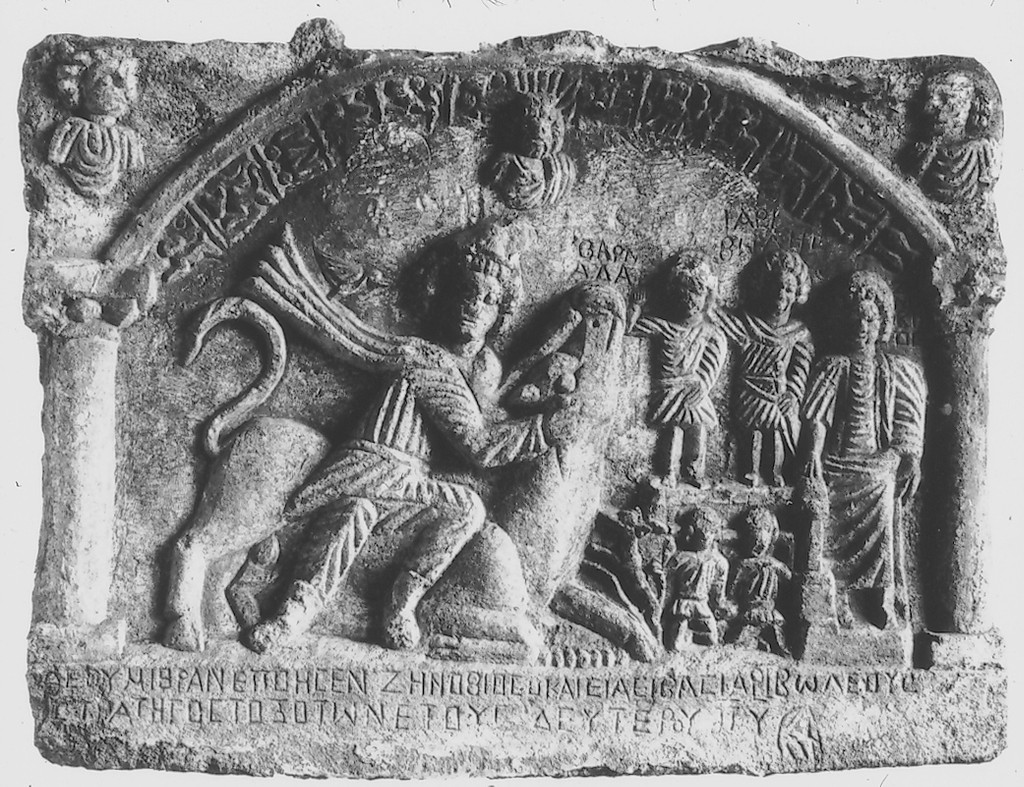
- Artemis Nanaia, a fusion of Greek and Mesopotamian goddess traditions
- Adonis, Aphrodite, and other regional deities
- Iranian gods such as Mithras, whose cult was popular among Roman soldiers
This blend of religions illustrates Dura’s tolerance and cosmopolitan character.
Art and Culture
The artistic remains of Dura Europos are among the richest in the region. The murals in the synagogue, the paintings in the Christian baptistery, and the temple art all demonstrate a vivid and symbolic visual culture.
The styles blend classical Greco-Roman techniques with local traditions. Figures are often shown in front-facing, flat compositions, emphasizing symbolic meaning over realism. This artistic tradition had a profound impact on Byzantine and early Christian art.
Many of the city’s most important artworks and objects are now housed in museums in Damascus, New York (Yale University), and Paris, where they continue to inform scholarly research on ancient religions and cultures.
The Fall of Dura Europos
In 256 AD, during the Roman–Persian wars, the Sassanian Persians laid siege to Dura Europos. The city’s defenders, including Roman soldiers and local civilians, were ultimately overwhelmed. The Sassanians breached the walls using an early form of tunnel warfare and chemical weapons—one of the first recorded uses of chemical agents in military history.
After the city’s fall, it was abandoned and never rebuilt. The harsh desert environment preserved it under sand and debris for centuries.
Rediscovery and Excavation
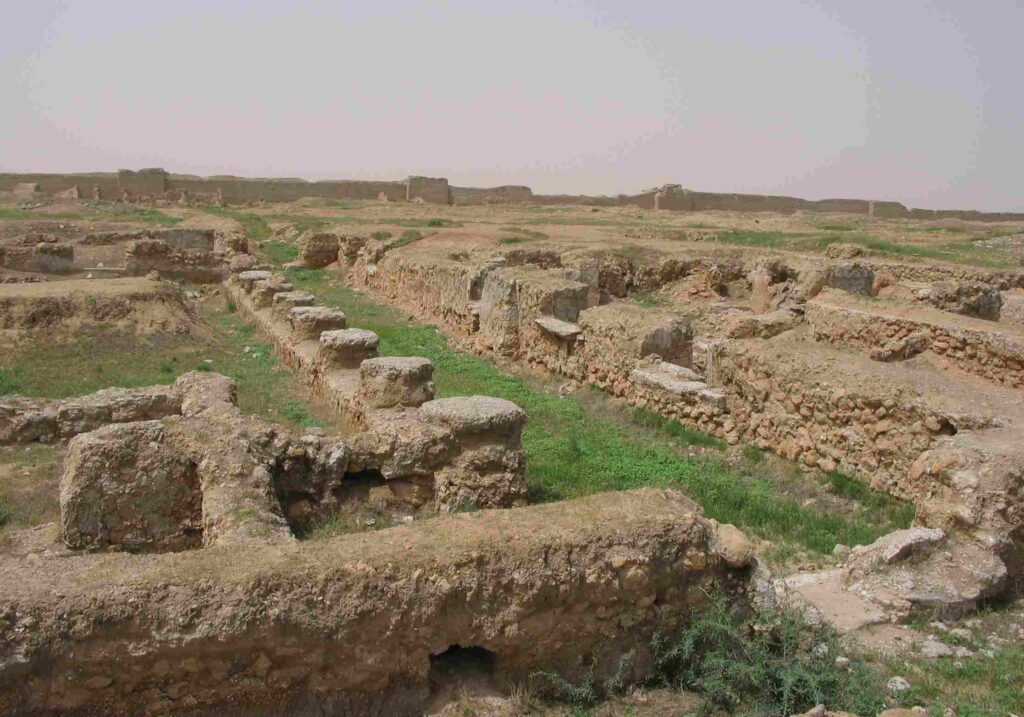
Dura Europos was rediscovered in the 1920s by British troops and later excavated by Yale University and the French Academy of Inscriptions and Belles-Lettres.
The site yielded an immense amount of material:
- Temples and shrines
- Residential buildings and wall paintings
- Weapons and military gear
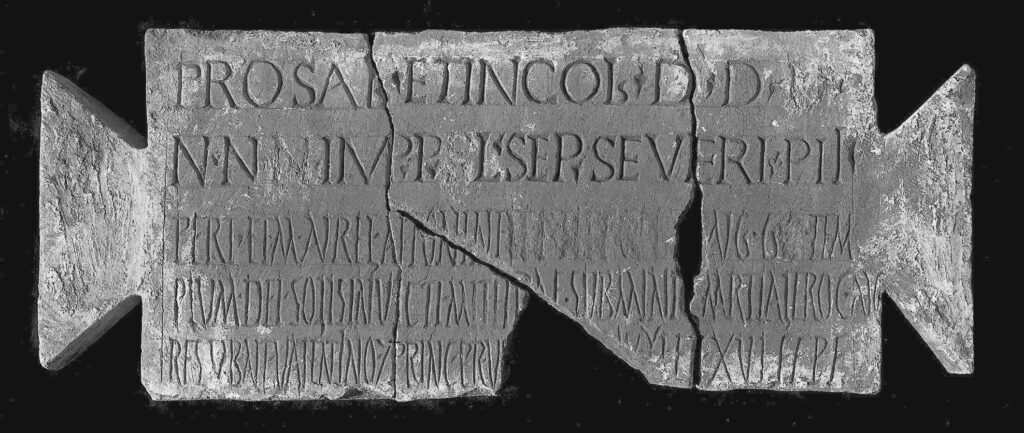
- Inscriptions in Greek, Latin, Aramaic, Hebrew, and Palmyrene
These findings offered an unparalleled look into daily life, military organization, and religious coexistence in an ancient city.
Visiting Dura Europos Today
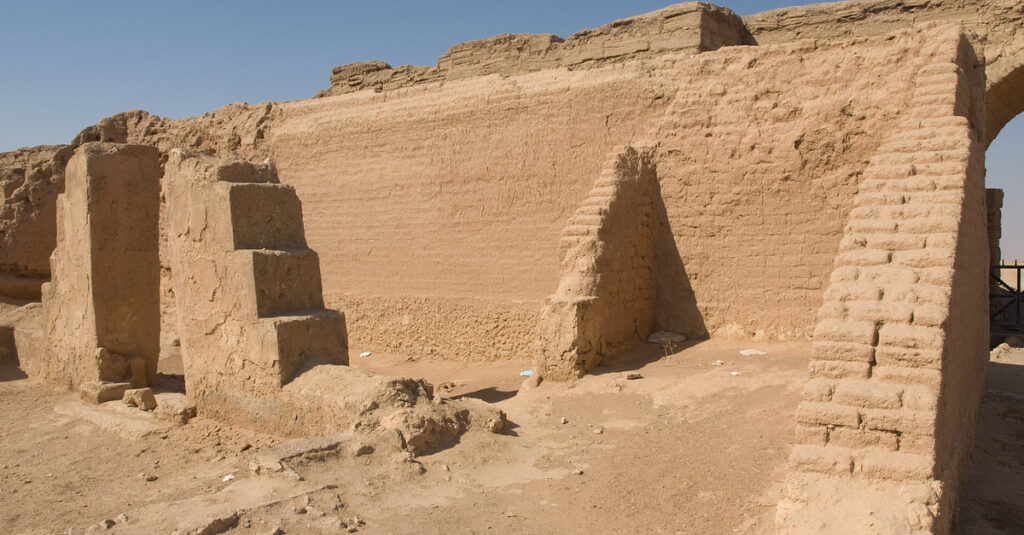
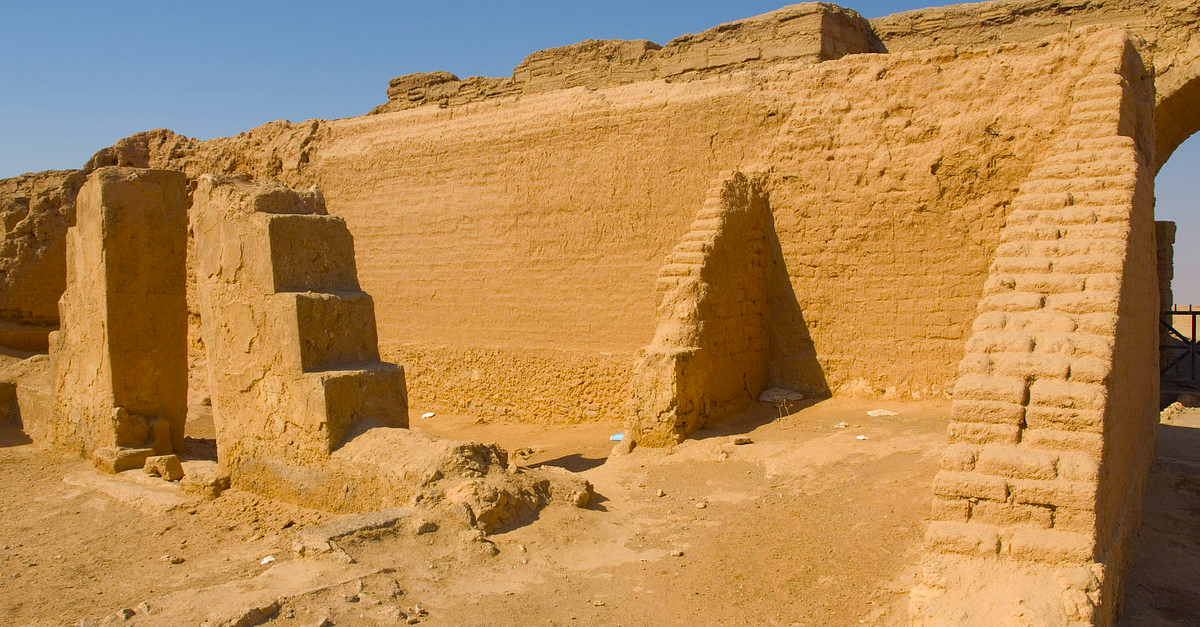
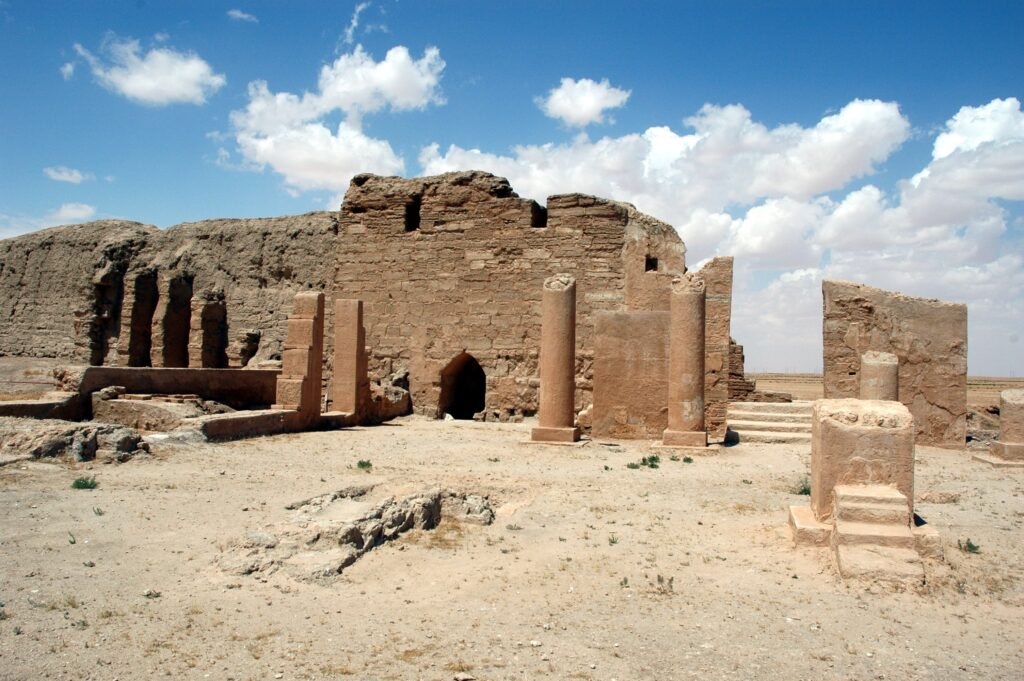
Due to its remote location and past conflicts, visiting Dura Europos today is not easy. The site has suffered from damage and looting, especially during the Syrian conflict. However, prior to 2011, travelers could explore the remains of city walls, towers, and surviving temple foundations.
Although many of its artworks are now in museums, the site’s location along the Euphrates cliffs remains spectacular, offering views that once inspired generations of inhabitants.
Future efforts toward restoration and protection will be vital to preserving this cultural treasure.
Why Dura Europos Is Unique
What makes Dura Europos so exceptional is its multicultural identity. It was never just Greek, Roman, Parthian, or Semitic. It was all of them at once.
Its buildings, murals, and religious structures form a rare portrait of:
- Early Christian worship
- Jewish artistic traditions
- Roman military life on the frontier
- Religious tolerance and hybrid culture
For historians, Dura Europos is a goldmine. For travelers, it is a silent but powerful reminder of what Syria once represented—a crossroads of the ancient world.
See Also: Kingdom of Mari
Final Thoughts
Dura Europos is not just another ancient ruin. It is a place of convergence, where East met West, and religions, armies, and merchants shared space in one of the ancient world’s most fascinating cities.
Though silent today, its story is more relevant than ever—reminding us of the richness that emerges when cultures meet, coexist, and leave behind a shared legacy carved in stone, painted on walls, and buried beneath the sands of time.
Finally.. If you have any questions, please contact us. To explore further, visit our website gallery for rare images and cultural highlights.
Sources & References:
UNESCO – World Heritage Centre: https://whc.unesco.org
Archnet – Architecture & Heritage Database: https://www.archnet.org
World History Encyclopedia: https://www.worldhistory.org
Syrian Heritage Archive Project: https://syrian-heritage.org
Global Encyclopedia: Wikipedia