Fakhr al Din Castle (Palmyra Castle) قلعة فخر الدين المعني الثاني : Palmyra is globally known for its Greco-Roman ruins, monumental colonnades, and its role as a key caravan city in antiquity. Yet the site did not cease to have strategic or political importance after the fall of the classical world. One of the most visible reminders of Palmyra’s later history is the citadel overlooking the ancient city, commonly known as Fakhr al Din Castle.
Unlike Palmyra’s temples, streets, and tombs, the citadel belongs to a much later historical phase. It reflects the Ottoman-era military and political realities of the 16th and 17th centuries and illustrates how ancient sites were reoccupied, repurposed, and militarized long after their original civilizations disappeared. This article examines the citadel as a historical layer distinct from classical Palmyra, focusing on its context, function, and significance.
Fakhr al Din Castle | Quick Info
| Item | Details |
|---|---|
| Name | Fakhr al-Din al-Ma‘ni II Citadel – Palmyra Castle |
| Location | Hill overlooking Palmyra (Tadmur), Syria |
| Historical Period | Late 16th – early 17th century |
| Political Context | Ottoman Empire |
| Associated Figure | Fakhr al-Din II, Emir of Mount Lebanon |
| Function | Military fortification and control point |
| Architectural Style | Ottoman military architecture |
| Relation to Palmyra | Later defensive structure above the ancient city |
Historical Context: Palmyra after Antiquity
By the late medieval and early modern periods, Palmyra was no longer a thriving urban center, but its geographic position remained important. Located on routes linking Damascus, Homs, and the Euphrates region, the site retained strategic value for controlling movement across central Syria. This strategic relevance later justified the construction and use of Fakhr al Din Castle, which overlooked these vital routes.
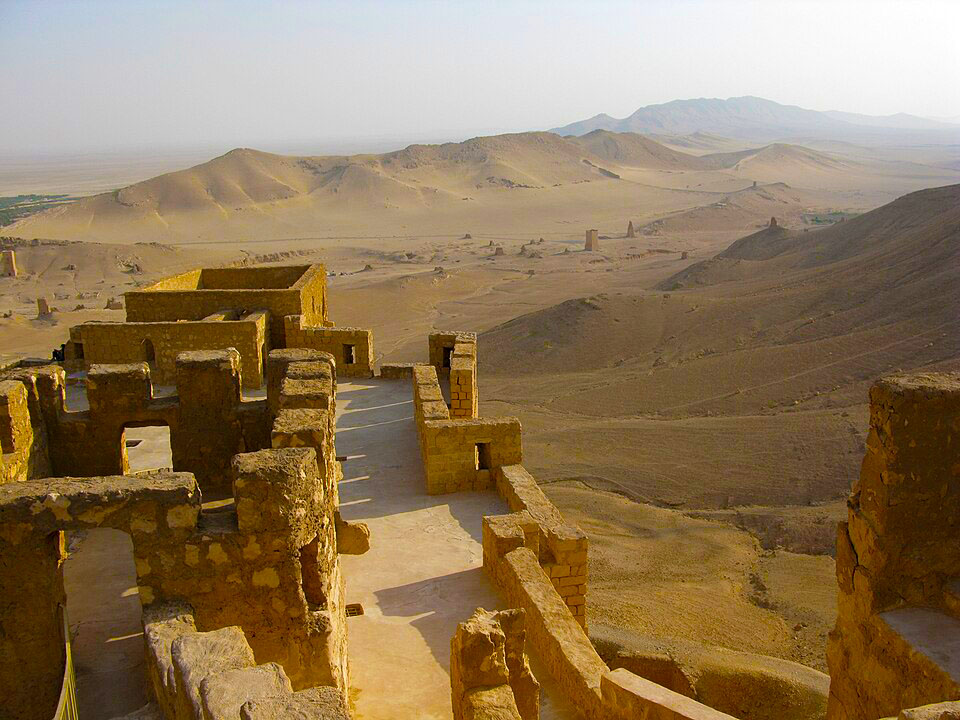
The Ottoman Empire, which incorporated Syria in the early 16th century, was concerned with securing desert routes, suppressing tribal unrest, and maintaining authority over distant territories. Ancient ruins, especially elevated positions near former cities, often became ideal locations for fortifications. Palmyra’s hilltop provided a natural defensive advantage, commanding views over the oasis and surrounding plains—an ideal setting for what is now known as Fakhr al Din Castle.
It was within this political and military framework that the citadel associated with Fakhr al-Din al-Ma‘ni II emerged. Fakhr al Din Castle reflects this phase of regional power dynamics, where control over movement, visibility, and desert corridors mattered more than urban prosperity itself.
Fakhr al-Din al-Ma‘ni II: The Political Figure behind the Name
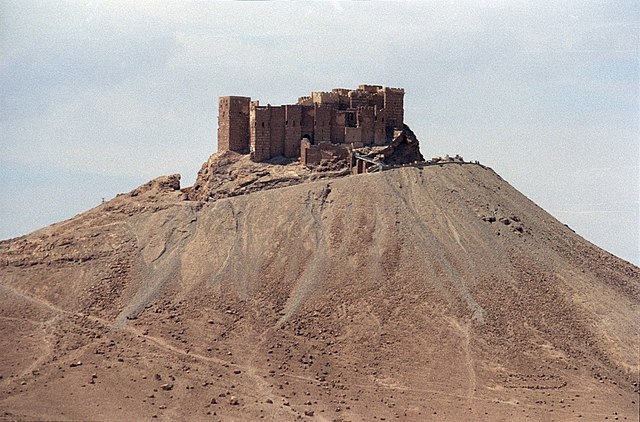
Fakhr al-Din II (1572–1635) was a powerful Druze leader and Ottoman emir based in Mount Lebanon. Though formally loyal to the Ottoman sultan, he sought to expand his autonomy, modernize his territories, and extend influence into neighboring regions, including parts of inland Syria.
Historical sources suggest that Fakhr al-Din took control of Palmyra for a period during his expansion. While the exact extent of his direct involvement in constructing the citadel remains debated, the fortress—commonly known as Fakhr al Din Castle—is traditionally linked to his name, symbolizing Ottoman provincial authority rather than imperial monumental architecture.
The citadel, often referred to as Fakhr al Din Castle, thus reflects a moment when local rulers, operating within the Ottoman system, exercised military power over key locations far from their primary domains.
Architecture and Military Function
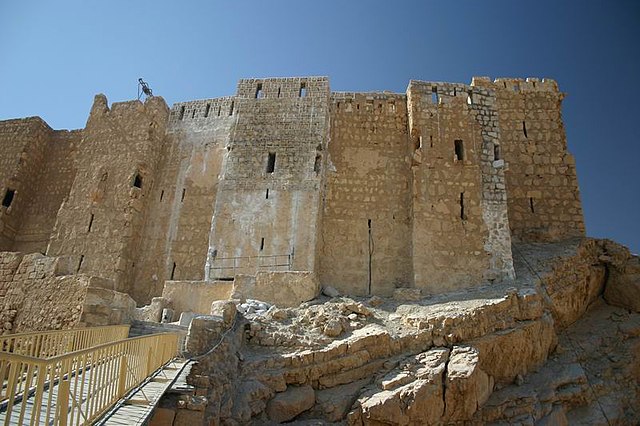
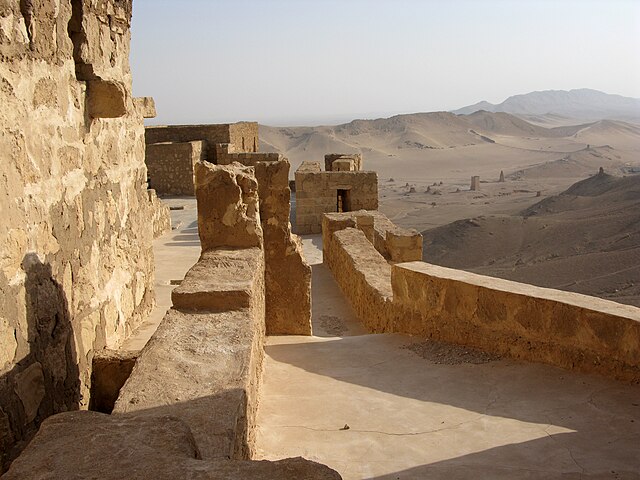
Palmyra Castle’s design follows typical Ottoman military principles rather than classical or medieval Syrian styles. Built primarily for defense and surveillance, it prioritizes function over ornamentation.
Key architectural characteristics include:
- Thick defensive walls adapted to artillery-era warfare
- A compact internal layout suitable for a small garrison
- Elevated positioning to control access to the ancient city below
Unlike Palmyra’s monumental temples, Palmyra Castle makes no attempt to harmonize aesthetically with the classical ruins. Instead, it asserts dominance over them—both visually and symbolically. From the citadel, the entire ancient city is visible, emphasizing its role as a military observation and control point rather than a residential or ceremonial structure.
A Layered Landscape: Classical City and Ottoman Fortress
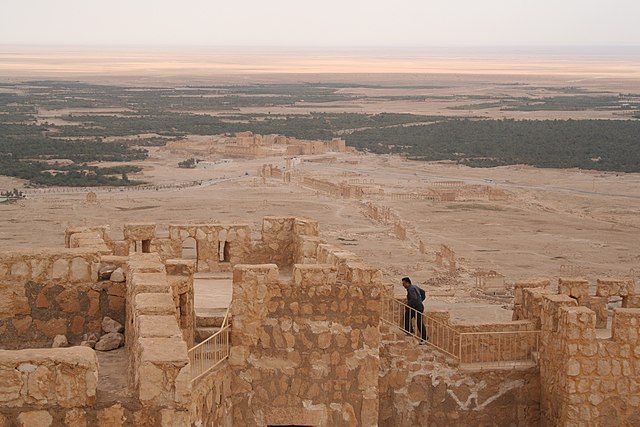
One of the most significant aspects of the Fakhr al Din Castle is what it represents archaeologically: the reuse of ancient landscapes by later powers. Palmyra is not a single-period site but a palimpsest of civilizations.
Palmyra Castle adds an Ottoman layer to a landscape already shaped by:
- Bronze Age settlement
- Roman urban planning
- Late antique decline
- Medieval desert use
This layering challenges the perception of Palmyra as exclusively “classical.” Instead, it highlights continuity—how strategic locations remain relevant even when their original cultures vanish.
Modern Perception and Scholarly Value
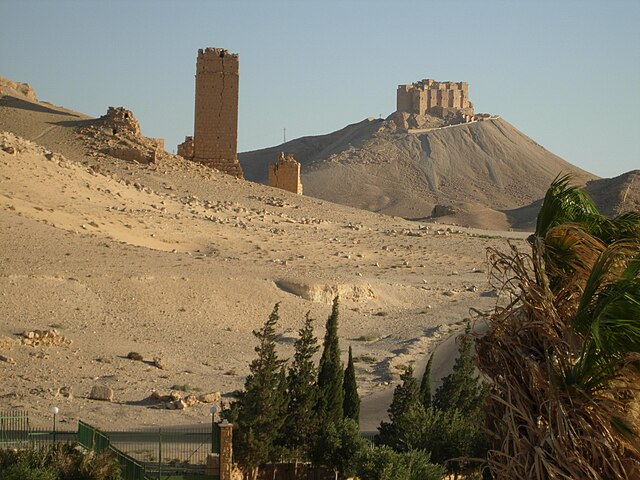
For many visitors, Palmyra Castle is primarily a viewpoint offering panoramic views of Palmyra’s ruins. However, from an academic perspective, it deserves attention in its own right. It illustrates:
- Ottoman frontier management
- Provincial military architecture
- The political reach of semi-autonomous rulers like Fakhr al-Din II
The citadel also serves as a reminder that the history of Syria cannot be confined to a single era. Ottoman-period structures, often overlooked, are essential for understanding how power, geography, and memory intersected in the early modern Middle East.
Relationship to the Ancient City of Palmyra
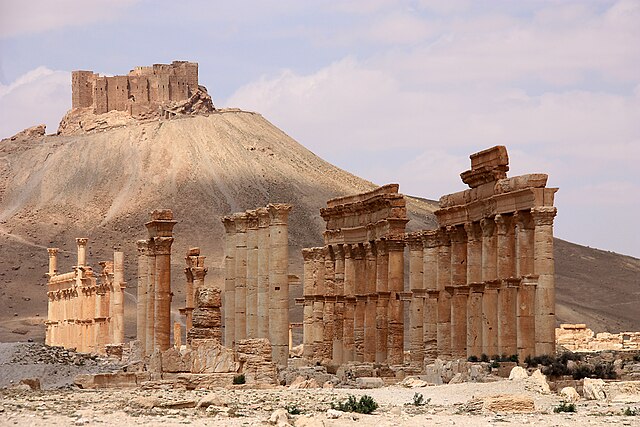
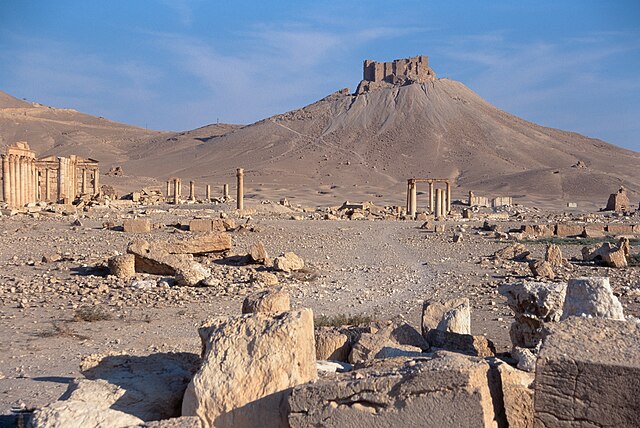
While physically separate, Fakhr al Din Castle is historically inseparable from Palmyra. Its existence depends on the city’s prior importance. Without Palmyra’s ancient prestige, location, and infrastructure, there would have been little reason to fortify the hill above it.
Thus, the citadel should be understood not as an intrusion, but as a continuation—an assertion of authority over an inherited landscape whose meaning had evolved across centuries.
Conclusion
Fakhr al Din Castle stands as a powerful symbol of Palmyra’s post-classical history. It represents an era when ancient ruins were no longer centers of civilization, but strategic assets within a vast imperial system. Through its Ottoman military architecture and political associations, the citadel adds depth to Palmyra’s historical narrative.
Understanding this fortress allows us to see Palmyra not only as a relic of antiquity, but as a living landscape shaped by successive powers. In doing so, it reinforces the importance of viewing archaeological sites as multi-layered historical records rather than frozen monuments of a single age.
Finally.. If you have any questions, please contact us. To explore further, visit our website gallery for rare images and cultural highlights.
Sources & References:
UNESCO – World Heritage Centre: https://whc.unesco.org
Archnet – Architecture & Heritage Database: https://www.archnet.org
World History Encyclopedia: https://www.worldhistory.org
Syrian Heritage Archive Project: https://syrian-heritage.org
Global Encyclopedia: Wikipedia