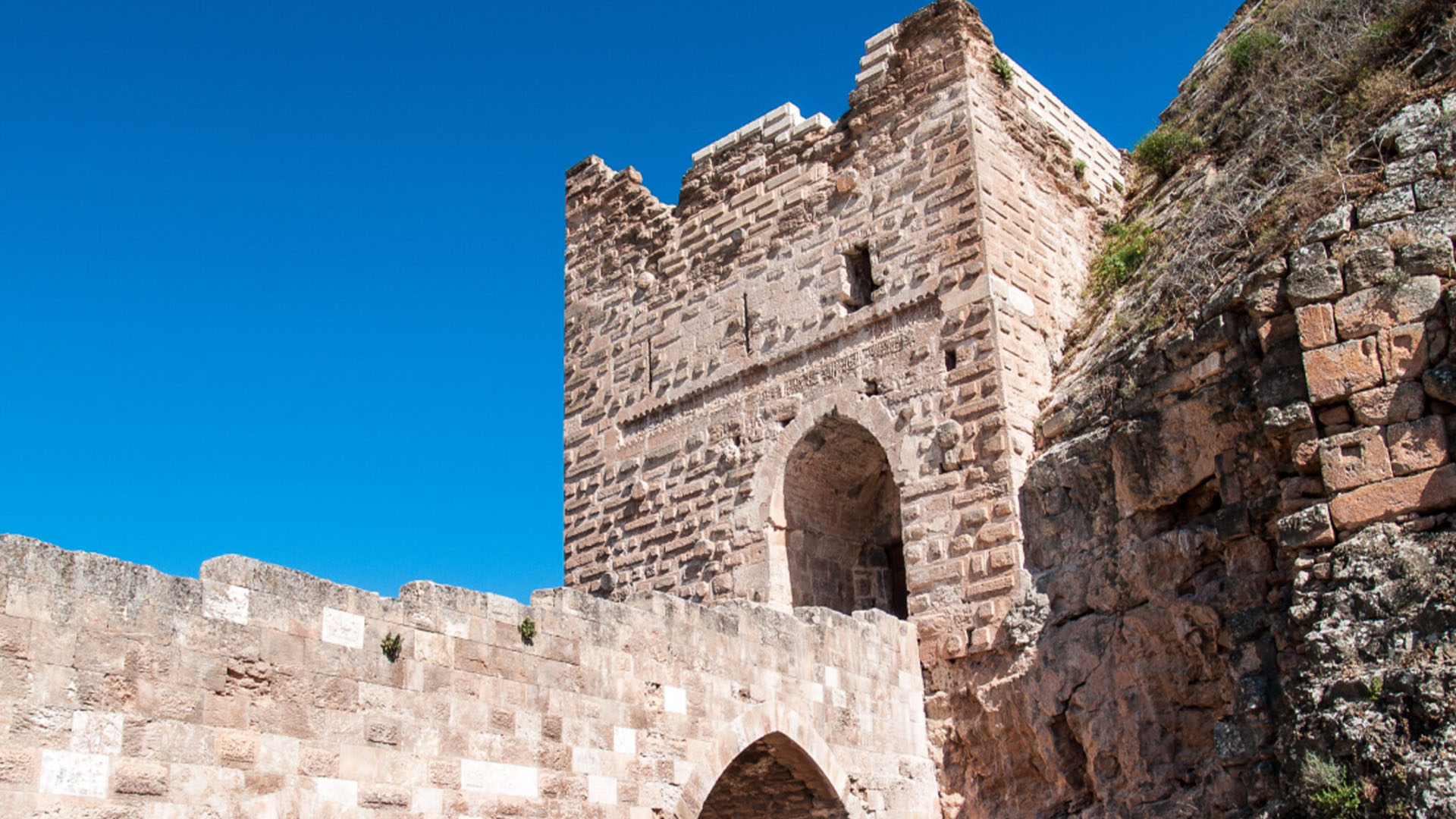
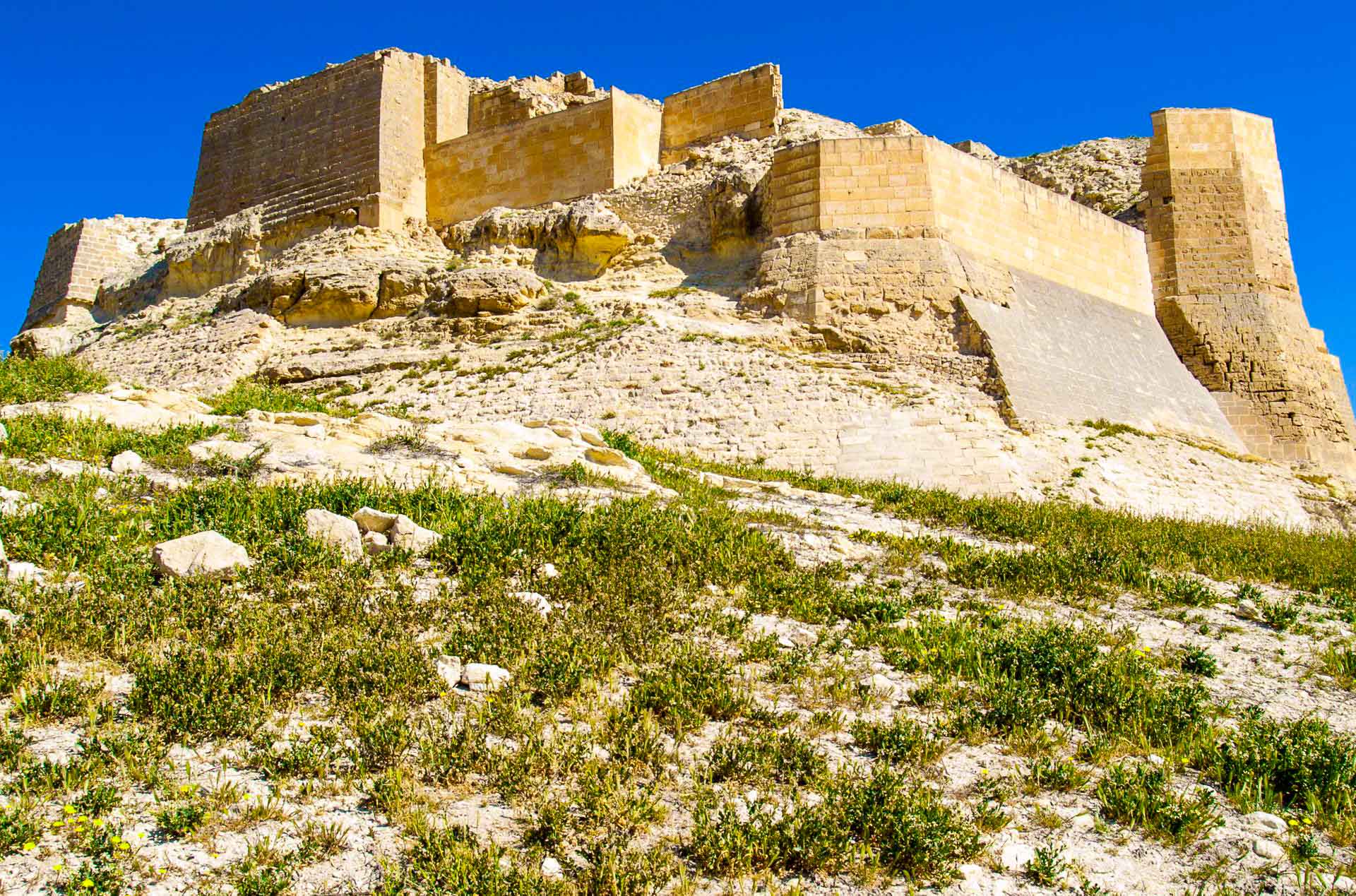
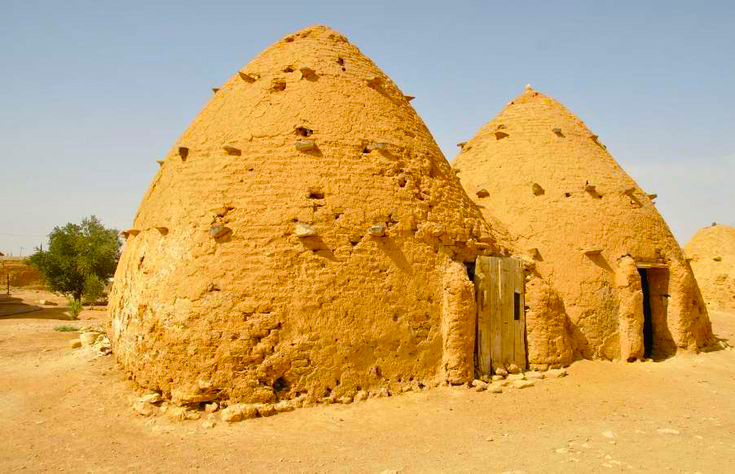
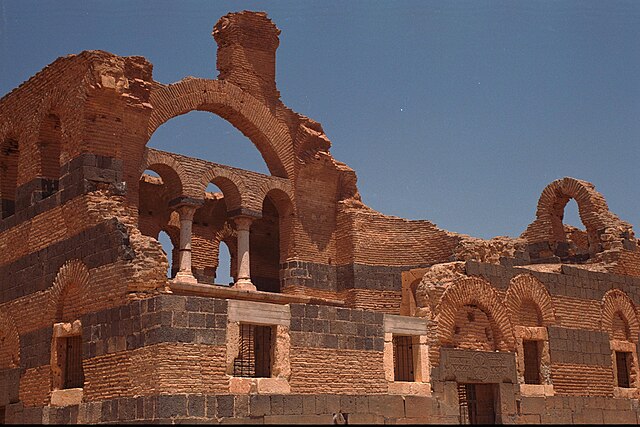
Ibn Wardān Palace (قصر ابن وردان) is one of the most distinctive Byzantine landmarks in Syria. Built between 561 and 564 CE under Emperor Justinian I, this desert complex combined a palace, church, and military post to showcase imperial authority on the frontier. With its striking striped façade of basalt and brick and its refined architectural details brought from Apamea, Ibn Wardān Palace stands out as a rare example of elegant Byzantine design in an isolated setting. Perched on the edge of the steppe northeast of Hama, Ibn Wardān Palace still preserves much of its original character, offering visitors a quiet glimpse into the empire’s ambition and its architectural reach deep into the desert.
| Feature | Details |
|---|---|
| Name | Ibn Wardan Palace (Qasr Ibn Wardan) |
| Location | ~60 km northeast of Hama, western slope of Syrian Desert |
| Built | 561–564 CE under Byzantine Emperor Justinian I |
| Components | Palace, church (domed basilica), military barracks |
| Style | Byzantine design with alternating basalt and brick (ablaq), imported marble columns |
| Condition | Palace and church partially preserved; barracks largely ruined |
| Accessibility | From Hama to al‑Hamra by microbus, then ~25 km private transport or hitchhike |
| Best Time to Visit | Spring or autumn mornings for cooler weather and clarity |
Why Visit
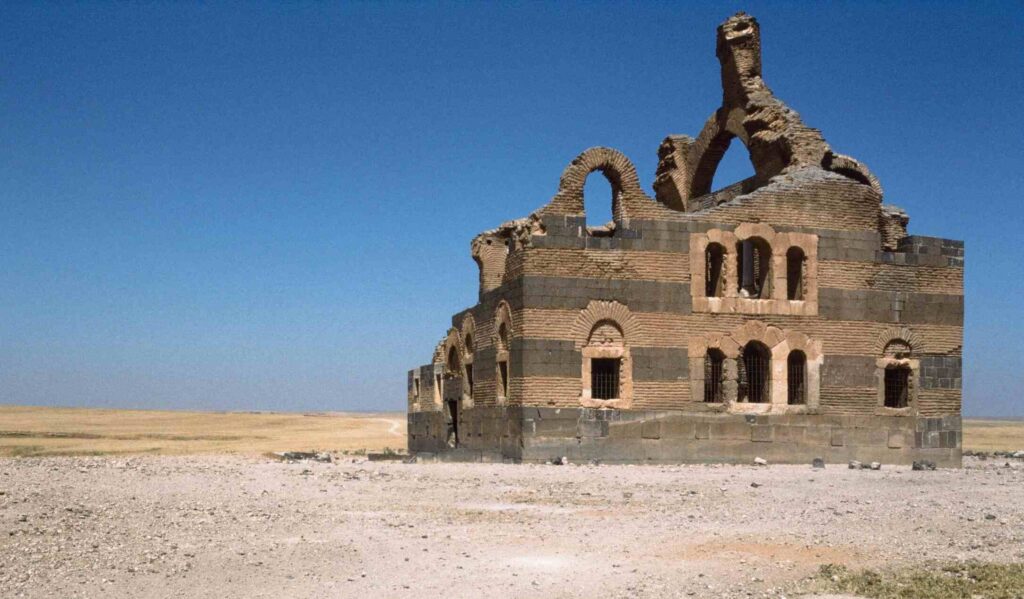
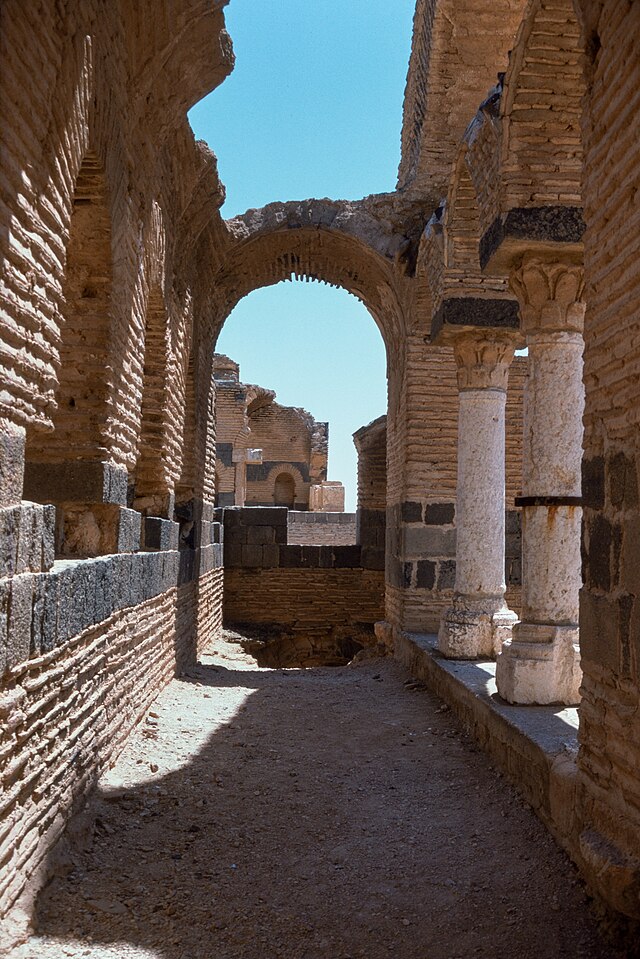
- Visiting Ibn Wardān Palace offers a direct encounter with the architectural style of Justinian’s era without the crowds of major sites. This complex is often described as the “desert cousin” of Hagia Sophia — not because of scale, but because of its clear Constantinopolitan influence. The palace displays a distinctive façade made of alternating black basalt and red brick bands, a design rarely seen in Syria. The interior layout follows a cruciform plan around a central courtyard, once surrounded by administrative rooms and reception spaces that reflected imperial authority.
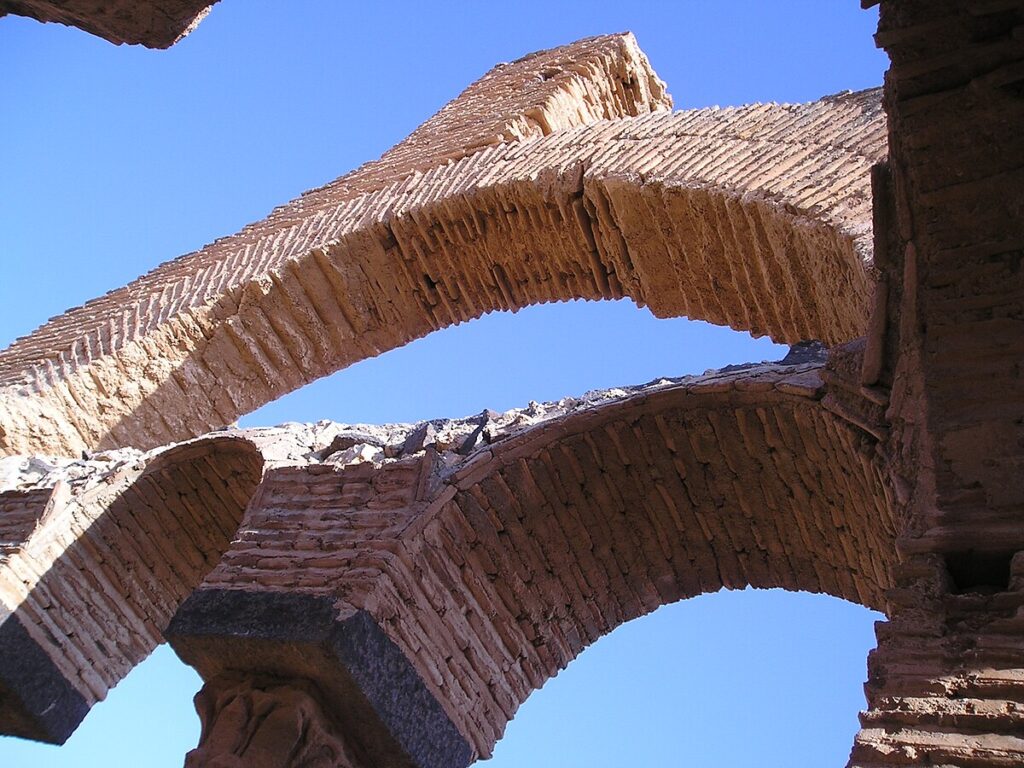
- Just steps away stands a small domed church, compact and elegant, featuring thick walls, semi-circular arches, and decorative stonework that shows a blend of Byzantine and local craftsmanship. Archaeologists believe that some capitals and columns were transported from Apamea after the great earthquake, giving the site a unique mix of reused Roman elements and fresh sixth-century construction.
- The palace was strategically positioned to control local tribes and secure the desert frontier. Along with Resafa and Halabiyeh, it formed a defensive and administrative triangle aimed at stabilizing trade routes and projecting power across the steppe. Exploring the ruins today gives visitors a sense of how the Byzantine Empire attempted to govern remote regions.
- Despite minor war-related damage in the surrounding area, Ibn Wardān Palace remains mostly intact. Its open desert setting, minimal modern additions, and impressive preservation make it one of the most atmospheric Byzantine sites in Syria.
How to Reach

Ibn Wardan Palace lies about 60 km northeast of Hama. First, take a microbus from Hama to the nearby town of al‑Hamra (≈30 minutes). From there arrange private transport or attempt hitchhiking for the remaining ~25 km along desert terrain. The journey requires planning as public transport only reaches al‑Hamra. It’s best visited as part of a guided day trip that may include Qalaat al‑Shamamis or Salamiyeh.
What to Know Before You Go
A local caretaker usually opens the palace and church and collects a small entry fee, often waived for friendly visitors. Facilities are minimal—bring water, snacks, sun protection, and sturdy shoes. The barracks are mostly gone, so focus exploration on the palace and church. Respect fragile masonry and architectural details. The site is in a remote area; travelling with a guide or companion is recommended, especially for safety and access.
Nearby Attractions
- Resafa (Sergiopolis) – Iconic Byzantine pilgrimage site ~100 km west
- Qalaat al‑Shamamis – Desert fortress ruins in the same region
- Salamiyeh – Historic town with Roman and Islamic remains
- Androna (Andarin) – Ancient Byzantine ruins nearby
- Scenic desert landscapes and traditional Syrian farmland for pastoral views



To read more about this topic, click here. To explore further, visit our Facebook Syria Collection for rare images and cultural highlights.