Hosn Suleiman Syria’s Mountain Temple of Power and Mystery: Hidden high in the coastal mountains of western Syria, Hosn Suleiman is one of the country’s most awe-inspiring and mysterious archaeological sites. Far from the crowded tourist circuits, this ancient mountain sanctuary combines natural beauty, architectural grandeur, and spiritual significance in a way few other sites can.
Built from massive stone blocks and perched at an altitude of over 1000 meters above sea level, Hosn Suleiman has attracted pilgrims, kings, and travelers for centuries. Its sheer scale and isolation make it one of the most memorable archaeological experiences in the Levant.
Hosn Suleiman | Quick Info
| Topic | Quick Info |
|---|---|
| Name | Hosn Suleiman / حصن سليمان |
| Location | In the coastal mountains of western Syria, about 35 km southeast of Safita |
| Historical Period | Iron Age to Roman period (c. 9th century BCE – 3rd century CE) |
| Original Name | Ancient Baal Temple of Saphon (later known as Zeus Baetocaece in the Hellenistic period) |
| Archaeological Importance | A monumental mountain sanctuary dedicated to Baal, later to Zeus |
| Architecture | Built with massive limestone blocks, featuring a grand courtyard and towering walls |
| Altitude | Over 1000 meters above sea level, offering panoramic mountain views |
| Role in History | Served as a religious center and pilgrimage site for thousands of years |
| Current Status | One of Syria’s best-preserved highland temple complexes and a unique heritage landmark |
| Significance | Symbolizes the blend of ancient Semitic and Greco-Roman religious architecture in Syria |
Location and Natural Setting
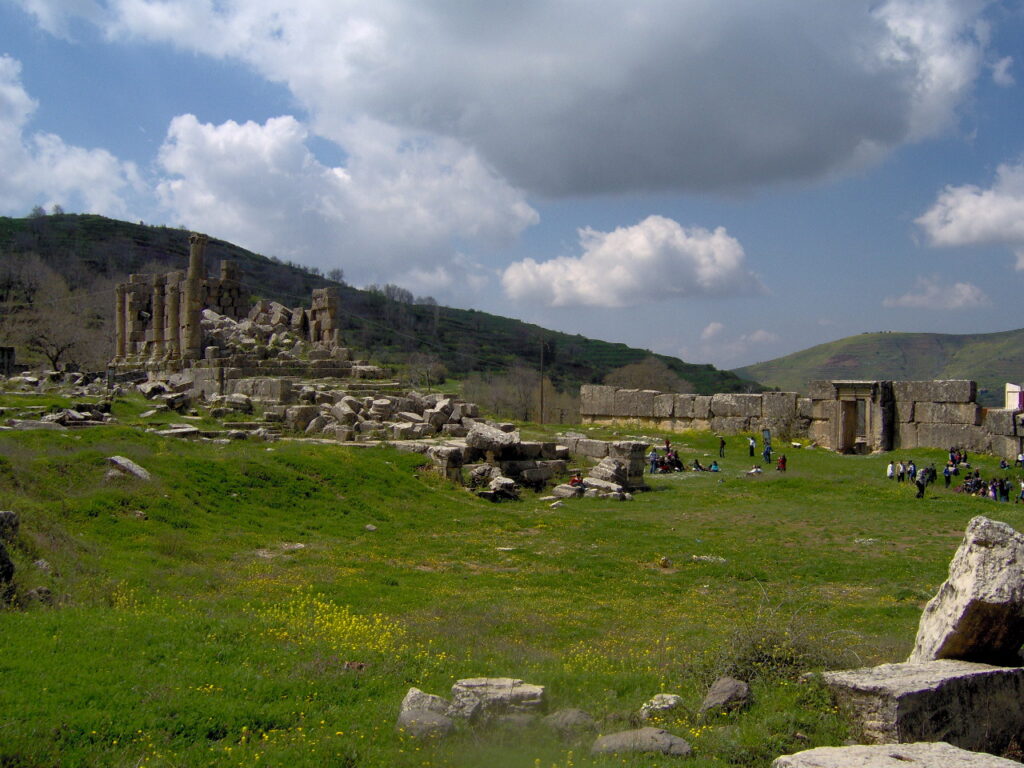
Hosn Suleiman is located in the Tartus Governorate, between Safita and Dreikish, deep within the lush, pine-covered mountains of the Syrian coastal range. The temple lies at the heart of a forested plateau, offering stunning views of the surrounding valleys and hills.
The fresh mountain air, the singing of birds, and the scent of pine trees create a serene and spiritual atmosphere, making this site not only historically important but also emotionally moving for those who visit.
Its elevated location once gave it strategic and spiritual significance. It was a place where gods were worshiped above the clouds, and decisions were made in the shadow of giants.
A Temple of Jupiter and Baal
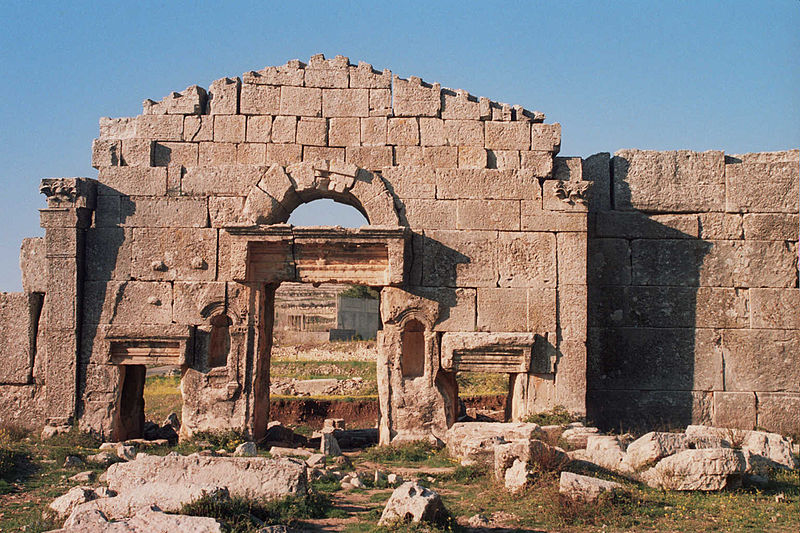

Hosn Suleiman was known in antiquity as Baal Safon or Baal Zephon, a sacred site dedicated to Baal, the storm and mountain god of the Canaanites and Phoenicians. During the Hellenistic period, this god was merged with the Greek deity Zeus, and later with Jupiter during Roman rule.
The result is one of the grandest Greco-Roman mountain temples in the region, built over earlier Semitic sacred grounds. Like the more famous temples of Baalbek in Lebanon or Palmyra in eastern Syria, Hosn Suleiman reflects the religious fusion that defined the classical age in the Levant.
Historical Overview

Pre-Hellenistic Origins
The earliest signs of worship at this site go back to the Bronze Age. Archaeologists believe that a sacred altar or shrine existed here long before the arrival of the Greeks or Romans. The mountain itself may have been seen as a godly manifestation, where the heavens touched the earth.
Hellenistic Period
In the third century BCE, the site was adopted and expanded by the Seleucid dynasty, which ruled much of Syria after the death of Alexander the Great. During this period, the local god Baal was associated with Zeus, and a more structured temple complex began to take shape.
The first monumental stone blocks were laid during this time, and the sanctuary became a pilgrimage center, especially for coastal cities like Arwad and Tartus.
Roman Period
The Roman Empire brought even more grandeur to the site. By the second century CE, the temple had grown to immense proportions. Inscriptions found on-site refer to offerings and dedications made to Jupiter, the Roman equivalent of Baal-Zeus.
Roman engineers built the temple in a style similar to Baalbek, using megalithic blocks weighing up to 30 tons. Some individual stones are among the largest used in any ancient temple in the world, which has led some scholars and visitors to compare the site to other global wonders such as Machu Picchu or the pyramids of Egypt.
Architectural Highlights


The Temple Structure
The main temple stands on a vast stone platform with three tiers of terracing. Its overall dimensions are monumental, and the remaining columns and capitals hint at the original majesty of the sanctuary.
The inner cell or naos, where the statue of the god would have been kept, is now partly collapsed but still powerful in presence. Large staircases and column bases remain visible, allowing visitors to visualize the grandeur of the original temple.
Megalithic Stonework
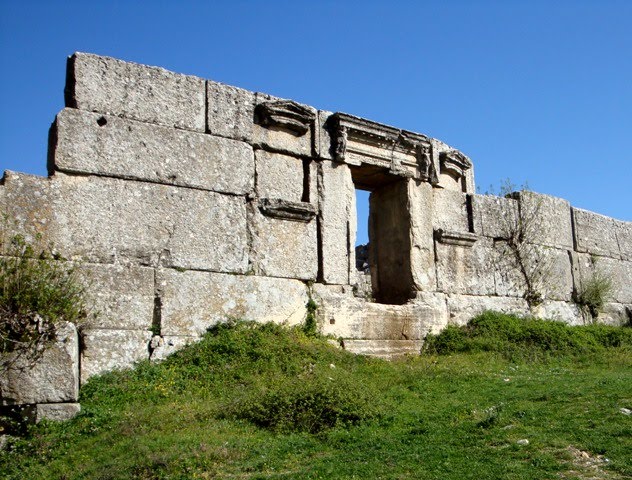
One of the most remarkable aspects of Hosn Suleiman is its megalithic construction. Some individual stones in the foundation walls are estimated to weigh up to 50 tons, making this temple one of the most ambitious engineering projects in Syria’s ancient history.
The precision with which these stones were cut and placed has led to various theories about the technology and manpower involved. Even today, archaeologists debate how such construction was possible with ancient tools.
Sacred Courtyard and Altars
Surrounding the main temple is a large courtyard, where pilgrims would have gathered for rituals and offerings. Several altars, stone basins, and carved inscriptions are still visible, giving insight into the religious practices that took place here.
One unique feature is a sacred well or spring, which likely played a role in purification rituals. The presence of water in such a high-altitude site adds a mystical element to the sanctuary.
Religious and Cultural Significance
Hosn Suleiman was more than just a temple. It was a spiritual center that connected the heavens, the earth, and the sea. From its mountaintop, priests and pilgrims looked west toward the Mediterranean and east toward the Orontes valley and beyond.
For centuries, this sanctuary served as a place of pilgrimage not only for local tribes but also for citizens of Greek and Roman cities along the coast. Inscriptions found on the stones mention names from Arwad, Tartus, and Tripoli, showing the site’s regional importance.
Even after the rise of Christianity and later Islam, the mountain retained a sacred aura. Some local legends speak of King Solomon or Alexander the Great visiting the site, giving it a mythical dimension in regional folklore.
Visiting Hosn Suleiman Today
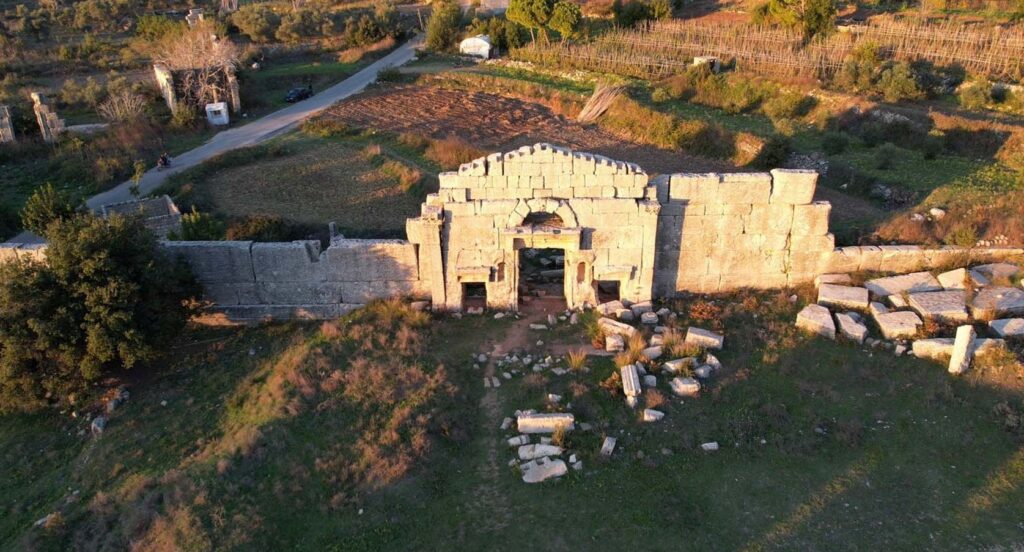
Despite its isolation, Hosn Suleiman is relatively easy to visit by road from Tartus, Safita, or Mashta al-Helou. The journey itself is beautiful, taking visitors through winding mountain roads lined with forests, villages, and panoramic viewpoints.
What to Bring
- Comfortable walking shoes
- Water and snacks, as there are few shops nearby
- A camera for breathtaking landscape and architectural shots
- Optional guide for historical context and local legends
Best Time to Visit
The site can be visited year-round, but the best times are spring and autumn, when the weather is pleasant, and the forests are lush. In summer, the altitude keeps the temperature mild, while winter can bring fog and occasional snow.
Why Hosn Suleiman Is Special
Hosn Suleiman is not a tourist attraction in the traditional sense. It is a place of silence and wonder, where you can stand among colossal ruins and feel the weight of centuries.
Here are a few reasons why this site is truly unique
- Massive stone architecture that rivals the greatest temples of the ancient world
- Stunning mountain setting with peaceful and spiritual surroundings
- Historical layering from Bronze Age worship to Greco-Roman grandeur
- Untouched atmosphere with few tourists and no commercialization
This is a place where the past is not hidden behind barriers or museums but rises in full view from the mountain itself.
Nearby Destinations
If you are planning a cultural or archaeological tour of western Syria, you can combine Hosn Suleiman with several nearby attractions
- Safita Tower A well-preserved Crusader tower with panoramic views
- Amrit A Phoenician temple site south of Tartus
- Qalaat al-Marqab One of the most powerful Crusader castles in the region
- Mashta al-Helou A scenic mountain resort town perfect for overnight stays
See Also: Chastel Blanc (Safita Tower)
Final Thoughts
Hosn Suleiman is more than an ancient temple. It is a symbol of Syria’s forgotten grandeur, a testament to the engineering genius of its ancestors, and a spiritual refuge above the noise of the modern world.
For those who seek meaning in ruins, beauty in stone, and stillness in nature, Hosn Suleiman offers a powerful and deeply personal experience. It is a hidden treasure waiting to be rediscovered.
Finally.. If you have any questions, please contact us. To explore further, visit our website gallery for rare images and cultural highlights.
Sources & References:
UNESCO – World Heritage Centre: https://whc.unesco.org
Archnet – Architecture & Heritage Database: https://www.archnet.org
World History Encyclopedia: https://www.worldhistory.org
Syrian Heritage Archive Project: https://syrian-heritage.org
Global Encyclopedia: Wikipedia