Khan Asad Pasha: In the heart of the bustling Al-Hamidiyah Souq, just a few steps from the Umayyad Mosque, lies a hidden architectural masterpiece — Khan Asad Pasha. Built in the 18th century during the Ottoman period, Khan Asad Pasha is more than just a relic of the past; it is a living space that echoes the grandeur, craftsmanship, and spirit of old Damascus.
Today, Khan Asad Pasha stands as one of the finest examples of Ottoman architecture in the Levant, attracting visitors for its beauty, serenity, and historical significance. Whether you are an architecture enthusiast, a photographer, or a curious traveler, this is one site in Damascus you should not miss.
Khan Asad Pasha | Quick Info.
| Topic | Quick Info |
|---|---|
| Name | Khan Asad Pasha / خان أسعد باشا |
| Location | In Al-Hamidiyah Souq, near the Umayyad Mosque, Old City of Damascus, Syria |
| Built | 1751–1752 CE (18th century, Ottoman era) |
| Builder / Patron | Commissioned by As’ad Pasha al-Azem, governor of Damascus |
| Original Function | Caravanserai (khan) for merchants and travelers, combining storage, lodging, and trade facilities |
| Architectural Highlights | Large octagonal courtyard, grand domed roof, black-and-white stonework (ablaq), and elegant arches |
| Current Use | Cultural landmark, sometimes used for exhibitions and events |
| Significance | One of the most magnificent Ottoman buildings in Damascus, symbolizing the city’s role in regional commerce and craftsmanship |
Historical Background

Who Was As’ad Pasha?
The khan was named after its founder, As’ad Pasha al-Azm, the Ottoman governor of Damascus from 1743 to 1757. A powerful and ambitious man from the notable al-Azm family, he left behind several impressive monuments throughout Syria. Khan Asad Pasha was his most personal and ambitious project — designed not just to serve as a commercial hub, but also to reflect the power and prestige of his rule.
Purpose of the Khan
Like other caravanserais, the khan was a resting place for traders and travelers — a kind of luxury inn for those moving along the Silk Road. It offered lodging, storage, and business facilities under one massive roof. Damascus, a critical stop along global trade routes, saw merchants from Persia, India, Anatolia, and even Europe, many of whom lodged at this khan.
Architectural Features
Khan Asad Pasha is widely recognized for its harmonious blend of form and function. It is one of the few caravanserais in the Islamic world with such monumental design and artistic elegance.
Impressive Dome System
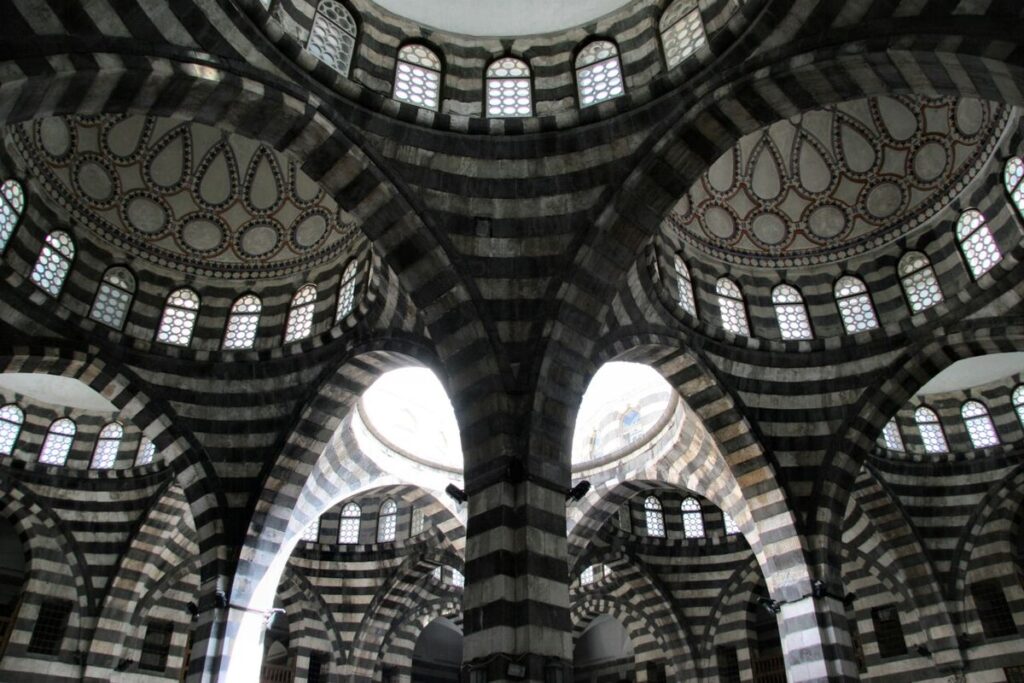
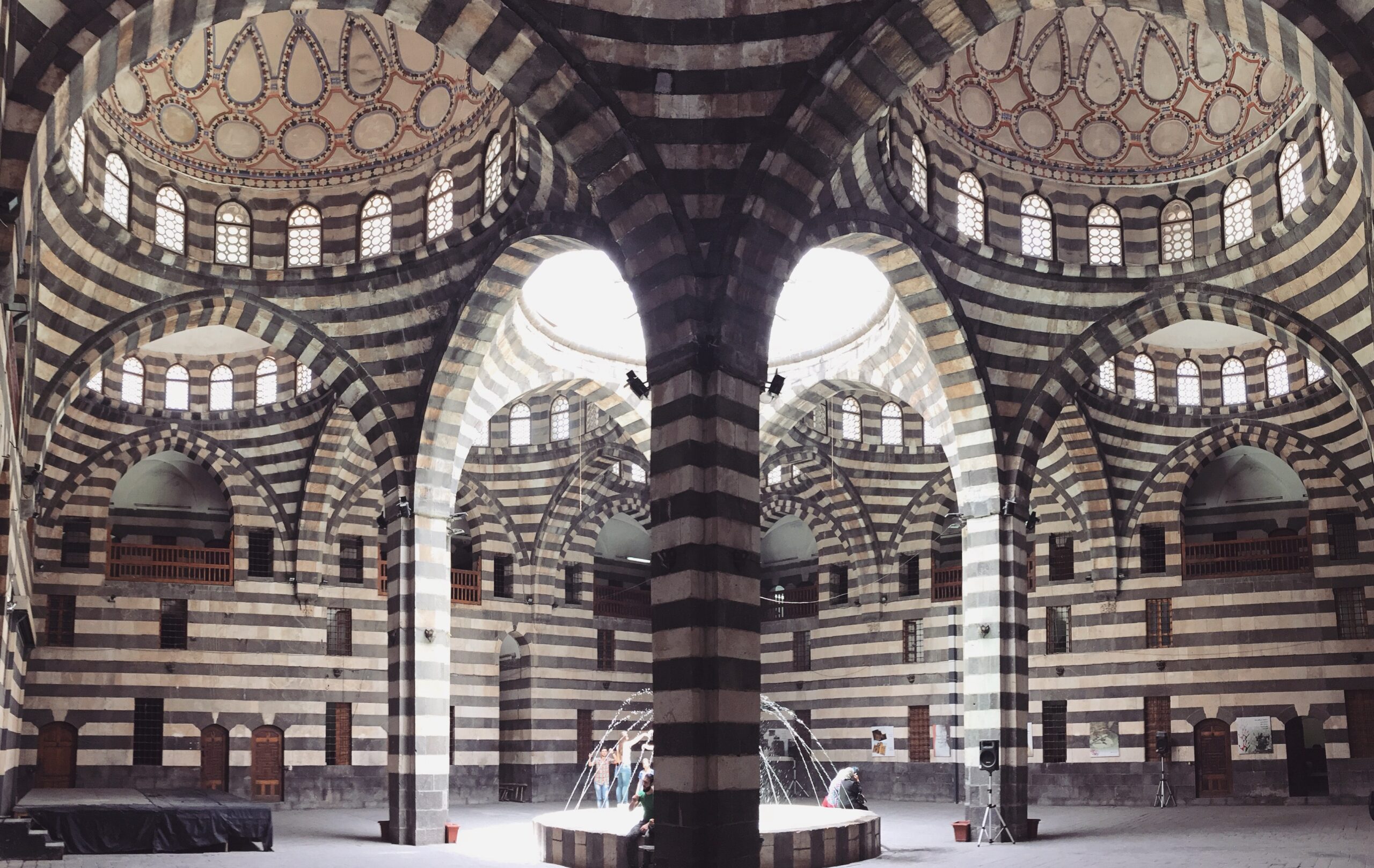
The first thing visitors notice is the striking series of domes inside the main hall. There are nine domes in total — a central large dome surrounded by eight smaller ones. The central dome, about 16 meters high, sits atop a raised octagonal structure with windows that let light pour in dramatically from above.
This dome system not only enhances the architectural beauty but also serves a practical function: ventilation and light control in a large, enclosed space.
Courtyard and Layout
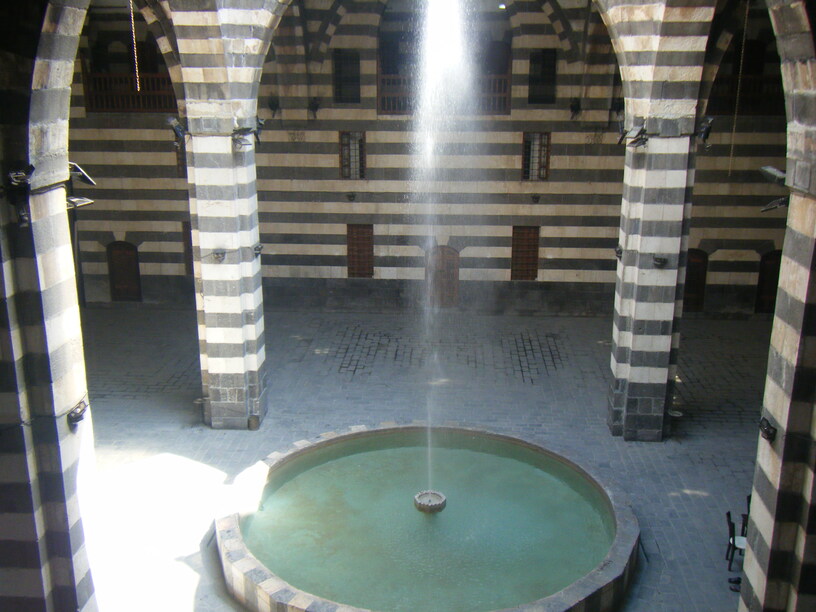
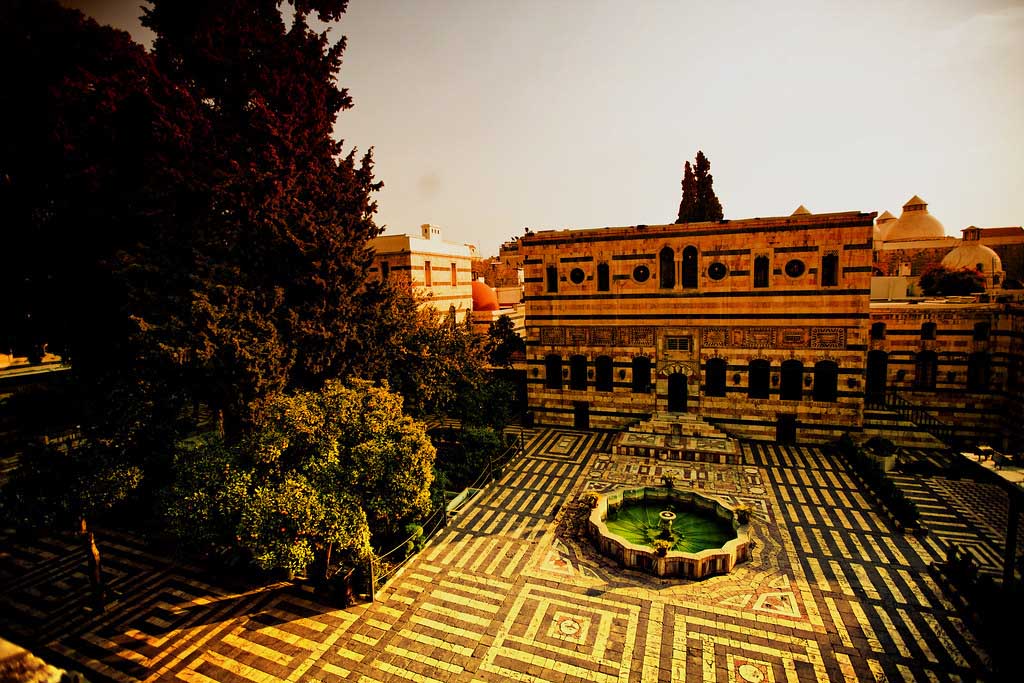
- The khan is built around a large, open-air central courtyard paved with traditional stone and featuring a small water basin. The open space was essential for caravans, animals, and storage.
- Around the courtyard, you’ll find two floors:
- The ground floor contains storage rooms, stables, and commercial spaces.
- The upper floor houses guest rooms — once rented out to wealthy merchants during their stay in Damascus.
Material and Aesthetic
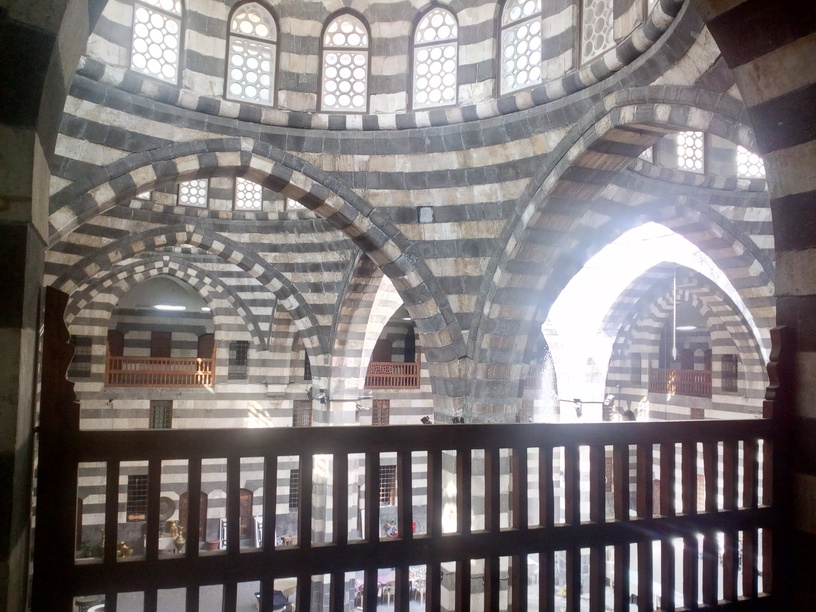
The khan’s construction uses the traditional Damascene stonework technique known as ablaq — alternating layers of black basalt and white limestone. This striped stonework creates a stunning visual rhythm on walls, arches, and domes.
Interior elements include:
- Beautiful muqarnas (stalactite-like stone carvings) in the upper arches.
- Finely carved wooden doors and iron grilles.
- Thick walls that keep the interior cool in summer and warm in winter — a perfect example of environmentally responsive design.
What to Expect When Visiting
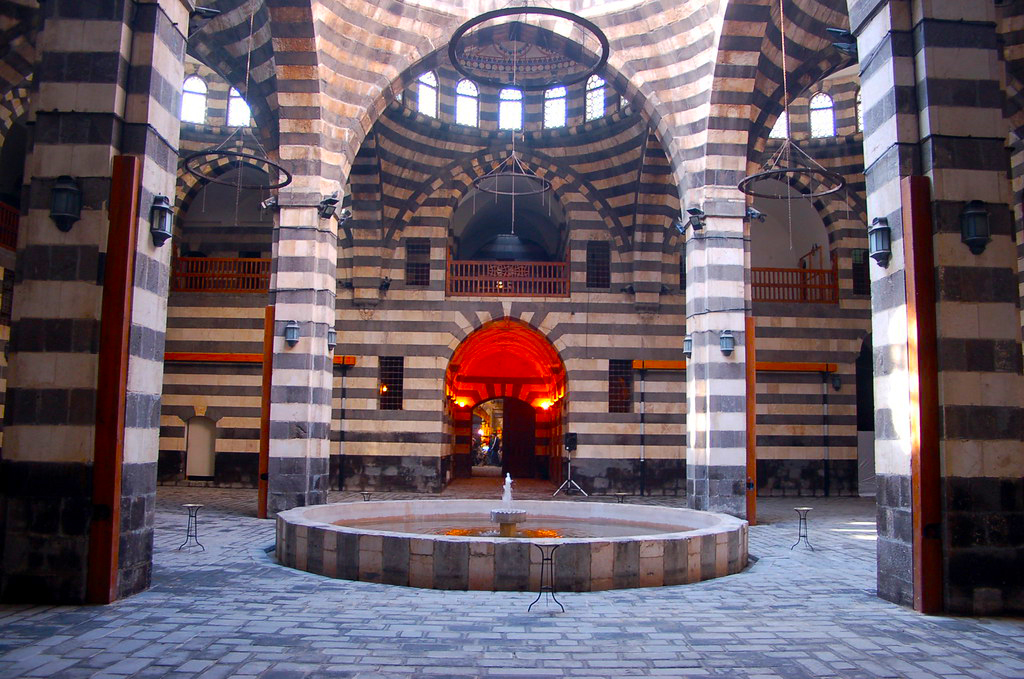
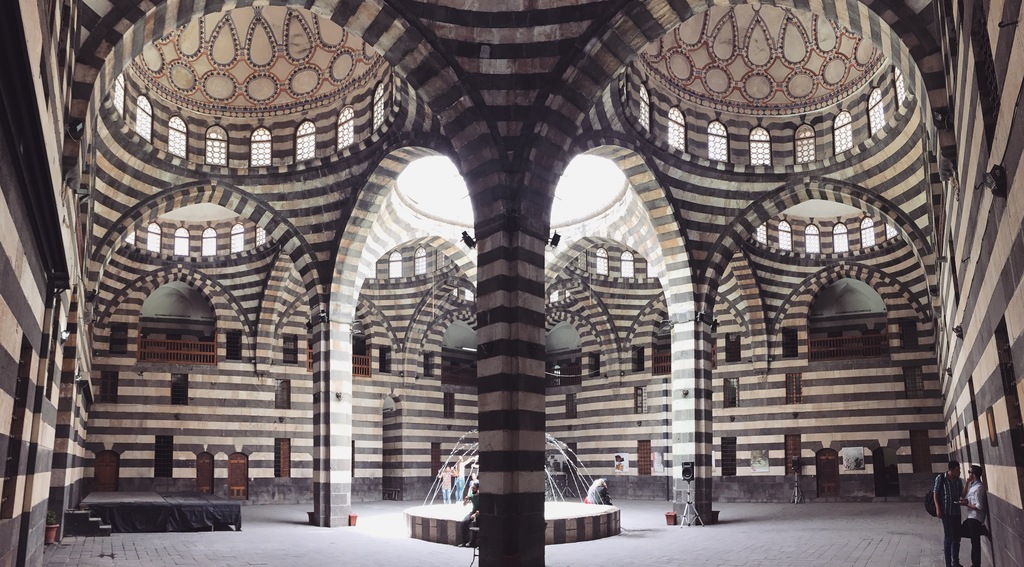
Khan Asad Pasha offers a calm retreat from the busy souq outside. Despite its central location, the thick walls and open courtyard create an atmosphere of silence and reflection.
A Visual Feast: Even if you’re not an architecture buff, the sheer symmetry and elegance of the space will leave you impressed. It’s one of the most photogenic places in Old Damascus — particularly during the golden hour when light filters through the upper windows.
Art and Exhibitions: The khan is occasionally used for art exhibitions, cultural festivals, or music performances, especially during official celebrations. Ask locally or check bulletin boards in the area — you might get lucky and witness the space come alive with modern art in a historic setting.
Guided Tours: While the khan is open to the public during most hours of the day, a local guide can greatly enrich your experience by explaining historical context, pointing out hidden details, and sharing stories about As’ad Pasha and the city’s past.
Practical Visitor Information
- Location: Inside Al-Hamidiyah Souq, near the Umayyad Mosque
- Opening hours: Usually 9:00 am to 4:00 pm (varies seasonally and during religious holidays)
- Entrance fee: Small, symbolic fee — subject to change
- Time needed: 30–45 minutes for a casual visit, longer for photography or guided tours
- Accessibility: Ground floor is accessible for most visitors; no elevators to the upper level
See Also: Damascus Old Bazaars
Photography Tips
- Bring a wide-angle lens: The domes are impressive but require a wide frame.
- Look up: The central dome with sun rays streaming through makes a perfect vertical shot.
- Low light areas: Some areas are dim — use natural light or a tripod if needed.
- Try black and white mode: The ablaq stonework creates strong contrast that photographs beautifully in monochrome.
Nearby Attractions
Khan Asad Pasha is ideally located within a few minutes’ walk from several key landmarks in Damascus:
- Umayyad Mosque – Just a 3-minute walk east
- Al-Hamidiyah Souq – The khan is located inside it
- Azm Palace – 5 minutes away, another masterpiece of Ottoman architecture
- Straight Street (Via Recta) – Close by, for a walk through biblical and Roman Damascus
Cultural Significance
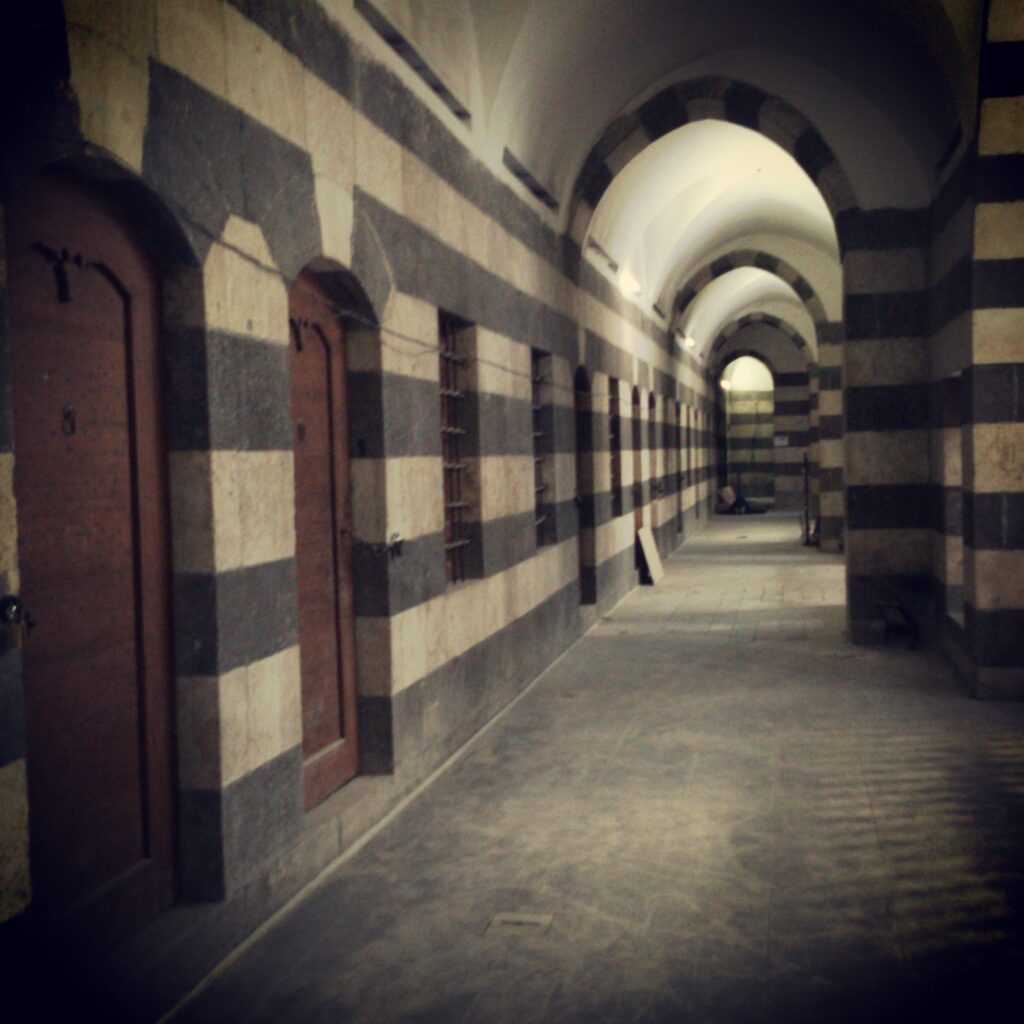
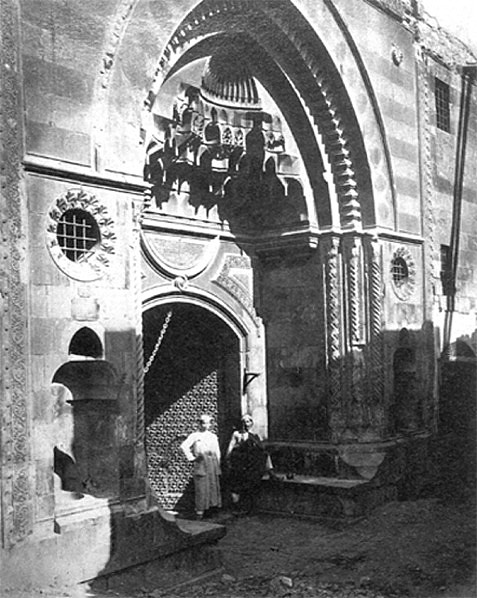
More than a building, Khan Asad Pasha is a symbol of Damascus’s cosmopolitan legacy. It reflects a time when the city was a central hub for trade, art, and diplomacy. Its continued use and preservation remind visitors that Damascus is not just ancient — it is living, breathing history.
Its design also reflects Islamic values of symmetry, balance, and hospitality, combining spiritual symbolism with practical needs in a way that few buildings manage to do.
Final Thoughts
Khan Asad Pasha is not just a beautiful piece of architecture — it’s a doorway into the cultural and economic history of Damascus. As you walk beneath its domes and through its cool halls, imagine the merchants, scholars, and travelers who passed through centuries ago. This khan is their legacy, and now it can be part of your journey too.
Whether you’re on a guided tour or exploring solo, make sure to include Khan Asad Pasha in your Damascus itinerary. It’s not only one of the most elegant landmarks in the city — it’s one of the most soul-stirring.
Finally.. If you have any questions, please contact us. To explore further, visit our website gallery for rare images and cultural highlights.
Sources & References:
UNESCO – World Heritage Centre: https://whc.unesco.org
Archnet – Architecture & Heritage Database: https://www.archnet.org
World History Encyclopedia: https://www.worldhistory.org
Syrian Heritage Archive Project: https://syrian-heritage.org
Global Encyclopedia: Wikipedia