Qalb Lozeh A Jewel of Early Christian Architecture in Syria’s Limestone Highlands: Perched on a gentle slope in the northwestern corner of Syria lies the village of Qalb Lozeh, home to one of the best-preserved and most influential churches from the early Christian world. Built in the 5th century AD, the Church of Qalb Lozeh stands as a quiet yet powerful witness to Syria’s Byzantine heritage, long before the rise of the great European cathedrals.
While many of Syria’s ancient towns have faded into obscurity, Qalb Lozeh has gained international recognition for its architectural brilliance and historical importance. It remains one of the few early Christian basilicas where the structure is still largely intact, and its design played a major role in shaping medieval church architecture from Europe to the Levant.
Qalb Lozeh | Quick Info
| Topic | Quick Info |
|---|---|
| Name | Qalb Lozeh / قلب لوزة |
| Location | Idlib Governorate, northwestern Syria – in the Limestone Massif (“Dead Cities” region) |
| Built | 5th century AD (Byzantine period) |
| Main Structure | Church of Qalb Lozeh, one of the earliest and best-preserved examples of Byzantine basilica architecture |
| Architectural Highlights | Three-aisled basilica, large central arch, twin towers, finely carved limestone façade |
| Influence | Inspired later Byzantine and Romanesque church designs, including early European cathedrals |
| Significance | A masterpiece of early Christian architecture and a UNESCO World Heritage site (part of the Ancient Villages of Northern Syria) |
| Present State | Well-preserved ruins within a small mountain village setting |
Where Is Qalb Lozeh Located
Qalb Lozeh is situated in the Jebel Seman region, part of the Limestone Massif in northwestern Syria. It lies around 35 kilometers west of Aleppo, near the Turkish border, and belongs to the governorate of Idlib.
This mountainous region is filled with the remains of hundreds of abandoned villages, churches, and tombs, collectively known as the Dead Cities. These sites were built during the Roman and Byzantine periods and abandoned between the 7th and 10th centuries. Qalb Lozeh, however, remains inhabited, and the church still dominates the village skyline.
The History of Qalb Lozeh
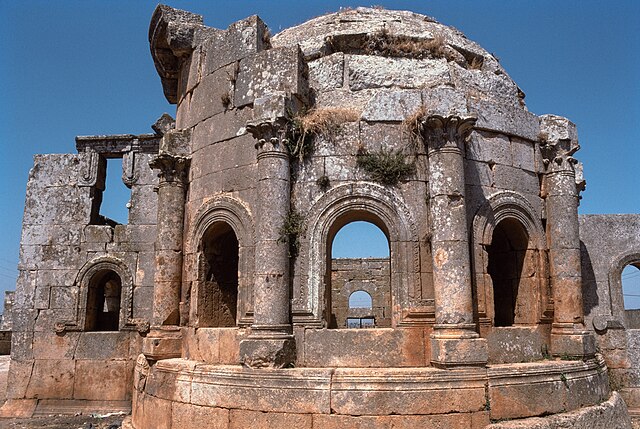
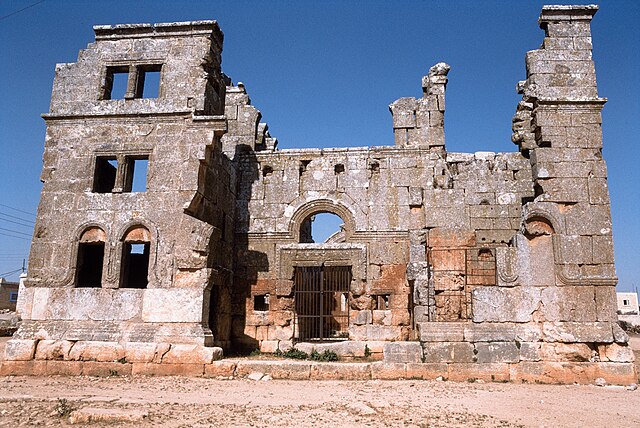
The village of Qalb Lozeh emerged during the 5th century AD, a time when Christianity had firmly taken root across the Eastern Roman Empire. The area flourished due to its location near trade routes and its productive agricultural economy, especially in olives and grain.
The construction of the church around 460 AD coincided with a period of stability and prosperity in Syria. During this time, villages throughout the region were building basilicas, often reflecting local styles and innovations. Yet, among all these churches, the one in Qalb Lozeh became a masterpiece, both in design and execution.
The Church of Qalb Lozeh
A Masterpiece of Early Christian Architecture
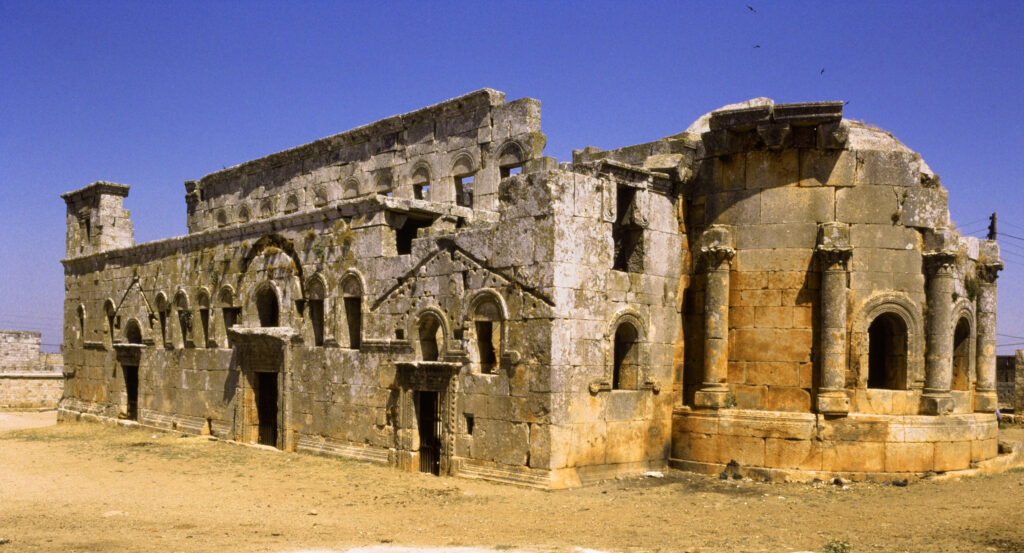
The church at Qalb Lozeh is one of the earliest known examples of a basilica with a monumental façade, a feature that would later become common in Romanesque and Gothic cathedrals. Built entirely of limestone, it combines simplicity, symmetry, and elegance in ways that were groundbreaking for its time.
Exterior and Façade

The western façade is the most striking feature of the church. It features three massive arched openings, supported by slender columns. These arches lead into the nave and allow natural light to flood the interior. Above the arches, decorative elements include carved rosettes, geometric motifs, and small windows.
This tripartite entrance was a new concept at the time and is believed to have influenced later church builders, including those in Europe. Some scholars suggest that the design of Notre-Dame de Paris and other Romanesque churches owes inspiration to Qalb Lozeh’s structure.
Interior Layout
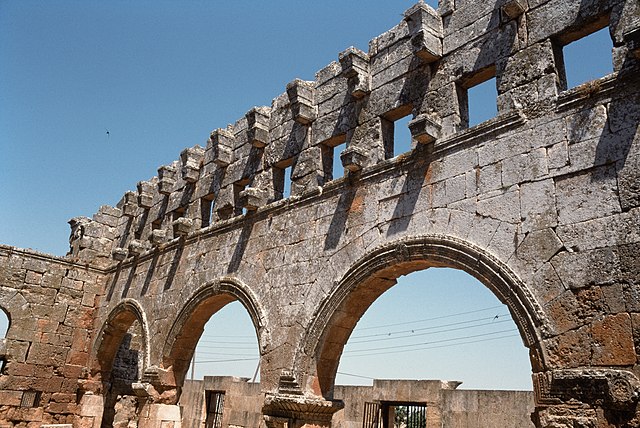
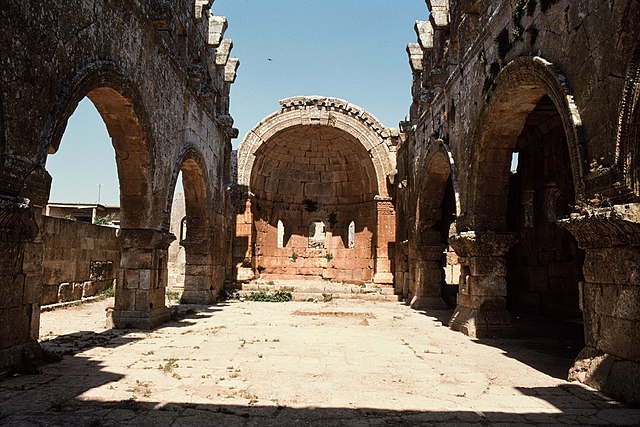
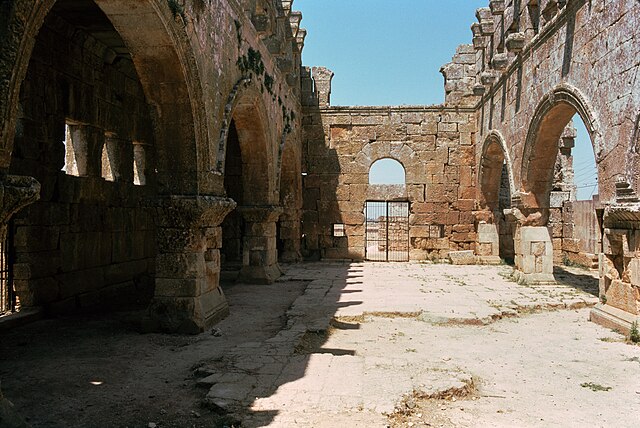
The church follows the classic basilica layout, with a central nave flanked by two side aisles, all separated by columns supporting elegant arches. The nave terminates in a semicircular apse, which housed the altar. The floor was likely paved with mosaic or stone, although much of it is now worn.
Natural light enters through clerestory windows, creating an atmosphere that blends architectural strength with spiritual calm. The proportions of the space are perfectly balanced, a reminder of the harmony sought in early Christian design.
Upper Gallery
Above the side aisles is an upper gallery, a rare and sophisticated feature for churches of this era. It likely served to accommodate more worshippers, especially women, in accordance with early Christian customs of gender separation during services.
Sculptural Decoration
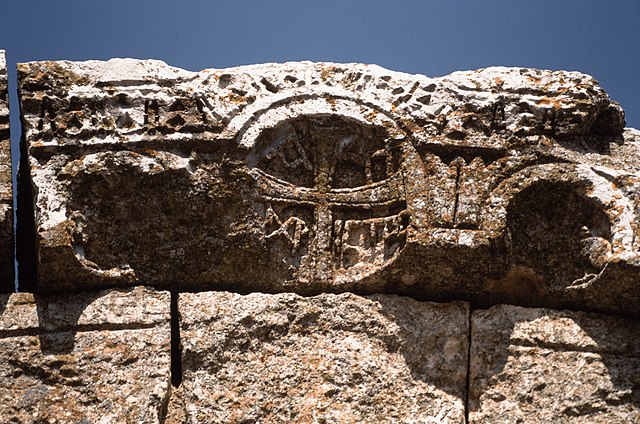

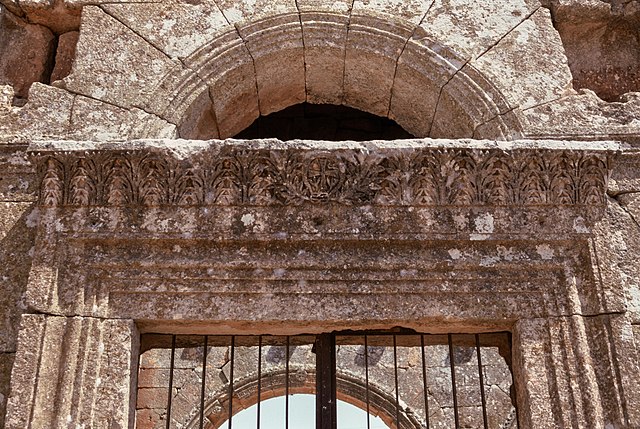
Though simple in form, the church contains refined decorative carvings on door lintels, capitals, and arches. These include crosses, palm branches, floral designs, and rosettes, which served both symbolic and aesthetic purposes. The restrained use of ornamentation emphasizes the purity of form and spiritual function.
The Significance of Qalb Lozeh in Christian Architecture
Qalb Lozeh’s church is not just important locally; it has had global influence. It stands as a bridge between early Christian Syrian architecture and later European church construction.
- The three-arched façade became a model for later Romanesque churches
- The use of clerestory windows for lighting was ahead of its time
- The design promotes verticality and light without the need for domes or vaults
- It reflects a Syrian-Christian identity rooted in rural piety and community life
Architectural historians often point to Qalb Lozeh as a turning point in church construction, where innovation blended with tradition to create a new standard of sacred architecture.
The Community and Village of Qalb Lozeh
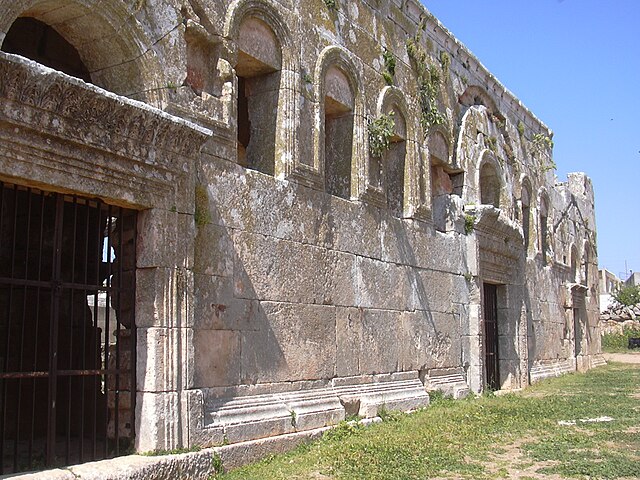
The church was likely the religious and social heart of a prosperous village. Its construction required skilled labor and significant funding, possibly provided by a wealthy landowning family or a collective of villagers.
Today, the village remains inhabited by a Druze community, who have lived there for centuries. While the original Christian population moved away or diminished over time, the church has been respected and protected by locals.
Though no longer used for worship, the church remains an enduring symbol of Syrian heritage and shared memory.
Challenges and Preservation
Despite its architectural brilliance, the church of Qalb Lozeh has faced numerous challenges:
- Weathering and erosion have affected some of the stonework
- Conflicts in the region have made access difficult for restoration teams
- Lack of modern conservation efforts means that long-term preservation is at risk
Nonetheless, the structure remains remarkably intact. In 2011, it was inscribed as part of the UNESCO World Heritage Site: Ancient Villages of Northern Syria, giving it international recognition and increased efforts for protection.
Visiting Qalb Lozeh Today
For travelers seeking beauty, history, and a sense of spiritual silence, Qalb Lozeh is a moving experience. Unlike tourist-filled cathedrals in Europe, here you can walk among the columns and arches alone, hearing only the wind and the whispers of time.
Key tips for visiting:
- The village is accessible from Idlib or Aleppo, but road conditions vary
- Local residents are generally welcoming to visitors
- The site is best visited in spring or autumn, when the weather is mild
- There are no visitor facilities or signs, so having a local guide or historical background is helpful
Other Sites Nearby
Qalb Lozeh can be part of a broader journey through the Dead Cities region. Nearby sites include:
- Bara, with its expansive ruins and tombs
- Ruweiha, known for its basilicas and mausoleums
- Serjilla, featuring homes, a bathhouse, and tavern
- Shinshirah, a large settlement with unique layout and monuments
Together, these villages form a silent chorus from the Byzantine past, each one offering its own chapter of history.
See Also: Deir Samaan
Final Reflections
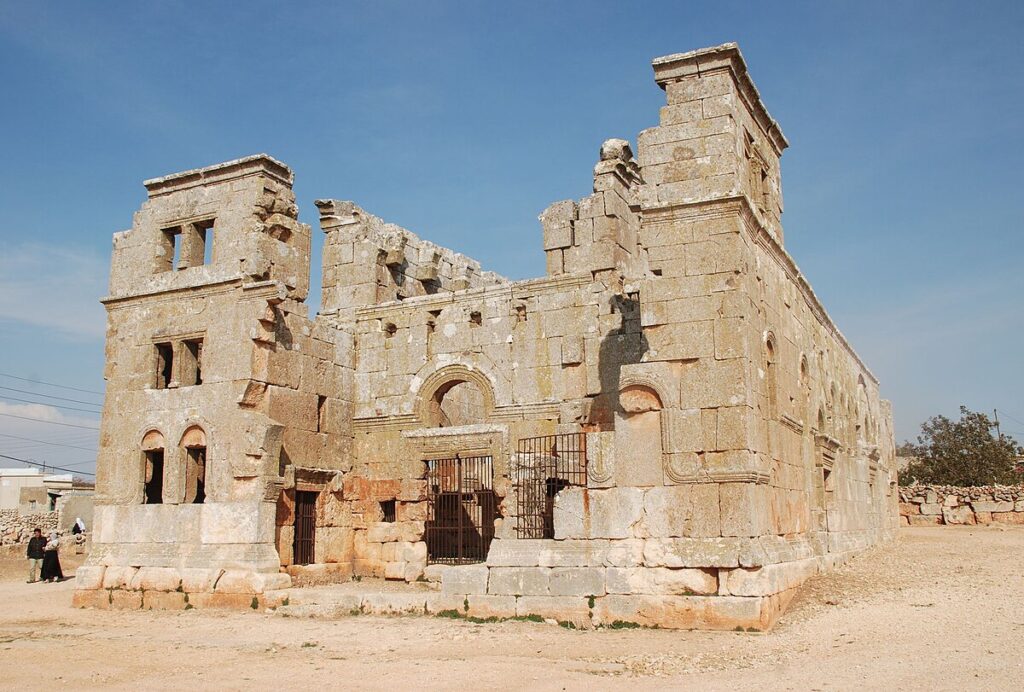
The Church of Qalb Lozeh is not just an ancient ruin. It is a masterpiece of faith, architecture, and cultural continuity. Built over 1,500 years ago in a remote Syrian village, it shaped the future of sacred architecture across continents.
Its preservation is not only a Syrian responsibility but a global heritage obligation. As a symbol of coexistence, innovation, and devotion, Qalb Lozeh deserves a place on every traveler’s journey through Syria’s historic heartland.
Finally.. If you have any questions, please contact us. To explore further, visit our website gallery for rare images and cultural highlights.
Sources & References:
UNESCO – World Heritage Centre: https://whc.unesco.org
Archnet – Architecture & Heritage Database: https://www.archnet.org
World History Encyclopedia: https://www.worldhistory.org
Syrian Heritage Archive Project: https://syrian-heritage.org
Global Encyclopedia: Wikipedia