Qasr Ibn Wardan A Unique Blend of Byzantine Elegance in the Syrian Desert: Nestled in the semi-arid plains of Hama Governorate in central Syria lies one of the most remarkable archaeological sites in the Middle East Qasr Ibn Wardan This 6th-century Byzantine palace stands as a striking testament to imperial power architecture and the cultural crossroads of ancient Syria With its unique black and yellow basalt stones and isolated desert location it offers visitors a truly unforgettable journey into Syria’s rich and layered past.
Qasr Ibn Wardan | Quick Info
| Topic | Quick Info |
|---|---|
| Name | Qasr Ibn Wardan / قصر ابن وردان |
| Location | Hama Governorate, central Syria – on the edge of the Syrian Desert |
| Historical Period | Byzantine era, built in the 6th century CE |
| Builder / Patron | Commissioned by Emperor Justinian I |
| Purpose | Served as a palace complex, church, and military garrison |
| Architectural Highlights | Distinctive black basalt and yellow limestone masonry, grand arches, and Roman-Byzantine design elements |
| Archaeological Importance | Symbol of Byzantine presence and authority in the Syrian steppe |
| Current Status | Preserved archaeological site and tourist attraction showcasing desert architecture |
| Significance | A rare example of Byzantine imperial architecture in an isolated desert setting, blending local and imperial styles |
A Glimpse into Byzantine Syria
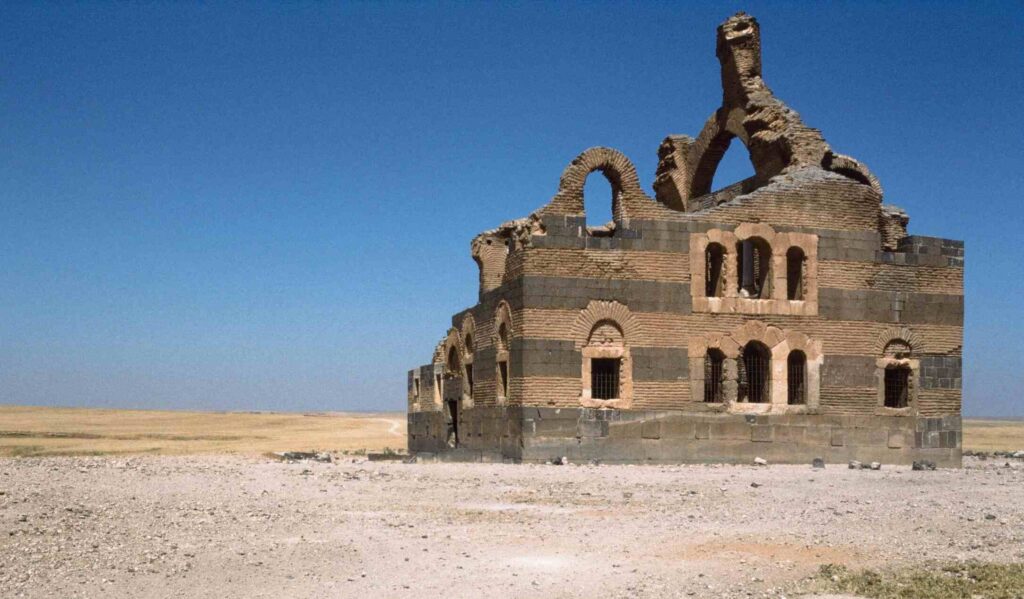
Qasr Ibn Wardan was built during the reign of Byzantine Emperor Justinian I around 564 AD Its primary purpose was strategic part of a chain of fortifications designed to protect the empire’s eastern frontier from potential incursions by the Sassanid Persians and nomadic tribes However it was also meant to impress showcasing the might and sophistication of the Byzantine Empire to local Bedouin tribes
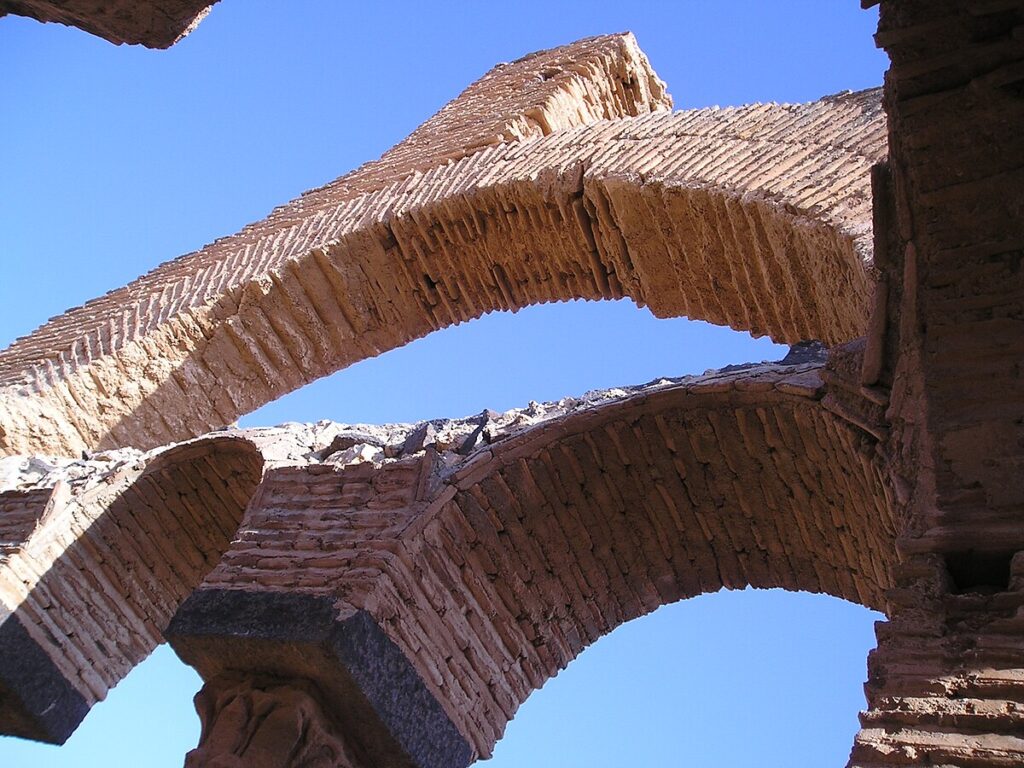
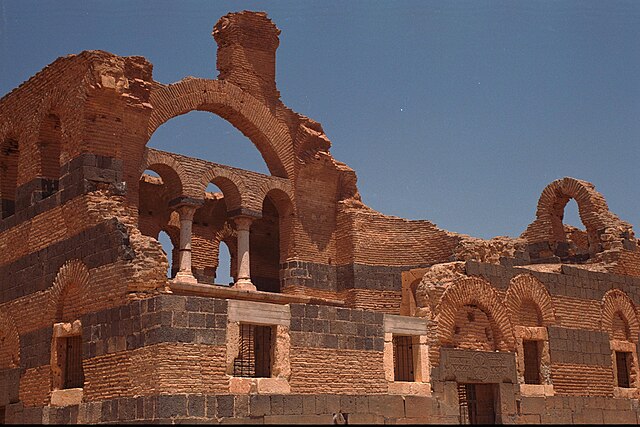
Unlike typical Syrian desert architecture which often relied on mudbrick or limestone Qasr Ibn Wardan was constructed with alternating rows of black basalt and yellow sandstone giving it a distinctive look rarely seen elsewhere in the region Some of the materials and decorative elements were even brought from distant parts of the empire including Constantinople reflecting its imperial prestige
The Palace Complex What to Expect


The archaeological site consists of three main structures the palace the church and the barracks Though partially ruined the layout remains clearly visible and offers a fascinating window into the life of a remote Byzantine outpost
The Palace
The centerpiece of the complex is the palace a rectangular building with a large central courtyard surrounded by rooms and halls Its thick walls and massive structure highlight its defensive role but it was also designed with aesthetic appeal in mind The façade features decorative niches pilasters and arches that echo classical Roman styles with a unique desert twist
Inside the palace visitors can explore the remains of reception halls official rooms and private chambers Some rooms still contain remnants of mosaic floors or decorative stone carvings giving you a hint of how lavish this desert fortress once was
The Church
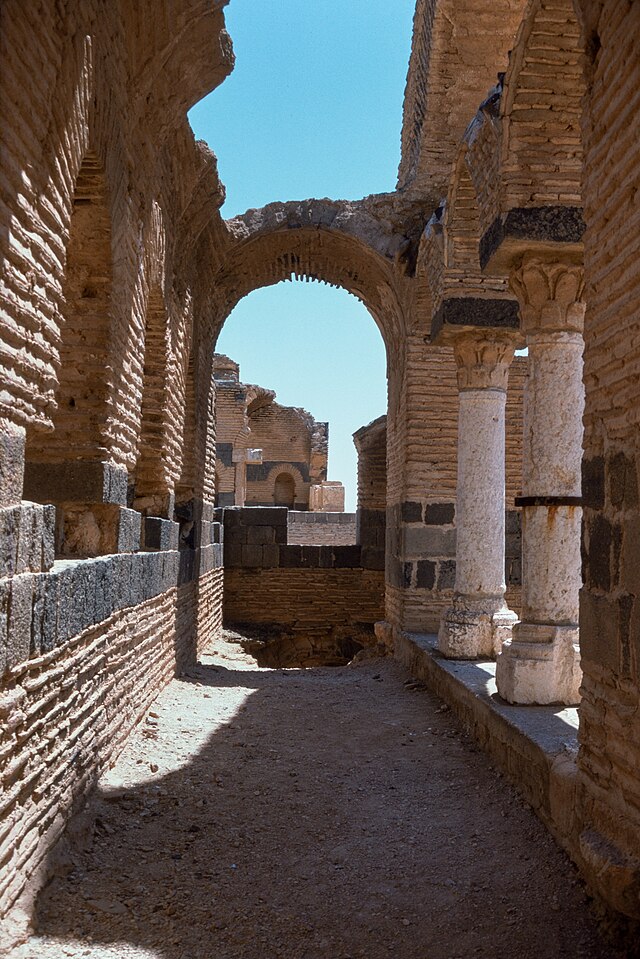
Adjacent to the palace is the church another key component of the complex It served both the garrison and the surrounding Christian population The church follows a typical Byzantine basilica layout with three naves and a semicircular apse Though the roof is long gone parts of the nave walls and decorative stonework are still standing providing insight into early Christian architecture in Syria
The church is especially notable for its inscriptions and column capitals which exhibit a fusion of Greco-Roman and local styles reminding visitors of Syria’s role as a bridge between East and West
The Barracks

The third building is the barracks a large L-shaped structure believed to have housed soldiers or workers connected to the palace administration Its design is more utilitarian than the palace or church but it completes the functional layout of the complex
Wandering through its rooms and corridors you can almost picture the daily life of soldiers merchants priests and artisans who once lived in this remote yet important frontier post
The Location Desert Beauty and Silence
What makes Qasr Ibn Wardan even more striking is its setting Surrounded by open desert fields and steppe vegetation the site is far from any modern development which adds to its mystique and timelessness The silence of the desert broken only by the wind makes it easy to imagine how this place once stood as a beacon of civilization on the empire’s edge
Sunset is especially magical here as the light turns the black basalt and yellow sandstone into glowing tones creating a surreal and breathtaking atmosphere Photographers and history lovers alike will find the site immensely rewarding
Getting There How to Visit Qasr Ibn Wardan

Qasr Ibn Wardan is located approximately 60 kilometers northeast of Hama and can be reached by car or through organized tours from Hama or even from Aleppo or Homs The road to the site passes through traditional Syrian villages and open desert plains giving travelers a glimpse into rural life in the region
It is recommended to visit the site with a local guide or driver familiar with the area not only for ease of access but also to enrich the visit with historical context and stories that bring the ruins to life
Due to its remote location there are no facilities at the site so visitors should bring water snacks sun protection and wear comfortable shoes A visit typically takes about 1 to 2 hours depending on your interest level in history and photography
Why Qasr Ibn Wardan Is Worth Your Time

Syria is home to countless historical treasures but Qasr Ibn Wardan holds a special place thanks to its architectural uniqueness strategic importance and beautiful isolation For travelers looking to experience the richness of Syrian heritage beyond the well-known Roman and Islamic landmarks this palace offers something distinct and memorable
It is not just about ruins It is about stepping into a forgotten chapter of history when emperors ruled from afar and cultures collided in the sands of the Syrian desert It is about the silence the architecture and the lingering spirit of an empire that shaped much of the world
Tips for a Better Experience
- Visit in the morning or late afternoon to avoid the desert heat and enjoy the best lighting for photography
- Consider combining the trip with other nearby historical sites such as Al-Rasafa or the ruins of Apamea for a full day of cultural exploration
- Always check the latest travel advice and local conditions before heading out especially in rural parts of Syria
See Also: Qasr al-Heir al-Sharqi
Conclusion
Qasr Ibn Wardan is a hidden jewel in the heart of Syria’s countryside offering a fascinating blend of architecture history and desert scenery For those who dare to explore off the beaten path it promises not just photographs but memories of a place where time seems to stand still A visit here is more than a historical detour it is a step into a world where empires once met in the sand and stone of ancient Syria
Finally.. If you have any questions, please contact us. To explore further, visit our website gallery for rare images and cultural highlights.
Sources & References:
UNESCO – World Heritage Centre: https://whc.unesco.org
Archnet – Architecture & Heritage Database: https://www.archnet.org
World History Encyclopedia: https://www.worldhistory.org
Syrian Heritage Archive Project: https://syrian-heritage.org
Global Encyclopedia: Wikipedia