Serjilla The Forgotten Roman Town of Syria’s Dead Cities: In the rolling limestone hills of northwestern Syria lies a breathtakingly preserved ancient settlement named Serjilla. It is one of the finest and most evocative examples of the so-called Dead Cities, a collection of abandoned Byzantine-era villages that once thrived in the region between the 1st and 7th centuries AD.
Visiting Serjilla is like walking into a living museum. The stone walls still stand tall. The outlines of homes, bathhouses, churches, and public squares remain visible, allowing modern visitors to imagine what life might have been like here 1500 years ago. For archaeologists, historians, and curious travelers, Serjilla is a rare window into the daily life of a late Roman and early Byzantine village.
| Topic | Quick Info |
|---|---|
| Name | Serjilla (سرجلا) |
| Location | Northwestern Syria, in the limestone hills between Aleppo and Idlib |
| Founded / Flourished | Between the 1st and 7th centuries AD |
| Historical Era | Late Roman to Early Byzantine period |
| Type | Ancient village – part of the “Dead Cities” of Syria |
| Main Structures | Houses, bathhouse, church, tavern, public square, and tombs |
| Material | Local limestone; remarkably well-preserved ruins |
| Abandonment | Likely deserted in the 7th century AD due to economic decline and invasions |
| Significance | One of the best-preserved Byzantine settlements, offering insight into rural life 1500 years ago |
| UNESCO Status | Part of the Ancient Villages of Northern Syria, a UNESCO World Heritage Site |
Where Is Serjilla Located
Serjilla is located in Jebel al-Zawiya, about 35 kilometers south of Idlib and around 90 kilometers southwest of Aleppo. It rests in the heart of the Limestone Massif, a region known for its dry climate, fertile land, and concentration of well-preserved stone-built villages.
The area is part of the UNESCO World Heritage Site known as Ancient Villages of Northern Syria, also referred to as the Dead Cities. These sites, including Serjilla, offer insight into rural life during the transition from paganism to Christianity, and from Roman to Byzantine rule.
The Origins of Serjilla
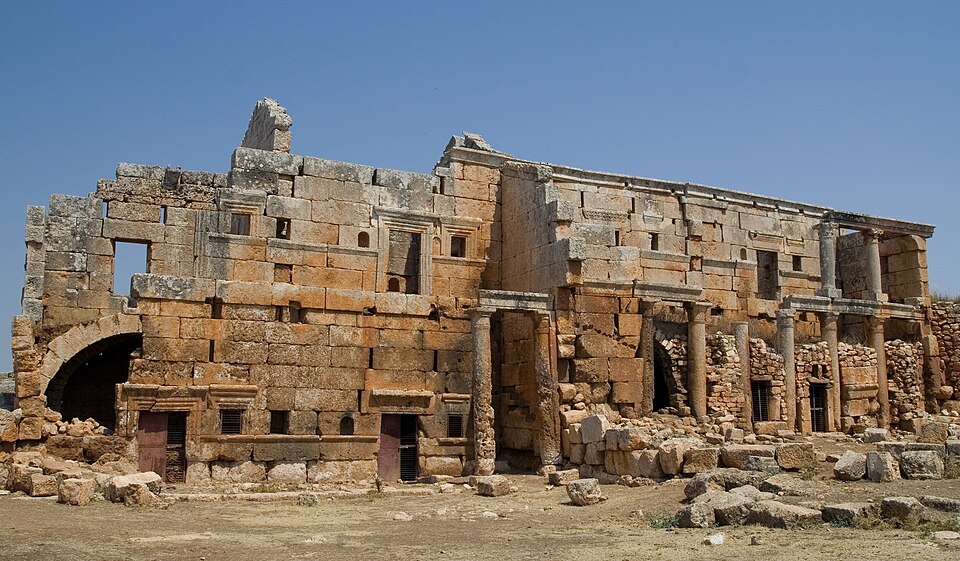
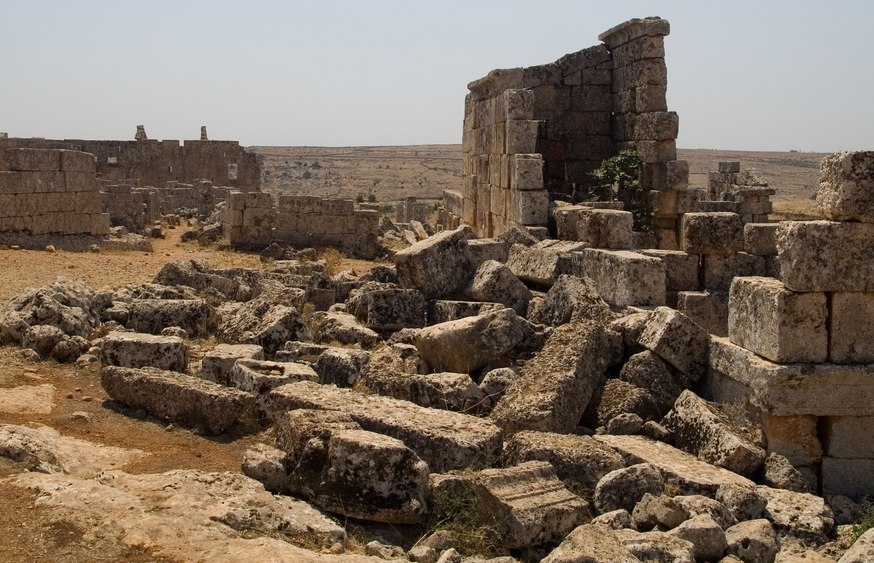
Serjilla was founded in the mid-5th century AD, during the later stages of Roman rule in Syria. Unlike grand imperial cities built by emperors, Serjilla was a prosperous rural village, built and inhabited by farmers, traders, and craftsmen.
Its success was tied to agriculture. The surrounding plateau provided ideal conditions for growing olives, grapes, cereals, and other crops. This allowed the village to develop wealth, sustain a sizable population, and build large and durable structures in stone.
A Walk Through the Ruins
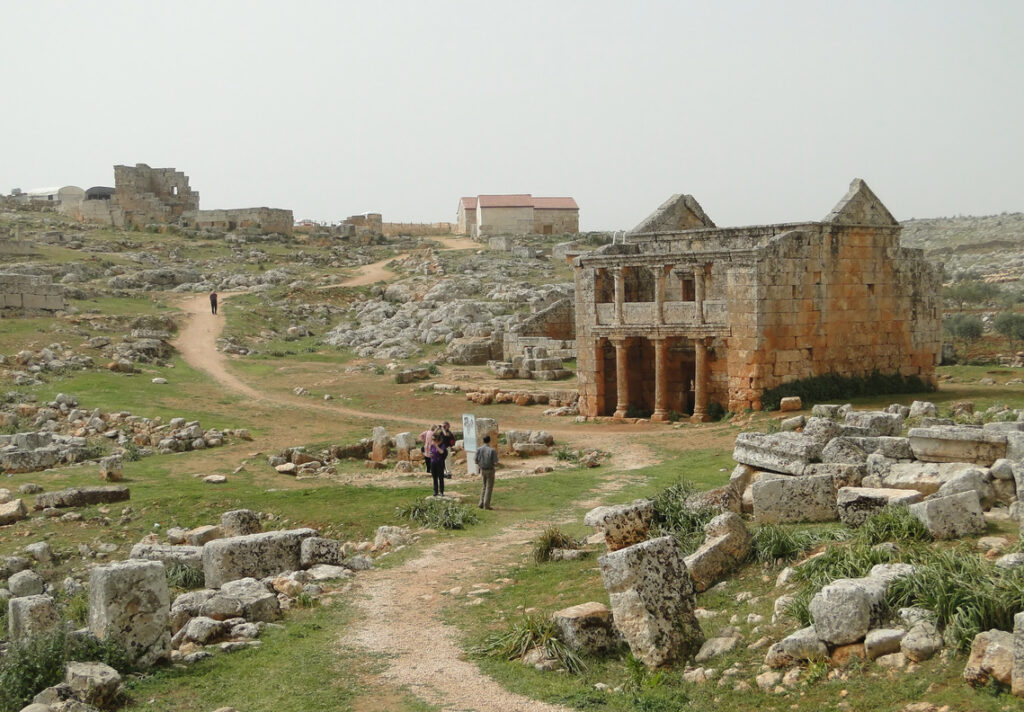
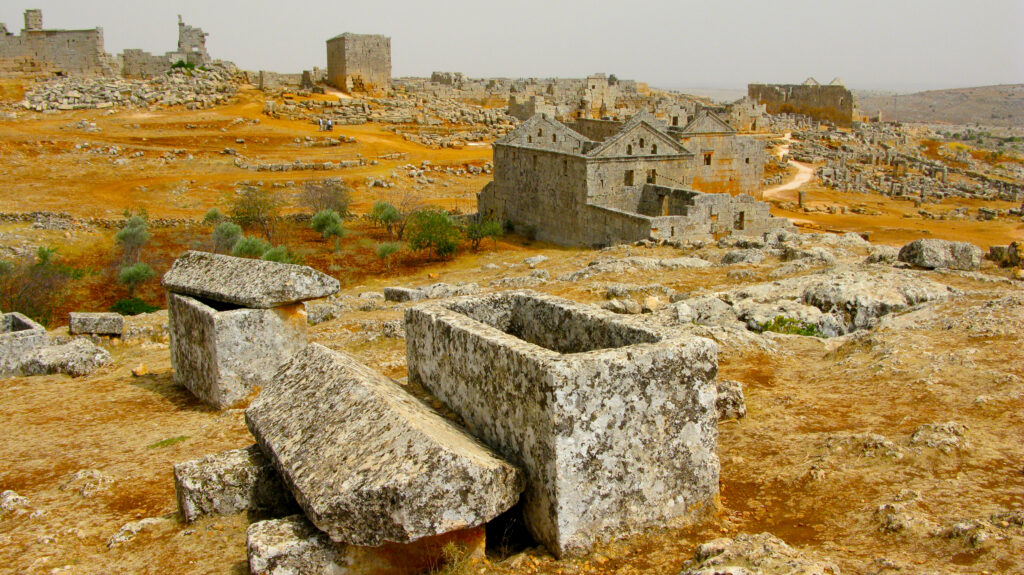
One of the most impressive aspects of Serjilla is how intact and accessible the ruins are. There is no need for imagination or reconstruction drawings. The buildings, streets, and courtyards are still clearly defined. You can walk into homes, climb staircases, and rest in the same public square where villagers once gathered.
Residential Buildings
The houses in Serjilla are among the best preserved in the entire Dead Cities region. Many of them are two-storey buildings made of limestone, with large doorways, interior courtyards, storage rooms, and staircases.
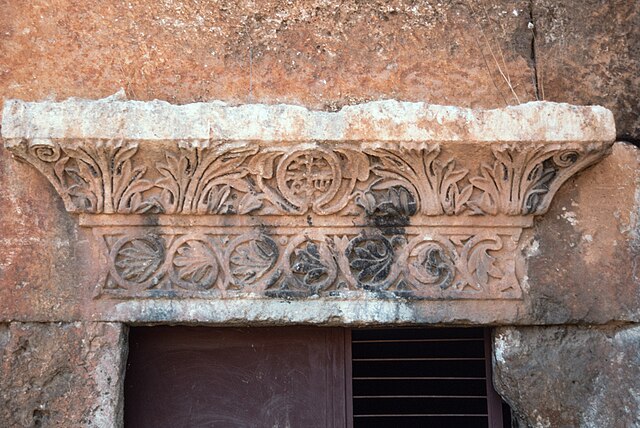
The construction style reflects wealth and planning. These were not huts or shacks but elegant country homes with carved lintels and decorated doorframes. Some houses even include attached stables and wine presses, indicating a mixed-use design for living and work.
The Public Bathhouse
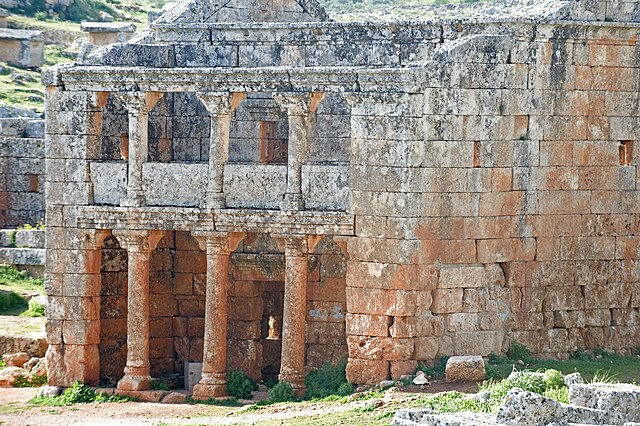
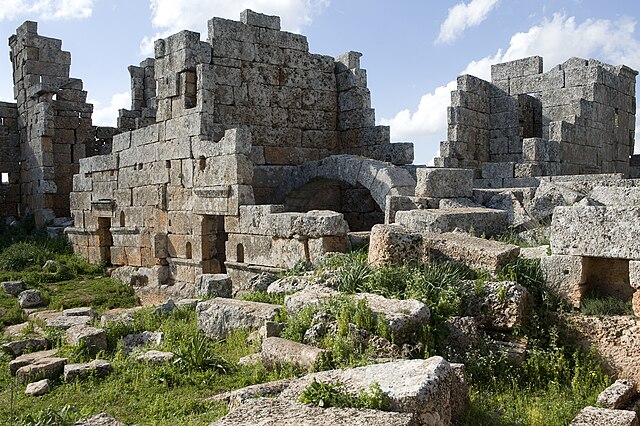
Perhaps the most famous building in Serjilla is the bathhouse, located near the center of the village. It is an exceptionally well-preserved structure that showcases the Roman influence on daily life.
The bathhouse includes multiple rooms that follow the Roman bathing tradition – a frigidarium for cold water, tepidarium for warm air, and caldarium for hot steam. You can still see the underfloor heating system, known as a hypocaust, and the niches for placing oil and towels.
This communal bathhouse was not only for hygiene but also served as a social gathering place. Its presence in a rural village like Serjilla speaks to the wealth and sophistication of its inhabitants.
The Church
In the northern part of Serjilla stands the remains of a basilica-style church. It features an apse, a nave, side aisles, and what was once a bell tower. The layout reflects early Christian architecture in the region.
The presence of such a church shows how Christianity had become a central part of life in the Byzantine period. The church likely served as both a religious and community center, hosting gatherings, liturgies, and celebrations.
The Tavern or Meeting Hall
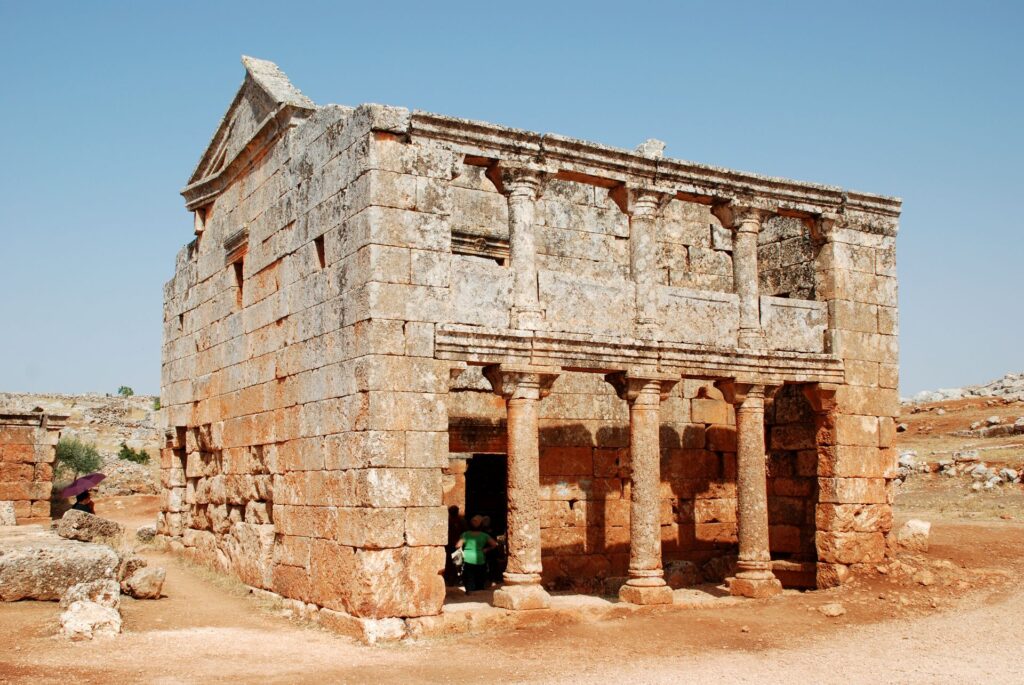
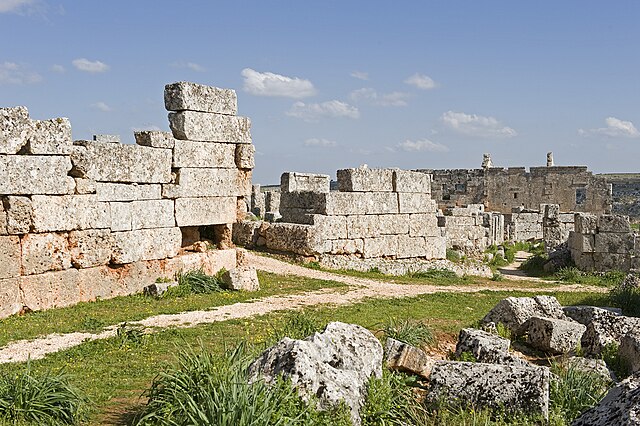
Another remarkable structure in Serjilla is a large hall with a row of arched windows and a portico. Some archaeologists interpret it as a tavern or inn, while others see it as a public meeting space.
Its size and location suggest it served visitors and local gatherings. Today, its tall facade remains an iconic image of Serjilla, with light filtering through the ancient arches just as it did centuries ago.
Burial Sites
To the south and east of the main settlement are rock-cut tombs and mausoleums, reflecting the burial practices of the community. Some are carved into natural rock formations, while others are free-standing.
These tombs provide valuable insight into local funerary traditions and social structure. Inscriptions and symbols can still be seen, though many are weathered by time.
The People of Serjilla
The people who lived in Serjilla were not elite Romans or imperial officials. They were local Syrians, likely Aramaic-speaking Christians under the Byzantine Empire.
Their lives revolved around agriculture, religious observance, and communal life. The size and quality of the buildings suggest a stable and prosperous population, perhaps between 1,500 and 2,500 people at its peak.
Many of the buildings appear to have been constructed over time, expanded by generations, and maintained by communal effort. This long-term investment speaks to the villagers’ connection to the land and their belief in the future of their home.
Why Was Serjilla Abandoned

By the early 7th century, many of the Dead Cities, including Serjilla, began to decline. Several factors contributed to their abandonment:
- Changing trade routes that bypassed the inland villages
- Islamic expansion, which shifted political centers and religious practices
- Earthquakes, which affected much of northern Syria
- Economic shifts, leading to rural depopulation
Unlike cities destroyed in war or buried by natural disasters, Serjilla was abandoned gradually, allowing the buildings to remain standing rather than flattened. This explains its exceptional state of preservation today.
Visiting Serjilla Today
Despite the recent turmoil in Syria, Serjilla has remained relatively intact. Its remote location and stone construction have helped protect it from looting and heavy damage.
For those able to visit, Serjilla offers a calm, majestic experience of walking through a ghost town from the Byzantine world.
- The site is open-air and free to enter
- There are no facilities or guides on-site, so preparation is essential
- Early morning or late afternoon light is ideal for photography
- Wear comfortable shoes and bring water
Why Serjilla Is a Must-Visit
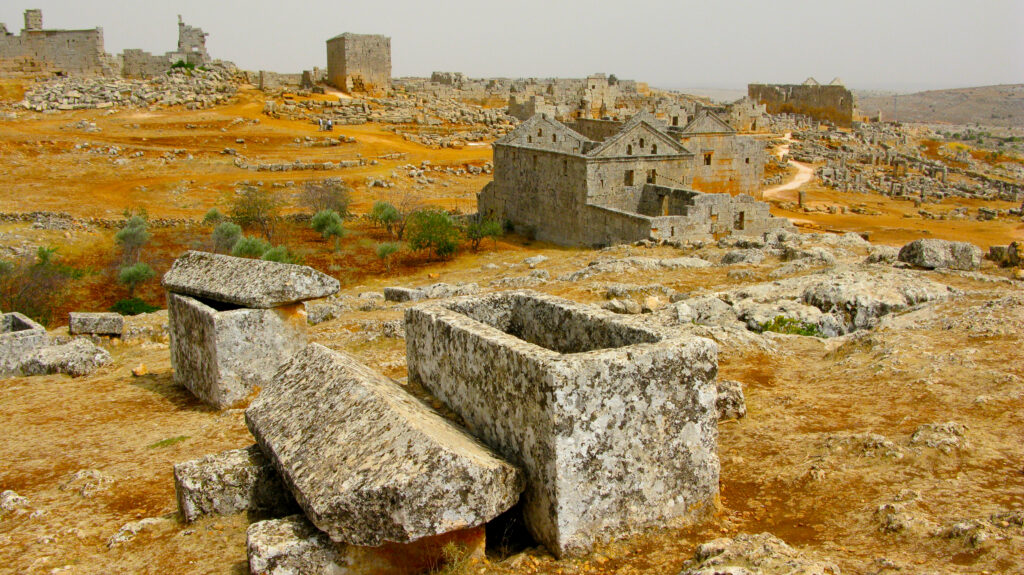
Serjilla is not just a collection of old stones. It is a storybook in stone, a chance to experience rural life from 1500 years ago with minimal imagination required. Unlike major ruins that focus on palaces and temples, Serjilla gives equal importance to homes, baths, shops, and streets.
It is one of the few places in the world where you can step directly into a functioning Roman-era village and see how ordinary people lived, worked, prayed, and gathered.
Nearby Historical Sites
Serjilla is located near many other significant sites that can be visited in a single day or over multiple excursions:
- al-Bara another expansive Dead City with tombs and churches
- Shinshirah the largest city in the region in terms of size
- Ruweiha with monumental funerary architecture
- Qalb Lozeh for its stunning early church
These sites together form a mosaic of rural Byzantine life in Syria.
See Also: Al-Nabi Houri
Final Reflections
Serjilla is more than just a ruin. It is a testimony to a civilization that combined Roman traditions with local creativity, faith, and practical wisdom. It reflects a moment in history where village life flourished alongside empire, and where stone was shaped not for monuments of power, but for homes, worship, and community.
For any traveler seeking not just history, but human history, Serjilla is an unforgettable place—quiet, powerful, and timeless.
Finally.. If you have any questions, please contact us. To explore further, visit our website gallery for rare images and cultural highlights.
Sources & References:
UNESCO – World Heritage Centre: https://whc.unesco.org
Archnet – Architecture & Heritage Database: https://www.archnet.org
World History Encyclopedia: https://www.worldhistory.org
Syrian Heritage Archive Project: https://syrian-heritage.org
Global Encyclopedia: Wikipedia