Syrian People: Before traveling, many people wonder what a country feels like beyond its landmarks. In Syria, visitors often discover that the strongest impression does not come from history or architecture, but from Syrian people themselves.
The experience is shaped by small moments: a casual question, an unexpected offer of help, or a short conversation that feels personal. This article is not about labels or stereotypes. It is about how Syrian people are experienced in everyday life, and why human interaction becomes a central part of the visit.
How Visitors Are Treated
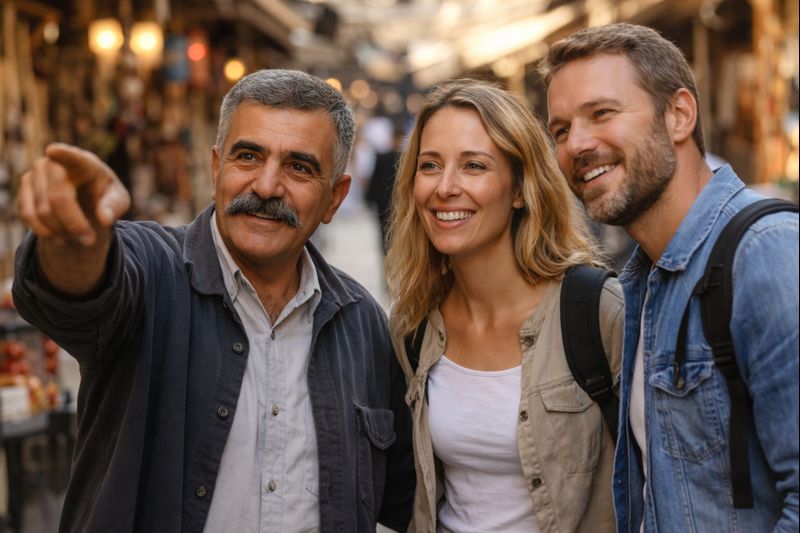
In Syria, a visitor is rarely ignored. Even a complete stranger is often treated like a guest. This is not something people announce; it appears naturally in behavior.
People ask where you are from. Help is offered before you ask for it. Sometimes someone steps in simply to make things easier for you. This attitude is not limited to tourist areas. It appears in big cities, small towns, and places where visitors are uncommon.
Across different regions, Syrian people tend to share one instinct: a stranger should not feel lost or alone.
Simple and Direct Social Interaction
One of the first things visitors notice is how easy conversation feels. Talks begin quickly and without formal barriers. There is no pressure to explain yourself or justify why you are there.
This simplicity makes interactions feel natural. Visitors often say they are not treated like tourists, but like ordinary people sharing the same space. Even short exchanges leave an impression because they are genuine. This directness is a clear trait of how Syrian people communicate.
Expectations Versus Reality
Many visitors arrive with cautious or unclear expectations, often shaped by distant media images. Daily life quickly challenges these ideas.
Syrian people go about their routines calmly and normally. The surprise is not perfection, but how ordinary and human the experience feels. Without explanation or discussion, daily interactions slowly change how visitors see the country.
Quiet Hospitality
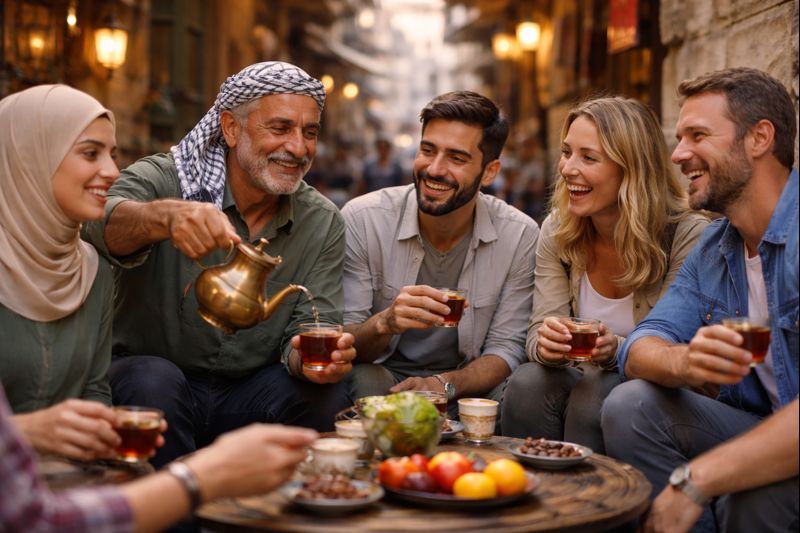
Hospitality among Syrian people is rarely announced or exaggerated. It appears in small actions: someone insists on helping, refuses payment, or gives time without expecting anything in return.
What makes this hospitality stand out is its simplicity. There is no performance and no attempt to impress. It happens naturally, as part of daily behavior, which makes it feel honest and memorable.
A Stranger, Not a Tourist
In many situations, visitors are not treated as customers, but as strangers passing through. This difference matters. A tourist is served; a stranger is engaged with.
Even when services are involved, personal interaction remains central. Many visitors notice that Syrian people often prioritize conversation and connection over transactions, which changes the entire feeling of the visit.
A Different Sense of Time
Time in Syria often feels slower. There is room to stop, sit, and talk. Conversations are not rushed, and meetings are not strictly timed.
For many visitors, the most memorable moments are unplanned: a short stop that turns into a long talk, or a brief meeting that lasts longer than expected. Syrian people tend to give moments their space instead of forcing them into schedules.
Outside the Major Cities
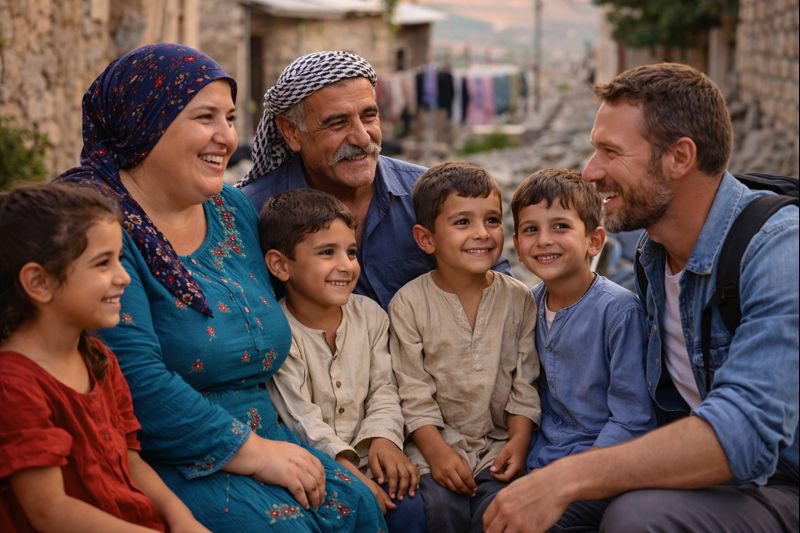
Outside large cities, the pace changes slightly, but the attitude remains familiar. Curiosity is more visible, and interactions may feel slower, but they remain respectful and warm.
In areas that rarely see visitors, simply being there can draw attention. This interest is usually sincere, not intrusive. Many visitors remember these encounters as the most personal part of their journey. In these places, Syrian people are not performing hospitality; they are simply being themselves.
How Syrian People Appear to Visitors
Before traveling, a common question arises: how do Syrian people look?
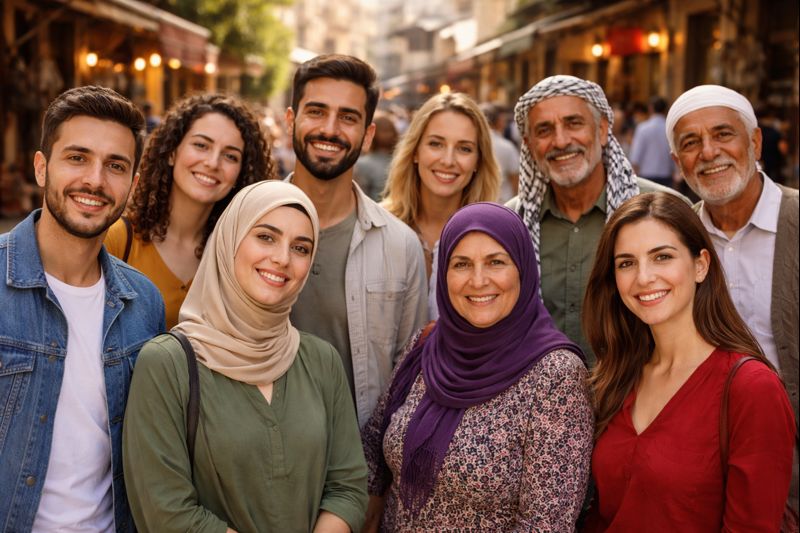
There is no single image. Appearances are diverse, reflecting Syria’s position between the Mediterranean and the Near East.
Visitors often notice a relaxed, unforced appearance. More than physical features, what stands out are expressions: direct eye contact, quick smiles, and ease in daily interaction.
For those curious before traveling, looking up public figures such as Syrian actors or well-known personalities can offer a rough visual idea, with the understanding that no image represents everyone.
What Visitors Say After Leaving
When listening to people who have visited Syria, similar comments often appear, said casually and without exaggeration:
“I never felt like an outsider.”
“The people were part of the journey.”
“I remember faces more than places.”
“I was treated like a guest, not a tourist.”
These impressions usually come after the trip ends. They show how strongly Syrian people shape the memory of the visit.
Syrians Through Visitors’ Eyes: Positives VS. Challenges
Traveling to Syria is not only about historical sites, but also about everyday interactions with people. The following observations help visitors understand what they may experience socially, without judgment, making the visit smoother and more meaningful:
Positive Impressions of Syrians (As Seen by Visitors)
Many visitors to Syria consistently describe Syrians as warm, generous, and genuinely hospitable. Travelers are often invited for tea, offered help without being asked, or personally guided through neighborhoods and historical sites. Syrians commonly show sincere curiosity toward foreigners, asking about their countries and sharing personal stories. Despite years of hardship, visitors frequently notice a strong sense of dignity, resilience, and pride in cultural heritage. For many, these everyday human encounters become one of the most memorable parts of the visit.
Cultural Challenges Visitors May Notice
Visitors may also notice social differences shaped by local culture. Communication can feel direct or personal at times, especially around daily life or family. In some informal situations, small gestures of appreciation may appear, but they are never expected and reflect context rather than personal intention.
Conclusion
Syria is not only a place to visit, but a place to meet people. What gives the journey depth is daily interaction with Syrian people, happening naturally and without expectation.
Visitors may forget routes or dates, but they rarely forget how they were treated, or the feeling of being welcomed rather than passing through. For many, this human experience becomes the most lasting part of visiting Syria.
See Also : Syrian Culture
Sources & References:
UNESCO – World Heritage Centre: https://whc.unesco.org
Archnet – Architecture & Heritage Database: https://www.archnet.org
World History Encyclopedia: https://www.worldhistory.org
Syrian Heritage Archive Project: https://syrian-heritage.org
Global Encyclopedia: Wikipedia