Syrian Culture : Syria is one of the oldest continuously inhabited countries in the world, and its culture is as rich and layered as its long history. Syrian Culture reflects a remarkable blend of ancient traditions and modern creativity. From the echoes of ancient instruments in the old cities to the bold strokes of modern Syrian painters, Syrian Culture remains alive, evolving, and deeply rooted in tradition. Despite years of conflict, the Syrian people have preserved their creative spirit, continuing to celebrate music, art, festivals, and craftsmanship with pride—an enduring testament to the strength and beauty of Syrian Culture.
Syrian Culture | Traditional Music
Music in Syria is more than entertainment — it’s a way of life. It flows through daily routines, celebrations, and religious ceremonies, carrying centuries of memory and emotion.
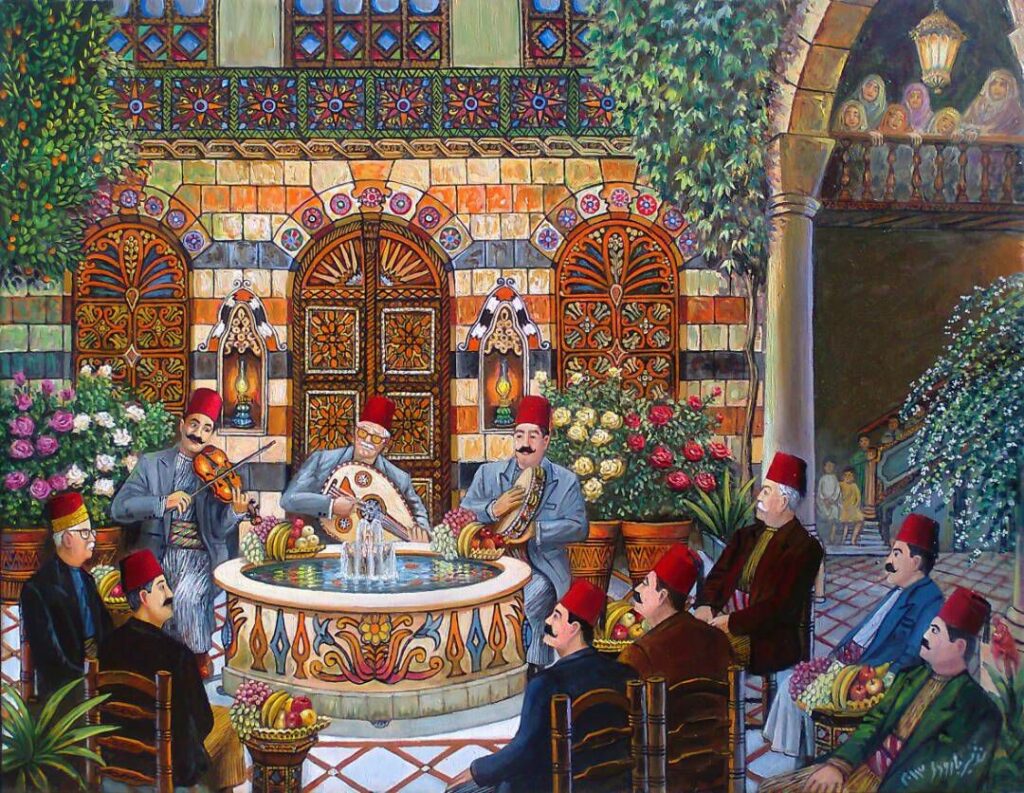
Classical Arab Music
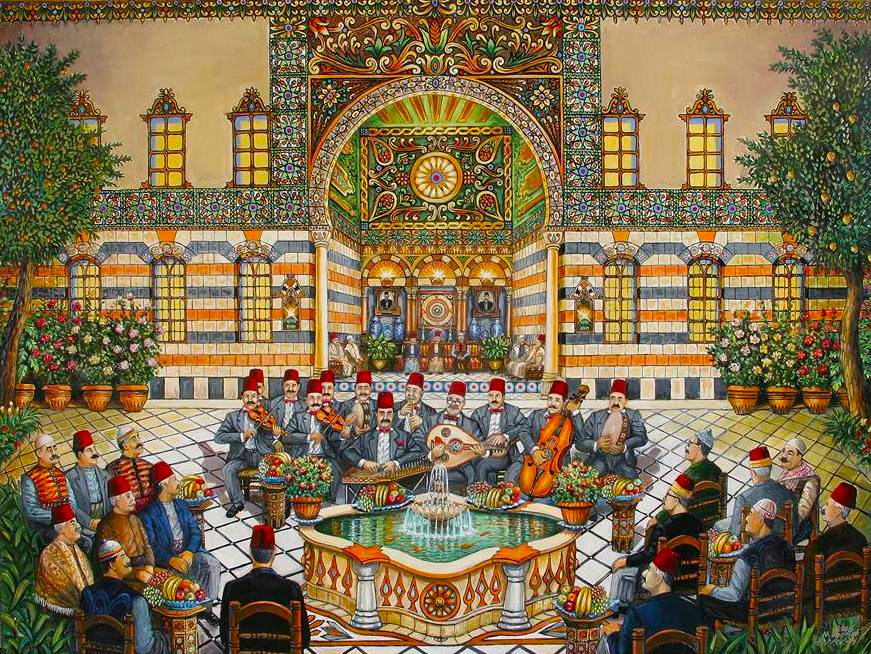
At the core of Syrian traditional music is classical Arabic music, known for its intricate maqams (melodic modes) and deep emotional resonance. Instruments like the oud (a pear-shaped string instrument), qanun (zither), ney (flute), and riqq (tambourine) are staples in Syrian ensembles. These instruments come together to create a soulful, rich sound that has remained largely unchanged for hundreds of years.
Damascus and Aleppo, in particular, have long been hubs of musical excellence. Aleppo is known for its role in preserving the muwashshah, an Andalusian-influenced poetic musical form that migrated eastward after the fall of Muslim Spain.
Folk Music and Dabke
In rural and suburban areas, folk music thrives. Songs often reflect themes of love, family, harvest, and resistance. Dabke, the iconic line dance performed at weddings and festivals, is always accompanied by loud, joyful music. Each region has its own unique Dabke rhythm and style — faster in the north, heavier and more grounded in the south.
Syrian Culture | Painters
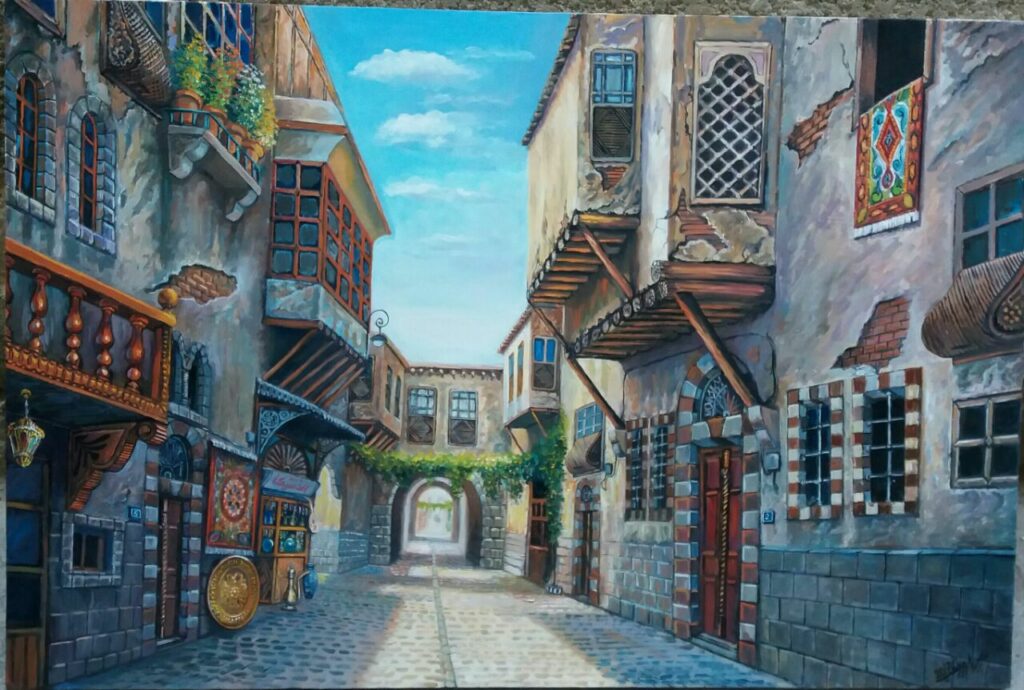
Syria’s visual art scene has birthed some of the Arab world’s most compelling painters. Among them, Louay Kayali and Nazir Baroudi stand as towering figures who used canvas and brush to reflect Syrian society’s soul, struggles, and spirit.
Louay Kayali
Born in Aleppo, Louay Kayali is often referred to as one of Syria’s most influential modern artists. His paintings frequently depict everyday Syrian life — workers, street vendors, children, and women — with a deeply human, melancholic tone. Kayali’s style evolved over time, blending realism with expressionism. He often used muted colors and minimalism to express emotion and silence. Tragically, Kayali died young, but his work continues to be revered across the Arab world for its emotional depth and artistic clarity.
Nazir Baroudi
One of the earliest pioneers of painting in Syria, Nazir Baroudi was not only a skilled artist but also a cultural advocate. He painted landscapes, portraits, and abstract pieces, often incorporating elements of Syria’s heritage and architecture. His work helped pave the way for future generations of Syrian artists. Baroudi was also known for his efforts to promote arts education in the country, believing that art was key to national identity and unity.
Literature, Poetry, and Storytelling
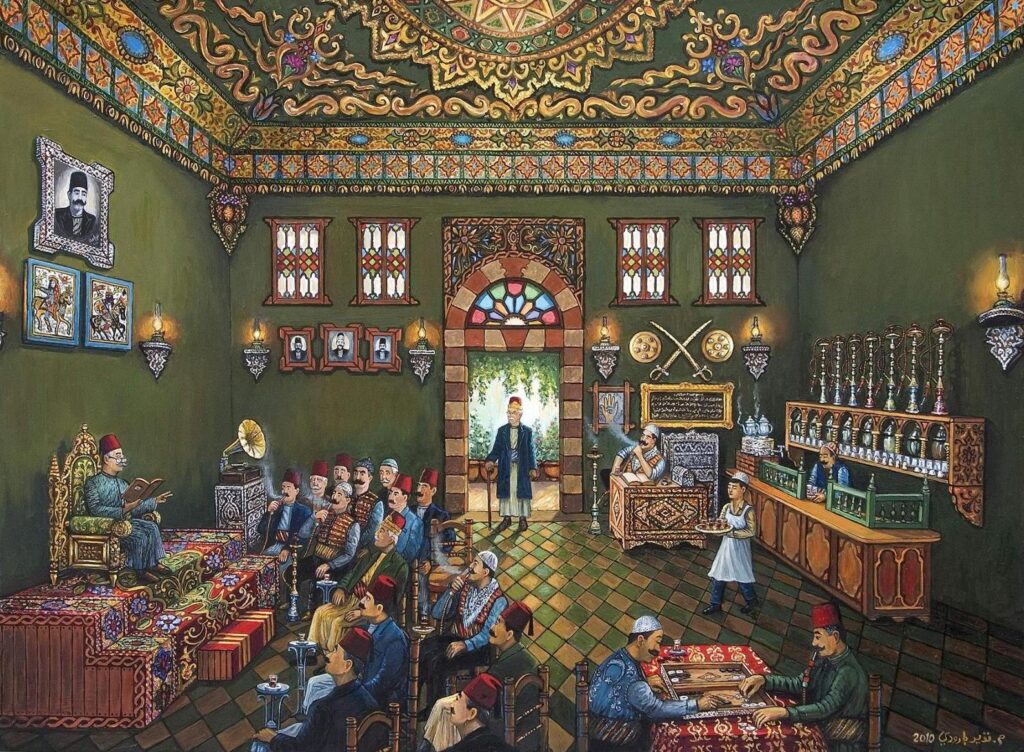
Syria has always been a land of poets and storytellers. From the ancient Ugaritic texts found in Ras Shamra to the poetic traditions of cities like Homs and Damascus, language and literature are deeply embedded in the culture.
Traditional oral storytelling (hakawati) was once a central fixture in cafes and homes, where elders would recite heroic tales and moral parables. Though this tradition has declined, it remains a powerful symbol of Syria’s literary heritage.
Modern Syrian literature has tackled themes of displacement, identity, and resistance — with authors like Nizar Qabbani gaining international attention.
Syrian Culture | Events and Celebrations
Despite the recent challenges, cultural life in Syria still pulses with vitality. Major cities like Damascus, Aleppo, and Latakia continue to host festivals, concerts, and exhibitions that reflect the resilience of the people.
Damascus Opera House and Cultural Festivals
The Damascus Opera House, officially known as the Damascus Dar al-Assad for Culture and Arts, is the country’s premier venue for music, theater, and ballet. Hosting both classical and contemporary performances, it’s a symbol of Syria’s cultural ambition and global connectivity.
Syria also holds regular events like:
- The Damascus International Fair – Once one of the largest trade and cultural fairs in the Arab world, this event combines business, arts, and music.
- Book Fairs – Promoting literature and local authors across major cities.
- Cultural Days – These are celebrated by different minorities, such as Armenian, Kurdish, or Assyrian communities, showcasing traditional dances, food, and music.
Religious and Seasonal Celebrations
Syria’s diverse religious landscape means that cultural life is full of varied religious holidays that often take on a festive public dimension:
- Eid al-Fitr and Eid al-Adha – Celebrated nationwide with music, dancing, and traditional sweets.
- Christmas and Easter – Especially in Christian towns like Maaloula or Saydnaya, where festivities include choirs, feasts, and public gatherings.
In spring and summer, many villages and towns celebrate local harvest festivals, which often include music, food, and storytelling.
Handicrafts and Artisanship
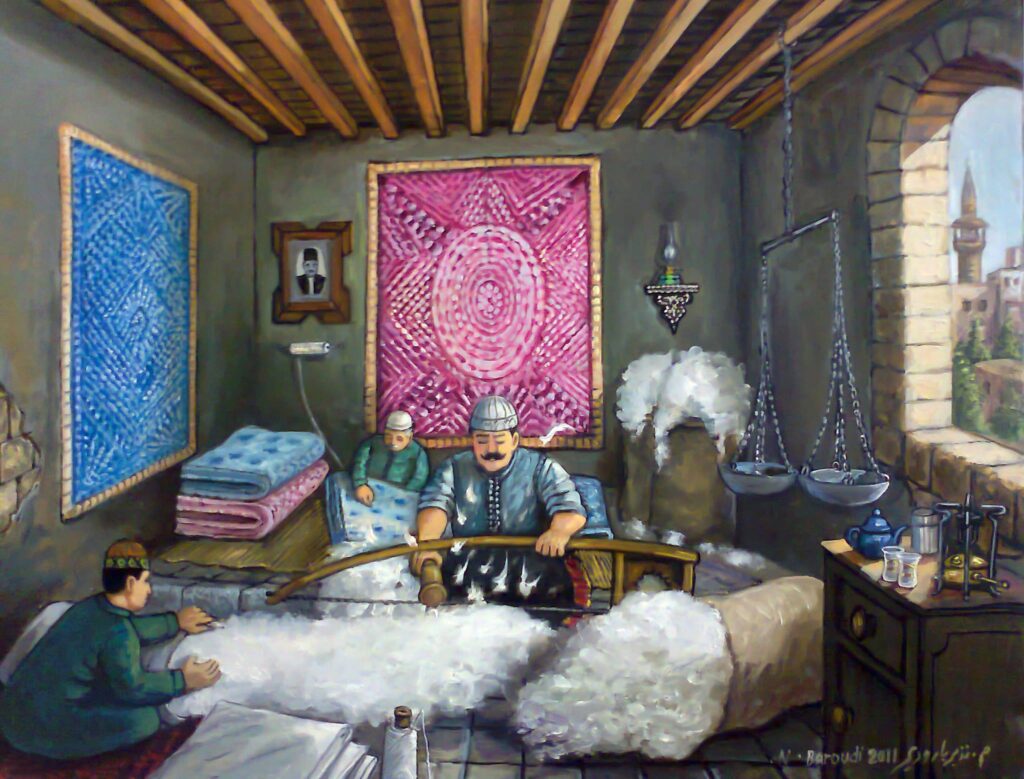
Syrian Culture isn’t only found in galleries and theaters — it’s also in the hands of artisans who craft everyday beauty. Syrian cities are renowned for:
- Damascene steel and inlay work
- Handwoven silk and brocade
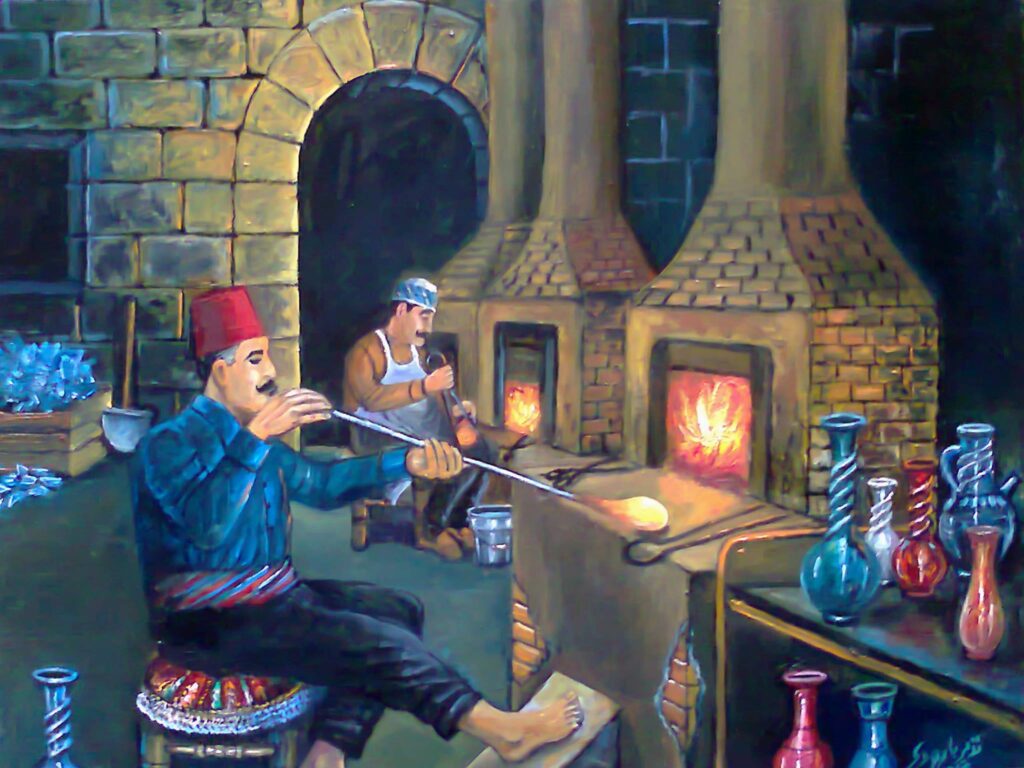
- Traditional glassblowing
- Wood marquetry and mother-of-pearl furniture
- Ceramics and mosaics
Walking through the souks of Damascus or Aleppo, you’ll encounter workshops that have been passed down for generations, continuing these ancient crafts.
10 Things You Didn’t Know Were Syrian
When you hear the name “Syria,” what comes to mind? Ancient ruins, Damascus, perhaps conflict? But Syria holds a treasure trove of inventions, art, and culture that have quietly shaped the modern world. Here are 10 things you probably didn’t know were originally Syrian — some will surprise you!
1. The First Alphabet
The world’s first alphabet came from Ugarit (modern-day Ras Shamra near Latakia) over 3,500 years ago. It was the earliest known writing system based on distinct letters representing sounds — a model later used by Greek, Latin, and modern alphabets.
2. Soap
Did you know the soap in your bathroom has roots in Aleppo? Olive oil and laurel oil were mixed in ancient Syria to make “Aleppo soap,” which became the blueprint for all modern soap bars.
3. Blown Glass
Glassblowing, the art of shaping molten glass by blowing air into it, began in ancient Syria — especially in Palmyra. This craft spread through the Roman Empire and became a key part of art and industry worldwide.
4. Arabic Music Roots
The rhythms and melodies of classical Arabic music — especially Qudud Halabiya and Muwashahat — originated in Aleppo and Damascus. These musical forms became the foundation of what we now know as Arabic music.
5. Mosaic Art
Syria was a major center for mosaic art, especially during Roman and Byzantine times. Cities like Shahba and Maarrat al-Numan still hold stunning floor mosaics that once decorated luxurious villas and churches.
6. Arabic Coffee Culture
While coffee beans came from Yemen, it was the Syrians who developed the culture of serving coffee in traditional gatherings and cafés — especially in Damascus. Bitter “sada” coffee is still a symbol of hospitality in Syria.
See Also: Syrian Food
7. Nay and Oud Instruments
These iconic instruments — the nay (reed flute) and the oud (precursor to the guitar) — were central to Syrian music for centuries, especially in the cities of Palmyra and Homs.
8. Ancient Irrigation Systems
Syria’s ancient farmers developed advanced irrigation techniques: canals, water wheels, and aqueducts that made arid lands bloom — many of which are still visible in places like Bosra and rural Aleppo.
9. Poetry and Arabic Literature
From pre-Islamic poets to modern giants like Nizar Qabbani, Syria has long been a hub for poetic expression, romanticism, and revolutionary thought in the Arabic language.
10. Covered Markets
The world’s oldest covered market is Souq al-Hamidiyah in Damascus — a bustling bazaar stretching from the Roman gate to the Umayyad Mosque. This architectural model inspired markets in Istanbul, Cairo, and beyond.
Why This List Matters
Because Syria’s cultural legacy is often forgotten, misattributed, or overshadowed. Recognizing these contributions brings pride and restores Syria’s rightful place in world heritage.
Wait, There’s More!
We could add: Damascus silk, Arabic calligraphy, Islamic ornamentation, Halabi carpets, even popular foods like kibbeh and stuffed grape leaves that are globally enjoyed today.
Orthodox Icons and Syria’s Role
Orthodox iconography, one of the earliest forms of Christian art, began around 330 CE during the Byzantine era. Syria—especially Antioch and Maaloula—played a key role in shaping this sacred art. Syrian Culture blended spirituality and symbolism, influencing Byzantine and Coptic styles. Though often linked to Greece and Eastern Europe, the roots of iconography in Syrian Culture remain a vital part of the world’s Christian artistic heritage.
The Role of Culture in Resilience
Perhaps one of the most remarkable aspects of Syrian Culture is its role in helping the people endure and resist the hardships of war. Artists, musicians, and writers have documented the human cost of conflict while preserving the memory of a vibrant, diverse Syria. From underground art galleries to rooftop poetry readings, Syrian Culture continues to thrive as a form of resistance and remembrance, allowing Syrian creatives to share their stories with the world once again.
Culture as Identity and Hope
Syrian Culture is not a relic of the past — it is a living, breathing force that connects generations, heals wounds, and preserves identity. Whether it’s the rhythm of a Dabke beat, the haunting melody of the oud, the brushstroke of Kayali, or the call to gather for a cultural fair, Syrian Culture embodies the creative soul that endures through time.
Travelers who engage with Syrian Culture don’t just observe — they become part of a story that spans thousands of years and continues to be written every day.
See Also : Syrian People (Syrians Through Visitors’ Eyes)
Sources & References:
UNESCO – World Heritage Centre: https://whc.unesco.org
Archnet – Architecture & Heritage Database: https://www.archnet.org
World History Encyclopedia: https://www.worldhistory.org
Syrian Heritage Archive Project: https://syrian-heritage.org
Global Encyclopedia: Wikipedia