Few people realize that some of the world’s earliest cities did not emerge in the southern marshes of Mesopotamia alone, but also across the fertile plains of what is now known as Civilizations Northeast Syria. While traditional historical narratives emphasize Sumer and Akkad as the primary centers of early urban development, a parallel and independent trajectory unfolded in the Upper Khabur region.
The Civilizations Northeast Syria represent one of the most important yet often overlooked chapters in the story of early human urbanism. Located within the rain-fed plains of the Khabur Triangle, these Northeast Syria civilizations developed complex societies, trade networks, and political systems that rivaled—and in some cases preceded—those of southern Mesopotamia.
Sites such as Tell Brak (Nagar), Tell Mozan (Urkish), and Tell Leilan (Shekhna/Shubat-Enlil) demonstrate that the Civilizations Northeast Syria were not peripheral actors. They were central innovators in early urban development, shaping trade, religion, and governance across northern Mesopotamia.
Understanding the Civilizations Northeast Syria is therefore essential to reconstructing the broader origins of cities and the emergence of organized human society.
Quick Facts: Civilizations Northeast Syria
| Site Name | Ancient Name | Key Era | Primary Significance |
|---|---|---|---|
| Tell Brak | Nagar | 6000–1300 BC | Early megacity; Eye Temple; trade hub |
| Tell Mozan | Urkish | 4000–1300 BC | Hurrian capital; religious center |
| Tell Leilan | Shekhna / Shubat-Enlil | 5000–1700 BC | Imperial capital; administrative archives |
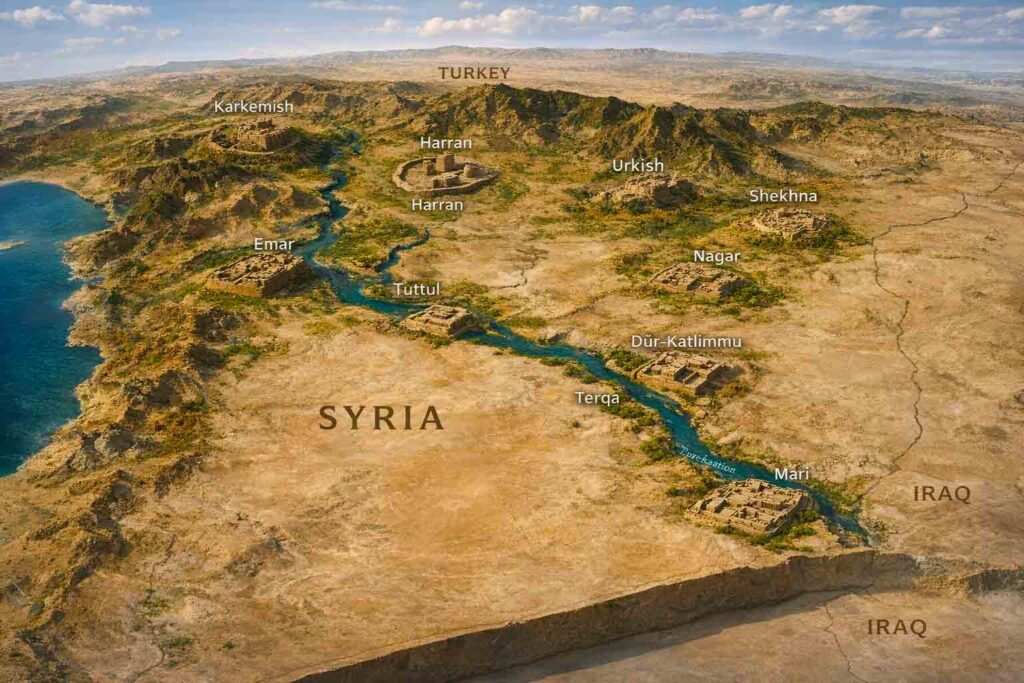
Nagar (Tell Brak)
The origins of urban life in Civilizations Northeast Syria can be traced most clearly at Tell Brak, one of the largest archaeological mounds in the Near East. Rising more than 40 meters above the surrounding landscape, Tell Brak represents millennia of continuous occupation and gradual urban expansion.
For much of the 20th century, historians believed that cities spread northward from southern Mesopotamia. However, excavations at Tell Brak challenged this assumption. Evidence shows that by the late 5th millennium BC, Nagar had already developed into a large urban center with extensive peripheral settlement zones—effectively an early form of suburban expansion.
This discovery fundamentally altered how scholars interpret the rise of cities, placing Civilizations Northeast Syria at the forefront of early urban development rather than at its margins.
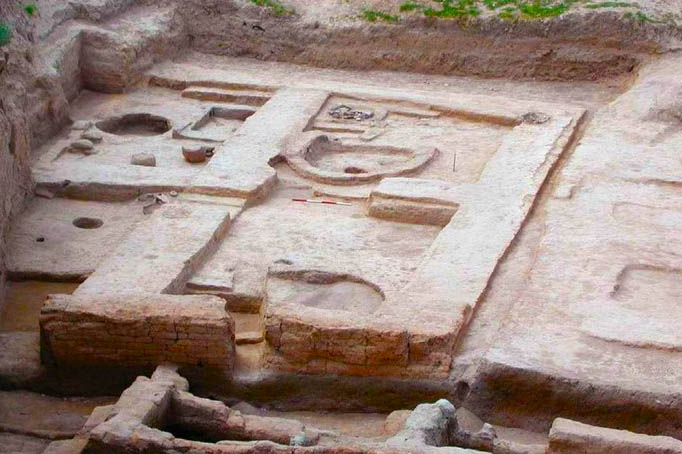
The Eye Temple and Religious Identity
One of the most iconic features of Nagar is the Eye Temple, dating to the late 4th millennium BC. Excavated by Max Mallowan, the site revealed thousands of small alabaster figurines characterized by oversized eyes.
These “eye idols” are widely interpreted as votive offerings, symbolizing constant divine presence or surveillance. Their abundance suggests that Nagar functioned as a major pilgrimage center within the Civilizations Northeast Syria, attracting populations from across the Khabur basin.
The religious landscape of Northeast Syria civilizations was therefore not peripheral but highly organized, reflecting sophisticated belief systems embedded in urban life.
Trade Networks and Strategic Power
The strength of Nagar within the Civilizations Northeast Syria was also rooted in geography. Positioned along key routes connecting Mesopotamia to Anatolia and the Mediterranean, it became a central hub for long-distance trade.
This strategic importance did not go unnoticed. During the Akkadian period, the ruler Naram-Sin established a fortified administrative complex at the site, integrating it into a wider imperial network.
Later, under the Mitanni kingdom, the region became known for specialized industries such as horse breeding and early glass production, further reinforcing the economic significance of Civilizations Northeast Syria.
Urkish (Tell Mozan)
If Nagar represents economic and urban expansion, Tell Mozan—ancient Urkish—embodies the cultural and spiritual identity of the Civilizations Northeast Syria.
Urkish is uniquely identified as a Hurrian capital, offering rare insight into a non-Semitic, non-Indo-European culture that played a major role in shaping northern Mesopotamian history.
Monumental Architecture and Symbolic Power
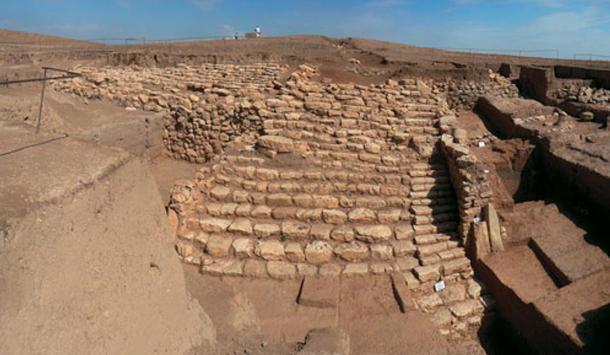
Excavations led by Giorgio Buccellati and Marilyn Kelly-Buccellati uncovered a massive temple complex built on an elevated terrace. A monumental staircase leads upward, creating a deliberate visual hierarchy.
This architectural design reflects what can be described as a “theater of power,” where movement, elevation, and scale were used to reinforce religious and political authority within the Civilizations Northeast Syria.
The Abi: Ritual and the Underworld
One of the most fascinating discoveries at Urkish is the abi, a deep ritual pit located near the royal palace. Unlike utilitarian structures, this feature appears to have been used for communication with the underworld.
Texts suggest that rituals performed at such sites involved invoking ancestral spirits or chthonic deities. The abi provides a rare physical link to the metaphysical beliefs of the Civilizations Northeast Syria, revealing a worldview deeply concerned with the boundaries between life and death.
Early Writing and Metalwork
Artifacts such as the “Lions of Tishatal” demonstrate that the Civilizations Northeast Syria had developed advanced metalworking and writing systems by the early 2nd millennium BC.
These objects confirm that Northeast Syria civilizations were not culturally isolated but actively contributing to the broader intellectual and technological landscape of the ancient Near East.
Shekhna (Tell Leilan)
To the east, Tell Leilan provides evidence of political centralization and imperial ambition within the Civilizations Northeast Syria.
Originally a local city-state, Shekhna reached its peak under Shamshi-Adad I, who transformed it into the capital of a vast territorial kingdom.
Shubat-Enlil: A Planned Capital
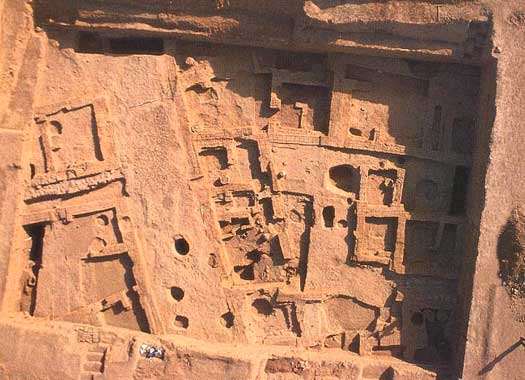
Renamed Shubat-Enlil, the city expanded significantly, featuring fortified walls, administrative quarters, and a carefully planned urban layout. A paved processional road connected the lower city to the acropolis, demonstrating advanced urban planning.
At this stage, the Civilizations Northeast Syria were no longer regional actors—they were shaping the political structure of the broader Near East.
Archives and Administration
The discovery of over 1,100 cuneiform tablets at Tell Leilan provides a detailed record of governance. These documents include diplomatic correspondence, economic data, and administrative records.
They reveal a sophisticated system of statecraft, proving that the Civilizations Northeast Syria developed complex bureaucratic institutions comparable to those of southern Mesopotamia.
Climate Crisis and Urban Decline
Tell Leilan also plays a key role in discussions of the “4.2 kiloyear event,” a major climatic shift that may have triggered widespread societal disruption.
Archaeological evidence suggests a period of abandonment, indicating that even the advanced systems of the Civilizations Northeast Syria were vulnerable to environmental change.
See Also: Ancient Sites East Syria I (On the Euphrates)
Trade, Interaction, and the Khabur Triangle
The Civilizations Northeast Syria functioned within a broader regional network known as the Khabur Triangle. This system facilitated the movement of goods, ideas, and populations across northern Mesopotamia.
Agricultural Foundations
The fertile plains supported large-scale agriculture and animal husbandry, forming the economic backbone of Northeast Syria civilizations.
Trade Networks
Cities within the Civilizations Northeast Syria acted as intermediaries, connecting resource-rich regions with agricultural centers.
Cultural Exchange
The interaction between northern and southern regions led to hybrid cultural forms, blending local traditions with external influences.
Can You Visit the Civilizations Northeast Syria Today?
Today, the major sites of the Civilizations Northeast Syria are not part of conventional tourism routes. Access to locations such as Tell Brak, Tell Mozan, and Tell Leilan remains limited.
However, their importance extends far beyond accessibility. These sites represent some of the earliest experiments in urban living and continue to shape academic understanding of early civilization.
Why Civilizations Northeast Syria Matter Today
The legacy of the Civilizations Northeast Syria lies in their diversity, resilience, and innovation. They developed sustainable urban systems, long-distance trade networks, and complex cultural identities that continue to influence our understanding of the ancient world.
Preserving and studying the Civilizations Northeast Syria is not only essential for archaeology—it is key to understanding the broader story of human development and the origins of urban life.
Conclusion: Rethinking Civilizations Northeast Syria
The Civilizations Northeast Syria fundamentally challenge traditional narratives about the origins of cities. They demonstrate that early urban development was not confined to a single region but emerged across multiple centers simultaneously.
From the early urban expansion of Nagar to the spiritual authority of Urkish and the imperial ambitions of Shubat-Enlil, the Civilizations Northeast Syria reveal a complex and dynamic world that helped shape the foundations of human civilization.
Sources & References:
UNESCO – World Heritage Centre: https://whc.unesco.org
Archnet – Architecture & Heritage Database: https://www.archnet.org
World History Encyclopedia: https://www.worldhistory.org
Syrian Heritage Archive Project: https://syrian-heritage.org
Global Encyclopedia: Wikipedia