Roman sites tour in Syria: Syria is not just another Mediterranean destination; it is the most concentrated repository of Roman urban planning and military architecture in the Near East. For the discerning traveler planning a Roman sites tour in Syria, the challenge isn’t finding history—it’s navigating it.
This Syria Roman ruins itinerary 2026 provides a precise logistical framework, focusing on safe travel routes in Syria for tourists while ensuring an uncompromising encounter with the stones that built an empire.
Day 1: Damascus – The Imperial Hub
Your expedition begins at Damascus International Airport. Upon arrival—once you have cleared the historical tourism Syria entry requirements—transition immediately from the modern terminal to the ancient core.
- The First Experience: Start with a high-end Damascene brunch; a sophisticated spread of Fatteh and artisanal oils in a restored 18th-century courtyard.
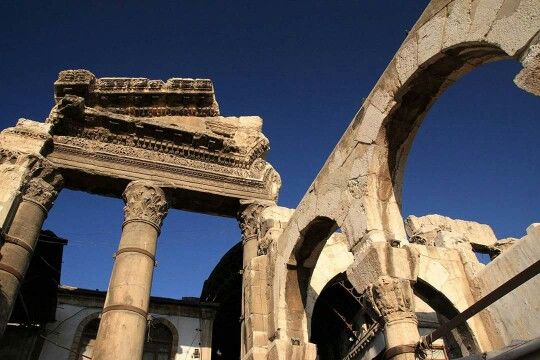
- The Roman Grid: Spend your afternoon at the Temple of Jupiter and the Via Recta (The Straight Street). These aren’t just ruins; they are the functional bones of the oldest continuously inhabited city on earth. Explore More.
Day 2: The Basalt Frontier – Bosra
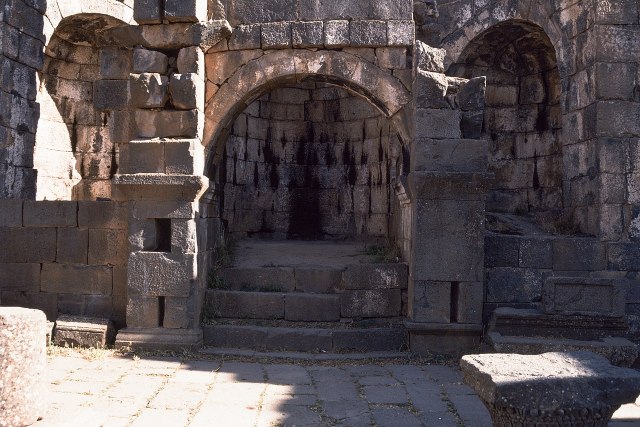
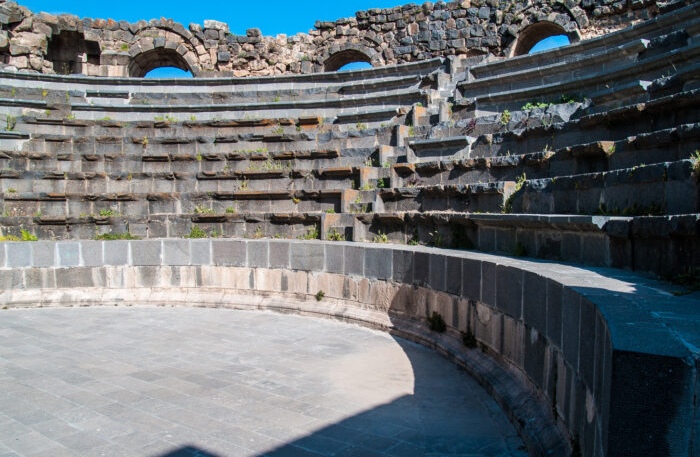
A morning drive south leads to Bosra Sham. This is where Roman ambition met Syrian basalt.
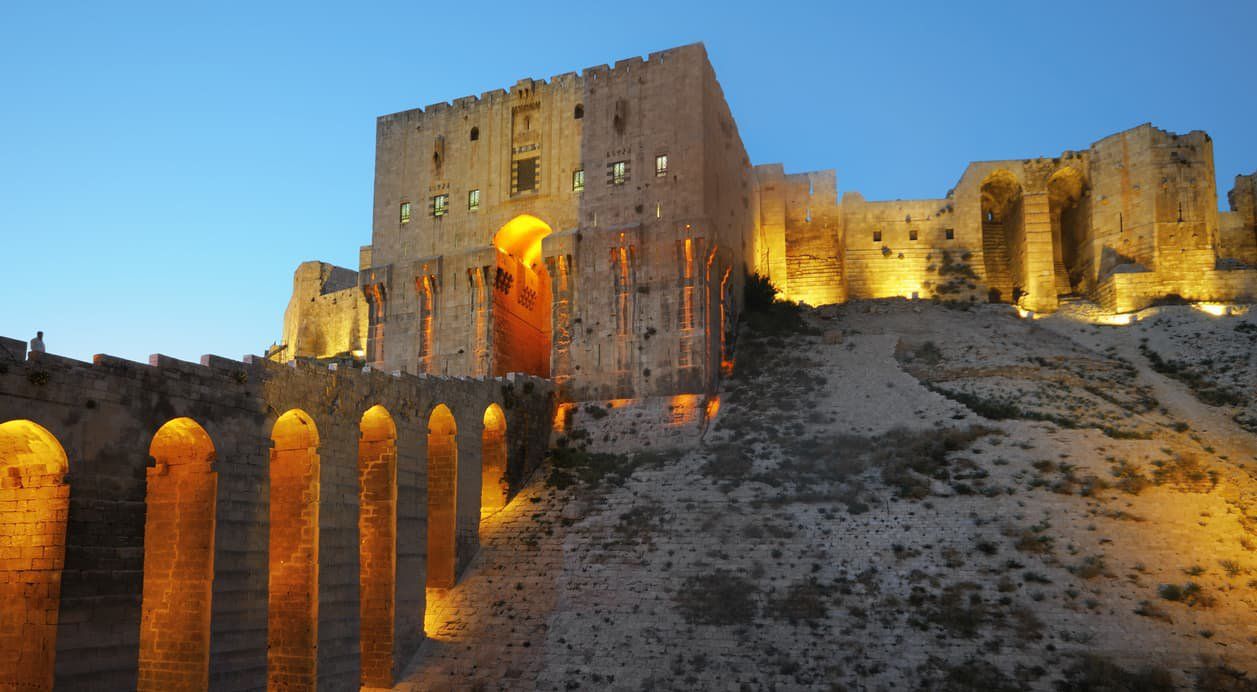
- The Site: The Bosra Theater is a structural marvel, encased in a later Islamic citadel, making it the most preserved Roman theater in existence.
- Logistics: After exploring the black-stone city, return to Damascus for the evening. The capital serves as the safest and most comfortable base for southern excursions.

Day 3: The Silk Road Powerhouse – Palmyra
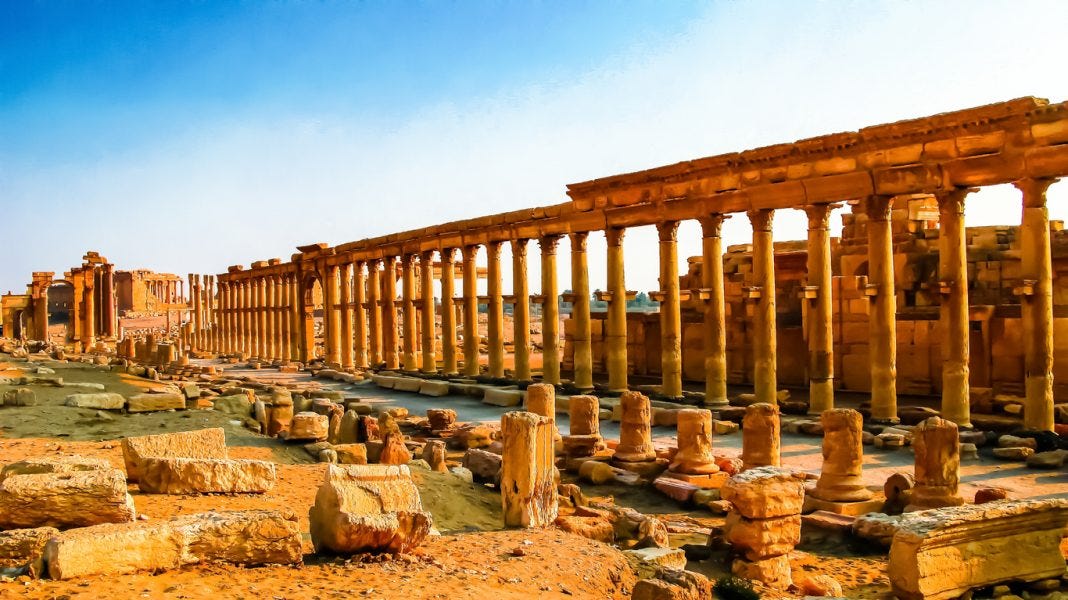
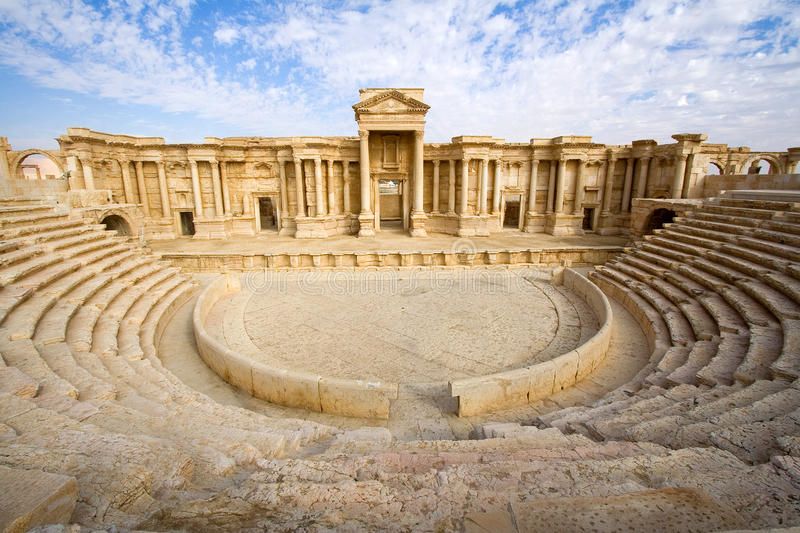
- The Encounter: Palmyra is an architectural dialogue between Rome and Persia. Walk the Great Colonnade and the Valley of the Tombs at sunset.
- The Homs Loop: Post-exploration, we drive to Homs for the night. Dinner in Old Homs is a culinary necessity; try the local Kibbeh in the historic quarters to experience the city’s authentic evening pulse. Full Guide…
Day 4: Urban Grandeur – Apamea
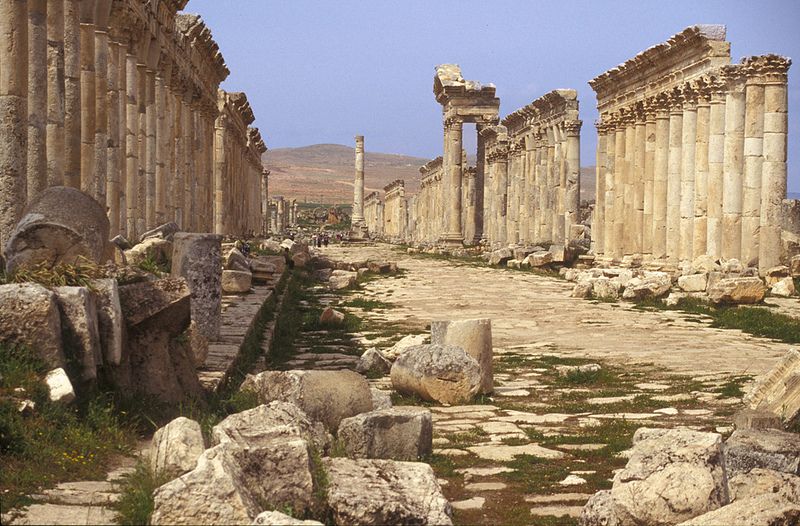
Northward to Apamea, home to the world’s longest Cardo Maximus.
- The Scale: The 1.8km stretch of twisted columns represents the pinnacle of Roman provincial wealth. This site is a primary focus for any serious Archaeological guide for Syrian Limestone Massif. After the trek, rest in the city to absorb the valley’s serene atmosphere.Learn More
Day 5: The Phoenician Coast & The Northern Reach
A strategic pivot toward the coast and the far north.
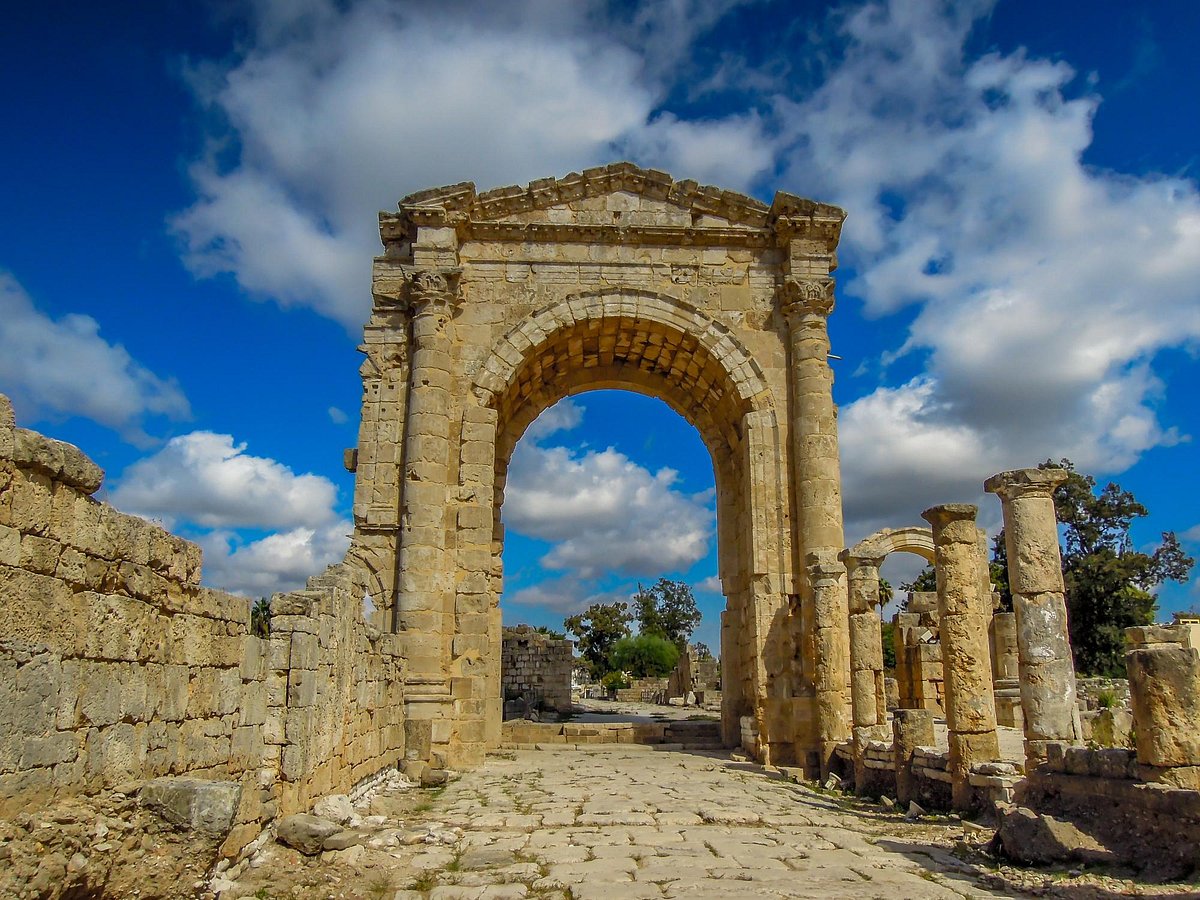
- Nabi Houri (Cyrrhus): Before hitting the shore, we visit the northern frontier. The Roman theater and the perfectly intact Roman bridge at Nabi Houri offer a rare, crowd-free experience.
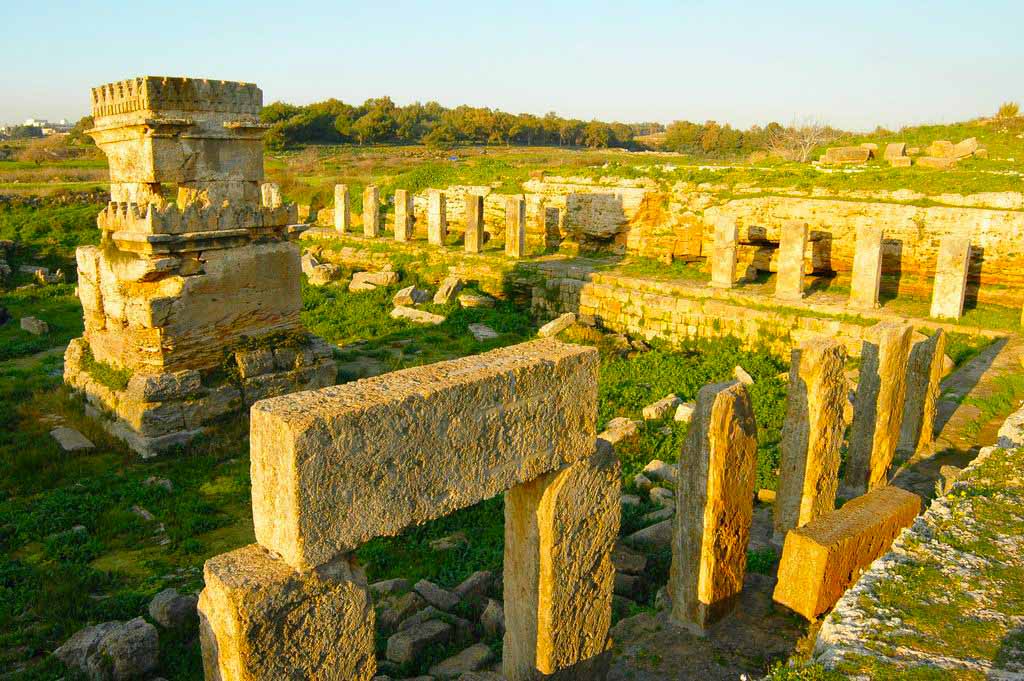
- Amrit: We loop back to the Mediterranean to see Amrit, where Roman religious architecture was grafted onto Phoenician foundations.Explore More
Day 6: The Final Synthesis – Damascus
Return to Damascus for a final day of strategic shopping. Acquire silk brocades or spices from the ancient caravanserais—authentic artifacts of a journey through time—before your departure from the airport.
Roman sites tour in Syria, Strategic Add-ons
For those with extended schedules, these sites provide critical context for a Roman sites tour in Syria:
- Shahba & Kanawat: Located in the south, Shahba (Philippopolis) contains world-class mosaics from the era of Emperor Philip the Arab, while Kanawat offers mountain-terrain temples. Deep Dive…
- Harran al-Awamid & Dumayr: These rural sites—featuring lone basalt columns and a perfectly preserved ritual temple—are essential stops for those seeking the “unbeaten path” of Roman Syria. Read more…
Roman sites tour in Syria | Summary: Logistics & Ratings
| Primary Destination | Key Roman Feature | Duration | Rating |
| Damascus (Day1) | Temple of Jupiter / Via Recta | 4 Hours | ★★★★☆ |
| Bosra Sham (Day2) | Basalt Theater & Citadel | 3.5 Hours | ★★★★★ |
| Palmyra (Day3) | Colonnade / Valley of Tombs | Full Day | ★★★★★ |
| Apamea (Day4) | The 1.8km Cardo Maximus | 3 Hours | ★★★★★ |
| Nabi Houri & Amrit (Day5) | Frontier Theater / Water Temple | 5 Hours | ★★★★★ |
Roman sites tour in Syria (FAQ)
Can I combine this with the “Dead Cities”?
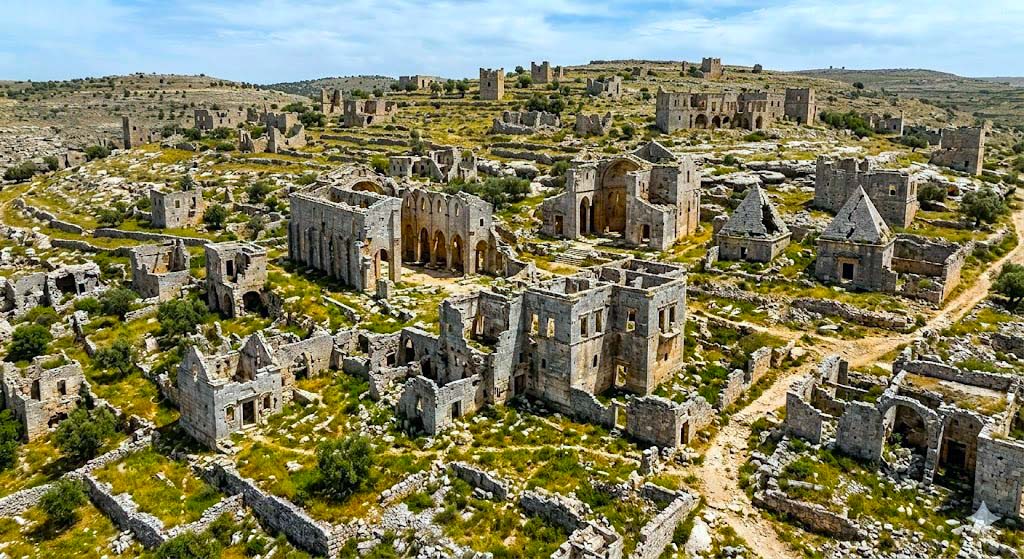
Yes. Use your Archaeological guide for Syrian Limestone Massif to add a 2-day northern loop. Many Byzantine sites sit directly on Roman foundations.
When is the best light for photography?
March–May or September–November. Aim for “Golden Hour” at Palmyra (limestone) and Bosra (basalt) to capture the best textures.
What is the dress code?
Smart-casual. Cover shoulders and knees to respect local norms and ensure maximum sun protection during long treks in Apamea.
How do I handle logistics and transport?
Stick to safe travel routes in Syria for tourists via private car. Avoid public transport to navigate 2026 checkpoint protocols efficiently.
Are there facilities at the sites?
Damascus and Bosra are well-equipped; Palmyra and Apamea are raw and isolated. Always carry water and essential supplies.
How do I pay for entry fees?
Use Syrian Pounds (SYP). Carry cash and your passport at all times to satisfy historical tourism Syria entry requirements at checkpoints.
Why is a Roman sites tour in Syria unique in 2026?
A: It offers crowd-free access to world-class heritage. Unlike Europe, you can experience these sites in their natural, silent state.
Syria vs. Europe: The Roman Distinction
Why choose a Roman sites tour in Syria over a trip to Italy or France? The difference lies in the “Eastern Roman” soul:
- Scale & Survival: While Rome has fragments, Syria has entire cities. In Apamea, you walk 1.8km of continuous columns—a scale rarely seen in Europe.
- The Basalt Factor: Europe is marble and limestone. Southern Syria offers the world’s only Roman cities built entirely from black basalt, giving a Roman sites tour in Syria a unique, moody aesthetic found nowhere else.
- Cultural Fusion: In Syria, Roman engineering merged with Semitic and Persian art. You aren’t just seeing Rome; you are seeing the “Globalized Rome” of the East.
Conclusion: Why This Journey Matters
The Roman sites tour in Syria is more than a checklist of ruins; it is a walk through the very foundations of Western and Eastern synthesis. By following this Syria Roman ruins itinerary 2026, you are securing a front-row seat to history that has remained uncommercialized and raw.
Whether you are marveling at the theater in Bosra or the desert sunrise in Palmyra, a Roman sites tour in Syria offers a level of intimacy with the past that Europe simply cannot match. The stones are waiting—it’s time to answer the call of the Orient.
Sources & References: UNESCO – World Heritage Centre: https://whc.unesco.org